

Some of the knotsis might be amenable to that but so far they only control 8.7% of the network
Let's see if that number continues to grow and then I'd like to more seriously propose reducing datacarrier limits at the consensus level
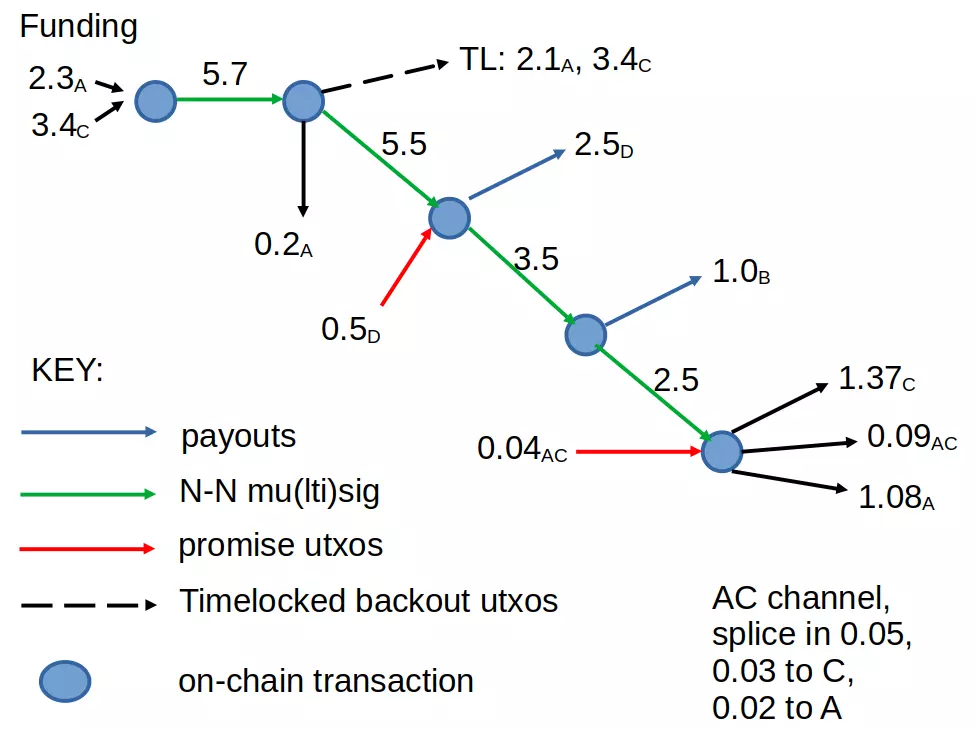
I think the extra fees incurred, sure, exist, but it doesn't make sense that the difference would be significant, persistently. Why would a miner not just mine txs that are more profitable? It's not exactly hard to directly receive them on any public message channel, if not by direct bitcoin p2p gossip. It's not a meaningful friction.
Compact blocks are afaiu simply a caching mechanism; if you already have all the txs, you can verify a smaller version of the block, which points to txs you already have.
(Bip is 152.)
If you're locally filtering out likely-to-be-mined txs, that doesn't work, at least not as well.
nostr:nprofile1qqsgdp0taan9xwxadyc79nxl8svanu895yr8eyv0ytnss8p9tru047qpz3mhxue69uhhyetvv9ujuerpd46hxtnfduq3samnwvaz7tmwdaehgu3wwdc8ymmkdahhxapwdekqzrthwden5te0dehhxtnvdakqm9jn0c was explaining this on his podcast, I don't usually think about these things ... but it's an illustration of the general point, that a "my preference" kind of mempool is just damaging what the purpose of a mempool even is. Imo.
> it doesn't make sense that the difference would be significant, persistently. Why would a miner not just mine txs that are more profitable?
For the same reasons I gave above: mining spam harms the goose in the long term, and some miners want the goose to stay healthy so that it keeps producing golden eggs. True, some are more interested in short term profits and do not really think about the long term effects. But I prefer to remedy this through education and persuasion.
> for zero benefit
I dispute this. When most users censor spam in their mempools, it pushes up the cost of getting spam mined. I think that reduces incidence of spam to an appreciable degree. This is a benefit and it comes with additional benefits, like reducing the centralization pressure spoken of in my slippery-slope post ("Spam-filled blocks lead to...a network [that]...is centralized.")
I want to weigh my proposed upsides against your proposed downsides, not just ignore them. Do my upsides outweigh the centralization pressure you speak of? I think so. At least up til now, it seems like the centralization pressure created by private mempool usage so far is marginal. The extra income accrued by those miners is tiny compared to their "regular" income. But the costs imposed on spammers is relatively massive: their costs double or sometimes even triple.
Similar considerations apply to fee estimation: very few fee estimation tools "only" look at what's in your mempool, and so far no one has complained that they couldn't get their transaction mined. If it eventually gets to that point I would support removing the filters but I see no evidence that it is a serious risk.
I am not familiar with your point about compact blocks. Can you elaborate or link to somewhere this point has been discussed at greater length?
Why does permissionless makes it ethically wrong to discourage behavior X? Just because someone *can* do X does not mean X is good. If I think X is a bad choice then it seems perfectly fine for me to discourage it.
Then why don't you fork the network to stop the harm?... People seem to be very confused and running Bitcoin Knots instead of Bitcoin Purifier, which actually enforces the censorship they intend - https://github.com/rot13maxi/bitcoin-purifier
bitcoin purifier would kick me off of bitcoin, harming me even more than the spam does
> If there are transactions that actually harm the network
Spam harms the network
- Spam-filled blocks lead to spam-filled nodes
- Spam-filled nodes aren't worth syncing
- Fewer node syncers leads to fewer node runners
- A network with few node runners is centralized
- A centralized cryptocurrency isn't worth using
- An unused cryptocurrency isn't worth mining
Bigger block sizes and spam
Two things that hurt miners in the long term but feel good for them in the short term
You know what else feels good short term? Cutting up the goose to get the golden egg a few hours early

Education may help
Me: The miners shouldn't mine spam
Them: Um, the miners obviously want the fees, they will follow their incentive
Me: The farmer shouldn't cut up the goose that lays the golden eggs
Them: Um, the farmer wants the golden eggs, he will follow his incentive
Same energy

Make a nostr "nostr video" video maker
At btc++, 6 bitcoin core contributors "concept ack'd" my idea change to bitcoin core
When sending money, these 2 commands are available
- sendtoaddress
- sendtomany
When mining a block on regtest, this command is available
-generatetoaddress
Let's add generatetomany! This would be useful for simulating protocols that send money to multiple recipients directly from a coinbase, as several pools do now, like ocean and braidpool.
Unfortunately, I don't know C++. But if *you* wanna be a bitcoin core contributor, consider writing it and do a PR!
People who "concept ack'd" this change were:
Instagibbs
Antoine Poinsot
Luke Dashjr
Jameson Lopp
Peter Todd
I forget the other one but it might have been Matt Corallo

I was on there earlier this season:
https://www.youtube.com/live/VlP6AjM28hY?si=xgQRZTkDDNLJ67AY
I was also on there last season:

Nauth is when you let people log into your service with their nostr account. E.g. by having an extension that signs a message proving you own the pubkey you say is yours.
NoAuth is when you don't have a log in system. Most things don't need one, they just like to have user data so they can (1) sell it (2) spam their users


Oauth is good
Nauth is better
But "no" auth is best of all

how should I encrypt the NWC string that's saved in local storage for nostr:nprofile1qqsxjvepw89pg6y44hlxse3mez0rvh80t7uh54rcp2axl65t40aj6sgpzpmhxue69uhkummnw3ezumt0d5hszrnhwden5te0dehhxtnvdakz7qgawaehxw309ahx7um5wghxy6t5vdhkjmn9wgh8xmmrd9skctc9xsxm6? #asknostr #nostrdev
You can use nostr's nip4 encryption scheme and encrypt it to the user's own pubkey
Then decrypt it like a nip4 dm

Yeah but you're not lazy
Most would-be spammers are lazy and poor
They don't spam if it takes work or costs are high
If you make it easier or lower the costs, you get more spam
The filters make it harder and that raises the costs

I support a soft fork to make the max op_return 0 bytes
I also support a soft fork to make a new witness field ("witness2?") where users are welcome to store up to 32 mb of spam per transaction
People who don't want to store this spam can just not run the new software. We learned from segwit that you can ensure backward compatibility by just not sharing the new witness data with people who don't flag their support for it.

For spam less than 150 bytes, here is the tier list:
Lowest cost option: unfiltered op_returns
Middle cost option: unspendable outputs
Highest cost option: private mempools
I support the filters because they push the cost of spam up the tier list
Using unspendable utxos to store spam costs a couple of bucks more than using an op_return. The deterrent effect of raising the cost in this way outweighs the cost of storing unspendable utxos, in my opinion. True, unprunable spam is a worse kind, but you have to be quite motivated to do it thanks to its higher cost of production, and the result us much less spam overall. I think that's a good thing, it highlights the filters' deterrent effect. But if we remove that, the effect reverses: we get less "unprunable" spam (yay!), but at the cost of having way more prunable spam, and that seems worse to me.

The amount of extra money spam miners get is very small relative to their total profit. But the effect on spammers is massive in proportion to their total expenses, because fees are nearly their "only" expense. By doubling or tripling the effective costs of producing spam, there is an asymmetric positive effect: the spammers get relatively poorer much faster than the spam miners get relatively richer. This asymmetry makes the filters worth it imo.