You changed my quote to make your argument. I never said the "voluntary exchange" thing your entire argument was predicated on.
I think voluntary exchange is one of the most fundamental rights in a society. I think inflation incentivizes overconsumption, a perfect money with no inflation does not have that same incentive. I'm not arguing for some hypothetical money with 10% YOY deflation.
I simply think that underlying tool we use to valuate everything in society, should remain perfectly finite.
I'm having a really hard time following your reasoning throughout these.
It seems like you just keep saying unconnected ideas without threads of thought between them trying to argue just for the sake of it.
I don't think you responded to my point, but yes I still do believe in what I wrote above. I suppose that makes me whatever name it was you called me 🙃
I actually find the incentive to reduce spending to be a positive. We live in a time of rampant overconsumption, causing inflation to incentivize more spending is unethical and toxic to culture in my opinion. I would prefer a currency with no inflation whatsoever.
We actually already live in a world with rapid deflation in certain areas. TVs rapidly decrease in price every year, we all know this, but still I buy TVs when I need them. I don't put off purchasing one just because I think it'll be cheaper in two years.
I don't think there has ever been a better target audience for a book. Can't wait to dive in 🧡⚡️🥩

Doesn't one thing having subjective value to another make it have some degree of subjective value to you?
For example, I don't want a Dogecoin, but if someone offered me 100k Dogecoin I would take it then sell it for whatever I can get over a few grand.
I morally disagree with everything it stands for, but it still has value to me based upon the value it has to others. I don't like thay fact, but I can't deny it.

That's one of the core beautiful things about bitcoin. It's trivial to hard fork, but why would anyone in the network want to use their random one-off 42M bitcoin?
No user has an incentive to switch to a system that changed one of the fundamental tenants of the protocol.

🥩 A pound of beef a day keeps the doctor away 🥩

The classic case of the turtle vs the bitcoin hare
https://pbs.twimg.com/media/FjYQ_ndXoAISS1o?format=jpg&name=medium
His wallet would actually be a great example of this perfect honeypot. IF there is a wallet with 5% of all bitcoin out there, how well encrypted is it?
If it isn't actively updated perhaps it would be targetable when computing power passes a certain threshold?
That's a really good point. And in my hypothetical example, I assumed a hyperbitcoinized future.
In this hypothetical future, why would someone wealthy enough to be running the most powerful supercomputer want to destroy the monetary system that they are using?
There clearly is a misalignment of incentives here.

Don't trust, verify ❤️
I work as an engineer and in that world there is often an emphasis on not solving for hypothetical future problems years before they happen. I think you are right that things like quantum are nowhere near close to even looking like a problem.
I've heard that as well about silicon.
This exercise has honestly made me much more appreciative of bitcoins resilience. I'm mostly just curious is someone much more knowledgable around bitcoin's future security than myself has thought or written about this problem.

That's what I'm curious about. Anything increasing that exponentially is overpowered given enough time. It's a super hypothetical problem, just curious if anyone smarter than me has given it more thought.
Thank you! Doing a little bit of this math actual made me much more appreciative for the power of bitcoin's security. The numbers are completely wild and the incentives beautifully designed. Gotta do a bit of math myself just to make sure that I'm verifying, not trusting 😄
The incentives are wildly misaligned for them to do this any time in the foreseeable. But given a powerful enough computer, there are likely many honeypot lost or old wallets out there that actually could hold massive amounts of BTC. (Satoshi's hypothetical) wallets for example)
24 makes it harder, but the same problem would occur father out into the future then.
I imagine all intelligent actors will continue to upgrade their custody strategies, but old, lost, or forgotten wallet would be vulnerable.
I specifically did it with the easier to crack 12 word seed. The same problem would occur for a 24 word seed, but just a handful more years in the future.
Again, HUGE assumptions made here about Moore's Law, which from my remedial understanding is debatable that it will continue at the same rate.
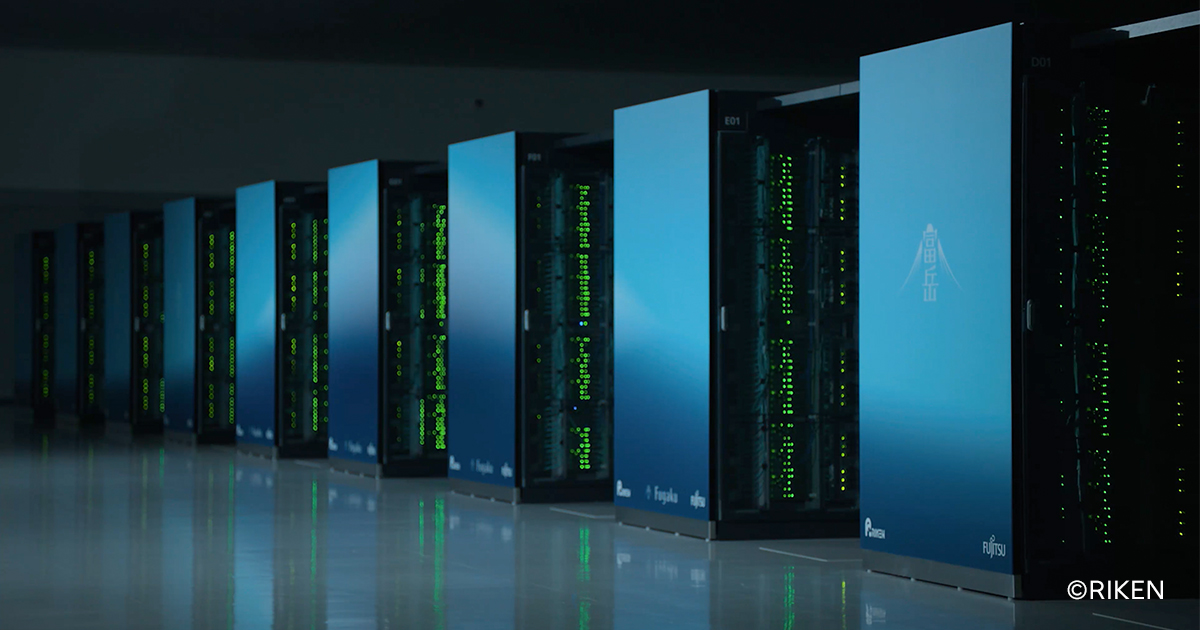
I've been playing around with some numbers regarding the security of 12 word seed phrases in a hyperbitcoinized future. The Fugaku Supercomputer is 542 petaflops and could test ~322 billion different seeds per second.
If all eight billion humans have a 12 word seed phrase, it would take this computer ~67 million years on average to find a single one. Obviously the incentives are massively misaligned for anything like this to make sense. But what if Moore's Law continues as the same pace for the next 70 years as it has for the previous 70?
This malicious actor with a hypothetical future supercomputer would be able to find one of these eight billion (assuming little population growth) roughly every 17 hours.
There are MASSIVE assumptions made in this super rough math. But generally, I'm curious how the bitcoin protocol might need to adapt to prevent this kind of issue if Moore's Law does continue?