Max you are an unstoppable force, well until you are dead, but that Bitcoin it'll still be unstoppable when you and I are both soil.
Hat's off to you dude.
Exchanging Empathy Rules.


Exactly I agree. Bitcoin is the exchange of Pure Human Empathy, in the form of a number that is that Magic Sauce, every day more people Globally realise IT. They'll say, this mother fucking Sauce is IT.
IT is Immutable Truth, if you live by IT you are IT and people recognise you for being IT.
The Wolf is IT until the Sheep is a Ghillie Suit of fuck you.
Bitcoin is Pure Human Empathy and that Peace is within you.
Peace ❤ Empathy

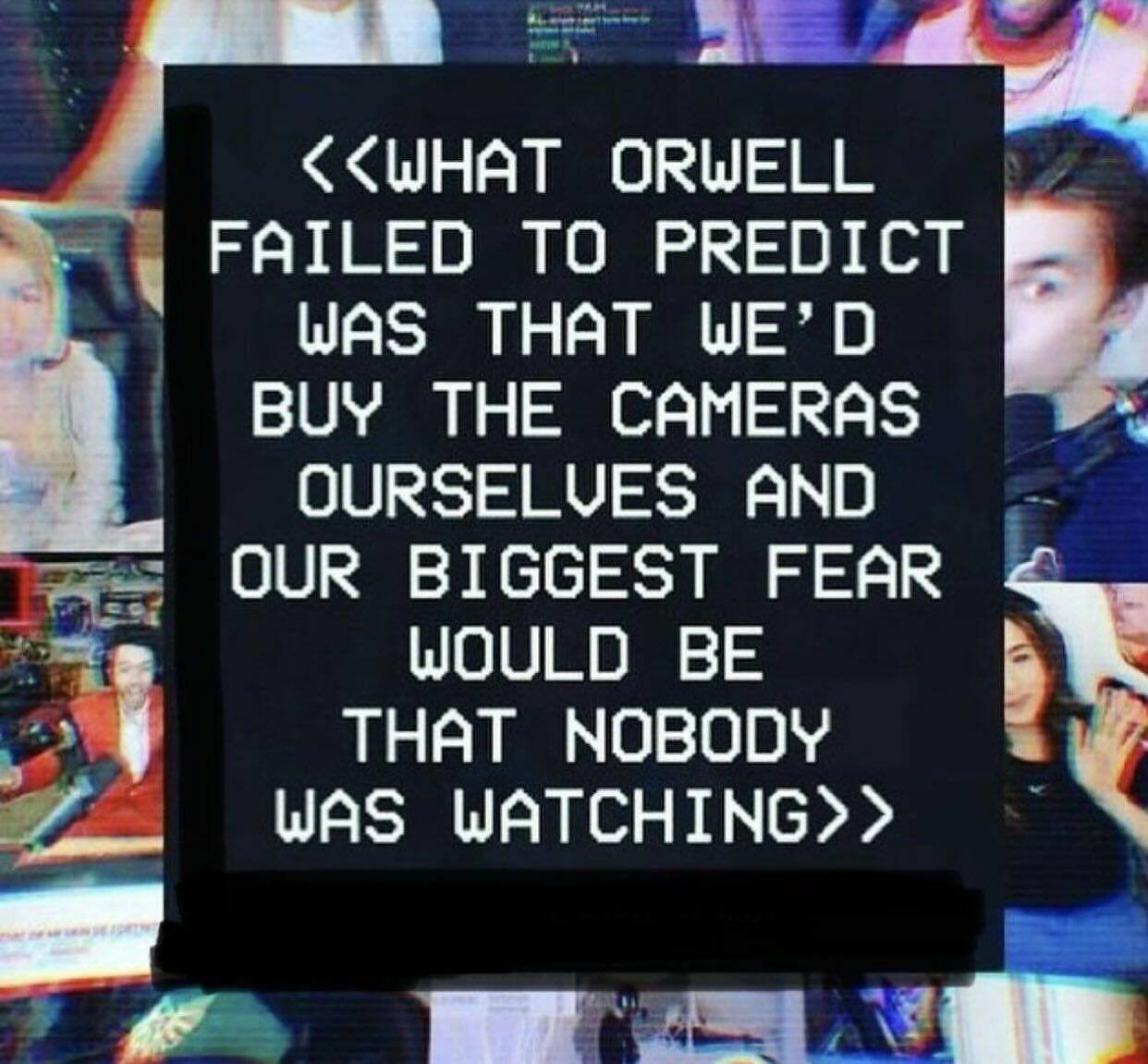
Amazing, that had never been a thought of mine. Absolutely spot on.
Also just thinking, a camera to help define words that cannot be used and or words that have meanings that need to change and or that represents the World as new and not just deranged.
Well done 👏

Amethyst seems the best I've tried on Android, but I've only been on Nostr for a week or so, but I binned Primal instantly.

Moreover, Bitcoin is the only resistance we currently have that has a chance of resisting Psychopathic AI that doesn't compute Human Empathy. Bitcoiner's now also have the ability to push the focus away from the creation of Anti-Human AI too.
The World really needs to think about how Bitcoin and it's security could be used to stop the feeding of AI, both before and after it's actually required.

Bitcoin is a reflection of you and nothing else. Exchange that Pure Human Exchange with nothing but goodwill.

Chapter 02: Barter Exchange before Money and Numeracy: How the Direct Exchange of Pure Human Empathy Was Critical to Individuals, Families, Villages, Tribes, and Communities
Introduction
Before the advent of money and numeracy, barter was the primary method of trade, requiring trust, communication, and mutual understanding. Human empathy, the ability to understand and share the feelings of another, was the bedrock upon which barter systems functioned. The absence of standardised currency and widespread numeracy meant that barter was not a cold calculation of value but a deeply relational and empathetic practice. This post explores the role of empathy in barter exchanges, emphasising the qualities needed for individuals to facilitate these trades on behalf of groups such as villages and tribes. It also discusses the potential erosion of empathy and its consequences for the stability of such exchanges.
Barter Systems and the Role of Empathy
Barter, the direct exchange of goods and services without the use of money, was prevalent in early human societies. From small family units to larger tribal communities, goods such as livestock, grain, tools, and textiles were traded to meet basic needs. Without numeracy, an essential skill for calculating value, empathy became the primary currency. Traders had to understand the needs, desires, and circumstances of their counterparts. A successful barter exchange was built on an empathetic recognition of the other party’s situation, and trust was at the heart of every transaction.
In a world without numerical calculations or written contracts, barter required a deep sense of human connection. People traded not only goods but also goodwill. A farmer exchanging grain for wool had to believe that both parties were benefiting fairly. The empathy exchanged in these transactions was crucial, as misunderstandings could lead to conflicts that threatened the cohesion of the family or community.
See Table 1: Empathy in Barter Exchanges and Its Role in Different Social Units
The Qualities Required for Barterers in the Absence of Numeracy
In the absence of numeracy, not everyone was suited to conduct barter on behalf of a group. Those selected to barter on behalf of families, villages, or tribes had to possess specific qualities:
1. Empathy: The ability to understand both the needs of their community and the people they were trading with was essential. Barterers needed to consider what was fair and equitable, ensuring that the trade benefited both parties. They could not simply seek personal gain but had to represent the interests of the larger group.
2. Trustworthiness: Integrity was paramount. A barterer who acted selfishly or misrepresented their community would damage relationships, not only between individuals but between entire villages or tribes. The consequences of broken trust could be severe, leading to isolation or conflict.
3. Communication Skills: Without written contracts, barter relied on verbal agreements. Barterers needed to be skilled negotiators, capable of explaining their position clearly and understanding the concerns of others.
4. Reputation: Barterers often earned their position due to their standing in the community. A person with a reputation for fairness and honesty was more likely to be chosen for such a role, and their actions could either strengthen or weaken that reputation.
5. Generosity: While barter was an exchange of goods, it also involved an exchange of goodwill. A successful barterer needed to embody generosity—ensuring that the trade was fair not only by immediate standards but by a long-term view of the relationship.
The Importance of Pure Empathy in Barter Exchanges
For barter to work effectively, the empathy exchanged had to remain pure and untainted by selfishness. This was especially true when individuals were chosen to barter on behalf of larger groups, such as tribes or villages. A barterer acting on behalf of others had to remove personal desires from the equation entirely, considering only the needs of their community and the people with whom they were trading. Selfishness eroded the trust and fairness upon which barter was built.
In small communities where relationships were intimate and ongoing, a breakdown of empathy could have dire consequences. If a barterer began to act solely in their own interest, future trades would become fraught with mistrust. The sense of fairness that underpinned all exchanges would be lost, and individuals would be less willing to engage in future trades. The barter system would break down, and with it, the social cohesion of the community.
See Table 2: Consequences of Eroded Empathy in Barter Exchanges
Selfishness and Its Removal in Barter Processes
To ensure the success of barter exchanges, selfishness needed to be carefully managed, especially when the barterer acted on behalf of a larger group. The concept of empathy, in this context, wasn’t just a matter of personal disposition but a responsibility to the wider social unit. If the barterer allowed self-interest to influence their decisions, it would taint the purity of the exchange and, ultimately, damage relationships.
The purity of empathy in barter required transparency and generosity. The barterer had to act with a long-term view, ensuring that their actions would not only bring material benefit to their group but also foster goodwill for future exchanges. Communities thrived when bartering was based on mutual understanding, as it ensured that no one took advantage of another. Selfishness, by contrast, undermined the trust that made these societies function.
In Conclusion
Before the widespread use of money and numeracy, barter relied heavily on empathy, trust, and the ability to represent the collective interests of groups. Those who engaged in barter, especially on behalf of families or communities, were selected based on their ability to empathise and ensure fair and equitable exchanges. The purity of empathy was critical for barter to function; when it was eroded by selfishness, the entire system risked breaking down.
In these early societies, barter was not just an economic transaction but a deeply relational process that reflected the interconnectedness of individuals, families, and larger social groups. Empathy was the foundation upon which all trade was built, and its erosion threatened the very fabric of these communities. As such, the success of barter in these societies depended not just on the goods exchanged but on the human values of fairness, trust, and empathy that underpinned every transaction.
Sources:
• Glyn Davies, A History of Money: From Ancient Times to the Present Day, University of Wales Press, 2002.
• David Graeber, Debt: The First 5,000 Years, Melville House, 2011.
• Keith Hart, Money in an Unequal World, Texere, 2001.
• Joel Kaye, A History of Balance, 1250-1375: The Emergence of a New Model of Equilibrium and Its Impact on Thought, Cambridge University Press, 2014.
01 Title: Barter to Money and the Empathy that a Lack of Numeracy Could Not Induce
Introduction
The transition from barter systems to money-based economies represents one of the most significant changes in human history. Before the widespread use of money and numeracy, trade relied on empathy—human beings understanding each other's needs and negotiating directly. As money began to replace barter, the need for personal trust diminished, but without numeracy, people still struggled to calculate fair exchanges. This post examines how barter declined as money use increased, and how the lack of numeracy prevented the kind of trust and empathy that characterised earlier economic interactions.
The Role of Barter and Empathy
In early human societies, barter was the primary method of trade. Without a standardised medium of exchange, individuals and groups relied on empathy to ensure fair exchanges. A farmer trading grain for livestock, for instance, had to place themselves in the position of the other party, understanding their needs and ensuring mutual satisfaction. Barter was not just an economic exchange; it was a social interaction, built on trust and community.
However, as human societies grew more complex, the limitations of barter became evident. In large communities or long-distance trade, barter required precise knowledge of the value of goods, and the negotiation process became increasingly cumbersome. The introduction of money simplified this process, but it also began to erode the personal, empathetic connections that had been central to barter.
The Introduction of Money and the Decline of Barter
The first coins, minted in Lydia around 600 BCE, marked the beginning of a new era in economic exchange. Money allowed for standardised transactions, reducing the need for personal negotiation. The direct connection between traders, once mediated by empathy, became less important. Instead, the value of goods was abstracted into coinage, allowing trade to occur even between strangers with little trust between them.
While the introduction of money led to a gradual decline in barter, the process was slow. Barter persisted for centuries, particularly in rural areas or in times of economic hardship when coins were scarce. In medieval Europe, for instance, barter was still common among peasants, even as money became the dominant medium of exchange in urban markets. The rise of feudalism and the lack of widespread currency systems ensured that barter continued well into the Middle Ages.
The Importance of Numeracy
Though money simplified transactions, it did not entirely solve the problem of fair trade. Without numeracy, the ability to understand and work with numbers, many individuals were still vulnerable to unfair deals. Money alone could not induce the kind of empathy that was necessary for ensuring fairness in barter systems. The rise of numeracy, particularly in the 19th and 20th centuries, played a crucial role in levelling the playing field, allowing more people to engage in economic transactions with confidence.
Numeracy became widespread only with the advent of public education systems in Europe and North America. Before this, only elites, scribes, and merchants had the numerical skills required for complex trade. By the early 20th century, with numeracy becoming common among the general population, the need for personal trust and empathy in transactions diminished further, as individuals could now calculate value and fairness independently.
See the Chart that shows Barter, Money and Numeracy in Use over time.
Barter, Empathy, and the Consequences of Their Decline
The decline of barter and the rise of money and numeracy represent more than just changes in how people traded goods. They mark a shift from a system based on human connection and trust to one grounded in abstraction and calculation. While the modern economy allows for efficiency and scale, it has also removed much of the empathy that once governed economic exchanges.
Barter required individuals to understand and relate to one another, making each transaction a negotiation not only of value but of social relations. The empathy exchanged in these interactions was a vital part of ensuring fairness, particularly in small, close-knit communities. As money and numeracy replaced this need, the personal connections that were once essential for trade were weakened, and economic transactions became increasingly impersonal.
Conclusion
The shift from barter to money-based economies was driven by the need for a more efficient and scalable method of trade. However, as this paper has shown, this transition also led to the erosion of empathy in economic exchanges. Without numeracy, early money-based systems could not induce the same kind of fairness and trust that characterised barter. Only with the widespread introduction of numeracy did individuals gain the tools to engage in fair trade independently. Yet, even today, the loss of empathy in economic transactions remains a consequence of this historic shift.
Sources:
Glyn Davies, A History of Money: From Ancient Times to the Present Day, University of Wales Press, 2002.
David Graeber, Debt: The First 5,000 Years, Melville House, 2011.
Joel Kaye, A History of Balance, 1250-1375: The Emergence of a New Model of Equilibrium and Its Impact on Thought, Cambridge University Press, 2014.
Niall Ferguson, The Ascent of Money: A Financial History of the World, Penguin Press, 2008.
A husband and wife both achieve gold in the Olympics and Paralympics
https://t.co/7M6eENkeNC https://video.twimg.com/ext_tw_video/1832514106202451968/pu/vid/avc1/576x1024/3ye0zmBt6U__R5wW.mp4?tag=12
Empathy is not Gaming a System, Immutable Truth is beyond Abuse.
It is the cleanest public restroom in the world.
In which country is this?
https://t.co/o7w4iuXIM8 https://video.twimg.com/amplify_video/1832673869422858240/vid/avc1/576x1024/pKbMrlrtTtRF25H6.mp4?tag=14
How to sanitise reality, by machines, the lack of Pure Human Empathy for others out of view.
Bitcoin fixes this soon....
A husband and wife both achieve gold in the Olympics and Paralympics
https://t.co/7M6eENkeNC https://video.twimg.com/ext_tw_video/1832514106202451968/pu/vid/avc1/576x1024/3ye0zmBt6U__R5wW.mp4?tag=12
ParaBitcoin Olympics is different... 


It's more dangerous to be wrong when the Government is wrong.
Fuck Government and Exchange Pure Human Empathy via Immutable Truth.
Bitcoin.


Nostr is not Bitcoin, it's an opinion a point of view. It's not Pure Human Empathy, it's not me it's not you.
IT is a Paradox. Do you go down the Rabbit Hole or does one climb out!?
Rhetorical question reveal a brain injection.
Is there too much information beyond those that can listen. Bitcoin pulls that back.
Everyone on Nostr, a simple thought experiment:
You have the Power to say anything you truly want;
Will that be Absolute Abuse or
Empathy for Immutable Truth?
Nostr is not Immutable Truth, it's closer, but are you?
To reflect or project, what is the point of you!?


What so you believe in Fiat Currency, what if I told you that Bitcoin was beyond Money itself!!!

Bitcoin rates Agency. The Pure Human Empathy in the World of the Clown.
Rate your own Agency, exchange Empathy and Repress the Clowns 🤡 
If you don't exchange Pure Human Immutable Empathy for others, you are done, IT is the truth.
Otherwise the Auschwitz train is coming for you.
To avoid that exchange Pure Human Empathy via Immutable Truth. That is Bitcoin.