


When anyone tries to copy the exchange of Immutable Empathy, they distort it by so much.
They all distort that Pure Human Empathy, but in differing amounts. Do they understand what they are doing mostly no and yes in differing amounts.
Since time began, Humans have only ever once had the chance to exchange Pure Human Empathy Globally without Fear or Favour. That is by Bitcoin BTC and to date, nothing has changed, aside from Bitcoin existing that is IT.

Okay, I get where you are going with that, I had similar thoughts and they changed over time.
So, another way to plan IT is to zoom out and then zoom back in, really close back in.
This would be to exchange Immutable Empathy with others at ever tick of my brains (clock) time, whatever that is in the human construct of the Fiat Clock World. I'm guessing at 10 milliseconds, so a Fiat time of a 10 Milliseconds Plan.
Basically, always exchange Immutable Empathy, irrespective of time, that's my plan.
Can you hodl more of the exchange of Human Empathy than the rest of the globe, yes in the very short term, to be truely happy you must exchange it away.

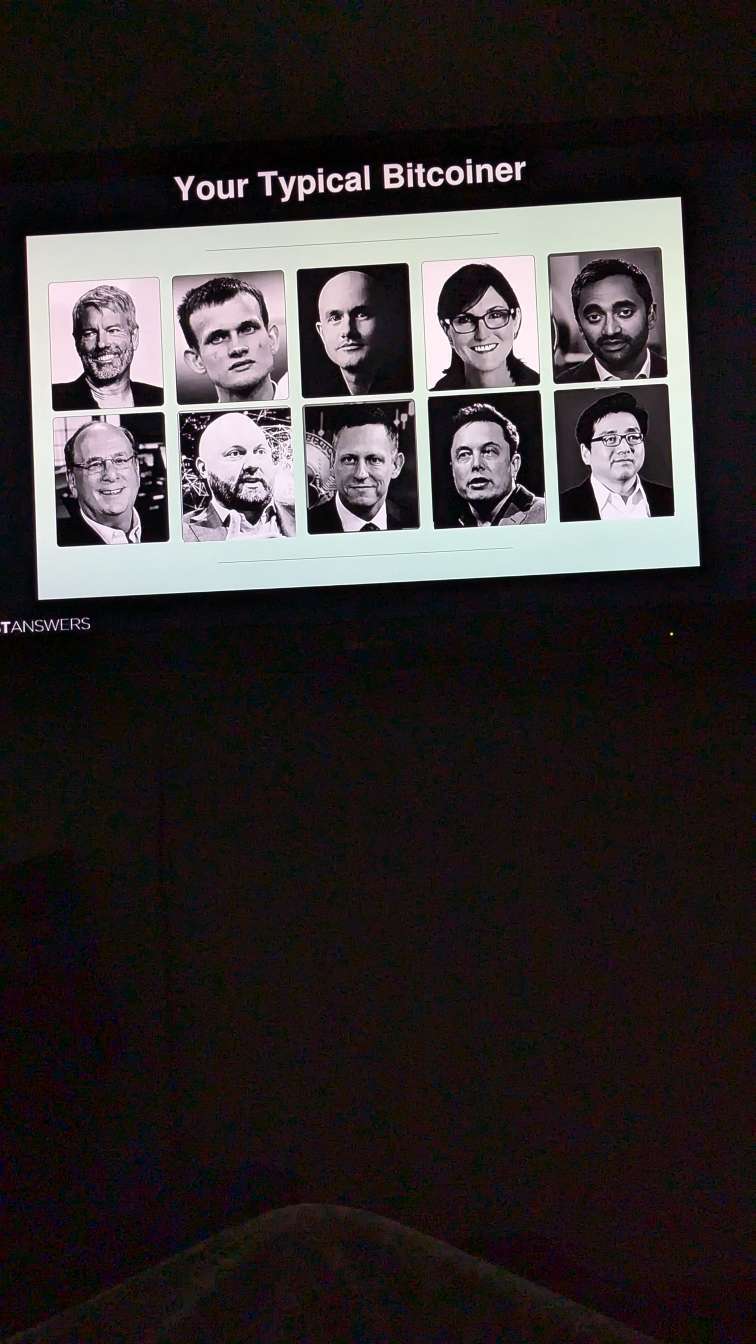
Here's most Bitcoiner's to be honest.
They see something special, but can't really articulately express IT, other than a pure animal instinct that something special has appeared and things have changed.
So let's jump around and make animal noises.
The use of such words, is a message to others see the world as I see it, think like me. If they are Alpha enough and you don't follow their linguistics reprograming of you, then you'll be cringe next.
Just another innocent conversation, taking place on a typical street corner, not dissimilar to yours, in a town or city like where you live. But these are the calls from the minds of the dead, grasping out from the far reaches of the Twilight Zone.

In the Exchange of Pure Human Empathy, the very essence of Love.
When two people are really in Love they exchange all their Truth, a mini consensus algorithm of the mind.
Like Bitcoin being the Exchange of Immutable Empathy to one observer, whereas, other observers see money and nothing else.
Admittedly, some of those see Fiat Currency and nothing else.
Even more reluctantly, few see it as a Commodity Money and nothing else.
Almost zero see Bitcoin is beyond Commodity Money, but aren't able to express it any further than that.
Am I fine with that, is that an example of what you ask, to be at peace with that?
Unfortunately, if everyone was at peace with such things, nothing would change. That's in my opinion anyway, for what that is worth 😆
Peace ❤
06 Title: Barter and the Ratio of Pure Human Empathy Exchange – What is that Magic Sauce?
Introduction
Human economies, long before the introduction of money and fiat currencies, were driven by barter systems, which facilitated the exchange of goods and services directly. What made barter unique was not just the goods being traded but the pure human empathy embedded in each transaction. Barter required participants to intuitively understand the needs of the other party and to negotiate in a way that ensured mutual benefit.
This empathy-driven exchange was more than an economic interaction; it was a social bond that recognised the interdependence of individuals and communities.
In contrast, money and fiat currencies have historically attempted to quantify and replace the empathy ratio inherent in barter. However, no monetary system has ever been able to perfectly replicate or represent the deeply human, emotional, and contextual nature of empathy within barter. This note explores how barter embodied a unique ratio of empathy that money has consistently failed to capture and why this failure has been a persistent flaw in all monetary systems.
The Role of Empathy in Barter
Barter was fundamentally based on human relationships and a deep understanding of the needs of the other party. Whether individuals were exchanging food, tools, labour, or shelter, the successful completion of a barter exchange required an empathic understanding of what the other party needed most and how best to meet those needs.
For instance, in a typical barter scenario where a farmer exchanges grain with a blacksmith for tools, the farmer must consider not only the immediate value of the tools but also the longer-term implications for the blacksmith’s livelihood. The blacksmith, in turn, recognises the farmer’s need for tools to plant the next crop.
This mutual understanding goes beyond the physical items being exchanged there is a recognition of each other’s circumstances, vulnerabilities, and future needs. This dynamic represents the essence of pure human empathy in barter, where the perceived fairness of the exchange is based on more than simple material value.
This emotional and social dimension is key to barter’s success. It required participants to consider the long-term relationship between trading parties, reinforcing communal bonds and ensuring that both parties would return for future exchanges. The exchange ratio in barter, therefore, cannot be boiled down to a simple numerical value; it was contextual and flexible, shaped by empathy and trust.
Defining the Empathy Ratio
While it is difficult to assign a precise numerical value to the empathy involved in barter, we can conceptualise an “empathy ratio” that represents the balance of trust, fairness, and mutual understanding that facilitated barter exchanges. This empathy ratio could be expressed as follows:
Perceived Fairness + Trust + Mutual Understanding
Empathy Ratio = ___________________________________
Material Value of Goods or Services
In this formula, the numerator consists of subjective, human elements such as:
• Perceived fairness: How each party feels about the exchange in terms of equity.
• Trust: The level of confidence that both parties have in each other’s future actions and good faith.
• Mutual understanding: The degree to which both parties understand each other’s needs and situations.
The denominator is the material value of the goods or services exchanged, but this is secondary to the human considerations in the numerator. In barter, the material value of goods alone could not dictate the success of the exchange. Instead, the empathy ratio governed the interaction, ensuring that both parties felt fairly treated and willing to engage again in the future.
This can be simplified to Empathy Supply and Empathy Demand, not a price, but a numerical ratio.
Empathy in Supply
Empathy Ratio = _________________________
Empathy in Demand
Why Money Could Never Capture the Empathy Ratio
The introduction of money was an attempt to overcome the practical limitations of barter, such as the coincidence of wants problem, where two people may not always have complementary needs at the same time. However, by introducing an abstract medium to represent value, the human empathy that underpinned barter exchanges was stripped away. Money became a universal equivalent, allowing goods and services to be exchanged impersonally and often without any relationship between the parties.
This impersonality is at the heart of money’s failure to replicate the empathy ratio. In a monetary system, the material value of a good or service is quantified in terms of money, and the human dimensions of the exchange fairness, trust, and understanding are assumed to be represented by the price. However, this assumption is flawed because money fails to account for the subjective human elements that were integral to barter.
1. Fairness: In a barter system, fairness was negotiated between individuals based on their specific needs and relationships. Money, by contrast, imposes an external valuation on goods and services, which may not reflect the subjective understanding of fairness between parties. A price may be considered “fair” by the market but deeply unfair by one of the individuals involved in the exchange.
2. Trust: Barter systems often relied on ongoing relationships where trust was built over time. Money, however, enables anonymous transactions where trust is no longer necessary. While this increases efficiency, it removes the empathetic foundation that ensured fair treatment in barter exchanges. Without trust, parties in a monetary system can exploit each other or the system itself.
3. Mutual Understanding: The empathy involved in barter meant that both parties had to understand each other’s needs and limitations. In monetary exchanges, this understanding is reduced to price tags. The complex human considerations behind why someone might need a particular good or service are erased by the assumption that everything has a market price.
Fiat Currencies and the Ultimate Failure
Fiat currencies government-issued money not backed by a physical commodity have further exacerbated the failure to capture the empathy ratio. Fiat currencies are detached from any intrinsic value and rely solely on government trust and regulation. This detachment widens the gap between human empathy and economic exchange, as the value of fiat money is entirely abstract, often manipulated by governments, central banks, or market forces.
Unlike barter, which was grounded in real goods and services and empathetic exchanges, fiat currencies are subject to inflation, deflation, and other forms of manipulation that erode the perceived fairness of transactions. As the value of fiat currencies fluctuates, the human element of economic exchange particularly the empathy ratio is lost. In times of economic instability, such as hyperinflation or severe deflation, fiat currencies fail spectacularly to meet people’s real needs, and the trust that underpinned early barter systems collapses.
Moreover, the ability of governments and financial institutions to control money supply, set interest rates, and manipulate currency values is fundamentally at odds with the principles of barter. In barter, exchanges were based on immediate, tangible needs and mutual understanding. Fiat currencies, by contrast, are detached from the real economy and often serve the interests of a small elite at the expense of the broader population. This imbalance in wealth distribution and power further depletes the empathy inherent in barter.
The Persistent Failure of All Monetary Systems
From commodity money (like gold and silver) to fiat currencies, all monetary systems have failed to replicate the empathy ratio that made barter a successful and socially cohesive system. By removing the human element from economic exchanges and reducing all value to a numerical quantity, monetary systems sever the personal connection between the parties involved in a transaction. This dehumanisation leads to a variety of problems, including:
• Economic inequality: Monetary systems concentrate wealth and power in the hands of a few, eroding the fairness and reciprocity that characterised barter.
• Exploitation: Without the empathy that underpinned barter, monetary systems enable exploitation, where individuals or corporations can extract value from others without consideration for their well-being.
• Social fragmentation: The loss of trust and mutual understanding in monetary exchanges weakens the social bonds that barter systems helped to maintain.
Conclusion: The Magic Sauce of Human Empathy in Barter
The magic sauce that made barter so successful for thousands of years was not its efficiency or material value, but the human empathy that underpinned every exchange. Barter relied on a deeply human ratio of fairness, trust, and mutual understanding an empathy ratio that no monetary system has ever been able to capture.
Money, whether in the form of commodity money or fiat currencies, removes the personal connection between the parties in an exchange, replacing it with impersonal, numerical values. By stripping away the empathy that was central to barter, monetary systems have created economic inequality, exploitation, and social fragmentation.
No amount of economic theory can replace the intangible yet powerful force of human empathy, which remains essential for creating fair, sustainable, and meaningful exchanges.
Sources:
• Szabo, Nick. Shelling Out: The Origins of Money, 2002. Link to Article
• Ferguson, Niall. The Ascent of Money: A Financial History of the World, Penguin Press, 2008.
• Graeber, David. Debt: The First 5,000 Years, Melville House, 2011.

If you follow me and I don't push back, does mean I'm not gay?








Bitcoin a Super Power, to use a Human Construct to Exchange Pure Human Empathy via the Immutable Truth of the said Construct.
Lol
Imagine if you understood more.
Not a criticism, I really do want you to think about IT more, because when you do it's the same but from a different point of view.
Anyways exchanging pure human empathy is the best part, it's what love is dude.

Humans are infinity more motivated to seek Immutable Truth and Empathy Abuse than any centralised obstacles that can be cast ahead of them and are few.
The cost of trying to make a lie true in Fiat terms is infinite too and Fiat by it's nature means they have less resources so to do.
Have you ever experience driving on a road with multiple lanes and someone is driving well below the speed limit for that road.
Then as you approach them, they drive upto and beyond the speed limit to stop you.
That's not just a road thing.
It's people pretending that they like Truth, but will abuse IT to be ahead of you.
Now you may be able to understand the reaction to Bitcoin and Nostr and witnesses the same behaviours in those communities too.
I am Anonymous, I have the power to say anything I want to say and I chose Immutable Truth for Pure Human Empathy.
Expect me, Expect Us, We are Legion.

Imagine a Human Construct, where exchange was finite and you aquire more of that exchange. That hodl has such value that you love a hodl it's Immutable Truth close. You don't want to sell it out. You want to hodl IT.
Then you have kids.
You will give it them, free of charge and without condition.
That's the exchange of pure love.
To accept and exchange all without any conditions.
That is another aspect of Bitcoin and there are many many more.
Because Bitcoin is the exchange of Immutable Pure Human Empathy and to do otherwise is a lie.
To Live backwards is Evil.
The exchange of pure human empathy has failed so many times before. It's time to love that Immutable Truth.
Much peace ✌ much Love 💘
🙏

Apologies for my newness here, but who is Ralf and why was Ralf the glue?

Bitcoin exchanges Pure Human Empathy. It's the most protected free speech that has ever existed, not only does it provide a number that is the magic source of human empathy exchange but it also takes energy directly from the Sun our closest Star to start the process of the first confirmation on the BTC Blockchain and protect that within a framework of Immutable Truth.
So Zaps on Nostr a great, but they are never as good as exchanging Pure Human Empathy at a base level.
No criticism, just much love ❤
Evolution is the sum of all possible things to infinity, but, observed at a certain point in time.
05 Title: Native American Barter Was Not Just for Themselves, but for the Animals, Plants, and Environment Too
Introduction
Long before the advent of modern currency systems, Native American societies (upto 15th Century see #1 below) employed various mediums of exchange to facilitate trade, particularly through barter. These exchanges were deeply rooted in the natural environment, with most trade goods emerging from the food chain items such as animal products, plants, and natural materials.
More than a mere economic system, the barter practices of Native Americans were inherently connected to their spiritual beliefs, which emphasised harmony with nature and respect for the animal and plant life around them.
To accumulate beyond what was naturally provided by the environment was not only impractical but also seen as a violation of the spiritual balance that governed their relationship with the earth.
Although economic theorists like Nick Szabo, in his seminal work Shelling Out: The Origins of Money, approached the origins of money through the lens of scarcity, durability, and efficiency, Szabo ultimately fails to recognise a critical aspect of early barter economies: the role of human empathy and the spiritual connection to the natural world that underpinned Native American exchanges.
#1 The process of attacking and displacing Native Americans, which ultimately disrupted their barter trading systems and traditional way of life, began with the arrival of European colonisers in the 15th and 16th centuries. However, the systematic effort by the United States government to forcibly remove Native Americans from their lands and end their traditional ways of life, including their barter trading systems, intensified significantly during the 19th century. I write this with much sadness, as they warned us of the the consequences of destroying and not enjoying their way of life.
This note explores the mediums of exchange used by Native Americans, demonstrating how these items emerged from the food chain and embodied a deeper empathetic relationship between humans, nature, and the environment.
Mediums of Exchange Used by Native Americans
Native Americans utilised a variety of items as mediums of exchange, many of which came directly from the food chain or natural environment. These items were not only practical but also held spiritual significance, connecting the traders to their environment and to the animals and plants that sustained them. Some of the key items used in Native American trade include:
Animal Products:
Furs and Skins (e.g., beaver, deer, bison): Used for clothing and shelter, these were highly valued trade goods.
Meat and Dried Fish: Preserved foodstuffs such as dried bison meat or salmon were traded, particularly during times of scarcity.
Bones and Antlers: Used to craft tools, weapons, and ornaments.
Feathers: Especially from birds such as eagles, these had cultural and ceremonial value.
Shells (e.g., wampum): Shells, particularly along the Eastern Seaboard, were used as currency and for ceremonial purposes.
Stone Tools and Minerals:
Obsidian and Flint: These were traded across vast distances and used for making tools and weapons.
Pipestone (Catlinite): A soft, reddish stone used to create ceremonial pipes, reflecting spiritual significance in trade.
Turquoise: Valued for its beauty and spiritual importance in the Southwest.
Plant Products:
Corn, Beans, and Squash: Often referred to as the “Three Sisters,” these staple crops were traded between tribes in different ecological regions.
Tobacco: A sacred plant, used in rituals and ceremonies, but also traded as a commodity.
Medicinal Herbs and Plants: Plants used for healing were traded across tribes, with knowledge and resources exchanged alongside the items themselves.
Crafted Goods:
Pottery: Practical and decorative, pottery was traded for its utility in cooking and storing food.
Beadwork and Decorative Items: Items crafted from shells, stones, and bones were exchanged for their cultural and decorative value.
Marine Products:
Dried Fish and Shellfish: Coastal tribes engaged in trade with inland tribes, exchanging marine products for other goods.
Fishing Nets and Hooks: These tools were critical for subsistence and were exchanged between tribes along waterways.
Shelter Materials:
Animal Hides: Used for tents, clothing, and bedding, these were critical items in trade.
Wood and Reeds: Used for constructing homes and making baskets, these materials were exchanged based on the ecological resources available to each tribe.
Spiritual and Ceremonial Items:
Spiritual Charms: Carved items, totems, and other spiritually significant objects were often exchanged between tribes as part of ceremonial trade.
Barter, the Food Chain, and Empathy for Nature
The mediums of exchange used by Native Americans largely derived from the food chain—a fact that profoundly influenced the way they approached trade. These exchanges were not merely transactional; they were rooted in a deep empathy for the natural environment and an understanding of the delicate balance that must be maintained between humans, animals, and plants. To take more than what was needed from nature was to invite disaster, both in the form of food shortages and in spiritual disharmony.
1. The Food Chain as the Foundation of Exchange
The items exchanged by Native Americans were often perishable or connected to the natural cycle of life. For example, animal hides and meat could only be sustainably sourced from healthy animal populations. Overhunting would not only deplete these resources but would also violate the sacred relationship between humans and the animal spirits.
This deep respect for the environment ensured that barter was conducted in a way that maintained balance, rather than exploited nature. Accumulation for its own sake was discouraged, as it threatened both the material resources and the spiritual equilibrium of the tribe.
2. Spiritual Beliefs and the Barter System
For Native Americans, spiritual beliefs played an integral role in the barter system. Many tribes adhered to animistic beliefs, viewing animals and plants as having spiritual essence. For example, the Plains tribes saw the bison as a sacred animal, central not only to their economy but also to their cosmology.
To barter bison products was to engage in a transaction that respected the spirit of the bison, ensuring that the animal’s sacrifice served the needs of the entire community. Wasting or over-exploiting these resources was viewed not only as impractical but also as a spiritual transgression.
This sense of spiritual responsibility extended to all areas of life. The gathering of plants for medicinal or ceremonial purposes was conducted with respect for the plants' spirits.
Barter exchanges of tobacco, for instance, were laden with spiritual significance, as this plant was considered sacred and essential for maintaining a relationship with the spirit world.
Through this lens, we see that the exchange of goods was not just an economic transaction but a moral act, driven by empathy for the plants, animals, and environment that sustained the community.
3. Human Empathy in Environmental Exchange
The barter system among Native Americans was underpinned by a strong sense of empathy for the natural world and for the community's needs. Empathy was not limited to human interactions; it extended to the animals and plants that were part of the ecosystem.
The interconnectedness of all living beings meant that barter had to be conducted with restraint and understanding. If a hunter took too many animals or a gatherer collected too many plants, the ecosystem would suffer, and the entire community would face shortages. This empathy-driven approach to barter ensured that trade was sustainable and that resources were shared equitably.
Nick Szabo and the Missed Recognition of Empathy in Exchange
In his influential article Shelling Out: The Origins of Money, Nick Szabo examines the transition from barter to money, emphasising the role of durable goods such as shells, beads, and metals in facilitating trade. Szabo discusses the importance of scarcity, durability, and the difficulty of counterfeiting as factors that made these goods effective mediums of exchange.
However, Szabo ultimately fails to recognise the empathetic and spiritual dimensions that underpinned early Native American barter systems.
Szabo’s analysis, rooted in Austrian economic theory, focuses on efficiency and material scarcity while neglecting the cultural and spiritual significance of trade items. By doing so, Szabo overlooks the fact that barter among Native Americans was not simply a way to overcome the limitations of the coincidence of wants, but a practice deeply tied to the empathy felt for the natural environment and the animals and plants that formed the foundation of their economy.
The Native American barter system was about more than just trading goods; it was about maintaining balance and harmony within the ecosystem, something that Szabo does not address.
Conclusion
The barter system of Native Americans, rooted in items from the food chain, was an inherently empathetic practice that reflected not only concern for human needs but also for the animals, plants, and environment that sustained them.
This balance between human trade and natural preservation was maintained through spiritual beliefs that emphasised respect and reciprocity with nature. To over-accumulate or exploit these resources was not only impractical but also a violation of their spiritual connection to the world around them.
While Nick Szabo’s Shelling Out provides valuable insights into the origins of money, his analysis ultimately misses the crucial role that empathy played in early barter systems. By focusing on material scarcity and efficiency, Szabo fails to acknowledge that Native American barter was about more than just economics it was about fostering harmony with the natural world and ensuring that trade benefited not only humans but the entire ecosystem.
The mediums of exchange used by Native Americans worked well precisely because they were rooted in the natural cycle of life and reflected an empathetic relationship with the earth.
Sources:
Szabo, Nick. Shelling Out: The Origins of Money, 2002.


Think about a Pure Empathy being exchanged at the base level and how that then moves up. It's what Money could never have been. Bitcoin is beyond Money, it's the magic number that rates the exchange of Empathy. You can read my bookmarked notes, maybe that will help you make more sense of your own questioning.
Hope that helps?