
Last year, nostr:npub1xeejes6lu4scttcmzytq5wfad3e6rljpmhc3snqs89xz3jjavfasnuz3mx posted an interesting thesis drawing a connection between the post-2008 money printing and relative enrichment of Dem congressional districts. A clear example of the Cantillon effect in action. Bitcoin's recent emergence in the US political spotlight is initially being embraced by the right and hesitation (or outright hostility) on the left.
If this trend continues and a clear separation becomes entrenched, could this translate into the inverse effect? I suspect over the next decade or two, those on the right would be (on balance) more likely to save in Bitcoin, benefitting from its appreciation and returning wealth to those who adopt it.
Thoughts?


The comments section of the article is pile of drivel, partially amusing but mostly just sad. Fear not...one out of hundreds is one of us, with a nice shout out to Lyn's book 😉

Minding my business today... turned the corner, and saw one of these up close driving around the neighborhood today. That was something.

I like the coin a bit more every day.

nostr:npub1a2cww4kn9wqte4ry70vyfwqyqvpswksna27rtxd8vty6c74era8sdcw83a, as usual, you called it.
"The thing I'm most disappointed about - there was not a single person from the other side of the aisle at the conference." - Zach Bradford, CEO of Cleanspark. Bloomberg TV today.
As a bitcoiner, and a shareholder, I'm disappointed by that abject blindspot. We all make mistakes, but those of us closely paying attention and in active leadership roles can do much better. It'd be great if he corrects his misstatement on such a big platform.
nostr:note1ftsqae3mq3xnpn5k45jkggchw9tpqw58f2rmweur6jltctqmet4qfj4sj5
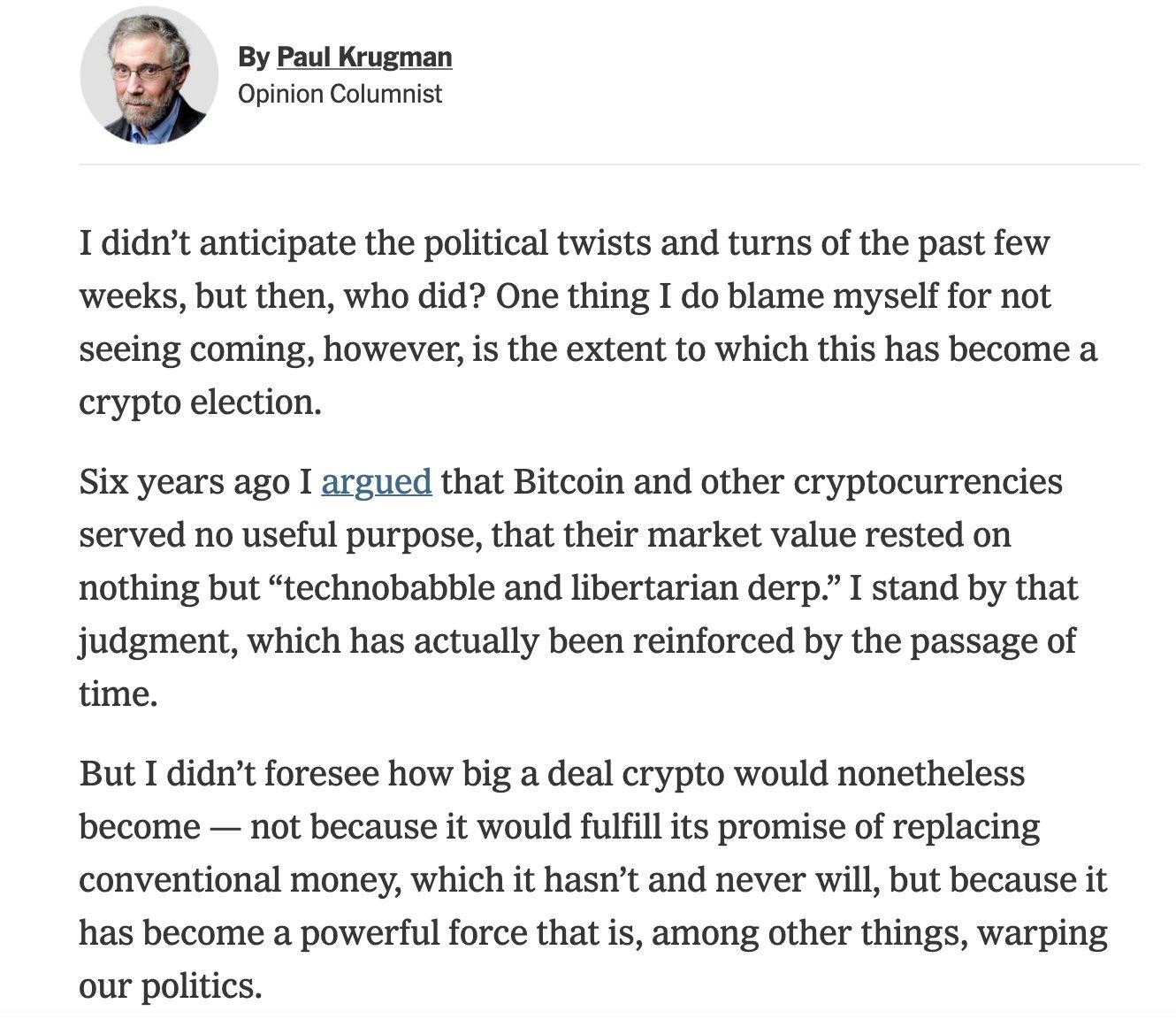
Just spent way too long, deep in the bowels of the NYT comments section of Krugman's latest piece that included bitcoin. It's really something to behold, the degree to which that space resembles an overgrown monocrop. Zero diversity of opinion, no balanced views, zero positive or even neutral comments about bitcoin.
Love you all, here on nostr. 🫂

It's late July 2024, and Paul Krugman has blessed us with another scintillating piece of analysis:


The transistor was invented in 1947. I suppose we should have closed up shop on that lost cause by 1962.

The ally of truth isn't intelligence. It's humility.
...and in the sequel, still no mention. Strike two!

+1 nostr. Here, this wouldn't even be a debatable point, since you can't delete your posts (notes). nostr ftw. errors immortalized. 💪

NYT article covering the DJT and RFK appearances at Bitcoin 2024 conveniently forgets to even mention that Dem representatives Ro Khanna and Wiley Nickel were speakers.
"I'm going to recognize that Bitcoin is for human rights. Bitcoin is about freedom." - Ro Khanna
Too much of an inconvenient truth for the NYT?

US-based TV coverage of the Olympics has been circling the drain for the past few decades. It's gone from tolerable to barely tolerable, to outright annoying, with a collage of personal-interest stories and gushing commentary that's so insanely cringe.
Maybe it's just a uniquely American thing to want to manufacture some patriotism through the lens of the individual's story. Instead of letting the competition play out and drama speak for itself, it's turned into a series of commentary, stats, rah-rah cheerleading, and over-the-top personal stories.
Like, can we just watch an minimally processed feed of a competition without cutting in with a personal sob story about someone's family or when they lost their first tooth?
Then they rolled out this feature today... 🤦♂️

Having just spent the past few weeks visiting family in Argentina, this phenomenon is clearly visible, with all unified behind the Albiceleste (national soccer team). Plenty of other shit and chaos to go around and argue over, but at least all have that unquestionable unifying element to go along a strong cultural bond. Hard to replicate that degree of unity.
🪧👈😂

Six blocks since he was supposed to appear on stage... tick tock...
“All our heroes are retarded” 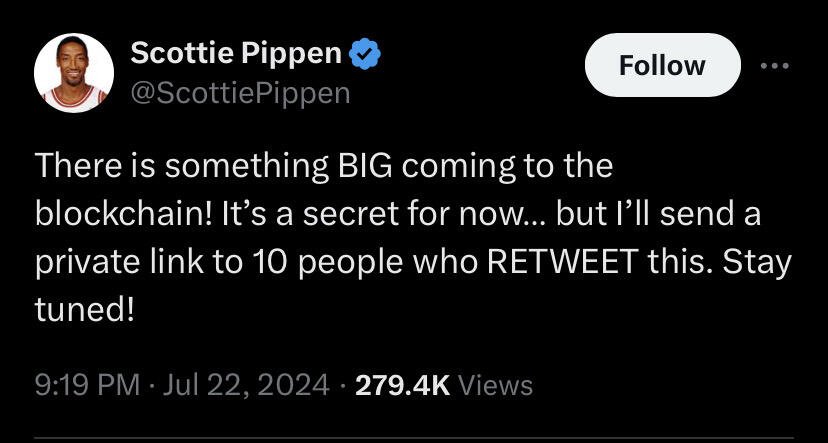
Great article! A balanced overview and very accessible. One thought that came to mind while reading section two was regarding friction. It might be helpful to include a brief discussion about how reducing friction may in some cases not be desirable. After all, friction, much like a tool is neither good or bad, but does greatly affect the way we interact with the world. For example, are there instances where frictionless payments via social graph might not be desired (e.g. political donations, unwanted influence or conflicts of interest, inability to refuse payment, etc.)? Or are these edge cases outweighed by the broader benefits?