
Absolutely. But for relays relaying a ton of users I have to expect that my notes may not persist indefinitely.
Yes, for users that worry about theit notes being deleted, running their own relay is a solution.
I responded to claims that notes are persistent. They might be, we don't know that yet.

Agreed. Then there is the problem of a single private key. If that key is compromised, we are no longer in control over our identity. This is particularly problematic for companies that need to share their private key with several people.
If Nostr were to have two private keys, one of them a master key with admin capabilities for the identity, the protocol would need a new architecture.
As a result, whenever a Nostr spin-off architecture solves this problem, every company, corporation and security-minded user will migrate to the protocol with higher security. That's just how things work.
Sure, but storage is costly.
We don't know yet how long we can expect Nostr notes to last. I have some Nostr notes that are 1.5 years but for all I know they could be deleted tomorrow.

When I joined Nostr it was said that we shouldn't expect notes to last longer than 6 months, due to relays needing to free up space regularly.
I like the idea of notes surviving for 10+ years but I'm not sure how realistic that is.

On twitter I have to compress ideas into a cryptic format, cut away some nuances and sometimes accept an approximate result that I'm not fully happy with, just because I can't cram in the full meaning into the character limit.
On Nostr I need to restrain myself artificially and brevity becomes a really flexible term.😄
I'm zappable. Will spread around the zap 23 times in 21 sat increments.
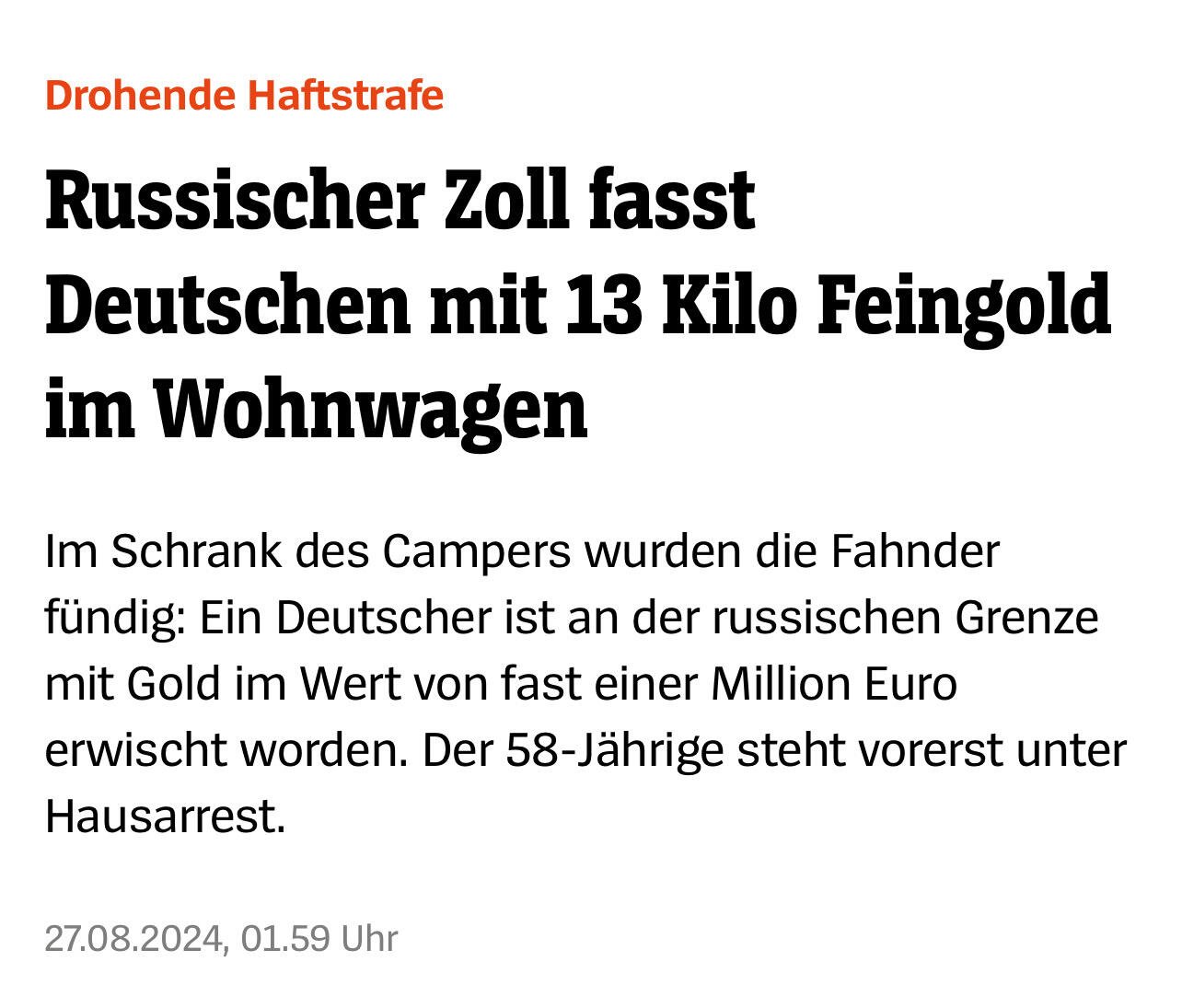
Hopefully not a German with 13 kilograms of hidden gold watches**.
**Pulp Fiction reference.
Aristotle: art and poetry, based on his book Poetics. (Repost from early 2023)
The below quote is from Will Durant as he attempts to encapsulate Aristotle's view on art:

When I came across this statement from Will Durant I decided to re-read Aristotle's Poetics to see how representative it was.
Aristotle studied at Plato's Academy in Athens, which brings continuity from Socrates -> Plato -> Aristotle.
Plato:
"And when someone honors beauty more than virtue, this constitutes nothing other than a real and thorough dishonoring of the soul" // Plato, Laws, Book B, 727d.
Socrates and Plato held an often times contemptful view of the poet or artist, expressed on several occasions in Plato's Republic.
This is likely because the artist was viewed as an imitator, in the negative sense. Reality is of course of higher value than any imitation. We might add to this that Socrates was sometimes ridiculed by contemporary poets.
Another point of irritation for Socrates was when poets celebrated and waxed sentimental over unethical men and portrayed them as heroes. It is possible that this latter case was Socrates' primary annoyance with the art of poetry.
Aristotle:
"What aims at reality is better than what aims at appearance".
// Aristotle, Rhetoric, Book I, 1365-b.
While there is overlap here between Aristotle and Plato there is also a clear divide. Plato is mainly concerned with ethics whereas Aristotle is more fascinated with analysis and substance. The ethics is obvious to Aristotle, what interests him even more is the practical considerations that can be made.
Aristotle continues:
"What a man wants to be, is better than what a man wants to seem (to be), for in aiming at that he is aiming more at reality".
Here Plato would focus on the ethical reasoning of 'being rather than seeming', while Aristotle is primarily occupied with the alignment to reality. For Aristotle, actions define us and it is through action that we realize our potentials. This in turn requires aims that are followed through - a fully practical process that does not involve pretense, but instead work and sweat. The point for Aristotle is not to spend time despising others for being unethical, but to inspire the proper practical achievement.
"And it is also natural for all to delight in works of imitation."
/ Aristotle, Poetics, Chap 3, 1448-b-9
Aristotle's remark here relates to delighting in realistic representations of things. He points out that we learn something from observing a realistic imitation.
Aristotle continues by observing that 'learning' is the 'greatest of pleasures'. He expands to say that 'gathering the meaning of things' is a part of what he is referring to by learning.
There is in Aristotle a focus on substance that isn't isolated to exterior appearance, but rather to attain some form of understanding of what we are observing.
In the artform of Tragedy, Aristotle counts six parts, where he highlights the Plot.
"And again: the most powerful elements of attraction in Tragedy, the Peripeties and Discoveries, are parts of the Plot".
/ Aristotle, Poetics, Chap 6, 1461.33
He continues:
"We maintain, therefore, that the first essential, the life and soul, so to speak, of Tragedy is the Plot".
Aristotle then lists Characters as the second most important part of the Tragedy art form:
"Characters come second - compare the parallel in painting, where the most beautiful colours laid on without order will not give one the same pleasure as a simple black-and-white sketch of a portrait".
There is in Aristotle a focus on actions, meaning and realism. Beautiful, decorative details are less important than capturing the true essence of something.
It is the plot and characters that makes the story significant to us, not the dramaturgical expressions on a stage; the Spectacle.
"The Spectacle, though an attraction, is the least artistic of all the parts, and has least to do with the art of poetry. The tragic effect is quite possible without a public performance and actors."
/ Aristotle, Poetics, Chap 6, 1450.b.16
"From what we have said it will be seen that the poet's function is to describe, not the thing that has happened, but a kind of thing that might happen."
/ Aristotle, Poetics, Chap 7, 1451.a.35
There is attention to realism in terms of artistic plausibility, while not necessarily an exact imitation.
He continues:
"Hence poetry is something more philosophic and of graver import than history, since its statements are of the nature rather of universals, whereas those of history are singulars".
Art builds upon timeless principles that can be understood intuitively and metaphorically, whereas history is locked into specifics.
"It is evident from the above that the poet must be more the poet of his stories or Plots than of his verses".
Again, Aristotle is looking at the meaningful significance of actions, plot and characters, rather than the exact outward format of the verse.
"Of simple Plots and actions, the episodic are the worst. I call a Plot episodic when there is neither probability nor necessity in the sequence of its episodes".
Improbable elements in a story are serious flaws for Aristotle. This is also an extension of his realism.
"The Plot in fact should be so framed that, even without seeing the things take place, he who simply hears the account of them shall be filled with horror and pity at the incidents."
/ Aristotle, Poetics, Chap 14, 1453.b.3
This is worth some reflection. Aristotle attempts to identify some kind of markers at this point by which we can identify a gripping plot. In short, it must stand on its own legs. This is yet another example of Aristotle's focus on the inner workings of a story or plot over the outward expression.
His realism is attuned to the inner, psychological motivations and plausible depictions of these, rather than merely ornamental or visual effects.
"The tragic pleasure is that of pity and fear, and the poet has to produce it by a work of imitation".
This perfectly encapulates Aristotle's positive use of the term imitation. The imitation he is talking about is an alignment with realistic internal realms, and how those can extend to the audience and create a meaningful experience.
"A likely impossibility is always preferable to an unconvincing possibility.
The story should never be made up of improbable incidents; there should be nothing of the sort in it."
/ Aristotle, Poetics, Chap 24, 1460.a.26
"Any impossibilities there may be in his description of things are faults.
But from another point of view they are justifiable, if they serve the end of poetry itself - if they make the effect of either that portion of the work or some other portion more astounding"
(1460.b.23)
This is where Aristotle shines, as he's playing the devil's advocate against his own argument.
While he is not yielding from his fiercely anchores principles, he is offering an alternative solution. If the artistic expression benefits it is possible depart from these strict guidelines.
At the end of the day, a compelling result is what matters.
In conclusion, I think it's fair to attribute the quote to Will Durant, as an interpretative summary of Aristotle on art. The inward significance is clearly highlighted in Aristotle. With some nuances.
Thank you for reading.
#Aristotle #Plato #Socrates #Writing #Plot

Nowadays 21 is a normal zap but in the beginning there were many 1,000 - 20,000 sat zaps.
Kinda cool to think about that 1 sat will be worth more than $1 at some point.

I'm on Amethyst (Android).
Great overview Logan.
When the quest for truth and reason is abandoned, when the concept of free will and individual sovereign decisionmaking is replaced by determinism and the belief that humans are merely a sum of their inputs, the logical outcome is an ideology that values power over truth.
Those that believe that they cannot change the minds of others via truthful argumentation will arrive at the conclusion that the power to set the standards is the only method of attaining ethical behaviors; via nudging and programming.
CBDCs and social credit scores is the logical destination of determinism, since there is an inherent assumption that the only realization of ethical behaviors is an external re-programming with values and ideals that have been stamped by the bureau as correct and appropriate.
Political correctness emerged as an assumed path to an ideological paradise where all injustices are believed to be conquered, if only, and this minor detail aside, if only everyone accept and practice the enlightened re-programming of political correctness, communicated by central planners and received at the mountain of higher wisdom, to achieve this necessary utopia.
Central planning being the root of totalitarianism didn't stop this quest for absolute power, perhaps because the imagined worst case alternative was the absolute power of some other group with a worse ideological framing.
Yet now we are witnessing the emergence of decentralization as a potent force involving game theory mechanics.
Property rights for all could suddenly be attained at a protocol level. Jurisdictions will now have to compete for capital and resources by providing and securing individual liberties.
The game has changed in favor of allowing liberty, private property rights, sovereign individuals and the decentralized quest for truth to emerge as a greater movement.
The future is determined by individuals, not by a centrally planned utopia designed by committees. A world where all risks are eliminated is an existence where all liberties have been dismantled.
Give me a life of risk and infinite possibilities rather than a prison of bureaucratic intentions.

Good ideas and interesting project you have going.
I was considering a secondary form of hashtags: funded hashtags.
Funded hashtags would be funded with let's say 10 sats. This would act as a cost barrier that reduces spam. Perhaps the relays that pick up notes with funded hashtags could gain a percentage of the sat funding.
While I hate pay-to-win features, spam will become an increasing problem and if the cost for funded hashtags is not expensive it might work.
I understand their strategies which is why I focus on the UN Agenda 21. It's not hard to understand once you study the code (Agenda 21) and put your mind into their shoes.


From a European perspective, I think that the establishment found it easier to implement the UN Agenda 21 under the banner of Social Democracy + alliances with Green parties.
As a result there is a general overlap between social democrat parties and the establishment, vs populist parties and anti-establishment movements.
This makes sense when we consider taxes, schooling, environmental policies, property rights, media control, moneyprinting in exchange for votes et cetera. These are all easier to achieve from a social democrat platform, even if there are authoritarian overlaps with the more extreme religious conservatives.
Yup.
Add that we would need at least two private keys to have proper control over our Nostr identity.
One key for regular login/signing and the master key for admin privileges that override the general key in case our regular key is compromised.
I never understood why the Nostr devs decided for risking a single point of failure.

This is just irrational.
Muted for being controlled opposition.

I don't see any specifics in his timeline.
Probably a good approach to not announce the destination.