


It's only a bubble if it eventually pops

When you don't get burned, pretend you did. Information is power.

Cities are where the nodes are! http://meshtastic.liamcottle.net
Oh, I didn't actually answer your question: laptop memory will always be limited because DRAM needs constant refreshing. Every GB installed reduces battery life.

Right. Nvidia is ahead because they have higher memory bandwidth as well as computation. Apple is winning in the efficiency corner, which is how we get 4B models on phones (Apple Intelligence, but also LLM Farm). All of it is pretty fantastic, and I'm going to surf this wave as long as I can.

I remain squarely in the “No Edit” camp.
I prefer the authenticity of un-edited notes. There’s something raw about them, especially in contrast to the manicured, artificial feel of most social* media nowadays (which means we should probably expect Gen-Z users to prefer No Edit, as well).
For one, typos are not that big of a deal, at least in the microblogging context. If anything, they’re endearing. And I hadn’t even considered the attack risk that Derek is pointing out, before today.
Furthermore, retracting a bad take with honest accountability is a lot more meaningful than editing or hiding something you wish you hadn’t said.
I don’t imagine a “maximum number of edits” would really gain traction, either. Who picks the number? Do we increase the blocksize (er, I mean, edit count) when more users join the network?
It just feels antithetical to the “freedom and user choice” ethos of Nostr.
*Outside of social media, it’s possible that other event types, such as long-form notes, or events used for things like healthcare in nostr:npub1hqaz3dlyuhfqhktqchawke39l92jj9nt30dsgh2zvd9z7dv3j3gqpkt56s's NosFabrica, could benefit more from editability.
But even then, there would be issues. One strength of Nostr is that (unlike Bitcoin) we don’t require universal consensus: different relays hold different content, and that’s okay. It’s okay primarily because we know that “1 nost = 1 nost”. This flexibility makes nostr more dynamic and scalable, but it depends in part on No Edits.
Edits would not be universally implemented, so what happens when some clients and some relays implement edits? How does a user verify that a specific signed event is actually the right version? How do relays stay up-to-date, especially if some relays are No Edit on principle and insist on storing and serving the original (or all versions) of a note?
For the more “formal” use cases, perhaps implementing multiple versions of a note could work, where a new (“edited”) note is signed with a reference to a previous version. This would be backward-compatible with clients or users who consider themselves “edit disrespectors” (ha).
If some clients do choose to honor edits, they should give their users the option to ignore the feature, and simply display a so-called “edited note” as a second, separate event with a reference to the original note.**
Because that’s the reality of what transpired, and truth is good. It’s like nostr:npub1rqe7upz9nl4jef9wdyx47vfxnt2g3357tl5s8fpt2vkxwlz2s9cq9w3jdt said: no edits in life.
**Having not reviewed the edit NIP (and I assume there is at least one), it’s possible that this is exactly how it’s intended to be implemented. But even so, it seems clear to me that the drawbacks of editing easily outweigh the benefits.
No Edits also incentivizes us to write a little more carefully, a little more thoughtfully — a habit that is woefully lacking in traditional social media.
To me, it’s an easy choice. I love the authenticity of unedited notes.
I’m grateful that the nostr:npub18m76awca3y37hkvuneavuw6pjj4525fw90necxmadrvjg0sdy6qsngq955 team has (at least historically) viewed edits this way, as well. I’ll continue to vote with my time, attention, and sats, through my choice of client, and by requesting every version of everyone’s notes from every relay.
All of that said, I would appreciate the opportunity to read a well-laid-out argument in favor of implementing edits. I believe in what I’ve written, but it doesn’t mean I’m right. (“Strong opinions, loosely held”). I could be missing some key technical aspects of Nostr that would satisfy the objections I raised, and I’m here to learn whenever I can.
I want Nostr to win (whatever that means), so I’m a fan of nearly any good-faith efforts to #grownostr 🫡 nostr:note1e4xlux4r4gda2sq50yn5tm8gl2xpq4906xtud72yeuw74c542ggs0xmfpf
The really tricky part is when relays implement edit and delete. Then it's a weird combination of client and network choice. Maybe relays that don't support censorship, err, corrections, will become more popular? Though relays aren't fairly compensated right now, so I suppose they get to make that choice.
Agreed, and I run both for different things. I'm not personally there yet, but no one expects to run a 405B model on unified memory.
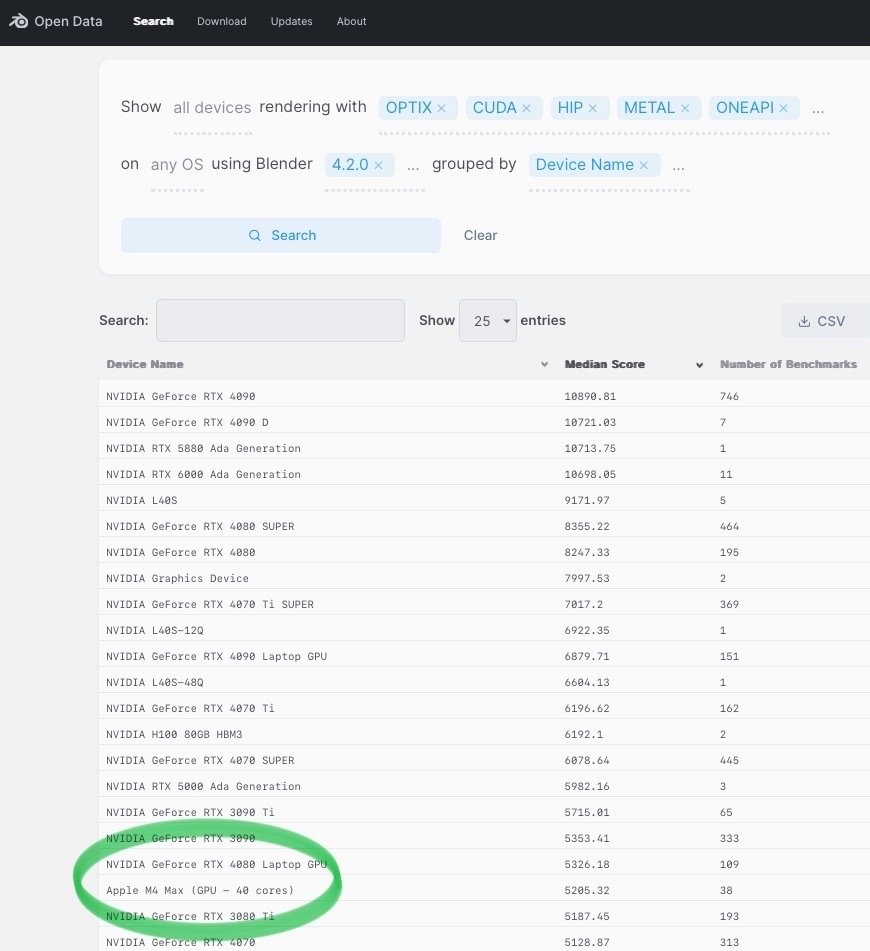
Unified memory is amazing, but it's more expensive per GB and slower at inference than a box full of used 3090s.
It's been a long time since local metal mattered.
Is there already a bot that follows prominent people and republishes their deleted events? The most absurd thing is that anyone can verify that the bot is telling the truth by using the hash in the deletion event.

How would you know?

nostr:nprofile1qy2hwumn8ghj7un9d3shjtnddaehgu3wwp6kyqpq2akj8hpakgzk6gygf9rzlm343nulpue3pgkx8jmvyeayh86cfrusf8t2fq that simply isn't true, though.
If you self-host, your content can be seen. So anyone can take a copy. Nuke your disk if you want, but the Internet Archive will still have copy. As will anyone who hit ctrl+s.
I frequently make that same argument about NIP-09. If you've shared something, you should forever assume someone has access to it. But if you aren't self hosting, everything that you do should be considered shared. At least with local files and code there is some semblance of privacy. Most don't understand this.
🆕 blog! “Self Hosting is an Unhelpful Term”
Mathew Duggan has a brilliant post called "Self-Hosting Isn't a Solution; It's A Patch". In it, he (correctly and convincingly) argues that compelling people to run their own computer services is a complex and distracting crutch for the current problems we face. It's expensive to self-host, there are moderation pro…
👀 Read more: https://shkspr.mobi/blog/2024/11/self-hosting-is-an-unhelpful-term/
⸻
#fediverse #ReDeCentralize #SocialNetworks
Literal self-hosting is important because without it you don't have any real control. Yes, laws can compel cooperative companies to treat you well, as long as someone is enforcing it, and there aren't bugs. Yes, it's important that we have these for things which cannot be self-hosted. But if a self-hoster wants to be forgotten, they can microwave the hard drive and have no doubts about whether the data was deleted.
I predict self-hosting will become much more popular as we get local AI's that are able to deal with the complexity. Or, we use them to build simpler systems that don't require so much complexity. What if the AI betrays you? Well, run three different ones that watch each other.
Self-hosting isn't an "solution", it's a philosophy.
The aim of any efficiency improvement should always be 10x. You may fail to find a way to accomplish this, but true failure is accepting additional complexity without actually solving the problem.

Honesty is too complex to be a requirement. Having people discredit your work is out of your hands. I'm not actually asking for our history books to be more accurate, because this is implausible. I only wish that people do enough of their own study to avoid being played. It's a minimal goal with properly aligned incentives, and yet a sadly high bar compared to the status quo.

Only someone actively studying history is a historian. Anyone can be one, but few actually are.
The world needs more historians

I would go one step further and suggest that when someone is throwing mud and demanding action towards a specific choice, this is evidence that the choice is the wrong one. Emotion can be a signal of commitment, but a brief survey of history demonstrates it can easily be used to make people to act against their own best interests.
Good choices tend to be based on well reasoned arguments that recognize root problems and the compromises of a decision. If something is important, it's worth putting in the effort to make good decisions.