


If you can become aware of the miraculousness which I symbolize, you can help save the freedom mankind is so unhappily losing.


The Inevitable Bust: Why Economic Booms Contain the Seeds of Their Own Destruction
My latest from the #Mises Institute
https://mises.org/wire/inevitable-bust-why-economic-booms-contain-seeds-their-own-destruction
Austrian business cycle theory carries several critical implications that remain highly relevant today. First, it reveals how inflationary booms plant the seeds of future busts by massively distorting investment incentives and price signals economy-wide. When interest rates are artificially lowered, malinvestment spreads rapidly across all sectors, initiating unsustainable projects that lack real underlying profitability.
Second, the theory demonstrates that the subsequent bust is unavoidable and results directly from the distortions, malinvestment, and overconsumption inherent in the preceding boom. The bust is the necessary market correction to the artificial boom. This implies that policymakers cannot possibly prevent recessions by reflating busts with even more credit and stimulus as this will only pile new distortions upon old ones.
Third, the theory shows that there are no shortcuts around the bust. Liquidation of malinvestment and realignment of the production structure are necessary to restore the economy to stability and sustainable growth. An additional stimulus cannot circumvent this painful but curative process.
Fourth, the bust should be embraced or permitted to run its course as the economy’s natural healing process, not derided as the problem itself. The bust is the solution to, not the cause of, economic turbulence.
Finally, the Austrian framework proves that policies that aim to continually inflate booms inevitably cause tremendous harm. Cheap credit distorts pricing signals and incentives, leading to systemic misallocation of resources.
These lessons remain highly pertinent in the present day, as decades of ultraeasy money have possibly inflated the largest asset bubble in modern history. Policymakers face continued pressure to reflate the bubble to avoid economic fallout. Yet, Austrian theory offers a stark warning that market forces cannot be ignored perpetually. Artificially stimulated booms only set the stage for even harsher busts when the unavoidable correction finally culminates. Therefore, understanding the seeds of collapse inherently embedded in inflationary booms provides urgent insight into our precarious economic trajectory. Despite its political unpopularity, the economic downturn remains an inescapable presence on our journey, a path lined with reckless enthusiasm and the false promise of easily accessible credit.
The Inevitable Bust: Why Economic Booms Contain the Seeds of Their Own Destruction
My latest from the #Mises Institute
https://mises.org/wire/inevitable-bust-why-economic-booms-contain-seeds-their-own-destruction
According to Austrian theory, systematically liquidating the unsound investments and errors made under the influence of monetary illusion is an unavoidable correction. To blindly blame the bust for exposing the economy’s excesses is akin to blaming the hangover rather than the intoxication. The distortions of the boom must be purged and the errors corrected.
Seeking to prevent the bust via renewed inflationary stimulus is much like avoiding sobriety after an unrestrained bender. The necessary correction will only grow more severe if continually postponed and amplified by additional distortions that keep fundamentally unsound ventures artificially alive. The recession serves as the natural corrective phase, aimed at reestablishing a foundation of sound economic principles following the prior era of misguided optimism induced by artificial credit expansion.
The bust plays an essential role in eliminating monetary distortions by realigning prices, closing unprofitable enterprises, and redirecting wasted resources into sectors genuinely aligned with consumer demands rather than allocated based on temporary monetary inflation. This painful but necessary process clears the way for balanced, sustainable growth founded on a framework of reality rather than fiscal intoxication and inflationary misallocation.
Policymakers often deride recessions as the source of economic problems and attempt to artificially resuscitate the economy via renewed inflation. Yet, according to Austrian theory, the bust is in fact the solution, not the problem itself. The true problem was the extensive distortions and malinvestment induced by the artificial boom. Efforts to continuously reinflate bubbles through monetary intervention only worsen matters enormously and plant the seeds for far more chaotic crises in the future when the correction is finally allowed to fully run its course.
The Inevitable Bust: Why Economic Booms Contain the Seeds of Their Own Destruction
My latest from the #Mises Institute
https://mises.org/wire/inevitable-bust-why-economic-booms-contain-seeds-their-own-destruction
The Austrian business cycle theory argues that efforts to artificially suppress interest rates below natural market levels fuel an unsustainable economic boom. When the inflationary credit expansion inevitably slows, the façade of illusory prosperity unravels as the widespread malinvestments and errors made during the boom are exposed and must be corrected. This bust phase acts as an unavoidable period of painful but necessary realignment and market correction.
In contrast to mainstream beliefs that monetary authorities can successfully iron out business cycles via interventionist policy, the Austrian school of thought recognizes such efforts to stimulate growth as inherently counterproductive and ultimately destructive. Inflationary booms inevitably sow the seeds of their own destruction and systemic collapse. Fear the booms, not the busts.


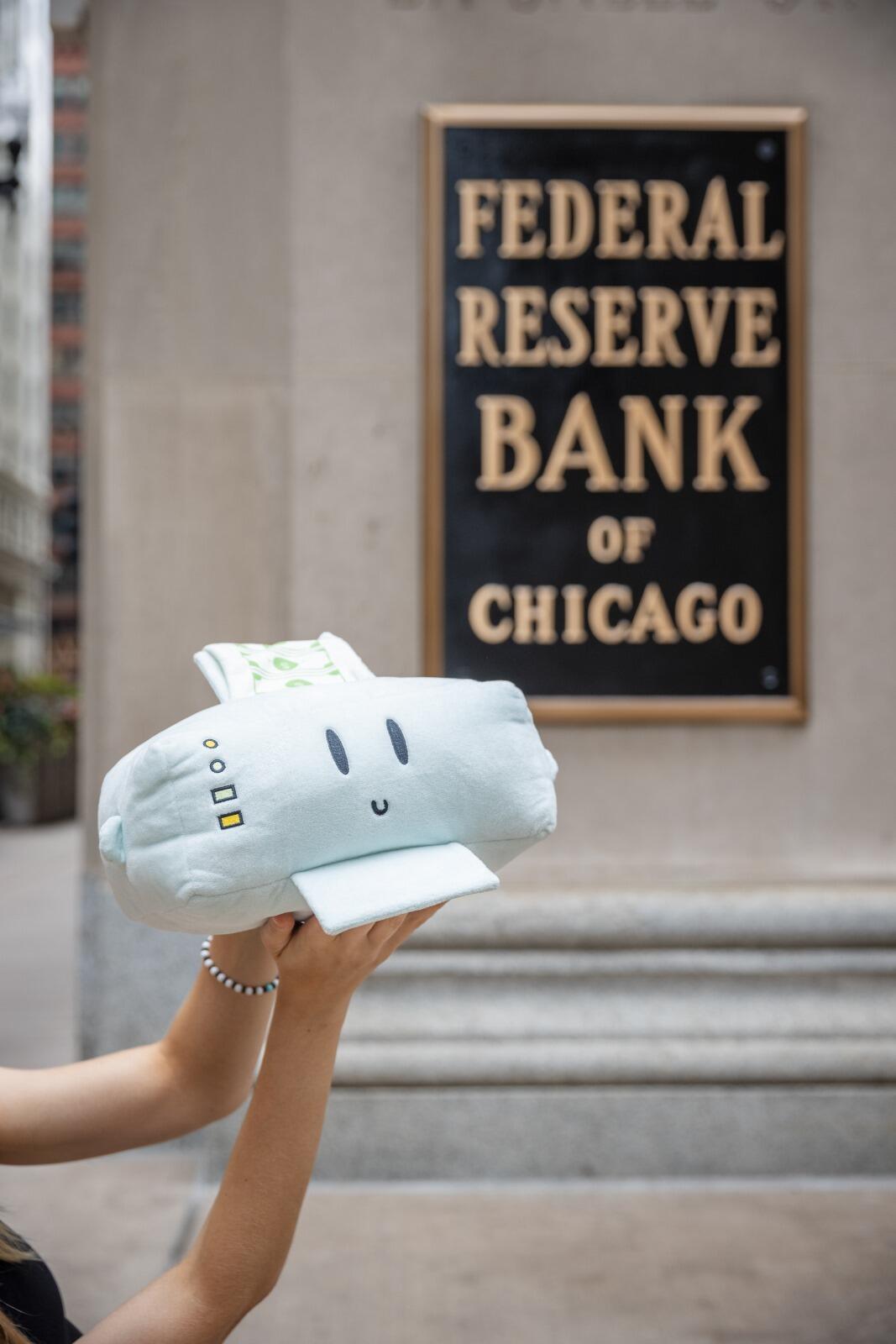


There is a safe house for him right down the street at Chicago BitDevs
The Inevitable Bust: Why Economic Booms Contain the Seeds of Their Own Destruction
My latest from the #Mises Institute
https://mises.org/wire/inevitable-bust-why-economic-booms-contain-seeds-their-own-destruction
The recurring cycle of economic booms followed by inevitable busts has remained a puzzle for generations of observers. While mainstream Keynesian and monetarist theories propose monetary interventions to smooth these fluctuations, the Austrian School offers a compelling and alternative perspective. Austrian business cycle theory provides a profound understanding of how artificially inflated booms sow the seeds of their own destruction. Delving into the depth of this theory illuminates the inherently unsustainable nature of economic upswings driven by the availability of cheap credit and inflation.


The Inevitable Bust: Why Economic Booms Contain the Seeds of Their Own Destruction
My latest from the #Mises Institute
https://mises.org/wire/inevitable-bust-why-economic-booms-contain-seeds-their-own-destruction
The curious task of economics is to demonstrate to men how little they really know about what they imagine they can design.

🧡💜🧡💜
Thanks for the support 🫂
The Inevitable Bust: Why Economic Booms Contain the Seeds of Their Own Destruction
My latest from the #Mises Institute
https://mises.org/wire/inevitable-bust-why-economic-booms-contain-seeds-their-own-destruction
In effect, with the establishment of a judicial monopoly all private property becomes essentially fiat property, i.e., State-granted private property. Private property is only provisionally private and left under private control, i.e., only until some State-made law or regulation does not decree otherwise, thus creating an environment of permanent legal uncertainty and causing an increase in the social rate of time-preference.
Let me term this process that is set in motion with the institution of a State: the progressive deviation from a natural order and system of justice and the increasing erosion of all private property rights and corresponding growth of the legislative and regulatory powers of the State, the process of de-civilization.
Hans Herman Hoppe
Interestingly, although the prescriptions and requirements of a natural order appear intuitively plausible and reasonably undemanding on its constituent parts, i.e., on us as individual actors, as a matter of fact, however, we inhabit a world that sharply deviates from such an order. To be sure, there are still traces of natural law and justice to be found in civil life and the handling of civil disputes, but natural law has become increasingly deformed, distorted, corrupted, swamped, and submerged by ever higher mountains of legislative laws, i.e., by rules and procedures at variance with natural law and justice.
It is not too difficult to identify the root cause for this increasingly noticeable deviation of social reality from a natural order and to explain this transformation as the necessary consequence of one elementary as well as fundamental original error. This error - the "original sin," if you will - is the monopolization of the function of judgeship and adjudication. That is, the "original sin" is to appoint one person or agency (but no one else!) to act as final judge in all conflicts, including also conflicts involving itself.
The institution of such a monopoly apparently fulfills the classic definition of a State as a monopolist of ultimate decision-making and of violence over some territory that it acquired neither through acts of original appropriation nor through a voluntary transfer from a previous owner. The State and no one else! - is appointed and permitted to sit in judgment of its own actions and to violently enforce its own judgment.
Hans Herman Hoppe
If you want to live in peace with other persons - and you demonstrate that you wish to do so by engaging in argumentation with them - then only one solution exists: you must have private (exclusive) property in all things scarce and suitable as means (or goods) in the pursuit of human ends (goals); and private property in such things must be founded in acts of original appropriation - the recognizable embordering or enclosure of scarce resources or else in the voluntary transfer of such property from a prior to a later owner.
Hans Herman Hoppe
