


I'm curious on your take on Milei, he's been receiving mixed criticisms amongst libertarians and anarcho capitalists. At first it sounded contradictory to me that, a supposed ancap, would run for president and I naturally distrust politicians, but I guess an ancap could try do it to actually damage the government from the inside. The problem I see with that though, is that power corrupts and politics is a cesspool that eventually gets to you.

My pleasure and thanks for the zaps, much appreciated!
Haha I'm learning all these things after knowing she won, I didn't vote regardless.




It's all the same in the end with politics here and anywhere, some just screw us more in certain areas than others.
¿Algun psicólogo/a que esté llevando a cabo una dieta carnívora o cetogénica? Me interesaría entablar una conversación.
#asktr #asknostr #dietacarnivora #dietacetogenica #psicologia #hispano

Nope, but Mexico is a very multicultural place so I wouldn't be surprised. Also, I said secular not Jewish, but I agree that it's a bigger deal she's a socialist and a globalist. Unfortunately, Mexico is full of socialist policy supporting people.

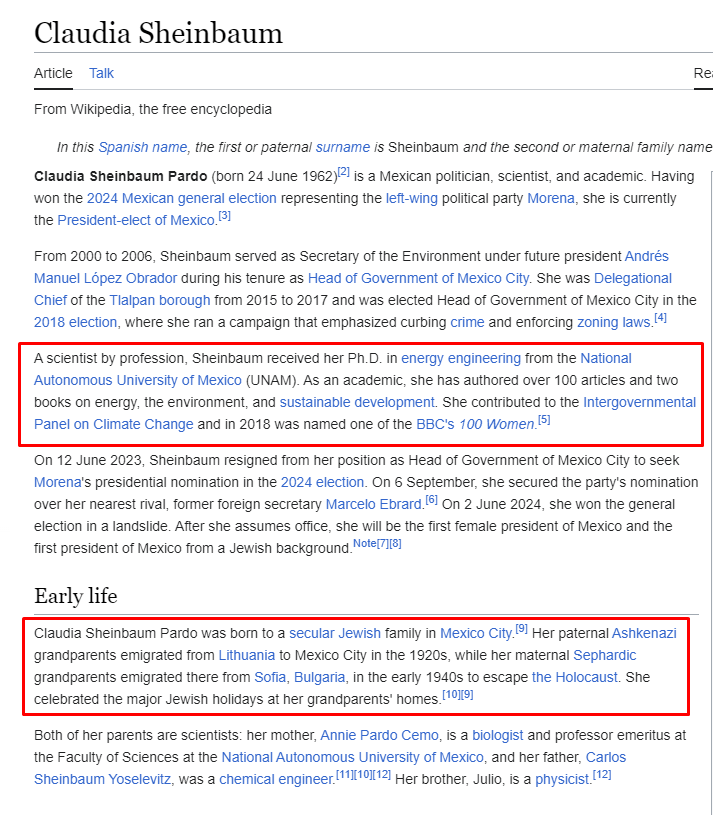
Interesting, I had no idea. Giving that Mexico is the country with most Catholics in the world, I'm surprised the opposition didn't try using her secularity against her. Then again, I don't follow politics in my country much.

I would recommend transitioning over a period of at least 6 weeks.
Hey, no problem, ask away. There aren't any studies that I'm aware of that look into the effects of the carnivore diet long term in relation to sex hormones. But generally, ketogenic diets have shown to reduce the level of estrogens circulating in the blood, most likely due to the loss of adipose tissue (a source of estrogen production), therefore resulting in a lowering of aromatase activity in fat tissue (aromatase is an enzyme that converts androgens to estrogens).
So it seems excess estrogen isn't a problem while on a carnivore diet, for both men and women, it's actually a way of reversing gynecomastia in men. The liver metabolizes estrogens into conjugated estrogens, making them more watersoluble and then eliminating them mainly through the kidneys but also through biliary excretion. Some of the conjugated estrogens in the bile can then be deconjugated by bacterial enzymes in the gut and reabsorbed. Fiber can help reduce some of this reabsorbtion, but that might be "helpful" for people on a SAD diet, where they might actually have excess estrogen. That doesn't seem to be the case on carnivore. Cheers!
TLDR: It doesn't seem excess estrogen is a problem on a ketogenic diet, therefore it would probably be even less of a problem on carnivore. Also, most of estrogens are eliminated through the kidneys and not the bile, so no worries about reabsorption there.
Nutritional science is not a hard science, there are a lot of misconceptions out there that want to convince you that exogenous sugar is "good" and "necessary". Nonsense, the minimum requirement for exogenous carbohydrates is 0 grams. I'm not saying go 100% carnivore, I'm just saying you don't need carbs to function optimally and anyone saying otherwise doesn't understand basic human physiology. Search: gluconeogenesis or watch the following video: https://www.youtube.com/watch?v=V76vuEx82OI
#carnivore #carnivorediet #carbs #vegan #nutritionalscience

I feel exactly the same way, I would never include my bitcoin or anarcho capitalist views on other social media. I guess I feel more understood and comfortable here.
Not at all, she was in deep ketosis so no worries. The brain actually functions great on ketones, of course there will always be a need for some glucose for proper brain function but we don't need as much glucose as most people think. There have been cases of people having their glucose as low as 20mg/dL while in deep ketosis.
My wife went pretty close to a lion diet and on day 10 we checked her glucose and ketones with the ketomojo, her glucose was 34mg/dl and her ketones were at 5.1mmol/L. She felt great.

I haven't touched relays in a long time, would you recommend deleting everything and keeping/adding those recommended? Should one be purging relays like one purges follows from time to time?

Awesome! My wife made a crust once out of chicharron (fried pig skin) and it was great, I'd recommend checking it out.
Here's my interview with Dr. Shawn Baker, directly on #Nostr
https://cdn.satellite.earth/cf6eba3ef53fcffa203124447157e5f1fe4a286ce7f0c8a846063d64caf973c8.mp4
#carnivorediet #carnivore #grownostr #health
The #carnivorediet did wonders for me and my wife, then I saw it doing wonders for my patients. How can I not go down this rabbit hole? I have my wife to thank, she was the final push I needed to start this journey.

Hey! I don't know if you've had an oxalate heavy diet in the past but oxalate dumping can occur to those who suddenly adopt a low carb or carnivore diet. The thing is, it can appear relatively soon after starting this diet or many months after, it's still not known why. Peanut butter is an oxalate bomb, so you never know if you can develop oxalate problems later on if you start eating it regularly, but the poison is in the dose. Anyways, I'd just be aware of any symptoms developing over time and if they appear, it would probably be the peanut butter. Cheers.

I'm not a doctor, but I know how to analyze data, so here is my response to the cardiologist who wanted me to go on Statin
I printed out each study, and he didn't bother to look at them.
I do a complete blood panel plus with nine vials of blood drawn and over 36 different tests. Everything was perfect except for LDL.
My oxidatedLDLL was six from 1-20
His only response was, “Then why do Statins work?”
High cholesterol is bad advice based on faulty science from the 1950s; Ancel Keys cherry-picked data with his seven-country study.
Every cell membrane in your body requires cholesterol.
Animal fat is one of the most nutrient-dense foods on the planet.
Vitamin D is produced when cholesterol in the skin is exposed to UVB radiation from the sun.
Testosterone, DHEA-S, Estradiol, Progesterone, and Prolactin are all steroid hormones synthesized from cholesterol in various tissues in the body. Cholesterol is converted into pregnenolone, which is then used to make these hormones through a series of enzymatic reactions.
Saturated fat: villain and bogeyman in the development of cardiovascular disease?
Association of lipoprotein levels with mortality in subjects aged 50 + without previous diabetes or cardiovascular disease: A population-based register study - PMC
https://pubmed.ncbi.nlm.nih.gov/36059207/
Lack of an association or an inverse association between low-density-lipoprotein cholesterol and mortality in the elderly: a systematic review | BMJ Open
https://bmjopen.bmj.com/content/6/6/e010401.short?g=w_open_current_tab
No association between 'bad cholesterol' and elderly deaths
https://www.sciencedaily.com/releases/2016/06/160627095006.htm
High low-density-lipoprotein is beneficial | The BMJ
Total cholesterol and all-cause mortality by sex and age: a prospective cohort study among 12.8 million adults | Scientific Reports
https://www.nature.com/articles/s41598-018-38461-y
(PDF) Small Dense Low-Density Lipoprotein as Biomarker for Atherosclerotic Diseases
https://bmjopen.bmj.com/content/6/6/e010401
https://www.sciencedirect.com/science/article/pii/S0002916522004749
Effect of short-term low- and high-fat diets on low-density lipoprotein particle size in normolipidemic subjects | Request PDF
Lipoprotein(a): is it more, less or equal to LDL as a causal factor for cardiovascular disease and mortality? - Abstract - Europe PMC
https://europepmc.org/article/med/32304380
(PDF) Lipoprotein(a) in atherosclerosis: from pathophysiology to clinical relevance and treatment options
Lipoprotein(a): is it more, less or equal to LDL as a causal factor for cardiovascular disease and mortality? - Abstract - Europe PMC
https://europepmc.org/article/med/32304380
Lipoprotein(a) and diet—a challenge for a role of saturated fat in cardiovascular disease risk reduction? - The American Journal of Clinical Nutrition
https://ajcn.nutrition.org/article/S0002-9165(23)57910-7/fulltext
Overview of OxLDL and Its Impact on Cardiovascular Health: Focus on Atherosclerosis
https://www.ncbi.nlm.nih.gov/pmc/articles/PMC7836017/
Sunlight Vitamin D and the anti-viral state
https://www.ncbi.nlm.nih.gov/pmc/articles/PMC3308600/
Exercise Exercise and Respiratory Tract Viral Infections - PMC
https://www.ncbi.nlm.nih.gov/pmc/articles/PMC2803113/
Finer A High-Fiber Diet Does Not Protect Against Asymptomatic Diverticulosis - PMC
This is the way. Many doctors don't bother to question what they are taught, they're bombarded with so much information, exams and making presentations that they leave them not wanting to dig deeper or think critically. Also, you can rarely question the doctor giving the class, undermine his authority and you run the risk of a hard/terrible time. There's this strange ego thing among many of the educators and they seem to pass it onto the students.
You need a doctor/patient relationship, it cannot be a one-sided relationship, a lot of patients even known more about their diseases than a lot of docs, because they have a vested interest.

What if you're the US government? Somewhere in between?