
Hey #Monero community, do you understand that #privacy appeals to a niche market, but the mass market prioritizes regulatory compliance by governments?
Do you still think Monero should seek mass adoption, or do you understand that it is better to remain in a niche and not take too many risks because regulators would not allow them to lose control over money?
Monero should remain simple and focused on usability for a small niche market. Scalability is not a priority.
My article
https://medium.com/@liberlion/decentralization-and-privacy-before-scalability-6b36405285bd
𝙼𝚘𝚗𝚎𝚛𝚘 𝚒𝚜 𝚗𝚘𝚝 𝚒𝚗𝚟𝚒𝚗𝚌𝚒𝚋𝚕𝚎: 𝚏𝚛𝚎𝚎𝚍𝚘𝚖 𝚖𝚞𝚜𝚝 𝚋𝚎 𝚍𝚎𝚏𝚎𝚗𝚍𝚎𝚍 𝚎𝚟𝚎𝚛𝚢 𝚍𝚊𝚢
Freedom and individual sovereignty are not inherited: they must be defended every day, in every decision we make. Believing that Monero is invincible is a dangerous mistake, because a false sense of security leads to complacency. History has already shown that Monero has been attacked several times, and in the future, attempts will not diminish but multiply.
For now, those who attack have not had enough power to cause real damage. But let's not fool ourselves: this is because the network still has limited use, which does not bother governments or bankers. The day Monero grows large enough to challenge the interests of these two giants, both sectors, powerful and with virtually infinite resources, will direct their resources to harm it.
There are many forms of attack: from group manipulation to attempts at censorship, technical vulnerabilities, and smear campaigns. They all have one thing in common: money. Money to buy computing power, to fund narratives, to infiltrate malicious actors, or to push for restrictive regulations.
Monero's defense is not automatic, nor is it guaranteed. It depends on a community that understands that privacy is not a luxury, but a necessity; that sovereignty is not a slogan, but a daily exercise.
And that individual freedom, like the network that sustains it, can only survive if those who value it decide to protect it, with care, every day.
#SovereignIndividual
Monero's Health. Qubic Cancer

Let's look at an analogy to understand the problem from another perspective and spark creative solutions.
Imagine that a blockchain network is like a living organism. Each mining node functions like a cell that performs its task to keep the body healthy. Everything runs smoothly... until some cells change their behavior. They stop cooperating, multiply for another purpose, and begin to attack the very tissue that sustains them. In biology, this is called cancer.
Something similar happened to #Monero with Qubic. Suddenly, part of the "immune system" turned against the organism itself. It was not an obvious external infection, but an internal mutation triggered by an external agent: computing power that stopped reinforcing Monero and redirected itself to attack it. As in metastasis, the network was forced to coexist with cells that not only no longer helped, but weakened the whole.
In medicine, cancer requires complex responses: detecting the anomaly, understanding it, containing it, and sometimes applying aggressive therapies to preserve the organism. The paradox is that those same cells were born from the body they now threaten. The challenge is not only technical, but existential: how does an organism stay alive when part of itself becomes a threat?
That is the creative question that Qubic raises in the crypto ecosystem. Beyond hash rates or protocols, the scene reminds us that systems—biological or digital—are not immune to internal dysfunctions. That resilience is not measured only by the strength of defenses, but by the ability to recognize when one's own can become hostile.
Perhaps the most fruitful aspect of this analogy is not to seek an immediate cure, but to accept the metaphor: blockchains, like living organisms, must not only grow, but learn to deal with their own mutations.
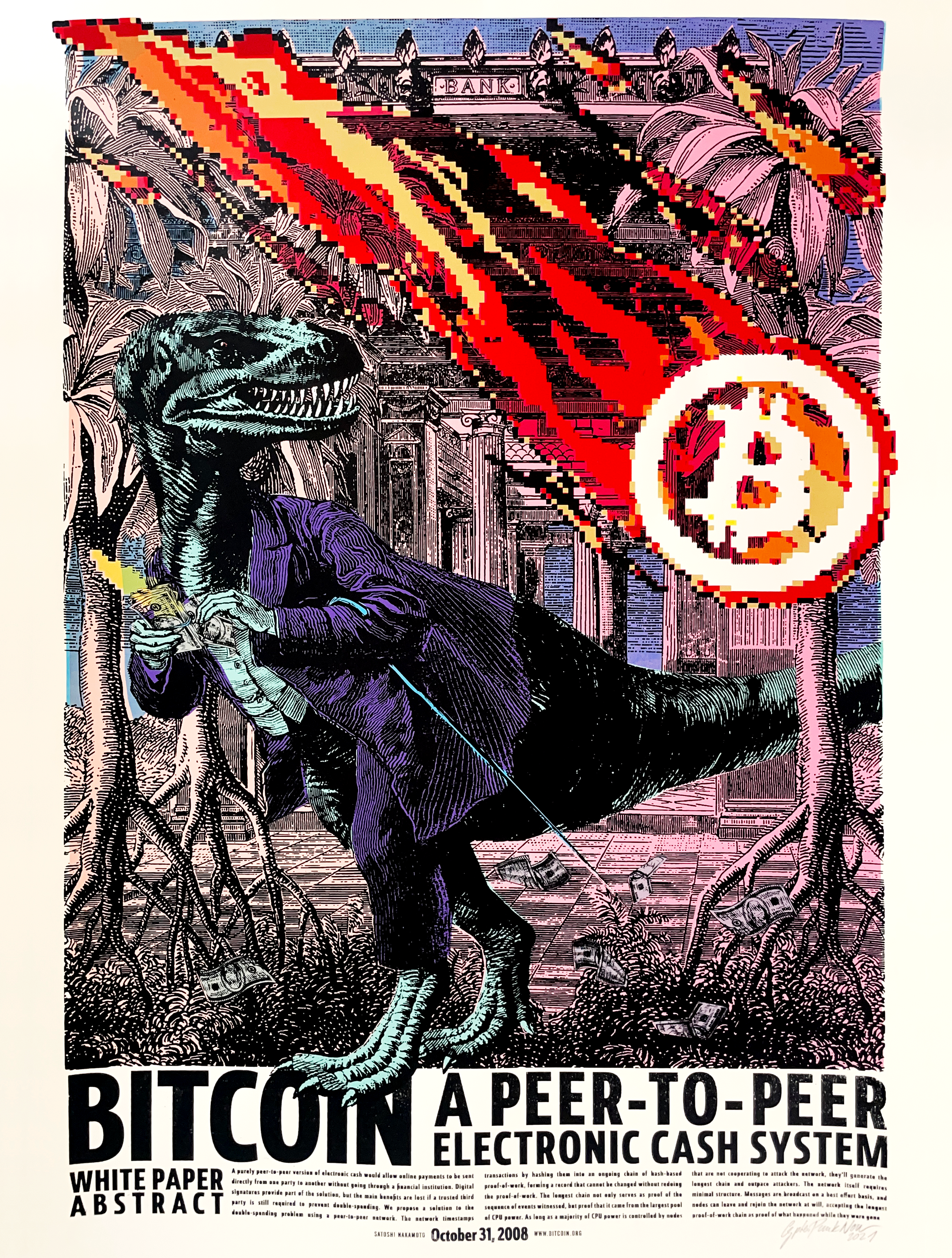
Dash pioneered the masternode + privacy model. Firo started with a similar design.
But over time, Firo introduced its own cryptographic innovations (Lelantus Spark, FiroPoW) that make it technically distinct.
#Monero Decentralization
The decentralization of the hashrate must be complemented by economic incentives so that network security is sustainable over time.
While researching PoW blockchains that suffered hashrate attacks and implemented protocol modifications, I came across FIRO, which is also a privacy-focused network, backed by protocols such as Lelantus Spark for total anonymity and Dandelion++ to obfuscate transaction origins.
It implemented a hybrid mechanism: Proof-of-Work combined with masternodes that issue ChainLocks via LLMQ, granting near-instant finality and protecting the chain from 51% attacks. To operate a masternode, 1,000 FIRO are required as collateral, which acts as a financial guarantee and reduces the amount of coins in circulation.
This means that to compromise the network, an attacker would not only need significant control of the mining power, but also of those masternodes, at a prohibitive cost.
I'm not saying this will be the solution, but it's interesting to analyze it to learn from other people's experiences.

It's a very complex topic. We could start here to open the door.. my article
https://medium.com/@liberlion/monero-and-artificial-intelligence-opportunity-or-threat-5c71e2d2b3ce

The actual input can only be used once, because its key image gives it away if it's repeated.
Decoys can be repeated in different transactions because they aren't "locked" by any key image.
Qubic uses a protocol called “Useful Proof of Work” (UPoW), and its mining power goes towards training neural networks for a decentralized AI called Aigarth.
I said this a year ago 👇🏻
Cut through the noise to see the essence of the attack on #Monero
There is a novel strategy of hashrate co-optation, in which networks compete to rent temporary computing power to destabilize others, hash-as-a-service, in this case with the Useful Proof of Work (UPoW) protocol.


"[...] An enemy at the gates is less fearsome, because he is known and bears his banner openly. But the traitor moves freely among those within the gate, his whispers whispering through every alleyway and heard in the very halls of government."
𑁋Marcus Tullius Cicero
"[...] An enemy at the gates is less fearsome, because he is known and bears his banner openly. But the traitor moves freely among those within the gate, his whispers whispering through every alleyway and heard in the very halls of government."
𑁋Marcus Tullius Cicero
#Monero hides amounts, not math
Even though you can’t see how many XMR are in each transaction (they’re hidden with RingCT), every block still has to obey the protocol’s consensus rules. The math behind it is public, just not the values.
How double-spends are prevented
Every $XMR input creates a unique “key image.” That key image can only ever appear once on the blockchain. If someone tried to “reorg” and spend the same input twice, nodes would instantly reject the block containing the duplicate key image. Hidden amounts don’t matter here—key images are the anti-double-spend stamp.
How inflation is prevented
RingCT doesn’t just hide the amount, it also uses cryptographic proofs (Pedersen commitments + range proofs). Each transaction proves “the outputs = inputs” without revealing the numbers. If someone tried to mint extra coins secretly, the math in the proof would fail and the block would be rejected.
What about reorgs n blocks deep?
A reorg just means: “We thought these n blocks were the chain, but now there’s a longer chain that replaces them.” When this happens:
Every node re-verifies all the blocks in the new chain.
All the cryptographic checks (key images, RingCT balance proofs, range proofs) run again.
If any block tried to create value out of thin air, consensus rules fail → block is invalid → chain won’t be accepted.
👉 So the short version:
Even if amounts are hidden, the math proofs and key images make it impossible to sneak in fake value. A reorg just swaps blocks, but every block still has to pass the same verification rules.

The trick is: Qubic is not just mining Monero and then torching money for fun. They engineered an incentive loop. Here’s the breakdown:
1. Base layer – mine Monero.
Miners contribute CPU cycles, solve RandomX, get XMR block rewards. That’s the same as any other Monero pool.
2. Conversion layer – pool takes custody.
Instead of simply paying out XMR, Qubic converts what was mined into a stable asset (e.g. USDT). Small spreads or fees here, but nothing dramatic.
3. Tokenomics layer – dual split.
Half of the value is used to buy and burn QUBIC tokens on the open market. That creates artificial scarcity → price support for QUBIC.
The other half (plus some fraction of the USDT itself) is paid out to miners. So a miner doesn’t just get “XMR value,” they get XMR-equivalent + upside from the token pump.
4. Where profit appears.
If QUBIC’s price rises because of continuous burns, early miners who also accumulate QUBIC tokens see their holdings appreciate.
Miners effectively extract both the intrinsic Monero value and speculative upside tied to QUBIC’s market cap.
That “extra” makes it more attractive than a plain Monero pool—even if there’s a haircut on conversions.
So: the burn is not destroying miner profit, it’s designed to transfer value into the token economy. The miners get rewarded partly in QUBIC (whose price is buoyed by the burns), making the package richer than XMR alone—as long as people believe QUBIC will hold or rise.
If you’re asking “what if QUBIC dumps?” then the loop collapses: miners would just see less payout than a normal Monero pool. Right now, the growth in hashrate suggests enough miners believe the upside compensates the risk.
Selfish mining at its finest: Qubic attracts miners because it gives them more profit than a normal pool:
—It converts the mined XMR into USDT.
—It uses part of it to buy back and burn their QUBIC token.
—It provides extra rewards to the miner.
This economic incentive explains why so many joined and why their hash power grew.
#Monero
Qubic: 2.11 GH/s / 4.50 GH/s → 46.9% de la red.
It doesn't look good..


More signs of a trend: Digital Identity (DId) will be implemented across the board.
You will be tokenized.
#CriticalThinking
#SovereignIndividual
Elon Musk: From Subsidies to Contracts, Always in Family with the State
WIRED revealed that the White House pressured the GSA to quickly reinstate Grok/xAI into the federal procurement system.
Versions 3 and 4 are already listed in GSA Advantage, ready for use by agencies following internal reviews.
Although there was no official comment, the push coincides with contracts xAI won in July with the Pentagon and its "Grok for Government" campaign, which explains the acceleration of its introduction into the state system.
The #Monero community will sooner rather than later face a dilemma that feels almost like science fiction: the use of Artificial Intelligence in the ecosystem.
The question is not if, but when and how.
My new article
Monero And Artificial Intelligence: Opportunity Or Threat?
https://liberlion.medium.com/monero-and-artificial-intelligence-opportunity-or-threat-5c71e2d2b3ce
"Humanity had everything to improve, and yet, it got worse.
Not from lack of resources, but from the greed of a few, and the apathy or lack of understanding of many.
I don’t want to sound entirely pessimistic, because while many things worsened, a few did improve.
I remember the early years of the 21st century as a time of innocence. We believed..[]"
A new episode in the New Geneva speculative fiction saga:
●|● Nҽɯ Gҽɳҽʋα ─Tԋҽ Aɠσɾα 2.0 ●|●
I don’t predict the future. I narrate it.
I am Markus.



The world is moving towards Technocratic systems of government that will inevitably all converge globally.
#Technocracy Agenda 2030 #AI #Transhumanism

https://docmalik.substack.com/p/raising-awareness-is-not-enough-why
Raising Awareness Is Not Enough - Why the Time Has Come for Mass Non-Compliance
Dr Doc Malik
06.05.25
#docmalik

No, I can not imagine a politician like this.
Politicians by definition always comply. In order to maintain the system, politicians are needed to feed and protect it. Politicians who do not comply do not move up the ladder of power.
There are many people who evade the republican system as centralized and corrupt that today governs the western world.
There are many people who do not comply.
We are those agonists who exercise our individual sovereignty from silence by saying no with our actions.
#Agorist #Monerist
#CriticalThinking
#SovereignIndividual
𝔸𝕧𝕠𝕚𝕕𝕚𝕟𝕘 𝔻𝕖𝕖𝕡 ℚ𝕦𝕖𝕤𝕥𝕚𝕠𝕟𝕤 𝕆𝕟𝕝𝕪 𝔽𝕖𝕖𝕕𝕤 𝕋𝕙𝕖 𝕊𝕞𝕠𝕜𝕖 𝕊𝕔𝕣𝕖𝕖𝕟
—Question#2
If you could store your treasure in a vault that you control yourself, why would you prefer to leave it in the hands of a guardian who has lost your stuff before?
Because the personal vault is still difficult to use, has risks one doesn't understand, or the guardian still seems more trustworthy... for now.
This is the situation of Centralized exchanges vs. Self-custody wallets.
#CriticalThinking
#SovereignIndividual
#tags: deep questions
🤪😂

#AI Co-optation Of The Human Brain
What are the limits of the AI?
1. Decision-making
Transhumanism is the next step if AI advances in such a way that the majority accepts the replacement of people's decisions.
2. #privacy
The use of data for training Large Language Models has a personal risk; when your personal information is linked to your identity you have a serious problem of security.
#Technocracy 2030 #AI

Price Is Not Value
The price increase we see in $XMR #Monero is just speculation.
$XMR is still listed on several centralized exchanges and that's where the speculation is happening.
When will we see an organic price increase due to demand pressure?

In a few years, the demand for Monero will get a real boost out of necessity as we will see most governments limit the use of cash to the point of banning it, going to a cashless society and with #CBDCs becoming part of a social credit system.
Then governments will implement a system of subsidies, UBI (Universal Basic Income), as in a few years the lack of employment for many sectors of the economy, due to the development of #AI will leave many people out of work, who will not have adapted to the rapidly evolving technology and market demand.
#Technocracy 2030 #AI
Does money have an intrinsic value?
The answer is no.
Money is fragile and temporary. And precisely this is the main argument used against cryptocurrencies: they claim to be worthless because “they have no backing”.
The fiat money is issued against debt taken by the State and then paid with the collection of taxes and other resources.
Cryptocurrencies are issued on the basis of a cost (network, mining or transaction fees).
The value of a good lies in its demand. The value is given by the market. Value is subjective.
My article
https://liberlion.medium.com/the-value-of-crypto-currencies-as-money-67ddea583451

Globalists invest in privacy?
SimpleX Chat is an open source messenger, which was conceived in privacy, keeping the anonymity of the users and without access to their data, but, in July 2022, SimpleX Chat secured seed funding from venture capital fund Village Global.
In July 2022 SimpleX Chat raised a pre-seed funding from the VC fund Village Global.
Village Global VC fund is Gates-Bezos-Zuckerberg.
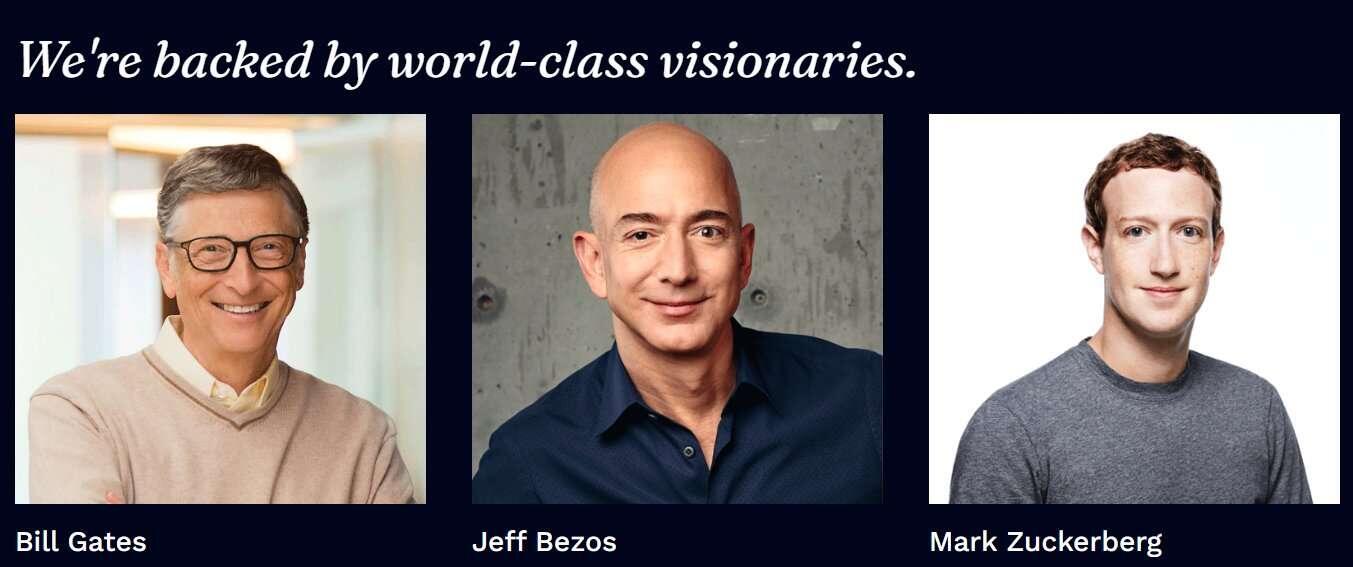
Do you think these three characters want your privacy?
Sources:
1. simplex.chat/blog/20230422-…
2. villageglobal.vc
A lot of money from venture capitalists investing in Simplex, a "simple" startup.
Do they all have a strong conviction for privacy?
What is the interest of globalist angel investors?
More money coming in...
Jack Dorsey and Asymmetric Capital Partners
Globalists invest in privacy?
SimpleX Chat is an open source messenger, which was conceived in privacy, keeping the anonymity of the users and without access to their data, but, in July 2022, SimpleX Chat secured seed funding from venture capital fund Village Global.
In July 2022 SimpleX Chat raised a pre-seed funding from the VC fund Village Global.
Village Global VC fund is Gates-Bezos-Zuckerberg.
Do you think these three characters want your privacy?
Sources:
1. https://simplex.chat/blog/20230422-simplex-chat-vision-funding-v5-videos-files-passcode.html
2. https://www.villageglobal.vc/
