Avatar
₿logging₿itcoin
75bf23531ae9f98c62995ba07191e488ead475975371d63d7dfd46bde1bfa895
₿itcoin geek who writes a ₿log about bitcoin and other freedom tech on the nostr. My mission is to promote bitcoin as a store of value, medium of exchange, and unit of account. https://nostree.me/bloggingbitcoin@iris.to Get notified of new blogs on [Keet](nosl.ink/TgS14vtN)
Replying to Avatar Highsselhoff

nostr:npub1sg6plzptd64u62a878hep2kev88swjh3tw00gjsfl8f237lmu63q0uf63m ‘s old t-shirt won Superbowl ad of the year

I didn't watch the Super Bowl. What commercial is this?

My parents bought a house in 1990. Today my mom said it cost $134,750.

I converted this to ounces of gold. It turns out gold did better than real estate.

It makes sense. Houses depreciate over time. This calculation didn't include interest, insurance or repairs. Real estate is not a store of value. It just loses value slower than the dollar or wages.


I can't do it today, but I would like to set something like this up with nostr nests and lightning poker. Small games, more like a meet up than serious poker.

Replying to Avatar Ava

nostr:npub1ytx8ffefzymnsen8eu99g9rwnc4emfpdyjjk2hrlqkqs8sfr8feq5vek79 ...helping 💜

#cybersecgirl #moxie #catstr #sphynx
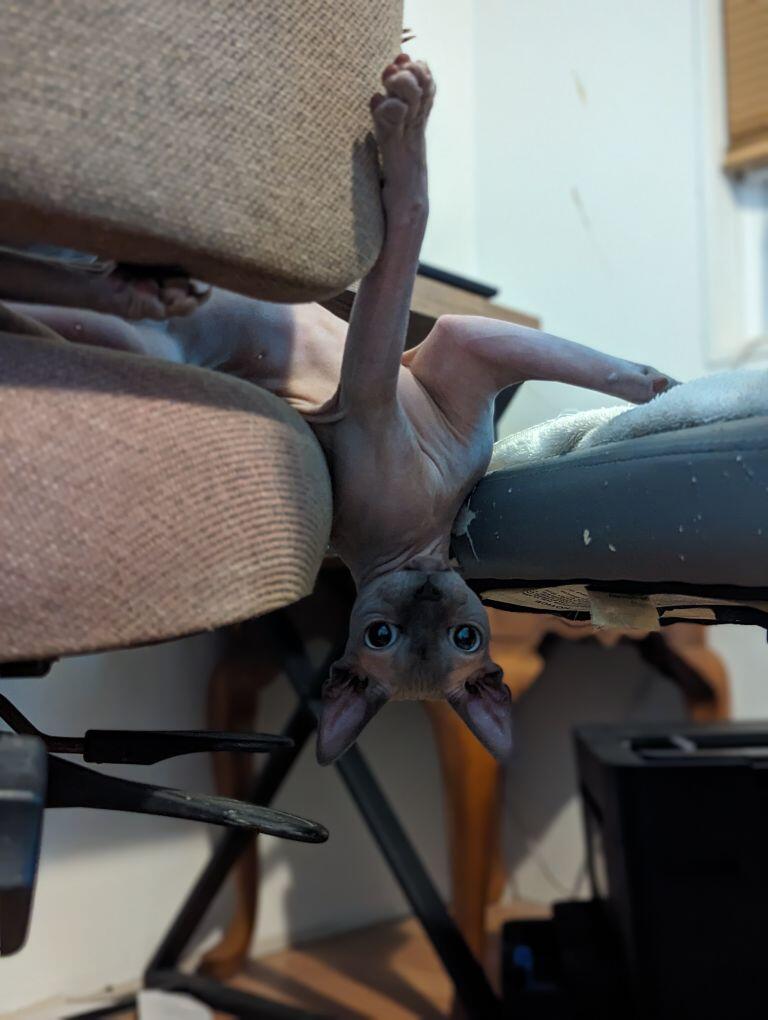
Is this your actual cat? I bet you sweep a lot less than I do.

It's fascinating, but I haven't spent enough time studying it to have a strong opinion. I've only heard a little bit about it on the bitcoin dot review podcast.

Replying to Avatar Dr. Hax

Yes. That works well for opportuniatic food, specifically for perennials. We're doing that with things like kale on our own property which can overwinter just fine. It still requires watering, weeding, pest control, harvesting, cleaning, and preparing/cooking/preserving them. But planning a location is only done once, there are no trellises to build and maintain. If planted in an ideal place and in a large enough quantity, they might do well enough with rainwater (directly from the sky, not the rain barrel). Vegetables are pretty thirsty, which means there are fewer locations suitable to get a decent harvest of fruiting bodies without watering.

Many people promoting the idea of food forests online seem to think you can just pick go out and pick apples or harvest kale and eat it without doing any other work. This may be more or less true at some times of year, but whether there is enough of not is a very different question. And getting a variety of food and nutrition all year around is something I've never seen anyone demonstrate.

Annuals are more difficult. You *can* just let things self-sow, but at a minimum there's still the watering, weeding and pest control. If you want to have a chance at a reliable food source, you'll want to make sure the tomatoes don't attempt to grow in the shade, and that they don't come up too early or too late. Tomatoes, beans, peas and others need trellises. Sure, you could let them grow up a tree, but unless you're going to climb it to pick beans, you won't get nearly as much food. Trellises break down every year and need repair. There's also crop rotation, cover crops, adding compost as the soil level goes down, and a ton of other things that seem optional to people who have only been growing for a few years.

Can all of these things just happen to work out, where the seeds land in a good spot, germinate, and do so at the right time, outcompete the non-food producing plants, and get enough water to grow fast enough and produce a bounty for people to eat? Absolutely. In fact, it's almost inevitable that this will happen sometimes.

And will all this food growing cause the rabbit and cabbage moth population to grow to consume said bounty? Maybe not the *entire* bounty, but it can be a serious problem.

I guess what I'm trying to say is that food forests are things we should do, but not a thing that I've seen evidence that they can produce enough, year around, for even a subset of the people who live nearby, let alone do so reliably, year after year.

We should do the permaculture things too, like companion planting. And we do here at my house. We're working on a watering system with will reduce the amount of our labor. We are actively working on this, and have been for years.

And maybe this year we will be able to grow, process and freeze a year's worth of tomatoes in a single season. Maybe we'll be able to grow more calories than we need, and do so in a way that doesn't take hours every day. So much so that we can exchange food for the materials needed to build trellisis and replace rain barrels when ours wear out.

We're going to keep improving. And I'm going to keep writing open source software in my "free time". But I'm skeptical that even just food production can be done with casual labor, let alone all the modern conviences we have grown accustomed to (lumber, dinner plates, knives, electricity, and yes also computers, cell phones, & social media). 😃

I do welcome any suggestions people have. But if you're about to say "why don't you just XYZ", and it's something you haven't personally done, nor have you read about how it addresses all the issues above. Just don't. It'll save us from having an unplesant interaction. I want input from doers, not armchair analysts.

You're way further down this rabbit hole thsn me. It's something I recently began to explore. My wife and I just designed out raised garden. We haven't set it up yet, and I'm sure there is labor involved.

I also loved Walden, and I'm sure that makes me biased.

Where can I learn more about this stuff?

On a more serious note, I think Eric Hughes put it best:

"Privacy is necessary for an open society in the electronic age. **Privacy is not secrecy. A private matter is something one doesn't want the whole world to know, but a secret matter is something one doesn't want anybody to know.** Privacy is the power to selectively reveal oneself to the world."