

'Tax the shit out of them' (Klaus)
It's all a show to generate artificial GDP in a dead economy.
#wef #climatescam #eu #memestr


And still we need to debate btc with the normies...
If we look at the current Swift data, we can see three things: 1. the dollar is far from dead as it is always talked about, 2. the euro has lost much of its importance after phasing out Russian gas imports and cannot recover, and 3. Asian currencies such as the yuan continue to play virtually no role in international business. It will be interesting to see how the BRICS currency project develops against the backdrop of this fact. Confidence in these currencies is likely to be zero!
#swift #usd #eur yuan #brics #usa #bitcoin 
Ignore the day-to-day politics, ignore the politicians, as you will gain nothing of value from their empty showmanship. The hidden principles of Bitcoin will lead you back to what you were created for: Focus on building what you are good at, creating real value for others to start interacting and exchanging, while storing your gained economic value in the best money humanity has ever defined. This is how we will overcome the ruling class and postmodern feudalism and its "divide et impera" - through voluntary cooperation based on an uncorrupted ledger.
#bitcoin #freedom 
Well, in the EUSSR we constantly get what we never asked for: more government control and stupid regulation. The good news is that any centralized control system will break down under its growing weight (vulgo: stupidity).
#eu #socialism #freedom #bitcoin

UK Business Activity Plummets: CBI Warns of Economic Downturn
UK's private sector is bracing for significant contraction over the next quarter, according to the latest Confederation of British Industry (CBI) report. With manufacturing, services, and distribution sectors all forecasting declines, this marks the most pessimistic business outlook since early 2020.
Economic Challenges Mount for New Chancellor
Rachel Reeves faces an uphill battle to steer the economy towards growth, with the CBI's survey highlighting a drop in business activity not seen in nearly four years. The report also reveals plans for substantial workforce reductions, with hiring intentions at their lowest since the height of the global health crisis.
Impact of Fiscal Policies
The downturn follows Reeves' budget which introduced a £26 billion increase in business payroll taxes. This move has been pinpointed by the CBI as a direct contributor to the current economic malaise, dampening business activity and employment prospects. Alpesh Paleja, interim deputy chief economist at CBI, stated, "The economy is headed for the worst of all worlds," emphasizing the dual pressures of reduced output and rising prices.
Political Repercussions
The Conservative opposition has seized on the survey, with shadow business secretary Andrew Griffith suggesting an impending recession under the current administration's watch. Meanwhile, the Treasury defends the budget's tough decisions, claiming they were necessary to address inherited economic deficits and provide the required stability for businesses.
European Economic Strain
Parallel to domestic issues, the economic strain is exacerbated by European engagement in the Ukraine conflict, accelerating an economic catastrophe. The persistent refusal to admit policy mistakes, coupled with calls for more sanctions against Russia and stringent control over public discourse, signals a civilizational rift in Europe, largely unrecognized until now.
#UK #Economy #Russia #Europe #Recession #BusinessActivity #CBI #Ukraine

Enjoy it. With a tasty ital. wine
I hear Ottorino Respighi and I hear Debussy, Ravel but also Final Fantasy, Square, great and old school Japanese video game composers like Nobuo Uematsu and the like.
The Japanese always had incredible great taste and artistry.
https://open.spotify.com/album/2Nm7vx01wJA7fNH6askGry?si=mNKzmZHeRputdvy-sg7h7g
Beautiful album.
Ottorino is from the late 1800s, from north Italy, Bologna. Italy is an incredible country, root of a lot of beauty, perhaps the root of the whole thing (of the West). Especially this part.
Anyways, it's incredible to listen to this, and imagine how life was for these people. I think the Gold standard clearly was superior in art, than what we have today.
#music #classical #videogames #japan #bitcoin #italy #gold #philosophy #politics
I remember Ottorino's opus on ancient Rome. The march of the victorious consule on Via Appia is overwhelming. Need to rehear it. Thanks
The Welfare Machine As a Sedative
An adult who has fallen into the clutches of the state, as a servant, in the state bureaucracy or as a recipient of its social security system, will have the same problems physically and mentally detaching himself from his over-father as a young person who has to leave his parental home, the refuge of his spiritual and monetary security, for the first time on his own credit. A proper upbringing is always geared towards literally weeding out the adolescent in an effort to build an autonomous and sovereign existence.
The current welfare machine is destroying this basic human instinct, which is nurtured in the family context, in a growing part of the population. The price our culture pays for the purchased temporary stabilization of the political handover process from government to government in the form of the welfare state, because in the end it is nothing more than institutionalised vote buying, is too high.
#socialism #usa #eu #freedom #bitcoin

Or centuries
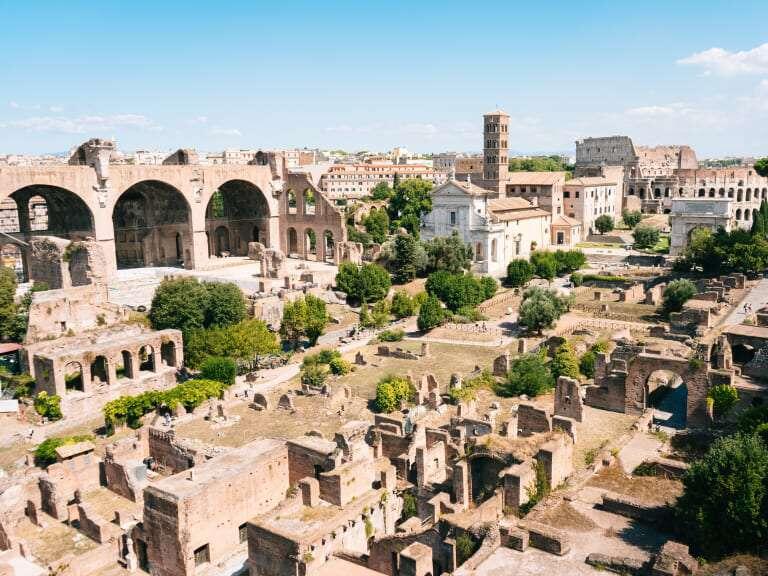
The Libertarian Lens on Rome's Economic Crisis of A.D. 33
(Dedicated to the roman Mario Draghi, Tiberius)
In the shadow of the Palatine, under the distant rule of Tiberius, Rome faced an economic tempest in A.D. 33 that would challenge not just its financial stability but the very principles of governance and liberty that underpin economic freedom. From a libertarian perspective, this crisis serves as a profound case study in the perils of state intervention and the unintended consequences of economic policy.
The Catalyst of Crisis:
The economic downturn was set into motion by a law mandating senators to invest heavily in Italian land, an act of economic nationalism that clashed with the libertarian ideal of free market dynamics. This policy, aimed at securing Rome's economic sovereignty, instead led to a devastating liquidity crisis. Land values plummeted as senators scrambled to comply, demonstrating a clear violation of the free market's invisible hand—a hand that libertarians argue should guide economic activity, not the heavy fist of state regulation.
A Libertarian Critique
From a libertarian viewpoint, the crisis of A.D. 33 is a stark reminder of the dangers of government overreach. The forced investment in land was not merely an economic misstep but an infringement on individual liberty and market freedom. This echoes the belief that individuals, not the state, should determine their economic activities based on voluntary exchange and personal risk assessment.
Tiberius' Intervention: A Double-Edged Sword
Tiberius' response, while stabilizing in the short term, offers a complex lesson. He injected vast sums into the economy through interest-free loans, a move that could be seen as an early precursor to modern-day state interventions like quantitative easing. While it undoubtedly alleviated the immediate crisis, libertarians would argue this was a band-aid solution that masked deeper issues of market distortion caused by initial government interference.
The Human and Economic Cost
This crisis laid bare the human cost of economic policy, where farmers, merchants, and senators alike were caught in the web of state-induced economic volatility. Libertarianism, with its emphasis on individual liberty, would decry the suffering caused by such policies, advocating instead for a system where economic decisions are made freely, reflecting the true will and ingenuity of the people, not the whims of rulers.
Philosophical Reflections
The crisis of A.D. 33 invites us to reflect on the balance between government and market. It's a potent narrative on how the state, in its efforts to control the economy, can inadvertently lead to its own undoing. This event serves as a historical testament to the libertarian creed that economic freedom is not just beneficial but essential for prosperity and individual well-being.
The economic crisis under Tiberius in A.D. 33 is more than a historical anecdote; it's a cautionary tale about the perils of government economic meddling. It underscores the argument for minimal state intervention, the sanctity of property rights, and the power of free markets to self-correct. From this ancient crisis, we can draw a modern lesson: that economic liberty is the bedrock of a just and prosperous society andfree markets are the absorber of economic shocks.
https://youtu.be/6B5Bthon7QM?si=nZ-iYyee8Yuoldn8
#rome #history #libertarian #socialism #soundmoney
The Libertarian Lens on Rome's Economic Crisis of A.D. 33
(Dedicated to the roman Mario Draghi, Tiberius)
In the shadow of the Palatine, under the distant rule of Tiberius, Rome faced an economic tempest in A.D. 33 that would challenge not just its financial stability but the very principles of governance and liberty that underpin economic freedom. From a libertarian perspective, this crisis serves as a profound case study in the perils of state intervention and the unintended consequences of economic policy.
The Catalyst of Crisis:
The economic downturn was set into motion by a law mandating senators to invest heavily in Italian land, an act of economic nationalism that clashed with the libertarian ideal of free market dynamics. This policy, aimed at securing Rome's economic sovereignty, instead led to a devastating liquidity crisis. Land values plummeted as senators scrambled to comply, demonstrating a clear violation of the free market's invisible hand—a hand that libertarians argue should guide economic activity, not the heavy fist of state regulation.
A Libertarian Critique
From a libertarian viewpoint, the crisis of A.D. 33 is a stark reminder of the dangers of government overreach. The forced investment in land was not merely an economic misstep but an infringement on individual liberty and market freedom. This echoes the belief that individuals, not the state, should determine their economic activities based on voluntary exchange and personal risk assessment.
Tiberius' Intervention: A Double-Edged Sword
Tiberius' response, while stabilizing in the short term, offers a complex lesson. He injected vast sums into the economy through interest-free loans, a move that could be seen as an early precursor to modern-day state interventions like quantitative easing. While it undoubtedly alleviated the immediate crisis, libertarians would argue this was a band-aid solution that masked deeper issues of market distortion caused by initial government interference.
The Human and Economic Cost
This crisis laid bare the human cost of economic policy, where farmers, merchants, and senators alike were caught in the web of state-induced economic volatility. Libertarianism, with its emphasis on individual liberty, would decry the suffering caused by such policies, advocating instead for a system where economic decisions are made freely, reflecting the true will and ingenuity of the people, not the whims of rulers.
Philosophical Reflections
The crisis of A.D. 33 invites us to reflect on the balance between government and market. It's a potent narrative on how the state, in its efforts to control the economy, can inadvertently lead to its own undoing. This event serves as a historical testament to the libertarian creed that economic freedom is not just beneficial but essential for prosperity and individual well-being.
The economic crisis under Tiberius in A.D. 33 is more than a historical anecdote; it's a cautionary tale about the perils of government economic meddling. It underscores the argument for minimal state intervention, the sanctity of property rights, and the power of free markets to self-correct. From this ancient crisis, we can draw a modern lesson: that economic liberty is the bedrock of a just and prosperous society andfree markets are the absorber of economic shocks.
https://youtu.be/6B5Bthon7QM?si=nZ-iYyee8Yuoldn8
#rome #history #libertarian #socialism #soundmoney
The Libertarian Lens on Rome's Economic Crisis of A.D. 33
(Dedicated to the roman Mario Draghi, Tiberius)
In the shadow of the Palatine, under the distant rule of Tiberius, Rome faced an economic tempest in A.D. 33 that would challenge not just its financial stability but the very principles of governance and liberty that underpin economic freedom. From a libertarian perspective, this crisis serves as a profound case study in the perils of state intervention and the unintended consequences of economic policy.
The Catalyst of Crisis:
The economic downturn was set into motion by a law mandating senators to invest heavily in Italian land, an act of economic nationalism that clashed with the libertarian ideal of free market dynamics. This policy, aimed at securing Rome's economic sovereignty, instead led to a devastating liquidity crisis. Land values plummeted as senators scrambled to comply, demonstrating a clear violation of the free market's invisible hand—a hand that libertarians argue should guide economic activity, not the heavy fist of state regulation.
A Libertarian Critique
From a libertarian viewpoint, the crisis of A.D. 33 is a stark reminder of the dangers of government overreach. The forced investment in land was not merely an economic misstep but an infringement on individual liberty and market freedom. This echoes the belief that individuals, not the state, should determine their economic activities based on voluntary exchange and personal risk assessment.
Tiberius' Intervention: A Double-Edged Sword
Tiberius' response, while stabilizing in the short term, offers a complex lesson. He injected vast sums into the economy through interest-free loans, a move that could be seen as an early precursor to modern-day state interventions like quantitative easing. While it undoubtedly alleviated the immediate crisis, libertarians would argue this was a band-aid solution that masked deeper issues of market distortion caused by initial government interference.
The Human and Economic Cost
This crisis laid bare the human cost of economic policy, where farmers, merchants, and senators alike were caught in the web of state-induced economic volatility. Libertarianism, with its emphasis on individual liberty, would decry the suffering caused by such policies, advocating instead for a system where economic decisions are made freely, reflecting the true will and ingenuity of the people, not the whims of rulers.
Philosophical Reflections
The crisis of A.D. 33 invites us to reflect on the balance between government and market. It's a potent narrative on how the state, in its efforts to control the economy, can inadvertently lead to its own undoing. This event serves as a historical testament to the libertarian creed that economic freedom is not just beneficial but essential for prosperity and individual well-being.
The economic crisis under Tiberius in A.D. 33 is more than a historical anecdote; it's a cautionary tale about the perils of government economic meddling. It underscores the argument for minimal state intervention, the sanctity of property rights, and the power of free markets to self-correct. From this ancient crisis, we can draw a modern lesson: that economic liberty is the bedrock of a just and prosperous society andfree markets are the absorber of economic shocks.
https://youtu.be/6B5Bthon7QM?si=nZ-iYyee8Yuoldn8
#rome #history #libertarian #socialism #soundmoney

Interesting how these globalists formed a closed club and penetraded national politics,
Now we have to explain that to the german people.
Germany's Economic Exodus: A Nation at the Brink
Germany faces a dire economic scenario as major corporations abandon the country, signaling a potential economic collapse. Industry leaders are sounding alarms over unsustainable operational costs, predicting further business flight in the coming year.
Dirk Jandura, President of the Federal Association of Wholesale, Foreign Trade, and Services, describes the situation as a "declaration of bankruptcy" for Germany's business landscape. His concerns are echoed by Peter Adrian of the German Chamber of Industry and Commerce, who notes a significant lack of competitiveness internationally due to excessive regulatory burdens and governmental overreach.
The sectors hit hardest include chemicals, metals, and mechanical engineering, with a third of companies reportedly planning to cut back on investments. This trend is set against the backdrop of high energy costs, which have yet to be addressed effectively, leading to a structural deindustrialization of the nation.
As Germany heads towards an unscheduled election in February, economic stability, alongside issues like energy policy, Islamic extremism, and migration, will dominate discussions. Current polls show the Christian Democratic Union leading with 30% support, closely followed by the populist Alternative for Germany with 20%. Despite recent tragic events in Magdeburg, political landscapes remain largely unchanged.
https://bga.de/im-fokus/artikel/wir-brauchen-einen-wirtschaftlichen-neustart/
#Germany #Economy #BusinessExodus #EconomicCrisis #IndustrialCollapse #Election2025 #EnergyCrisis
Ukraine Halts Russian Gas Transit, Forces EU to Seek Alternatives
Ukraine has announced it will no longer allow Russian gas to flow through its pipelines to Europe, effective January 1. This decision comes despite urgent requests from the European Commission for continued energy supply.
Georgiy Tykhyi, a spokesperson for Ukraine's Foreign Ministry, emphasized that discussions with non-Russian regional partners are underway to address the looming energy crisis.
As winter approaches, Europe faces a stark choice between energy security and geopolitical tensions, with Ukraine opting for independence over reliance on Russian gas.
It's almost absurd to watch Ukraine blackmailing the European Union. Let's see how far the EU will sink, how far Germany will go into economic disaster before a change in thinking occurs.
#Ukraine #russia #Energy #EnergyCrisis #Gas #Winter2024 #EU #EconomicDisaster

"A man's character is his fate"
(Heraklitos)
A few good intentions for 2025, addressed to myself:
1. Cultivate Integrity:
Make decisions based on what is right, not just what is easy or beneficial in the short term.
2. Embrace Responsibility:
Take full ownership of your actions, both the successes and the failures.
3. Develop Empathy:
Strive to understand others' perspectives, emotions, and struggles.
4. Practice Self-Discipline:
Discipline in small daily habits leads to significant life changes.
5. Seek Continuous Improvement:
Never settle for your current state. Always look for ways to grow, learn, and better yourself.
2025 will be the best year when we enter the stream of becoming with a firm will.
#2025 #philosophy #bitcoin

It really looks like that. But madness diverts from the norm quite drastically these days. So...
