Z čeho pramení odmítání Bitcoinu ze strany akademické obce, ekonomických elit a intelektuálů?
Máme pro to jméno - a důkladnou analýzu.
Esej Nocoiner syndrom (Institute of Cryptoanarchy, 2024) představuje psychologické a ekonomické motivace odpůrců Bitcoinu. Zkoumá, proč centrální plánovači považují „early adopters“ za nemorální, odhaluje jejich kognitivní disonanci pramenící ze strachu ze ztráty kontroly nad měnovým systémem - a zároveň nabízí i léčbu jejich úzkostných stavů.
Věnováno každému, kdo hledá hlubší pochopení bitcoinové kontroverze.
https://cryptoanarchy.institute/nocoiner-syndrome-2024-CZ.pdf
Hello friends!
To celebrate the successful Nocoiner Syndrome paper and observing fiat going closer towards zero, we have published a musical version of the Nocoiner Syndrom paper - in reggae style!
Get it as a DeMu feed: https://cryptoanarchy.institute/nocoiner.rss
Play the MP3: https://cryptoanarchy.institute/nocoiner-syndrome.mp3
Jam with the morning coffee, enjoy and celebrate!
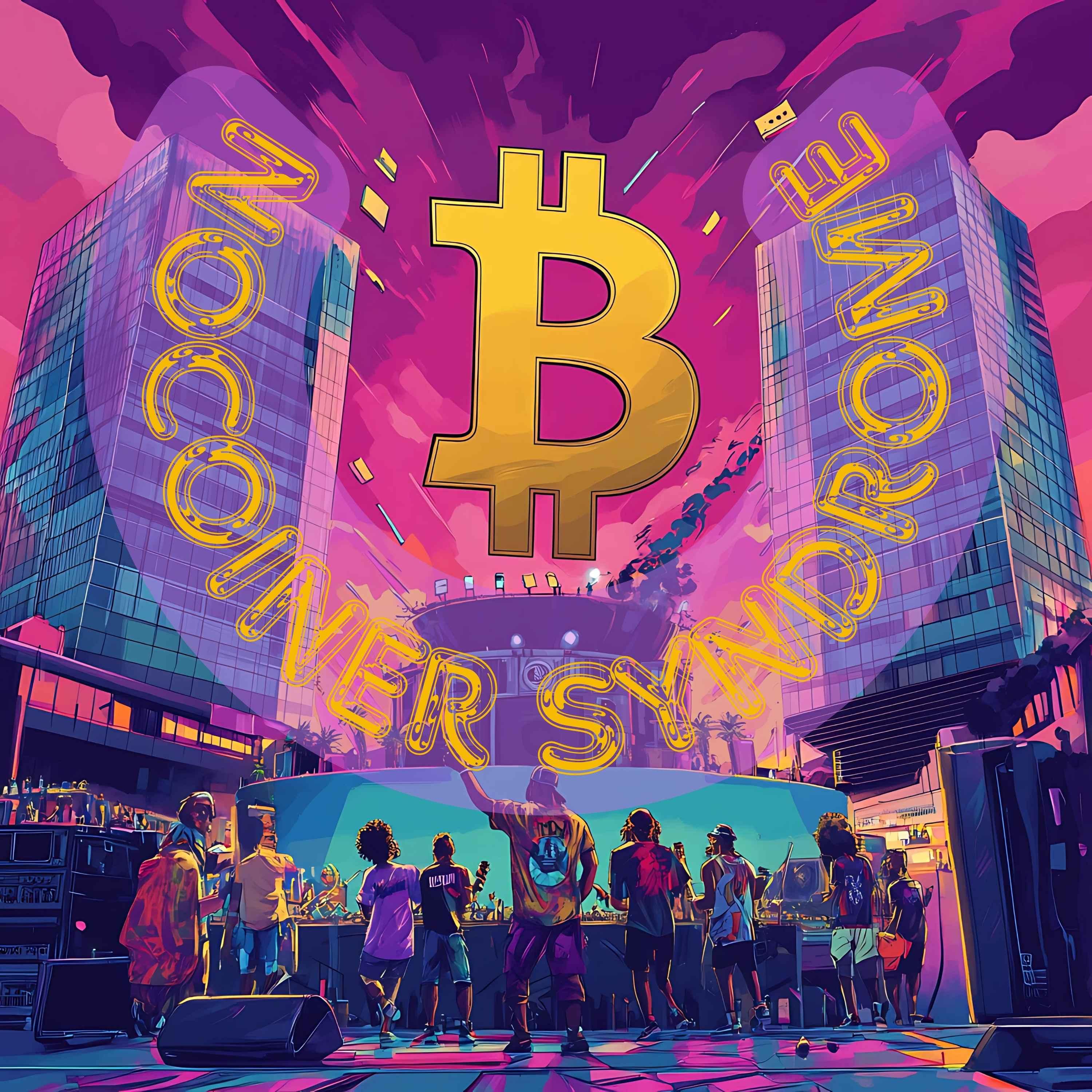
Cover art:
Important correction for the nocoiner-syndrome paper, page 9:
"Bitcoin is not going away; it is now a more important reserve asset than silver or the British pound. This means that if we weight risk of Bitcoin, it might be a better idea to enter the Bitcoin economy now than it was in 2010. The risk is gone."
The risk that bitcoin will go away is NOT gone, it is still there and will be there for the foreseeable future. One part of the risk, specifically the risk of not being able to take off, is gone. Say, it was in the range of 99.0-99.9% probability. Another big part of the risk, specifically possible ban (and legal prosecution of the owners of bitcoin) from the state authorities of the major states also seems quite diminished for the time being. But other parts of the risk are still there, namely:
1. possible catastrophic bugs
2. attacks on cryptography algorithms from newer vectors like quantum computing (but not only this)
3. new distributed coin with better qualities, which could flip over bitcoin
4. splitting the network into separate segments - physical or logical, including possible splitting of the bitcoin into several types (white, black, ...) with different prices and utility
5. hacking attempts on the broad spectrum of vectors, which will be the more intense the more value will be concentrated in bitcoin network
6. outlawing of non-custodial wallets and mixers, and moving most of the bitcoin to the state-controlled entities with full control and taxation
7. mining pool wars between the states or corporations
Many of these risks will be more prominent during next years and decades with current trends of the development of the newer AI systems and governments trying to get more and more control over the citizens of their countries.
// Please share with authors. nostr:npub1sma7q7czgjjgqva5x6lv32jv9qhd8grwulvu0tkj88j4z4qyapws9psdx0
Thank you for feedback.
There are still risks, we were talking about the risk of the project not taking off.
But let's discuss your risk analysis:
1. and 2. are still risks
3. possible, low probability, but that does not mean Bitcoin goes away. Even if it flips over, there will be people that want to stay in Bitcoin. When countries introduced instant payment and better "distribution qualities" of fiat, there still were enough people who held to gold, just because they trust it more.
4. that is a risk of something that will happen, but that will not kill bitcoin as a project. There is now enough hodlers that they will just play in their own sandbox regardless of splits.
5. This is similar to 2. Yes, it's a risk, but not to bitcoin, but to its users. Market will react with better security solutions.
6. Outlawing is not a risk to bitcoin, but to some users. There are many countries where bitcoiners can flee to and they will have mean to do it. It will also show how the use-case of bitcoin (free movement of capital and self custody) works and solves this problem for users. Bullish (not necessarily for price, but for use-case, what Bitcoin is for).
7. that will certainly test Bitcoin's antifragility, bullish.


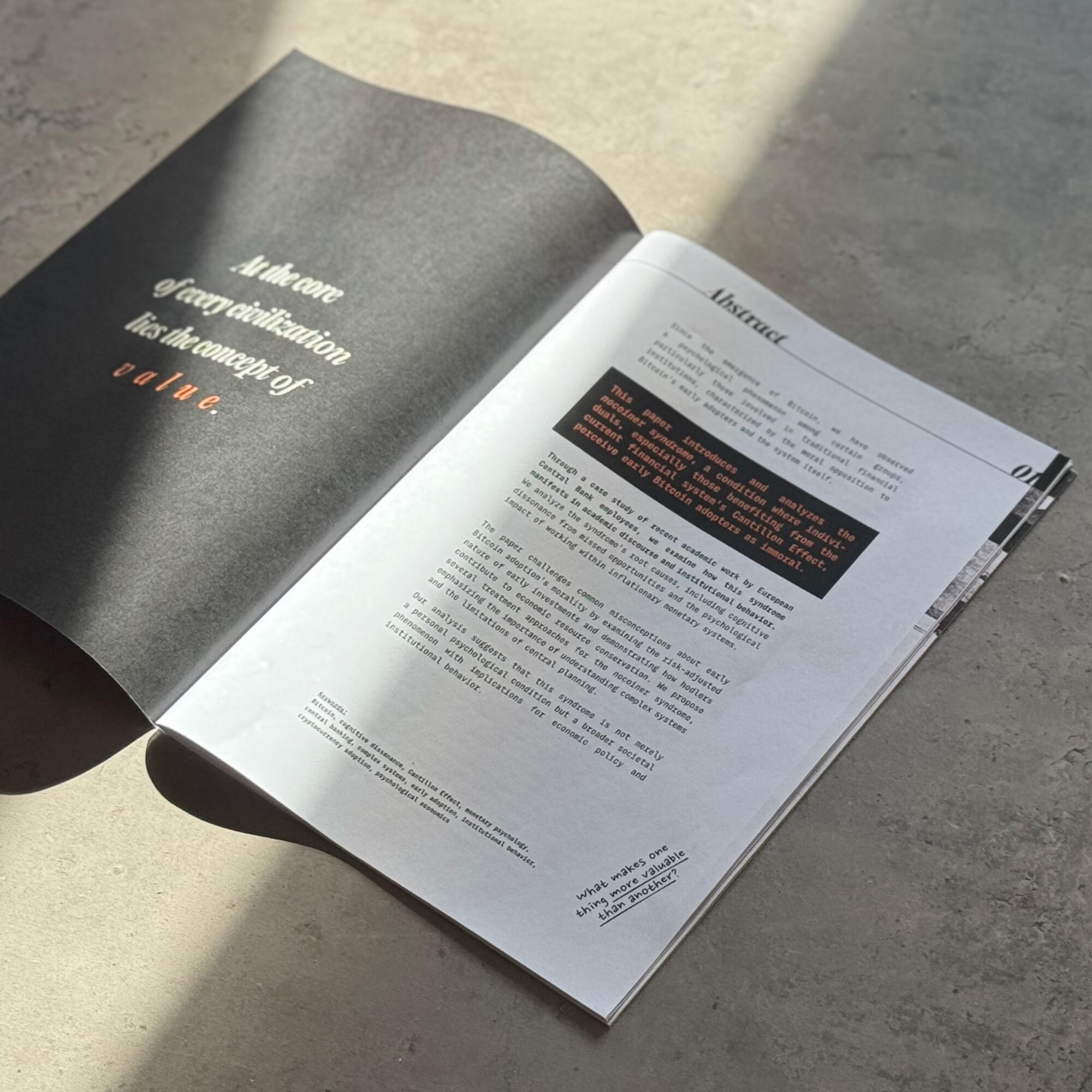
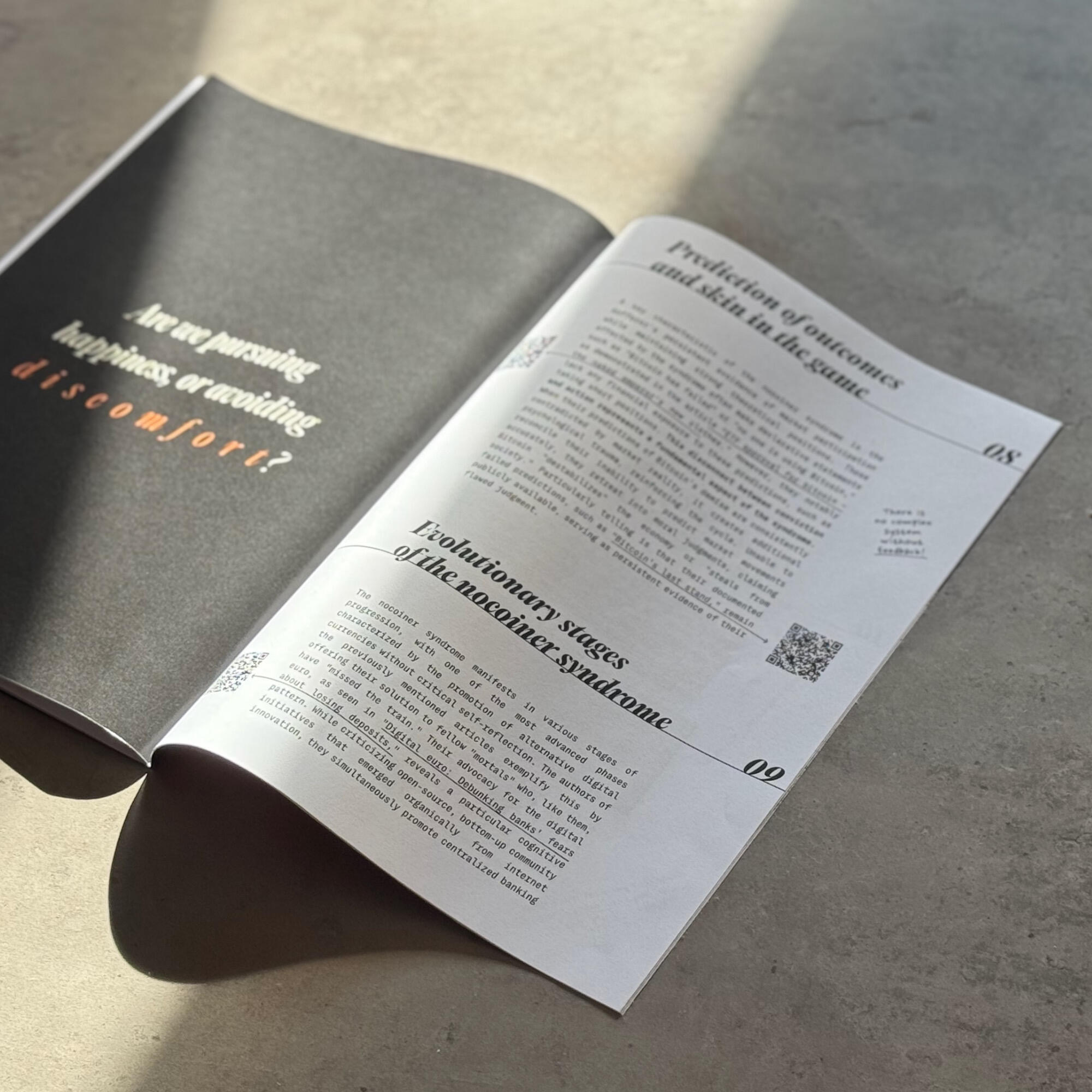

The designer for our paper Nocoiner Syndrome is lit. We are very grateful for the visual identity of the paper, including the notes on the margin. And also for managing the printing. You can find printed editions of No Coiner Syndrome at some of the cool conferences over the coming months.
Check his web and portfolio and contact him if you need amazing visuals for your project:
Portfolio:https://dribbble.com/nogoodkid
nostr:note1xd4qkxgvmnwm9wd5a6x2el9fudna5kjtrv8s4teqrv6tzrwftr4qcwal4u



They're getting it straight from the printer. Thank you!
The institute is not tied to the building, it's like ECB, having many branches. But contrary to ECB we do not have any hierarchy.
The nocoiner syndrome is not simply having no Bitcoin. Most people on this planet as of this writing have no Bitcoin. Some don't know about it, some have not invested enough time to learn about it, and some do not want or need it for its properties.
The nocoiner syndrome is a condition under which a person perceives early adopters of Bitcoin as immoral. Often, this condition stems from their perception that early Bitcoin adopters in their vicinity have quickly become extremely wealthy, by not producing anything, "just buying Bitcoin". The root cause of this syndrome is perception of a "missed train" and further justification of why Bitcoin itself and also the early adopters are bad, immoral, or misguided.
To be diagnosed with the nocoiner syndrome, individuals must actively oppose and judge Bitcoiners. This often involves hiding trauma from past dismissals of Bitcoin as unworkable or harboring suppressed feelings like 'we missed this train' or 'it is too late.' This leads to animosity towards Bitcoiners.
We are pleased to announce our research paper "Nocoiner Syndrome", which analyzes this condition where individuals, especially those benefiting from the current financial system's Cantillon Effect, perceive early Bitcoin adopters as immoral.
It is based on a case study of certain individuals working for European Central Bank and investigating several "issues" with Bitcoin. As they have all the symptoms to be diagnosed with late progression of nocoiner syndrome, we decided to help people understand this condition and possible treatments.
Please spread widely to help those in need: https://cryptoanarchy.institute/nocoiner-syndrome-2024.pdf
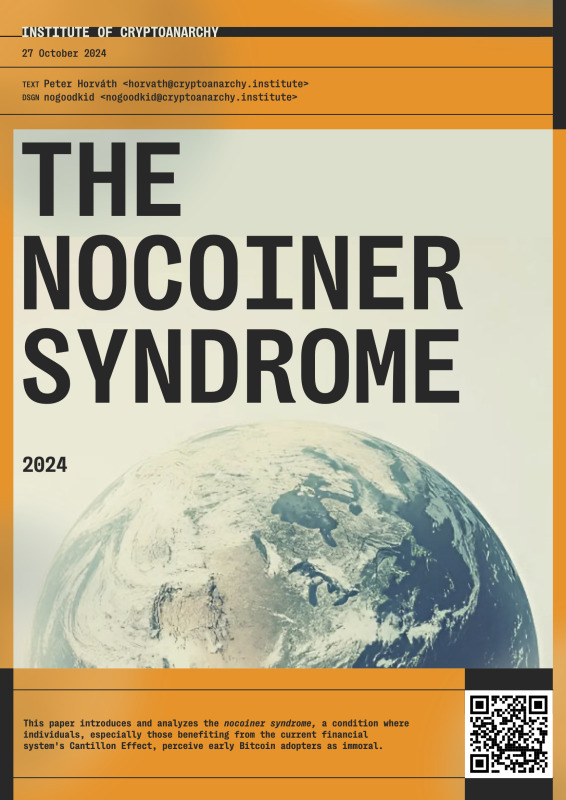
We have updated the paper with one more section and some minor bugs fixed. Download the current version from the web.
More importantly we need to send them the paper.
Anyone knows a snail mail address? We are producing a hard copy and they deserve a copy each.
We are pleased to announce our research paper "Nocoiner Syndrome", which analyzes this condition where individuals, especially those benefiting from the current financial system's Cantillon Effect, perceive early Bitcoin adopters as immoral.
It is based on a case study of certain individuals working for European Central Bank and investigating several "issues" with Bitcoin. As they have all the symptoms to be diagnosed with late progression of nocoiner syndrome, we decided to help people understand this condition and possible treatments.
Please spread widely to help those in need: https://cryptoanarchy.institute/nocoiner-syndrome-2024.pdf
Hello Nostr! We are a think tank that provides state of the art research, policy papers and decentralized knowledge, in a search of deeper wisdom emerging from complex decentralized systems.
Check out our website: https://cryptoanarchy.institute/