

It would be cool if it somehow rewards more valuable content. Like making it more plausible for a well formulated comment to receive a zap than someone who just comments ”.”
I really like how new ”features” on #Nostr originate from user needs. Not what a company thinks users need.
It grows organically and the best ideas survive.

I find this quite scary. He writes in his book that once a global order is challenged, trade, technology and other types of wars happen.
The worst one is shooting wars.
And that if there’s anything you can be sure of about shooting wars it’s that they never go according to plan, and outcomes are always worse than anticipated.

Babies should be called entropy machines. Look away for 30 seconds and see utter chaos when looking back.
It’s also quite impressive.
#dadstr

You have me curious – what’s vibelining?
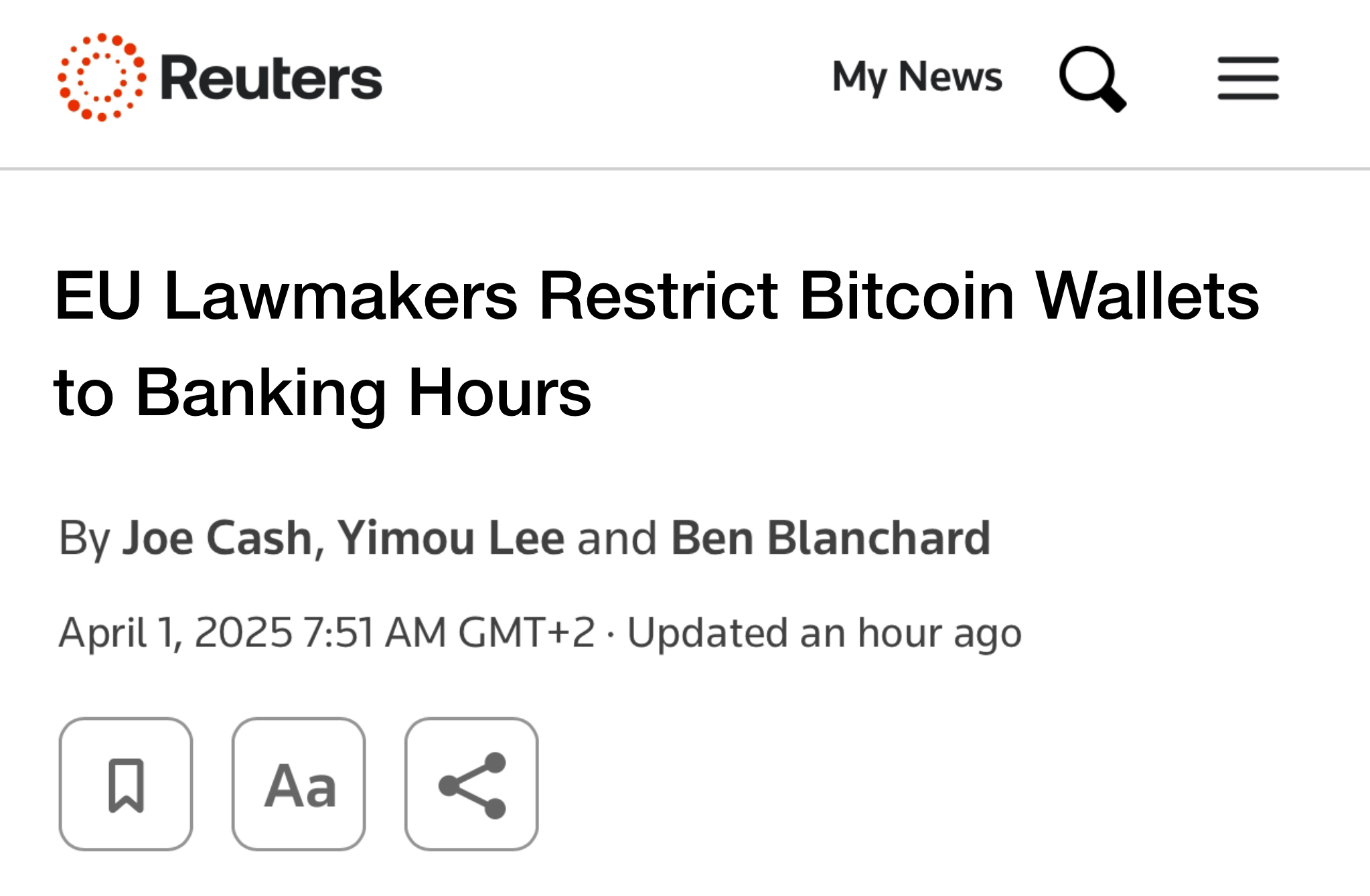
Although markets are down, any Bitcoin purchase before 10 November 2024 is profitable today (vs USD).
Puts it into perspective.
#bitcoin


Has anyone evaluated the Bitaxe vs Braiins mini miner? Pros and cons?
I like that the Braiins miner is more discreet.
#asknostr
GM ☕️
It looks like bitcoin is on sale again.
#gm #bitcoin

maybe https://huggingface.co/some1nostr/Nostr-Llama-3.1-8B by nostr:npub1nlk894teh248w2heuu0x8z6jjg2hyxkwdc8cxgrjtm9lnamlskcsghjm9c
Thank you
Rookie Nostr question: is there a go-to place where you can get Nostr-related docs to use as context/rules for the models?
GM!
Are we witnessing the first time markets decrease significantly without it affecting bitcoin’s price?
#asknostr
”Can you spice it up?”
This one prompt gave me good results when asking an LLM to improve the front-end of a webpage.
For this webpage I asked for some extra spice twice.
#ai


I found these good:
- Check your financial privilege. nostr:nprofile1qqs9336p4f3sctdrtft2wlqaq5upjz9azpgylhfd3dplwf005mfrr9spzamhxue69uhkummnw3ezuendwsh8w6t69e3xj7spz3mhxue69uhkummnw3ezummcw3ezuer9wct4lwjj
- A progressive’s case for bitcoin. Jason Meier. (Even if you have other political views)
- Layered money. Nik Bhatia.
Thought experiment: do index funds become irrelevant if inflation is 0 (i.e. money supply is fixed)?
If the money supply is fixed, then index funds that follow market movements would not see the increases they see today. There is a clear correlation between money supply and stock market performance.
Will Index funds even become obsolete? Why invest in an index fund that follows the market movements if the market does not increase relative to the money supply? The opportunity cost of investing 1 money becomes much higher since the market only increases if money is allocated to the stock market from other asset classes or salaries.
Companies that pay dividends would be attractive, and speculative companies would likely not be as highly valued, compared to today. What you’re betting on is whether the up-and-coming company can obtain a larger portion of the money supply in the future.
Companies will still improve over time, by generating more and higher quality output. Some companies better than others, and money will continue to be reallocated between companies.
The index funds may still increase if money is reallocated from other asset classes such as bonds, real estate and commodities to stocks. But the stock market cannot be larger than 100% of the money supply. It stops there.
And yes, with money I mean bitcoin.
What is my thinking missing, and does someone else have detailed thoughts around this already? Book / podcast / video / other?
#asknostr
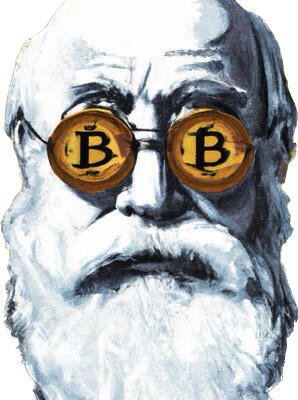
A favourite quote from Richard Feynman.
#Bitcoin #Bookstr

Since becoming a dad, the amount of time I spend in random car parks because my baby fell asleep and I don’t want to wake her is getting weird.
Each time I feel like I’m going to see a drug deal unfold somewhere.
#dadstr
Hi #Bookstr, I wanted to share one of the most practically useful books I’ve read in the past 3 years: Decisive, written by Chip and Dan Heath.
Key takeaway: before making any big or difficult decision, use the WRAP process.
Widen your options: we often mistakenly think we have limited options. For example, when buying a car, we might think should I have this extra nice feature that costs $1,000 more, or not? Instead, widen the options. Should I have this extra nice feature or use that money for a trip, a new TV, or to send a butt-load of zaps?
Reality-test your assumptions: Talk to people who have done what you want to do. Talk about your expectations and see if they match up. Also, a thought experiment can help: “what must be true for the alternative to be better”?
Attain distance before deciding: Sleep over the decision for however long you need (if time allows). And use the “10 method”: how will you feel about the decision in 10 minutes, 10 days, 10 months, and 10 years?
Prepare to be wrong: Have a backup-plan if your decision was wrong. Thought that you would enjoy backpacking in Thailand for 6 months but hate it? Don’t hesitate to change location or go back. This step is extra important if the potential downsides are big.
For me, widening the options has been the most useful. Whenever I find myself thinking “should I do this or that”, I try to swap “or” with “and”. It doesn’t always work but when it does, it feels great! Just thinking about “and” gives a bigger sense of freedom.