
Merry Christmas!


nostr:nprofile1qqsrhuxx8l9ex335q7he0f09aej04zpazpl0ne2cgukyawd24mayt8gprfmhxue69uhhq7tjv9kkjepwve5kzar2v9nzucm0d5hszxmhwden5te0wfjkccte9emk2um5v4exucn5vvhxxmmd9uq3xamnwvaz7tmhda6zuat50phjummwv5hsx7c9z9 I just found this in a box. I got this for Christmas 1998
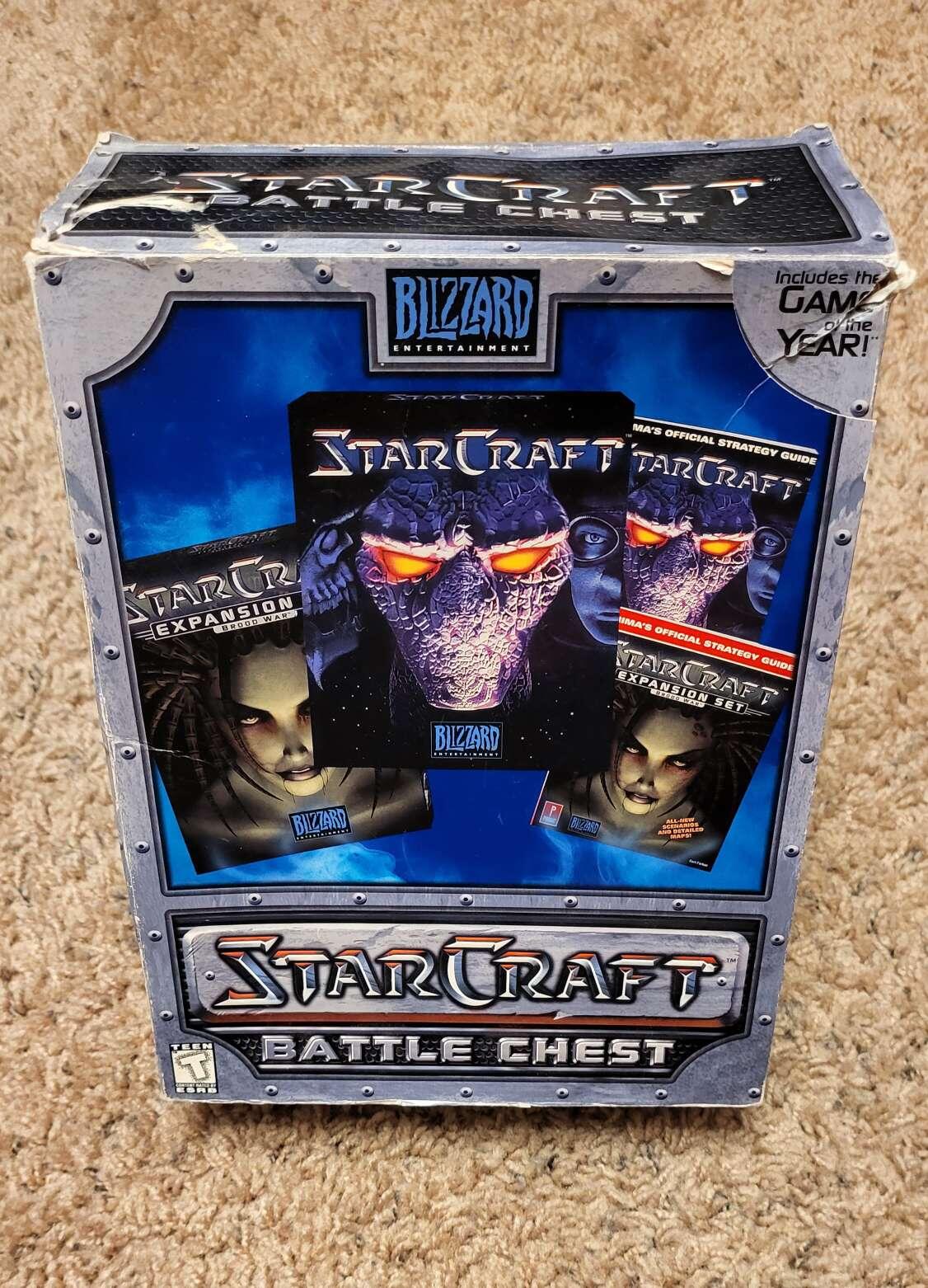
Such a good game. I loved making maps, too.
Did you know one release of this was rated M?

Brain to machine interface will 100% be a thing. I just hope and pray we are a freedom and privacy loving society when that happens.

I'm sure some people have been working on it, but lightning won't be as beneficial if one believes in a multi-coin future.

I don't think I've ever seen `Shop Around the Corner`! I'll have to check it out!
`It's a Wonderful Life` is the story of our time. America is currently Pottersville, and it got here because of warped, frustrated old men who couldn't say "no" to playing with the way our society is run for their own gain, in the fields of legislature, money and banking, the corporatist capitalist tenancy to lower quality and raise prices, etc. We are George Bailey. We've been slaving away at making this a better place and only narrowly escaping defeat.
The only way to restore Bedford Falls is to realize why we've been put here on this earth and no longer wallow in self pity, initiating the change we wish to see, not relying on the greedy to needs but working as directly with each other as possible.
Bitcoin, Nostr, and neighbors fixes this. #maga
Watching `It's a Wonderful Life` with the family. George Bailey is my spirit animal.


All *good* things. And since it is technology that makes playing by the rules not only easier but the only feasible path, I would definitely call it good, and thus from God in the same sense all good inventions come from him. Unlike compound interest on loans.

Okay. I'll see about checking it out.


Each person maintains only a couple lightning channels per year, big block:
8B people * 4tx/yr * 250B/tx = 8TB/yr
Each year, a full node would have to add $150 in storage if they only use disks
VS:
Small block, self custody:
8B people * 1tx/person * 10min/2700tx = 56.3yrs
Time to make one transaction per person art current rate.
----
There's no way to self-custody for every person at the current rate. As it currently stands, an on-chain transaction will be a once-in-a-lifetime event for 99.99% of people.
I don't think I am. Bitcoin still has a scaling problem if self-custody is not to be a thing of the past.

I'm looking for a synopsis. Got a source to which I can go?
I have an idea. What if to be consider to be running a "full node" one participates in a database sharding proof of storage system, so it's ensured that the full chain will persist, but not necessarily on any single node? I can imagine a RAID striping type system across nodes. If a node keeps X of every Y blocks, and somehow proves it to its neighbors, and there are Y groups who all keep track of neighbors, the storage needed per node will be X/Y of the total size of the chain. Let's say 5 of 256, so adjacent groups have an 80% overlap, while reducing load to about 2%. Reconstruction would be quite rapid. If a group goes empty, the data could be reconstructed from four other groups, and a node could automatically manage to which group it is assigned. This would allow meaningful participation while greatly reducing load. Whole-chain full nodes would still be a thing for those who would want that, obviously.
To maintain the full node aspect of verifying chain integrity, each node proves to itself the change to the database, and the group publishes the agreed upon proof to the chain with a many-multi-sig (allowing for a latency), sorta like a parity, so the shard system will occupy exactly one transaction per block. This would become the basis, then, for a layer 2 of virtual addresses, wherein an on-chain address is non-custodially occupied by many sub addresses, and the per-shard database proof also contains the transactions of virtual addresses. Cross group transactions might have to be on-chain, but they could at least be rolled up after a signed cross-group acknowledgement (making the other group acknowledges the transactions into its virtual addresses). Cross-group lightning network could also become a thing.
This is starting to feel a bit like drive chains, NGL, but still a bit different.
Thinking about scaling again. What are the arguments for and against everyday people needing to be able to run full nodes? (small block/big block root arguments)
I'm not saying we need big blocks or Bitcoin is doomed, but I am saying that with technology getting better and storage getting cheaper, the need for small blocks will decrease.
Thoughts?
#askNostr #bitcoinscaling #bitcoin #layer2 #BTC #BCH

It is indeed! My MIL said I should give it a listen and wants my opinion.
So far, I get the impression he's intellectualized being butthurt from the BCH fork. I'll take it seriously, though.
Listening to #hijackingBitcoin right now. Who else has read/listened to this book? #askNostr