

Standalone web apps that aren't intended to be shared wouldn't normally need to keep keys from being hard coded. That constitutes a lot of projects on GitHub.
Some people actually do store private keys on GitHub. Even if that key is configurable, their actual key is often used as a default to make testing faster.
Still listening to #HijackingBitcoin. I got into Bitcoin in 2016, right as the block size war was coming to a head, but I heard almost nothing about it. I heard about BCH, but I always thought it was a spinoff that was more separate. I'm learning a lot about the real history of the development.
I'm still not a big block Bitcoiner, but I do agree that the core devs did unnecessarily prevent the block size increases that were actually intended. We still need secondary layers, too, because the use and the verifiability need some level of decentralization.
Who else has read or listened to the book?
100% it will! Nostr is freedom tech like Bitcoin is, so it's almost inevitable he'll be attracted to it. I hope he works on the marketplace side of things.

I and my wife were home schooled. We plan to homeschool our children. The best way to reform education is simply not participate in government schools. As demand for it does down, so do its problems.
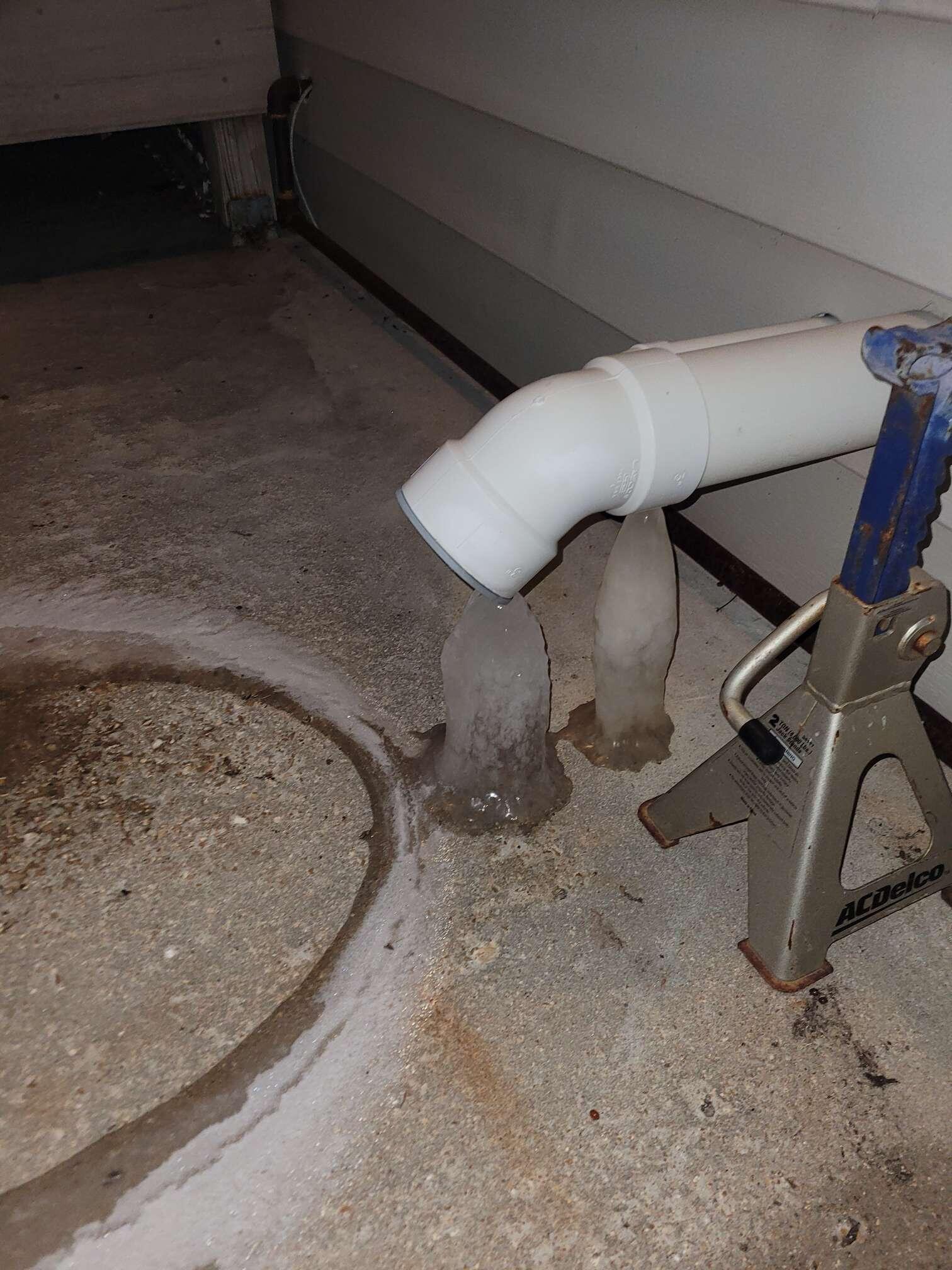
Wow! This is an air exhaust vent, not for water. That's frozen condensation! Haha!
So, how long until the recently released Ross gets purple pilled?
#freeRoss

Hahaha! Why would they want to censor that? To protect talk about their friends?
MAGA FUD. Not going to happen.

In terms of number of orders of magnitude, but still enormous! The last four years were weird, though.
#GulfOfAmerica

Interesting idea! The number two correlation for repeat incarceration is financial illiteracy after fatherless upbringing, and that is likely in large part due to not having a meaningful way to contribute to the market. Could be a great way to fix the system in-part.

Exactly.
I'm not a big blocker, but nor am I exactly a small blocker either. In the far future (multiple decades, centuries), maybe we'll see giant blocks to maintain the L2s and L3s, but it's a far cry from what BCH will end up being.
Using bitcoin L1 has to be be more common than running an L1 full node.
Again, this is for the future, many years from now.
I think there ought to be more users of bitcoin that node operators. I think a single transaction ought to be cheaper than running a node. The upwards fee pressure of 8 billion people putting transactions on a 7tx/s network would make each cost possibly a years salary of an average person.
A metric we could use for fees is their proportion to the cost of owning and running a node for a year.
Trading "your everyday node operator" for "your everyday bitcoin user" is a profitable trade.
That's not to say that every transaction ought to be on-chain, but that users need to actually be able to set up their a LN channels in a decent timeframe.


I want to explore drive chains as a way to alleviate L1 congestion while maintaining some level of self-custody. It's seeming more and more like the only way. DC+LN could really widen the adoption potential.
For now, yes. I'm setting my sights not on this year but in five when adoption is up 10x and again after that. The chain doesn't need to contain all the world's transactions, but I don't want L1 to be only for the financial elite either.
2300tx/10min/8B ppl = 1tx/person per 66year
64000/10min/8B ppl = 1tx/person per 2.4year
One of two things has to happen for a self-custody future: greater block sizes scaling partially with adoption or an L2 that is trustless and doesn't require direct and proportional L1 interaction.


Looks like floating granny underwear 😂
How expensive should it be to run a full node? Current low-mid end hardware costs about 0.001BTC, and storage is about 10MB/sat. If the blocks are fill for a year, that's a little more than 5ksat/yr. 100ksat startup cost and 5ksat/yr is really quite cheap.
With hardware costs going down and performance going up, I think a block size increase could be warranted. Carefully and cautiously, we could try 2MB, and then 4MB in another four years, maybe keeping trend to a maximum of 32MB as the adoption reaches the end of the S-curve.
A balance must be struck between throughput and security. The narrow optima is widening between these as of now, and I'd rather a world in which self custody and everyday people interacting with L1 remains a thing for my children.