
Avatar
MCBitcoin
9cc9ebc28533300f4f8edd1fc21c59f9655cb1c3b4020fe0b579ea57e63b9d07
Bitcoiner. Here for the memes. Family, friends, and good times. Love nature and playing the piano.

How much monetary premium do you think there is in residential real estate?

I think it is a soft fork, not sure what the consequences would be if some miners started running it and others didn’t.
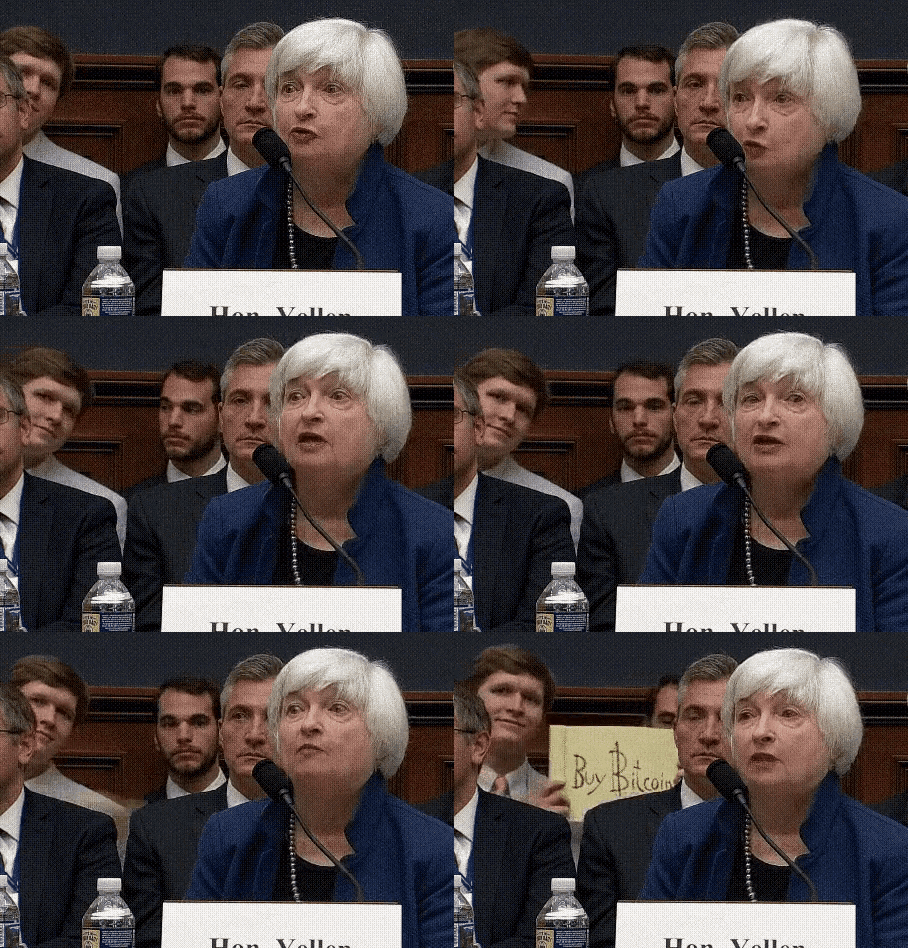
Would be better to give it away to private charity. Don’t let the government get their filthy paws on it.

Fuck drive chains.

Really enjoyed Oppenheimer. Christopher Nolan is an amazing filmmaker.

🤯

Satoshi Nakamoto will go down as one of the most influential figures of all time. I wonder if his identity will ever be known publicly?

Replying to Avatar jimmysong

The False Dichotomy: Soft Forks vs. Innovation

----------------------------------------------

A common argument in the altcoin community is that Bitcoin isn't innovating, especially compared to newer, "advanced" altcoins. I've debunked this fiat argument in the past, as it equates bribed rent-seekers with entrepreneurs under the label of "developers." These arguments come from non-technical midwits that spew altcoin propaganda and have no interest in providing value.

Unfortunately, this argument has a particularly obnoxious form within Bitcoin where the so-called "moderates" argue that Bitcoin needs to implement more soft forks to continue innovating or progressing or gaining adoption. This argument is flawed for several reasons.

First, it's incorrect to say Bitcoin isn't innovating. Numerous developers are continually working on Bitcoin, not just in Core, but in the many projects building on top of it. Innovation doesn't just mean changes at the protocol level; it also happens in second layers. Innovation is happening in a permissionlessly.

Second, equating soft forks with innovation is not understanding the long-term consequences. Soft forks are permanent changes to the protocol, and implementing them doesn't necessarily make Bitcoin more innovative or better. In fact, rushing to add new features can introduce security vulnerabilities, a problem often seen in many altcoins. Worse, if the soft fork is a complete dud, we're stuck with it. Reversing a soft fork requires a hard fork. We're essentially stuck with these soft-fork changes forever so we'd better be careful about the changes we let in.

Third, there's a misconception that a lack of soft forks indicates stagnation. This view ignores Bitcoin's biggest strength: its decentralization. Because Bitcoin is not controlled by a single entity, it doesn't have a traditional roadmap or deadlines. This decentralization enables a more organic and safer form of innovation, primarily occurring in layers above the Bitcoin protocol.

Innovation in Bitcoin is not solely defined by the number or frequency of soft forks. The argument that Bitcoin is lagging because it isn't continually implementing soft forks misrepresents how genuine, sustainable innovation occurs. Such misunderstandings comes from a fiat, centralized mindset and the less credence we give to this assumption, the better off we'll be.

Bitcoin core protocol is the bedrock upon which a new monetary and financial system will be built. Need to have a solid foundation that is predictable, secure, and reliable. Only changes that enhance these properties should be considered.

Bear market rally is over. Cheaper sats incoming.

BTC price drops, DCA intensifies!

Can’t wait to see fedimints roll out. Nostr zaps would be a great testting ground.