

I'd imagine most bitcoiners are xNTx types, probably quite a few ISTP:s too, considered the most N of the S:es.
I've also noticed that there seems to be a lot of extroverts, but that could be biased since my primary way of consuming bitcoin content is podcasts, and I guess they are the most likely to host and guest podcasts. Being on quite the opposite end, it's even a bit annoying sometimes, but it is what it is...
I'd say, between the "toxic maxi" meme, the willingness to move and travel, the unbelievable energy to do a million things and managing companies, etcetera etcetera, the quintessential bitcoiner is either an [ENTJ](https://www.16personalities.com/entj-personality) or [ENTP](https://www.16personalities.com/entp-personality). This based on my exposure to the MBTI system and bitcoiners - YMMV.
Yeah, that's more likely what MoE stands for. I checked Wikipedia for the mathematical uses of s, entropy is one, but thats capital S, small s is specific entropy, the entropy per volume/mass/etc. of something. And either way, I don't really see why entropy would belong in the function.
Why haven't there been any updates on your blog for a long time? This information seems like something that you would put there, comparing to earlier posts there.

It's not used correctly from a logical and grammatical standpoint to begin with. F, U &D are emotions and thought processes, but it is used about information intended, (and often about information not intended), to cause such emotions and thought processes.

Money over Ethernet (bitcoin), cumulatively over time, gives bitcoin cumulatively over s. s=$, i.e. NGU? Probably not, but that's what I can come up with right now...

Mainstream media and social media algorithms are the problems. They brainwash people to think the silly things aren't silly at all, and that government "solutions" work well. See "money laundering" for example, that has put a huge surveillance and financial censorship system in place, targeting transactions in the single dollar to hundreds of thousands of dollars range, while the multi-billions are laundered without problem, and the governments are involved in it...

Aren't there USB NFC readers? I've never seen one, but it would be strange if they didn't exist.
You have the answer in your own comment. If trying to add friction lands you in jail, of course few will do it.
In many cases it's not a complicit attitude, but seeing that the proposed tech isn't viable.
We definitely need privacy tech, desperately, but we need well thought-through things that either can't be banned, or that would be essentially foolproof even if banned, so that there is an absolutely minuscule risk of jail by developing, implementing, and especially using it.
It's a huge ask, but it is what we need. Anything less isn't just useless, but counterproductive, as it allows the state to state examples, discouraging even more people from trying.

Indeed. The printing press was banned, with increasing penalties as time went by and the use of it still increased. At the end, the use of a printing press was punishable by death! All this to "prevent the spread of dangerous information".
The printing press, obviously, didn't go away, but being a physical object, it's not exactly comparable to protocols and data on a highly surveilled Internet, when there are even technologies to identify people on how they write. Probably nowhere near perfect, but for totalitarian regimes, which soon (if not already) seems to be all regimes, it's more important to state examples than making sure the examples are actually the ones intended.

3. #EU #AML PROPOSAL TARGETS PRIVACY PAYMENT INSTRUMENTS AND FREEDOM TOOLS
The current AMLR version specifically targets self-hosted wallets, ignoring their role as vital financial tools as #Bitcoin for millions of activists facing financial oppression.
Labeled high-risk, self-hosted wallets are now seen as significant money laundering and terrorist financing facilitators. Changes include revisions to Recitals (20) and (21) and the addition of Article (31b) in Charter III, which increases operational and compliance costs, affecting business strategies and client relationships.
The consequences for EU users of self-hosted wallets are serious. Additional compliance checks will complicate, if not block, the conversion of crypto-assets to fiat currency for activists and civil society members already facing financial exclusion. The AMLR overlooks the crucial role of self-hosted wallets in transferring funds to non-democratic or conflict regions, exposing donors and recipients to repression by authoritarian regimes using AML/CFT laws (e.g., in #Belarus, #Kazakhstan, #Turkey).
Smaller clients with self-hosted wallets, viewed as higher risks under Article (31b), may be deprioritized or excluded due to higher transaction compliance costs. This makes them economically unviable for financial institutions, which often favor larger, lower-risk clients for efficiency. The latest AMLR version could effectively ban self-hosted wallets in the EU, significantly impacting the cryptocurrency sector and those vulnerable to oppression.
See our reaction in our Submission: https://en.odfoundation.eu/a/725781,building-true-change-btc-coalition-submission-on-the-eu-proposal-for-a-regulation-on-the-prevention-of-money-laundering-or-terrorist-financing/ 
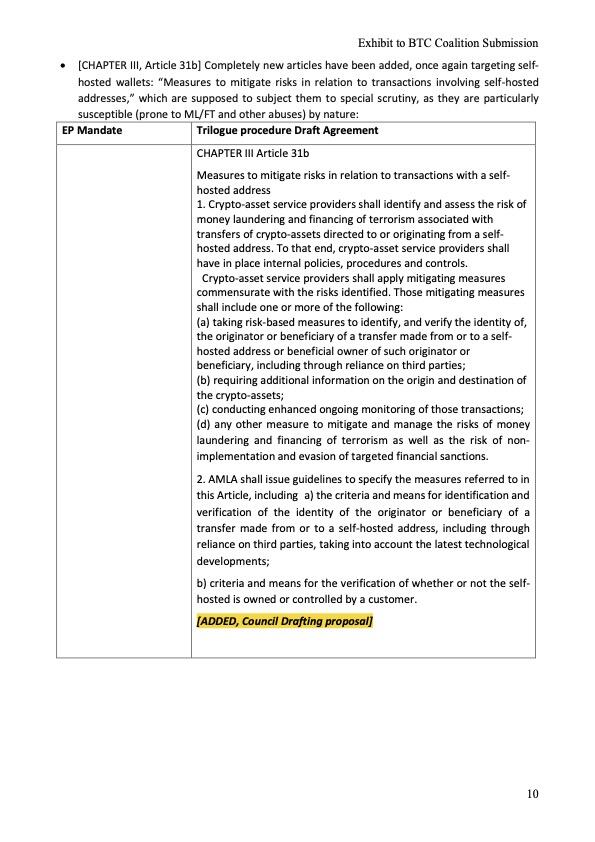
I guess the eurocrats spread a rumor that they would ban self-custody, waited for the Bitcoin community to debunk it, and then pretty much added it in, last second, in order to confuse people until it's too late. I was going to add something, but it would be too mean to all the pigs in the world, so I'll refrain from that...

Not strange. The body probably acts as an antenna, picking up some fairly nearby signal.
When listening to a weak signal on a regular FM radio, the reception often gets better if you hold the antenna. Same effect.
Terahertz doesn't go very far: https://en.wikipedia.org/wiki/Terahertz_wave
Also, what does that have to do with the chemical key system that they show?
Seems like a video of put-together vaguely related things to lend credibility to something that's not real.
Dutch podcast interviews a few victims of obvious discrimination by ING. They sent a small payment to someone whose first name is the Arab equivalent of "John", and were hit with KYC questions. Both initially refused, but when ING threatened to close their bank account they relented.
They also interview a compliance supervisor at the bank who basically gave the "I'm just following orders" excuse, and is sorry that the victims "feel" discriminated.
The "explanation" given, though ING doesn't confirm it, is that there is some random terrorist out there with the same first name, so they ask everyone who mentions that name for full details. ING then pretends that the law requires this, because there's a "risk". This is utter nonsense in my opinion, and it would never happen if a terrorist had a common Dutch or English first name.
Banks are playing a cynical game here. They know they get a fine if they don't do sufficient anti-terrorism screening. They can probably use these nonsense investigations as a legal defense, using their customers as human shields. Meanwhile they know they'll never be prosecuted for discrimination, or extortion for that matter.
Bitcoin fixes this, but personally I'd like to see these Gestapo compliance officers, and their bosses, behind bars.
https://www.nporadio1.nl/podcasts/argos/106152/discriminatie-of-terrorismebestrijding
"I'd like to see these Gestapo compliance officers, and their bosses, behind bars."
Indeed, along with the politicians, lobbyists, etcetera, who make these laws in the first place!

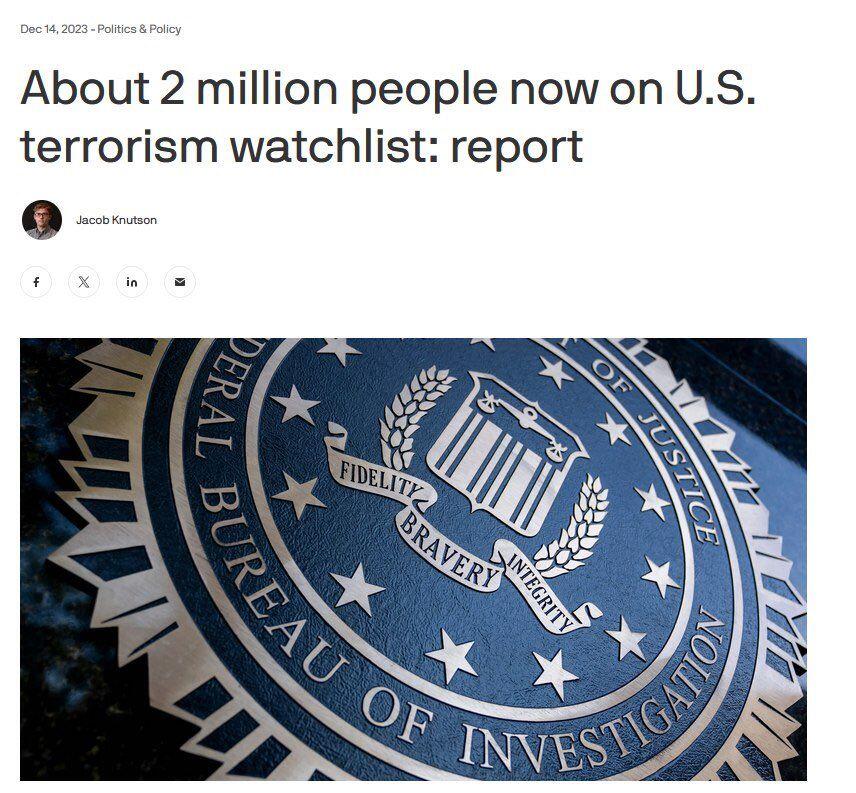

Someone needs to make an AI that can make sense of this: input symptoms > AI narrows it down and asks questions about diet etc. > AI figures out what's missing or there's too much of, or at least a number of possibilities to test for > AI informs of what foods contain it, or if it's available as supplements, etc. or what to avoid.
I believe many illnesses are in fact malnutrition or poisoning.
 nostr:note17yvru9sa9pn0q53wdmw3ld7zqjr05q4kr2m4qxrvmc3t673vpgmqkqr7pe
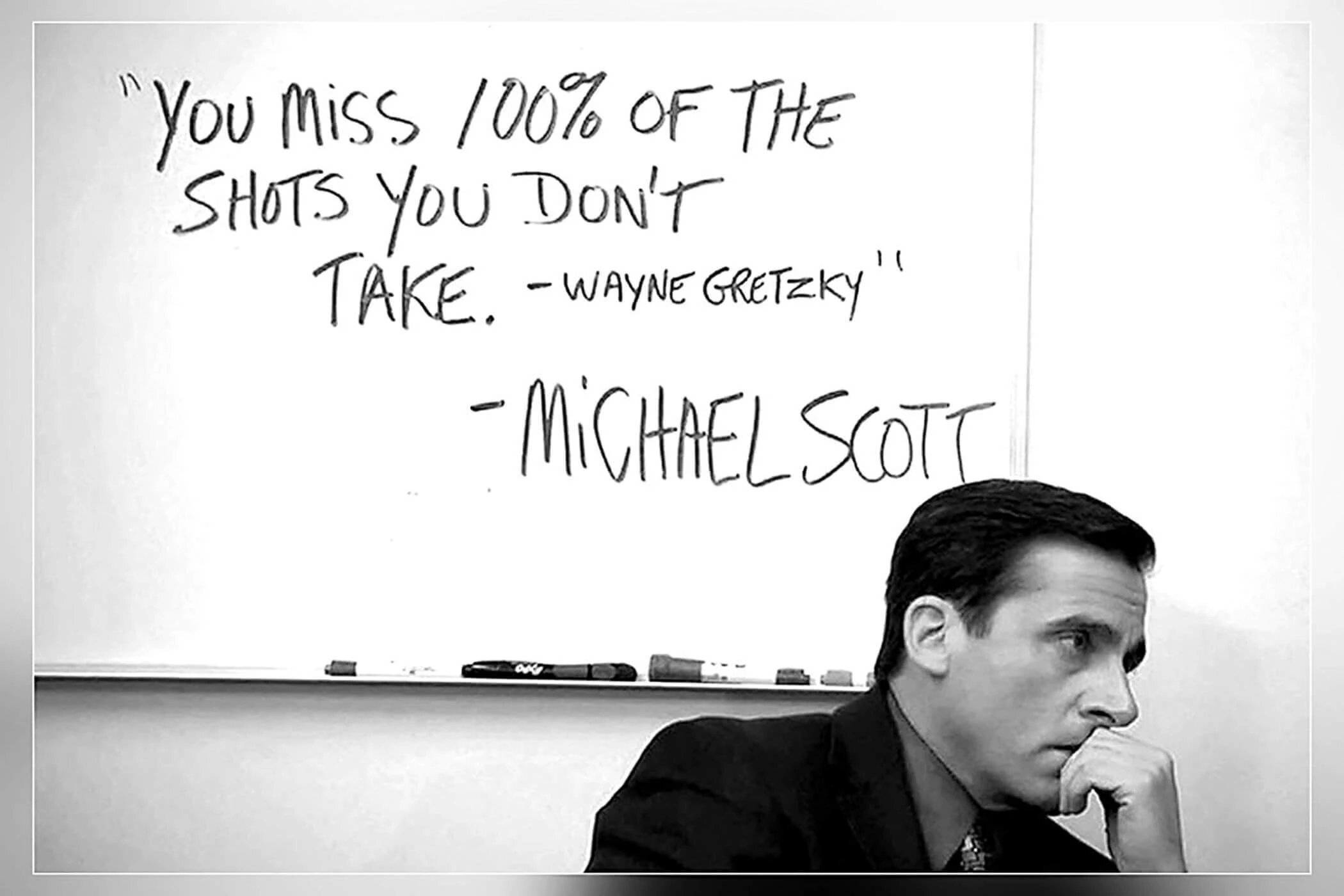
And you lose 100% of the time and bullets spent shooting at something that's impossible to hit.
I don't know if it's mostly a personality trait or something that can be learned, but having a good idea in advance about what's worth spending time and energy on trying to achieve is by far more valuable than just trying everything, in my opinion.

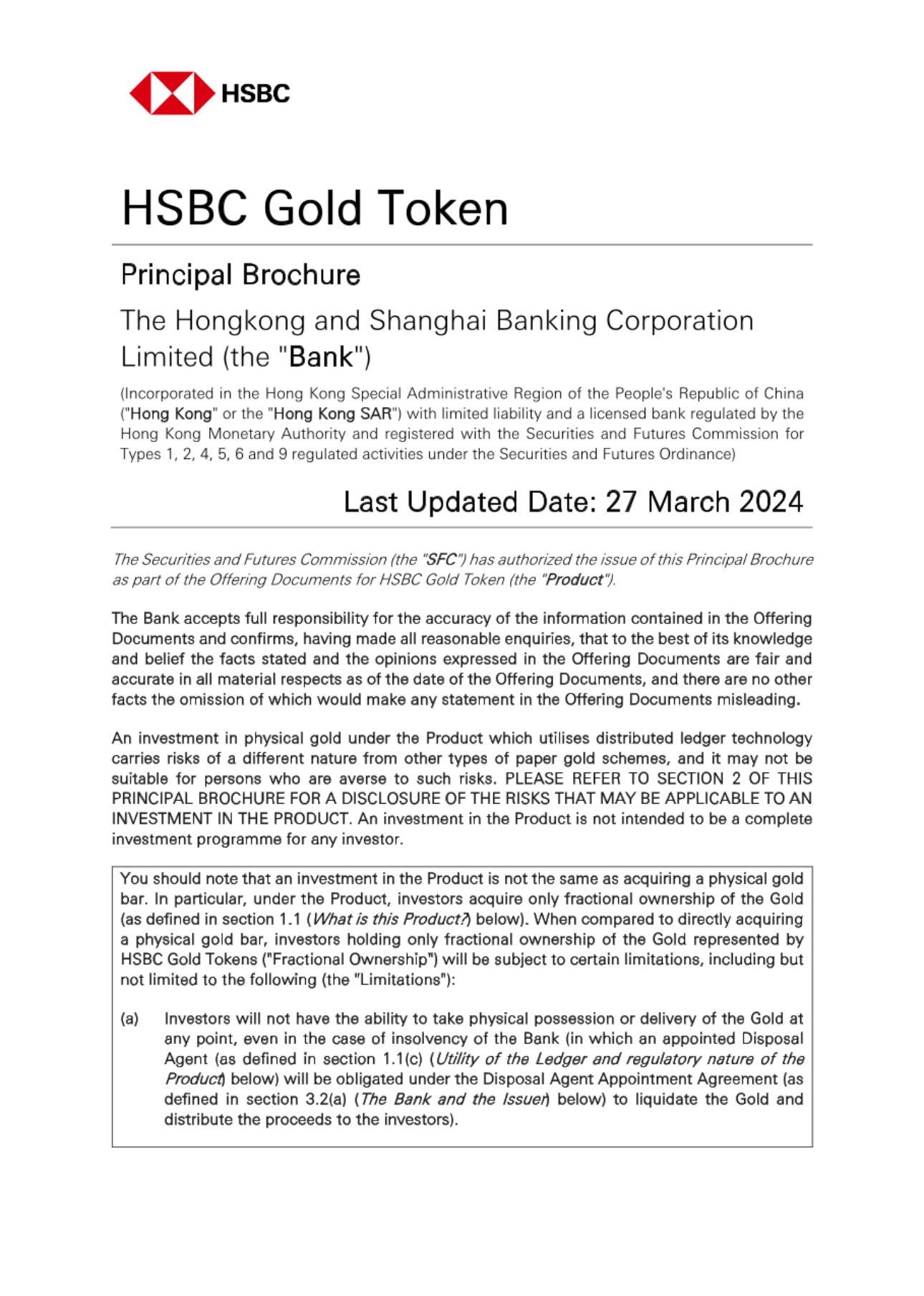


Uh, no. I'm not bragging or trying to cope, I didn't have that knowledge, so I'm not rich, but I am not on bitcoin zero either. I was just trying to answer a seemingly sarcastic question in a sarcastic way.
