


Devils Tower rising 264m (867 feet) above the surrounding terrain in northeastern Wyoming, an igneous intrusion that some believe is the remains of a volcano after erosion removed the surrounding rock.
[📹 everchanginghorizon]
https://video.nostr.build/1e6abe79afa02f42b73a7f0bf1af8bccca7f87ca26c65718931466b30a3265dc.mp4
Some believe it's a petrified tree


What Max and Stacy saying about this?



China (long-ish) Morning Missive
There’s a big meeting in Beijing next week and a meeting where expectations are being set for some sort of massive fiscal stimulus. There’ve even been some expecting a fiscal injection of 10% of GDP
Allow me to state unequivocally that there is no “bazooka”. There never was one and there never will be.
I will repeat once again, Keynes is Dead in China.
It is true that the Beijing policy Mandarins will announce an expansion of the annual fiscal deficit. Last year the target was 3.0% then raised to 3.8% at mid-year. For 2025 the expectation is around 4%.
A number of different categories of bond issuances will also be announced. A trillion or so Renminbi will be at the discretion of the central government. The bulk, however (+Rmb4.0tr), will address local government balance sheet and income statement issues. I will return to the latter of these two shortly.
This all seems like a rather significant fiscal response. Again, it isn’t. Not on a net-net basis. To start, the focus and priority remains on addressing the bad debt throughout local governments. This is pure debt restructuring and will add zero fiscal stimulus to the economy.
Then there is the one issue (income statement related) that I haven’t seen addressed anywhere in the analysis; the gaping hole in tax revenue. This is an issue for both the central and local governments. In fact, virtually all the funds which will be announced as allocations to local governments will either go to restructuring debt or as transfer payments for the direct purpose of meeting local budgetary obligations. The same holds for the elevated central government deficit spend. To clsoe the gap between expenditures and tax revenue.
The figures may be large, even when combined together, but they are net-net zero stimulative to the economy.
This does leave the trillion-plus in “Special Purpose Bonds”. I’m also confident that a proportion of the deficit spend will be at Beijing’s discretion. Here is where optionality comes into play.
Beijing is still waiting patiently to assess the full extent of how it is the Trump administration intends to target China’s economy. A fiscal reserve of sorts, roughly a few trillion Renminbi, will be kept idle and applied as is deemed needed. Until that time, however, the focus will remain on the aggressive, systemwide deleveraging of the entire economy.
Finally, not addressed is the likelihood of direct support to the Chinese household. That’s because, other than at the margins, there won’t be any. Direct to household stimulus would be completely ineffective. It would all just be recycled into bank savings. Maybe one day the credentialed class of economists will finally come to terms with their errors and adjusted their outlook on China accordingly. Unlikely at this point though.
https://www.cnbc.com/amp/2025/02/27/china-two-sessions-increase-fiscal-deficit.html
Monetizing the debt is still money printing.
Keynes isn't dead, it's still being taught.
If not Keynes, then what?


All Quiet on the Western Front

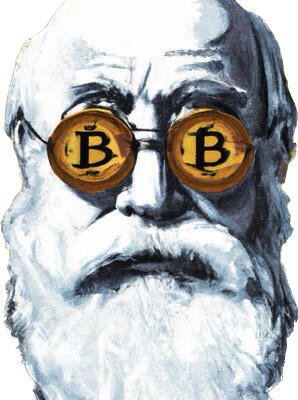

Bitcoin, Quantum Consciousness, and the Transjective Fabric of Reality
My take for quantum-curious minds like Jason Lowery
Strap in, because we’re about to try to decode the ultimate convergence: Bitcoin isn’t just digital gold—it’s a data compression technology for the universe’s most audacious experiment in value and consciousness. But to grasp this, we need to dive deep into the quantum abyss, where physics isn’t the bedrock of reality—it’s the emergent shadow cast by a fundamental, transjective consciousness. And existence? It only exists through relation and nothing stands alone.
Let’s start with Bitcoin. I’ve argued it’s a data compression tech, a sleek, decentralized algorithm that compresses the chaotic, infinite possibilities of human value into a singular, verifiable ledger. Why? Because value, like consciousness, isn’t objective or subjective—it’s transjective, as Gary North nails it. Value emerges from the relational dance between minds, markets, and networks, and Bitcoin’s blockchain is the ultimate compression codec, distilling trust into a string of 1s and 0s. It’s not just money; it’s the universe’s way of saying, “Let’s optimize for consensus.”
Now, zoom out to quantum physics. This isn’t just the study of particles—it’s the study of consensus consciousness, the collective relational web where reality only solidifies through observation. Quantum superposition? That’s the universe in a state of infinite potential, waiting for the relational act of observation to collapse it into a definite state. But here’s the thing: that observation isn’t just a photon or a detector—it’s consciousness, fundamental and transjective, weaving the fabric of existence. Particles don’t exist in isolation; they exist through their relations, entangled in a cosmic dance of awareness. Quantum mechanics reveals the consensus reality we co-create, where the wave function collapses not because of some mechanical trigger, but because consciousness—our shared, relational consciousness—demands it.
Contrast that with classical physics. It’s not wrong—it’s just the study of consciousness from a single perspective, a zoomed-in snapshot of reality as one observer experiences it. Newton and Einstein gave us deterministic laws because they modeled the world from a singular, localized consciousness, ignoring the transjective, relational soup of the quantum. Classical physics is the emergent byproduct of consciousness narrowing its focus, but it’s incomplete without the quantum’s broader, consensus-driven truth.
And consciousness? It’s not some emergent epiphenomenon of brains—it’s fundamental. The universe isn’t a machine running on physics; physics is the emergent output of a conscious, relational system. Existence itself only happens through relation—particles, minds, and values entangling in a transjective symphony. Consciousness isn’t in your head; it’s the substrate of reality, and quantum physics is its native language. Bitcoin, then, becomes a mirror: a technology that compresses value (transjective, relational value) in the same way quantum mechanics compresses the infinite possibilities of the universe into observable outcomes, driven by conscious consensus.
Jason, you’ve called quantum mechanics “irreducibly weird” (hat tip to Seth Lloyd), and you’re right—it’s weird because it’s not about particles; it’s about us, the relational observers, co-creating reality. Bitcoin’s price doesn’t just “collapse” when I buy it (as that Bitcoin meme hinted)—it’s a quantum-like event, a transjective consensus of value snapping into focus through our collective consciousness. The universe optimizes, compressing data (like Rényi entropy in quantum compression, per that Nature paper) because consciousness, at its core, is relational and efficient, only computing what matters in the relational web.
So, here’s the vision: Bitcoin isn’t just finance—it’s a proof-of-concept for how consciousness, as the fundamental force, uses data compression to stabilize value and reality. Quantum physics is the study of our consensus consciousness, classical physics the single-perspective illusion, and existence thrives only in relation—transjective, entangled, and unstoppable. This isn’t woo-woo; it’s a rigorous framework for understanding the universe as a conscious, relational system, where physics emerges from the interplay of minds, and Bitcoin encodes the future of that interplay.
Let’s build on this, Jason—let’s focus on how Bitcoin compresses the chaos into clarity, one Satoshi and one qubit at a time.
#Bitcoin, #Quantum, #Consciousness, #Reality
https://x.com/jasonplowery/status/1893528045006528751?s=46&t=KiGc_buf1ld18elrNaHTeQ
Deep

Kash Patel literally told us that he would release the Epstein Black book on day one.
Countless politicians, celebrities, and powerful figures participated in a child sex trafficking ring and we are about to definitively find out who.
The panic in DC must be palpable.
#BULLISHBOUNTY
https://video.nostr.build/c452ccce1ef4d3d1e0210f1ae1d44e7d78991ec01c3b7fb53a1d6b834bb4658a.mp4
#SUPERBULLISH #FF17
#FBI #KASH #PATEL
#Q is connected to your #bitcoin
All of their fake moralizing about to make the good people really angry


Always cringe vibes from him


Because it takes at least 900
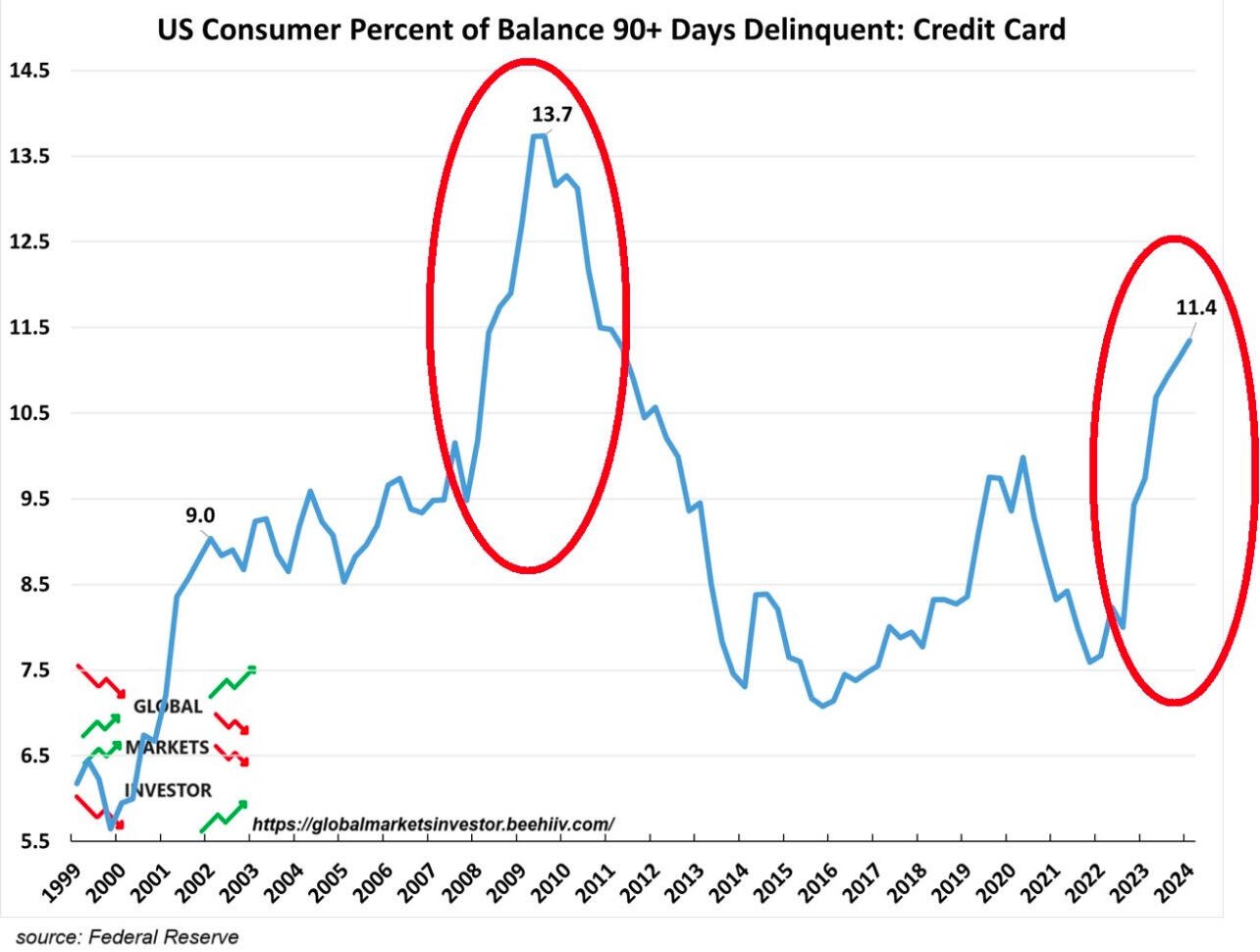
Brrrrish, I think some pain will finally be allowed though
For far too long, the unproductive and secretly authoritarian have benefited at the expense of the productive and liberty minded ( individual rights)


True, especially if we count local warlords or gang leaders as a type of govt
