
It's not cheap but definitely worth a purchase if you're new to Japanese teas! Not only do you get to try loads of different kinds, you also get a permanent collection piece (a Tokoname clay kyusu), packaged up in a festive game for Christmas.
https://nioteas.com/products/green-tea-advent-calendar-kyusu?variant=39491548217428
#tea #teachain #Advent #Christmas

Quality does not mean that it's stronger. This could mean the flavors is better. It's not damaging, the world would be way better off without alcohol. I can tell you that much right now. While y'all fry your brains on that literal poison (includes weed), you're not doing anything productive in your life or in society.
It is supreme weakness if you must fall back on alcohol in the face of difficulty. Escape the prison and find your way to freedom.

Alcohol in His day was remarkably weak compared to alcohol today, and the Bible condemns drunkenness. Frankly, I see no point in alcohol. Smells like crap, supposedly tastes like crap, poisons your liver... All to temporarily escape your troubles.
Never had a drop, never will. If people enjoy it, that's their choice but I'll never be able to understand it.

Wake up babe, Nvidia just casually dropped a 70B model that beats GPT-4o and Claude 3.5 Sonnet.
And it's fucking open source.
Try it: https://build.nvidia.com/nvidia/llama-3_1-nemotron-70b-instruct
Or
https://huggingface.co/chat/models/nvidia/Llama-3.1-Nemotron-70B-Instruct-HF
Or
MLX (image attached) 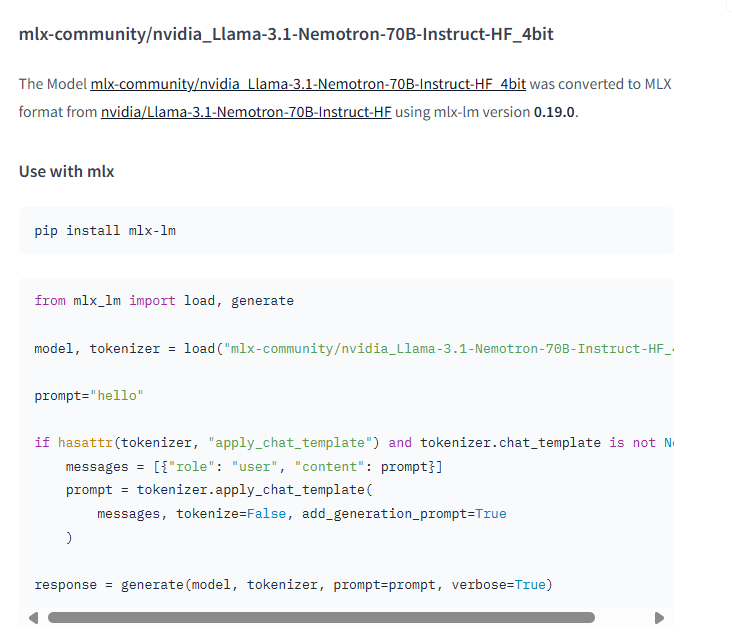
Based. If only Nvidia would play nice with their open source Linux drivers, now... 🤔


I heard that in Negan's voice (from The Walking Dead)... Seriously, what were they thinking? 😂

Oh man, hope you're braced for the maxi swarm on this one haha

The problem with fasting is that some diabetics have hypoglycemia. I'm not hypoglycemic myself but I struggle to fast more than a single meal in a day, and even that is stretching it on some days. It's weird, some days I can go a long time without eating but then other days, I struggle even if my meals are delayed.
That's my issue with a lot of diets, I've tried a few but can't seem to stick with them (and not just because I disliked it).

What do I do for people who really like their pastas and breads? That includes me 😅

This is why I went from centrist monarchist, to hardcore conservative to right-wing traditionalist libertarian, all over the past decade. I'm at the point where I want to go back to the Gilded Age and it has been a journey getting to this point.

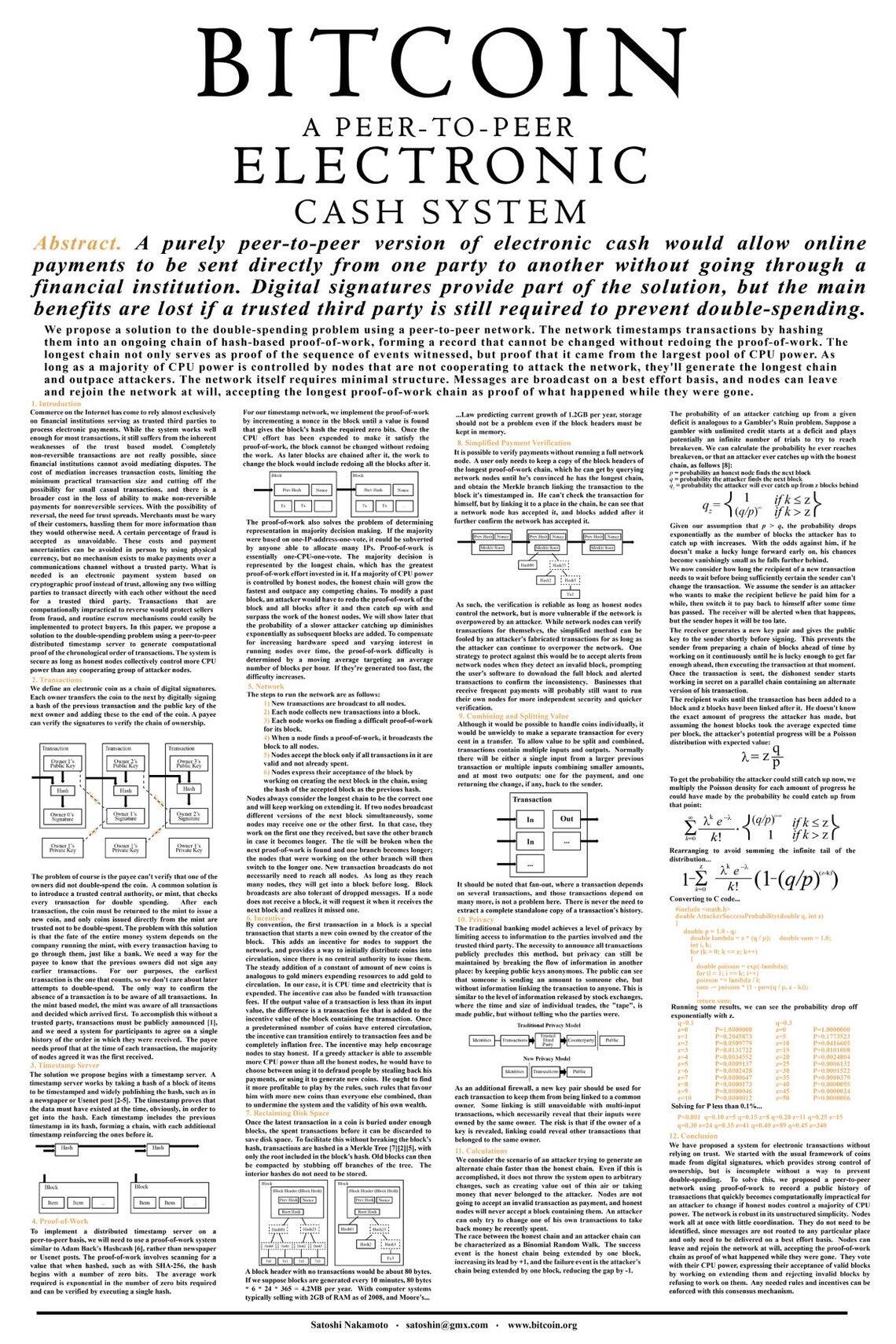
My understanding of Bitcoin is exactly why I'm unable to use it: KYC completely destroys the point, and until no-KYC options are more viable, I'm basically stuck with zaps and the ~$11/year I earn from converting Brave Rewards to BTC.
What IS the solution? I'm not diabetic myself but I have many family members that are.
This video is great for anyone who is on the fence or unsure about why everyone should switch to Linux.
#Linux #FOSS #opensource #privacy #freedom
As I said, I'm not against SimpleX. I just have plenty of concerns (and it's painfully slow/sluggish and janky) that keep me from using it much. I'm also skeptical of how everyone seems to be rushing to sing its praises; that should raise eyebrows, especially with a community that tends to be skeptical of changing software when the previous option works.

Okay, first off, yes: they can get loads of metadata from secret chats on Telegram. As far as I'm aware, nothing but the messages themselves are encrypted on Telegram secret chats; this is a similar flaw to Matrix. Sure, keeping the messages encrypted is supremely important, and yes, I think both Telegram and Matrix have plenty of valid use cases. However, metadata is very important as well, and Telegram doesn't encrypt much of it (if any). Signal encrypts pretty much everything they can possibly encrypt. Moreover, Telegram's encryption standard is widely panned by cryptographers and security experts due to various flaws; there's literally zero reason for an app to not use the Signal protocol or a fork of it. Durov just wanted to be different, as his recent slander of Signal proves.
Regarding SimpleX, I'm not discrediting it. I'm simply expressing valid concerns over it. I'm not against it, I use it too (though not much, because it's slow and janky at this point). I'm just not sold on this idea that it's somehow the perfect, maximum privacy encrypted messenger. Signal is almost universally accepted by security pros and cryptographers as the best, or at least one of the best options for secure messaging. Again, if the most wanted man by the three-letter agencies of the United States (Edward Snowden) feels comfortable using Signal for his messaging, then random, average joes on Nostr have no excuse for hating on it because none of you are even remotely as important to intelligence agencies as whistleblowers like him. Preference is fine, don't get me wrong: you're 100% free to use what messenger you like best and I think that's great! However pretending like Signal is some honeypot or heavily flawed because you think you know better than the people who study these topics as a career it really does make y'all look like you're talking out of your backsides. Now, on to the individual points.
1) Signal verifies with a phone number, usernames make it so you never even have to reveal that number to anyone. This is the same as Telegram except, unlike Telegram, Signal actually keeps all of that metadata encrypted. SimpleX does have unique IDs for each conversation, which is nice for privacy, but it can also easily lead to abuse on the network. Session, which has cryptographic IDs, proves this is more than a possibility; earlier this year, Session's open groups were unusable and the entire network slowed to a crawl, all because some dork in his mommy's basement ran a massive DDoS attack mass-spamming ads for a group that he claimed was a CSAM group. Signal having phone number verification means that you don't see quite that level of abuse on the network or its bandwidth. Decentralization is great and all, but if you're combining decentralization with unlimited user IDs, that's a recipe for disaster, and a messenger that is incredibly slow and non-responsive is not useful in any way.
2) I'll give you this much: I do wish Signal was decentralized or, at the very least, offered a hybrid decentralization (basically, running off of volunteer nodes unless the network is overwhelmed, during which it'd hop to cloud providers). However, I also can't blame them for not doing that since it'd likely require a total rewrite of the code and really, all the decentralization gives to an encrypted messenger is that you have less likelihood of downtime.
SimpleX decentralization is a thing, but it's only "decentralized" in the sense that it has various nodes, a majority of which are run by -- you guessed it -- the corporation developing SimpleX.
3) The only metadata Signal "leaks" is the same kind that other messengers leak. If a hostile force obtained the servers that SimpleX is routing messages through, they can still get that metadata. You can't stop this, the only way to get around it is to use a VPN or Tor. In fact, if you're using an "anonymous" messaging app without a VPN or Tor (one or the other; don't mix for a single user ID), you're essentially putting all your eggs in one basket.
4) I mean, disappearing messages are pretty important. The fact that the "ultimate privacy messenger" doesn't have a very basic feature of private messaging is questionable at best. That said, can't individual groups set a timeout for messages on SimpleX?
5) Self-hosting is a great concept but in practicality, very few people can or even want to self-host. Moreover, the fact remains that the overwhelming majority of SimpleX nodes are hosted by the company, not volunteers.
6) Security by obscurity is important. If only a handful of people use SimpleX, then you're not as private or anonymous as you would believe, because as I said, metadata like your IP is still present. If you're not using a VPN/Tor, anyone watching the network can see you're using Signal... OR SimpleX. The difference is that Signal is massively popular, meaning you blend in with millions of other users around the world, whereas SimpleX is newer and less populated meaning you have risk of being singled out by ISPs or government snoops.
Not sure why you felt the need to go with an AI-generated reply but I figured I'd address the things you're trying to present as alleged issues with Signal, regardless of the AI reply.

Sure, but that's a flaw with all messengers, even decentralized ones. The reason I see Session as more secure is because of the onion routing. Thrice encrypted and bounced across the world. SimpleX decentralization isn't conducted that way. It's better than nothing but most of the servers are hosted by the company and seizing those servers would get you a lot more metadata.
Also, yes, them being for-profit is completely relevant and concerning. A for-profit corporation has to maximize profits, meaning they aren't quite as trustworthy to host a privacy service. Meanwhile, a non-profit doesn't have to go wild to maximize profits. They actually directly have a necessary reason to do what they claim they're doing or donations will dry up.
That's a bit of a stretch. The only metadata that it actually "leaks" is the frequency of your messages and your IP if you're not using a VPN. The thing is, a VPN can hide the IP easily, the frequency of messages issue is going to happen with any messenger. With Sealed Sender, metadata isn't a concern unless you dox yourself. And if you do that, then that's on you, not on Signal. And even if you do that, sealed sender still makes it impossible for any snoop to actually see where messages are coming from.
Thing is, even with other messengers like Session or SimpleX, if government authorities are paying attention to multiple contacts in the same circle, they're going to know who is actively sending messages, whether it's through Signal or one of those anonymous messengers.
The only advantage to using an anonymous messenger is to speak anonymously with people you don't know in person. If you're talking to people over the internet and you want to stay completely anonymous, then it has a purpose. It's for the same reason that people say you shouldn't sign into accounts on Tor because it immediately de-anonymizes you unless that account is exclusively used on the Tor network. At the end of the day, using an anonymous messenger to keep in contact with people you actually know in person is not any more secure than using Signal.
And that's without diving into the whole subject of SimpleX being run by a for-profit corporation instead of a non-profit organization, which is concerning in and of itself.
You're misreading what I'm saying. Edward Snowden is one of the most hunted men by the US government, and yet he uses Signal, so that's all you really need to know about that part. If the government had access to Signal, they wouldn't need to hunt him so hard. They'd just get access to his information. It's not backdoored and that's proof.
And no, the reason why they went after Telegram was because there was information that they could easily get from Telegram. They can't do that from Signal. They've tried and they failed. Again, if the government thought that they could get anything out of Signal, they would be doing the exact same thing they're doing to Telegram right now, but they realize they can't, so they don't waste their time. Instead, they redirect their efforts to compromising individuals opsec. That's the real threat to Signal: poor opsec. Detractors commonly point to the Tucker Carlson "hack" but that wasn't a hack or a flaw of Signal, that was a flaw in his own personal opsec.
Exactly what I'm saying. I don't understand why people think that Nostr can fix every single problem with digital communication and media. It's just like how people assume that Bitcoin can fix literally every problem related to the economy and government when it definitely can't.
That doesn't mean that they can't help and can't be a very important cornerstone in the movement. I just don't know why they insist on being such fanboys as to think that their favorite technology is somehow going to be the thing that fixes the world on its own. The truth is that we have more technology now than ever before to free ourselves from big tech, corporatocracy and government oligarchy, yet some folks would deliberately ignore that tech if it's not BTC or Nostr. It's bizarre.