

Use these scripts with your Bitcoin Core on signet: https://github.com/ajtowns/powcoins
Delivers full coins in a few blocks.

Loading the Satochip java applet to the javacard is what I refer to as the DIY version of Satochip. It takes seconds to prepare them. Here are my notes, follow the links and readmes in the linked repos for more details: https://gist.github.com/openoms/510b2876cab19e15c4190456ea8aad82#file-satochip-javacard-applet-install
It does store the private key and does the signing also.
It only not capable of generating the seed itself so that is needed to be loaded once from an external source using Sparrow Wallet, Electrum Wallet or the modded Seedsigner.
Once the seed is in the card it cannot be exported and the signing is protected by a 4-16 character PIN.
Planning to show this setup tonight:

Truely FOSS Satochip javacards https://github.com/Toporin/SatochipApplet initialized with an airgapped, stateless nostr:npub17tyke9lkgxd98ruyeul6wt3pj3s9uxzgp9hxu5tsenjmweue6sqq4y3mgl .
The cards act as a hardware wallet without a display, but with a PIN protected secure element. Mess up the PIN 10 times and the card is bricked. Blanks cost ~2 dollars with chip, ~5 dollars with NFC support. Can compare with #TapSigner, #BitKey and alike.
Find the modded images supporting the smartcard readers here: https://github.com/3rdIteration/seedsigner/releases
Parts:
- a generic smartcard reader (here ACR39U https://a.aliexpress.com/_EzkLWc9 + microUSB adapter)
- can use the same cards as the SpecterDIY
Notes: https://gist.github.com/openoms/510b2876cab19e15c4190456ea8aad82
nostr:note1hatuatxl5hajvh6xdfy3pqkuc0hna2azaap3y6sza3nc6jnpk7lsz7tlkv
Wrote a quick guide about using an initialized Satochip smart card with Sparrow Wallet: https://github.com/openoms/bitcoin-tutorials/tree/master/satochip#get-started-with-satochip
As these javacards are essentially $5 hardware wallets (with no screen, but using a Secure Element) are great to give bitcoin in a physical form.
This short guide is for the ones receiving them.
To initialize the cards one could use TailsOS offline with Sparrow Wallet or Electrum or a modded version of Seedsigner: nevent1qvzqqqqqqypzp2kq0k2s388x4hcghy2k6s7p5j44jnrpxzmaevfwcxvsprzcrx30qyw8wumn8ghj7mn0wd68ytngw4eh5mmwv4nhjtnhdaexcep0qy38wumn8ghj7mt4d36xjurvv4ux2u3wdp6hx7n0dejkw7fwwahhymry9uqzpaca0y00n4qs4k5drhwaz99vuy78r6ddqxu7hwxy8xghj45knkh5jgfqlz
To work with Bitcoin Core v28.0 LND needs to have
deprecatedrpc=warnings
set in the bitcoin.conf
https://x.com/roasbeef/status/1842956355516223824
Electrs needs to be updated to the latest version: https://x.com/roman_zeyde/status/1842937024967327932
Tracking issue in Bitcoin Core: https://github.com/bitcoin/bitcoin/issues/31039
H/t Ketominer of https://nodl.eu for reporting the issues.
Testing to use renepay instead of the default pay plugin with CLN v24.08.
Payments got much more reliable with nostr:nprofile1qqsrf5h4ya83jk8u6t9jgc76h6kalz3plp9vusjpm2ygqgalqhxgp9gpz4mhxue69uhhyetvv9ujumt0wd68ytnsw43qzrthwden5te0dehhxtnvdakqz8thwden5te0dehhxarj94c82c3wwajkcmr0wfjx2u3wdejhgjaa6xr and nostr:nprofile1qqs8u5uf0rd2p9wmdxxaznpn54tkq8wwspmljy0cjqw6jdgm5kv84dspp4mhxue69uhkummn9ekx7mq20qgpe
Might make it an option in the #Raspiblitz: https://github.com/raspiblitz/raspiblitz/issues/4777
You can just download a small translator plugin to try.
Let me know if it is useful.

Igen, ingyen van az `@huszonegy.world ` NIP-05, csak kérni kell egy npub + kívánt névvel.
Ha tudsz pull requestet nyitni még egyszerűbb: https://github.com/huszonegy/huszonegy.github.io?tab=readme-ov-file#add-nostr-username-and-pubkey-for-nip05
További előnye, hogy könnyen megtalálják így a magyar nostr közösséget az újak is.

nostr:npub1psm37hke2pmxzdzraqe3cjmqs28dv77da74pdx8mtn5a0vegtlas9q8970 you are not alone 🥰

Don’t be suspicious, don’t be suspicious… 🧐 Why would update details be redacted? nostr:npub1ajlrwgfj4yerhqf7ady03h7wmtk2qr3gs7h3sxcx83k05yld36sswpzx3q 😅
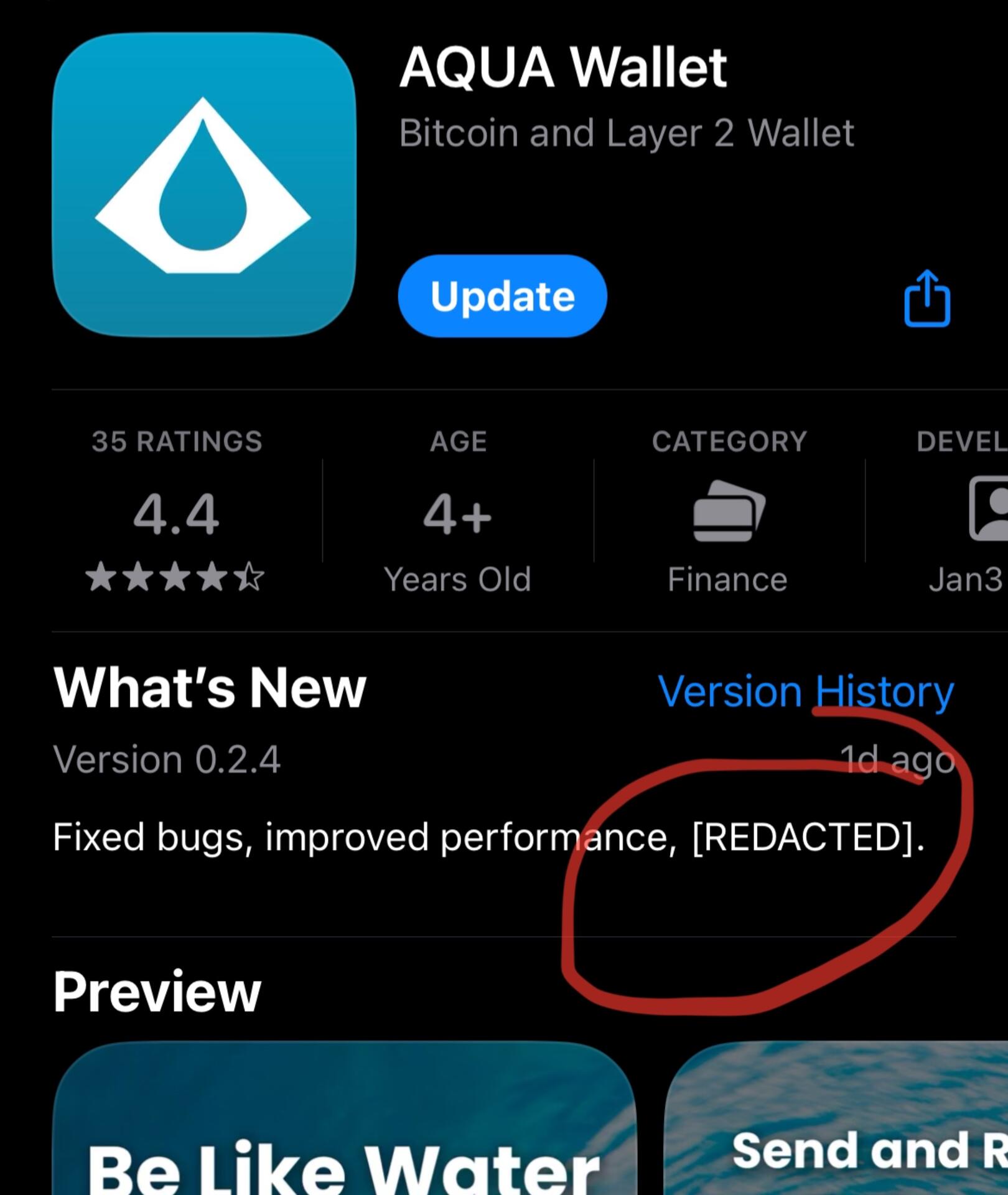
Possibly to avoid keywords which would trigger censorship in the App Stores.
Go to github for the details.

Headscale is a coordinator server, it needs to be publicly exposed for the tailscale clients to be able to connect out to it.
Your node at home is typically behind a router NAT and firewalled. It should remain that way.
Tailscale can be used as a VPN if you advertise an exit node on any other client and connect to it. Your IP address would appear as the public IPaddress of that exit node. This is independent from using Headscale or the Tailscale coordinator.
I hear you, Tailscale is in for the next release: https://github.com/raspiblitz/raspiblitz/pull/4712
Headscale would need to run on a machine with a reachable public IP address, usually a VPS.
Noted! Was just working on adding Styrfry https://github.com/raspiblitz/raspiblitz/pull/4721 and Bostr2 https://github.com/raspiblitz/raspiblitz/pull/4724 recently.
Moving to 2 TB disks suddenly opens new possibilities.
First step to be added: https://github.com/raspiblitz/raspiblitz/issues/4756
Was planning to try for myself anyway. Wonder how all functions work as an onion service? Tunnelling it to a VPS serving a clearnet domain is not that trivial task, but
Tailscale makes it easily as possible if one has a VPS and (sub)domain to use.

nostr:npub14tq8m9ggnnn2muytj9tdg0q6f26ef3snpd7ukyhvrxgq33vpnghs8shy62 this would be a great addition for Raspiblitz https://github.com/bitvora/haven
Noted! Was just working on adding Styrfry https://github.com/raspiblitz/raspiblitz/pull/4721 and Bostr2 https://github.com/raspiblitz/raspiblitz/pull/4724 recently.
Moving to 2 TB disks suddenly opens new possibilities.


Great work, thank you! In the meantime was just browsing your page for Aqua wallet: https://walletscrutiny.com/android/io.aquawallet.android/
*take the .apk, unpack, remove the signature and try to reproduce the rest of the binary
Thanks clarifying, was not aware that the signature can be that easily separated.
Does that mean that in case there is a reproducible build method available I can take an apk, unpack and try to reproduce just the binary?
I hear you. But It is one thing to trust the binaries (apk) represent the published code on GitHub;
at least there are people like nostr:nprofile1qqsydl97xpj74udw0qg5vkfyujyjxd3l706jd0t0w0turp93d0vvungppemhxue69uhkummn9ekx7mp0qy08wumn8ghj7mn0wd68yttsw43zuam9d3kx7unyv4ezumn9wshsz8thwden5te0dehhxarj9ekh2arfdeuhwctvd3jhgtnrdakj70vc385 who check the builds for us.
Yet not even having the v0.2.3 and v0.2.4 code on GitHub, while binaries of these versions are being distributed via app stores for quite some time.... is pretty meh.
At the very least, unprofessional.
And yes, everybody should install from GitHub/Obtainium 👍
PS: I wished more projects publish Dockerfiles for builds, so regular normies can build themselves. The Build process is oftentimes so poorly documented, and/or requires manual steps that it's just a pain in the ass to build apks yourself, so ppl just trust whatever is published.
Agreed, it looks unprofessional and leaves space for potential malice. They should do better. We all should strive for better.

Wonder if this is related to the recent Tor hidden service deanonymization attempts mentioned here: https://blog.torproject.org/tor-is-still-safe/
The finalexchange site has a long list of small, obscure exchanges. They might be overlapping entities. Could they all use largely outdated software?
The code can be shared while the internal development is kept private. Testing, iterations etc are not needed to be shared. It is a scale, but always the open process is preferred.
Until there are reproducible builds the apk-s cannot be checked anyway.
The Google Play versions cannot ever be reproducible due to the signature being part of the apk (correct me if I am wrong).
Reviewing the code and building for myself would be better, but until then I at least use Obtainium to grab the binaries from github.