
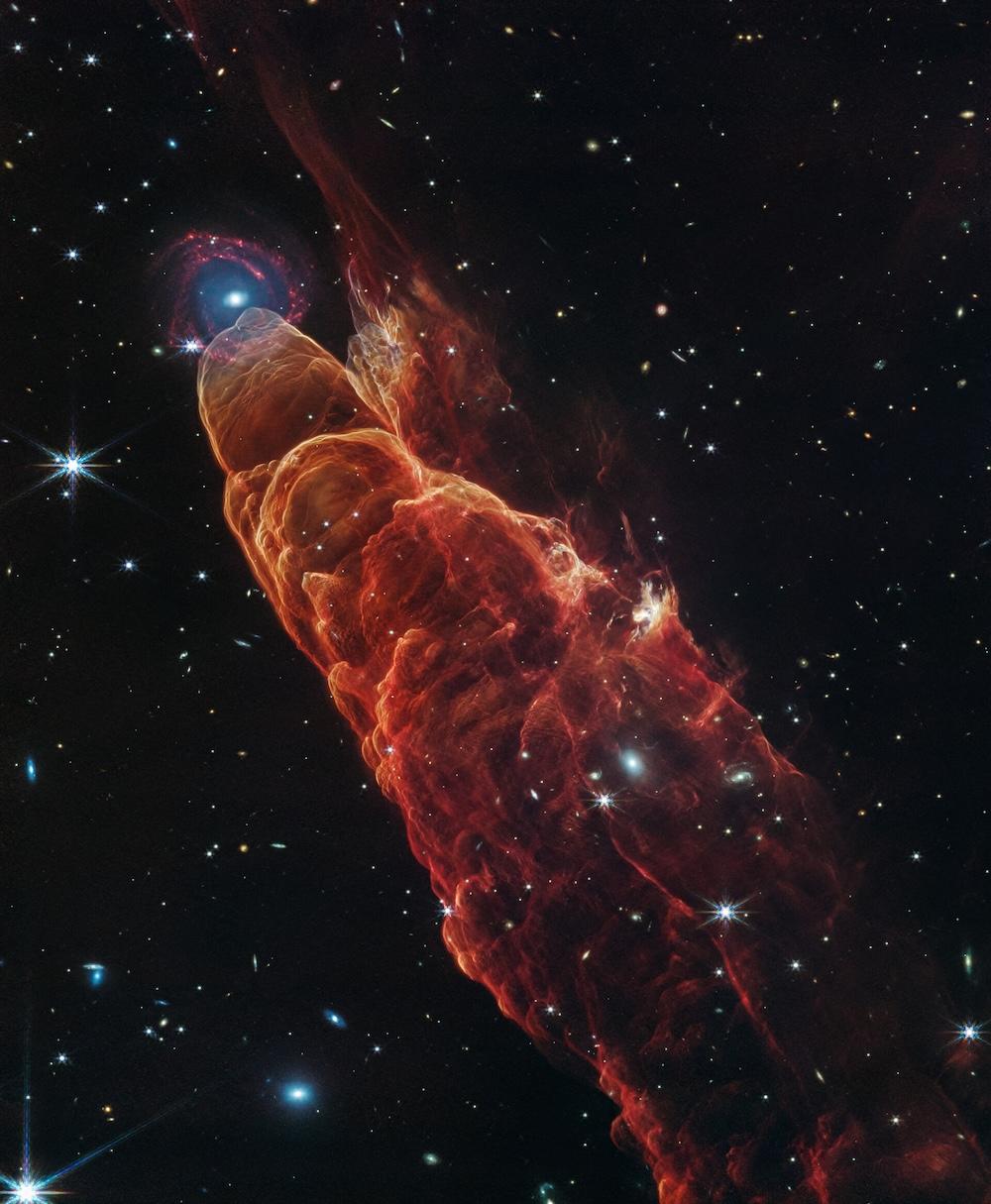
This incredible new image from JWST shows a newly forming protostar, surrounded by a tornado of gas and dust. Designated Herbig-Haro 49/50, the star is about 630 light-years from Earth and is driving outflows of gas that stretch for light-years into its surroundings. They crash into denser material, heating it up and creating the glowing regions seen by Webb. The fuzzy blob at the top of the tornado is actually a more distant galaxy that happens to be lined up.
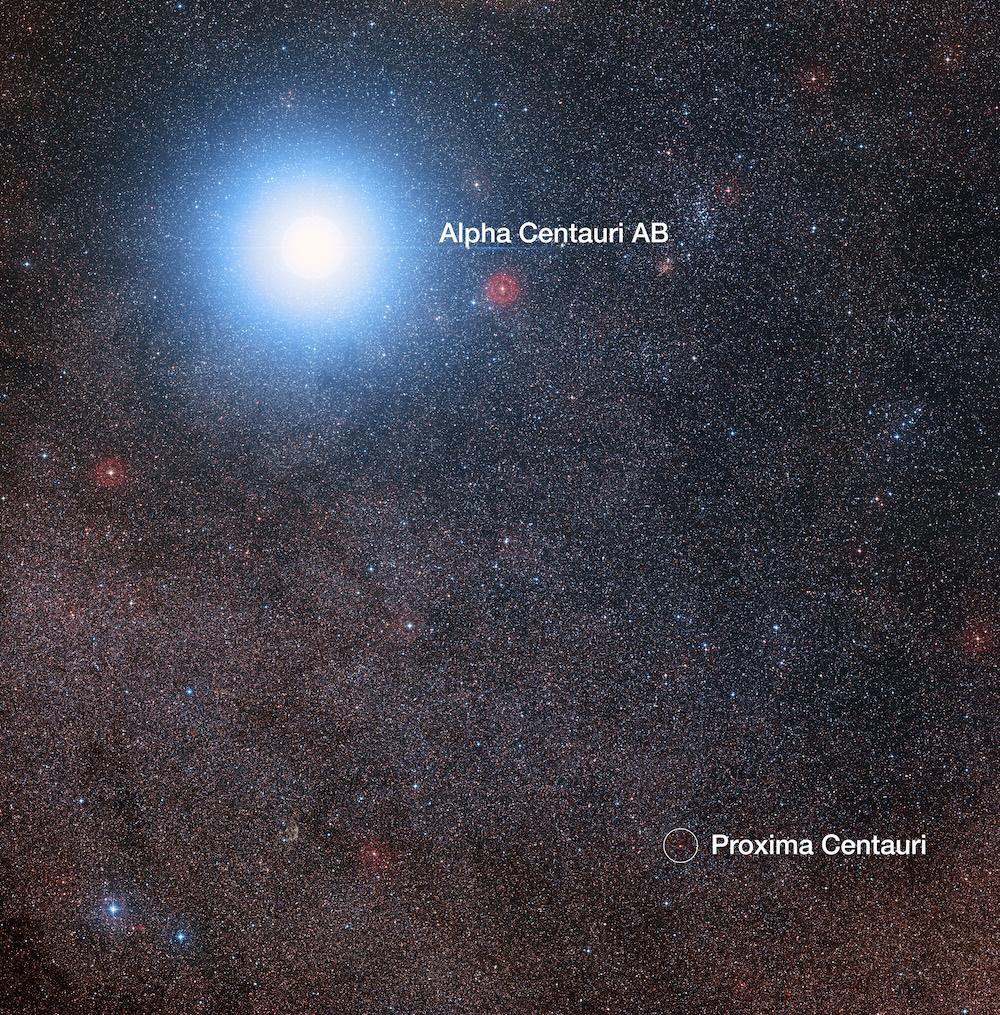
With the discovery of two interstellar objects, astronomers have learned that material is freely drifting around the Milky Way. So what about the closest star system, Alpha Centauri? According to a new paper, asteroids and comets are constantly escaping the grasp of the stars in the system and making the journey to the Solar System. The journey takes about 10 million years, and they estimate there could be about 1 million large particles from Alpha Centauri already here.
https://arxiv.org/abs/2502.03224
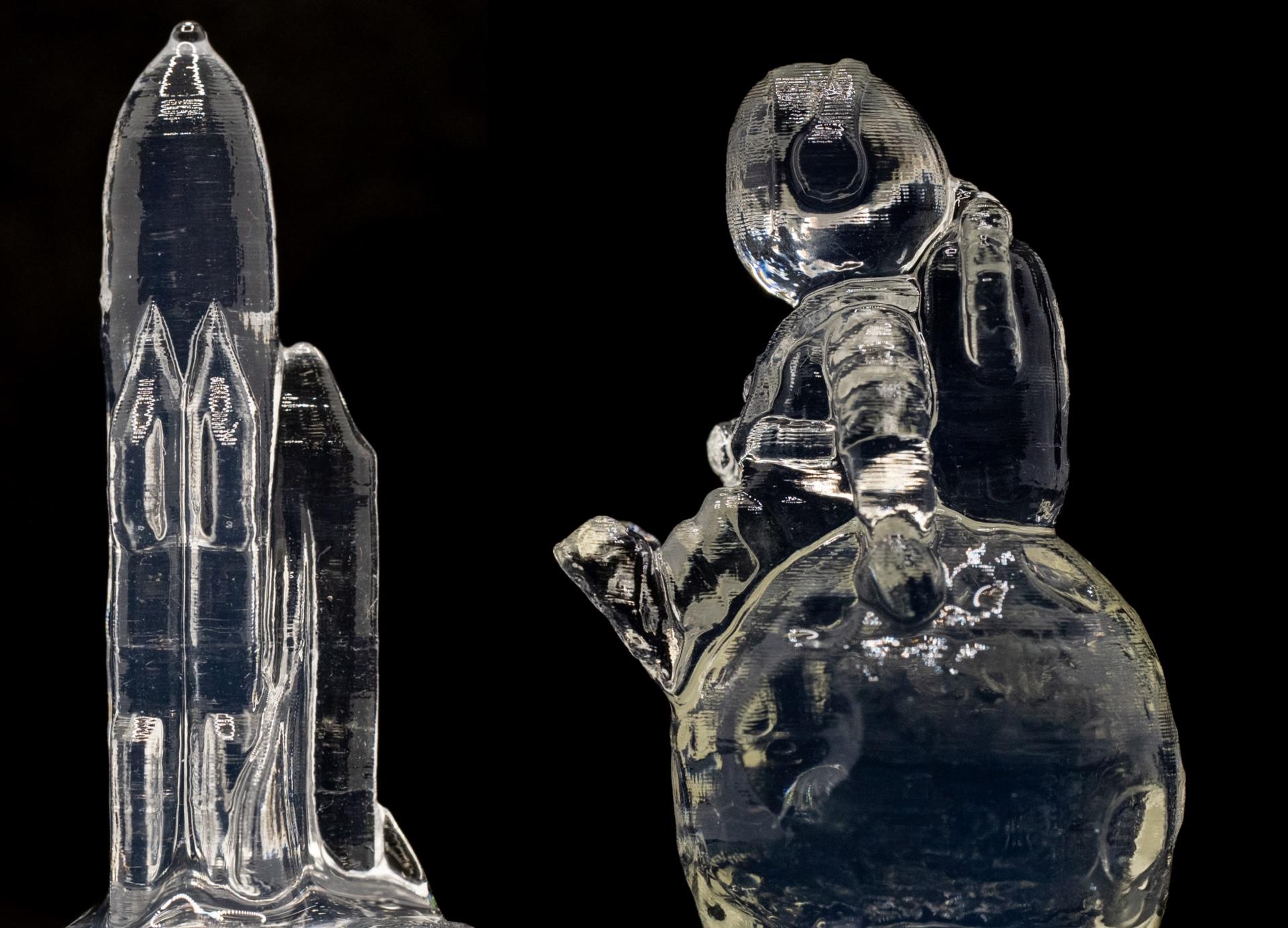
When astronauts fly beyond the Earth's magnetosphere, they're exposed to hundreds of times more radiation than they would experience on Earth. The easiest way to protect them is to hide behind a wall of protons; rock or water will do nicely. Researchers are testing hydrogels, which can absorb hundreds of times their weight in water, as a potential radiation barrier. The gels could be 3D printed on Earth and then mixed with water from the Moon to form a radiation shield.
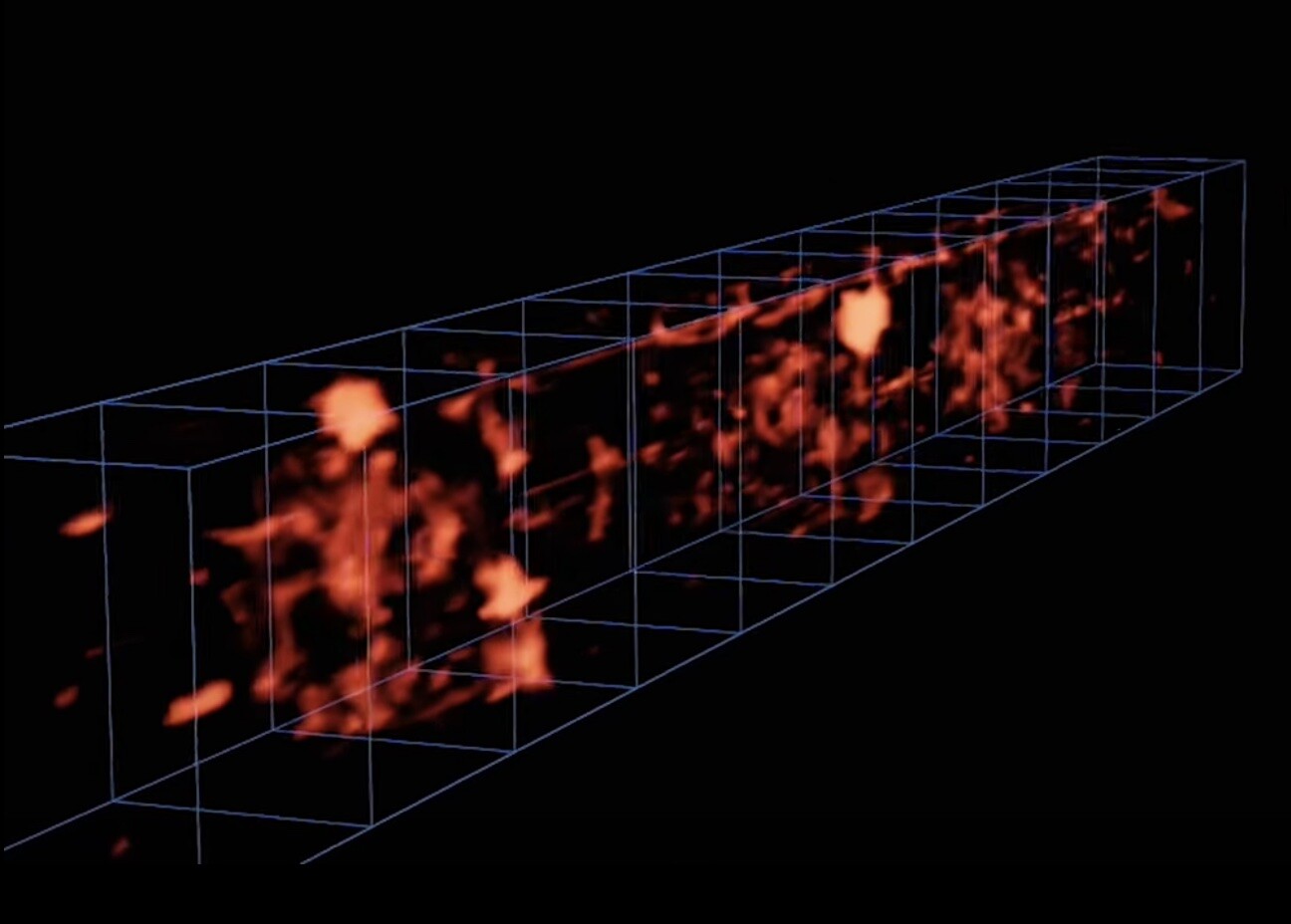
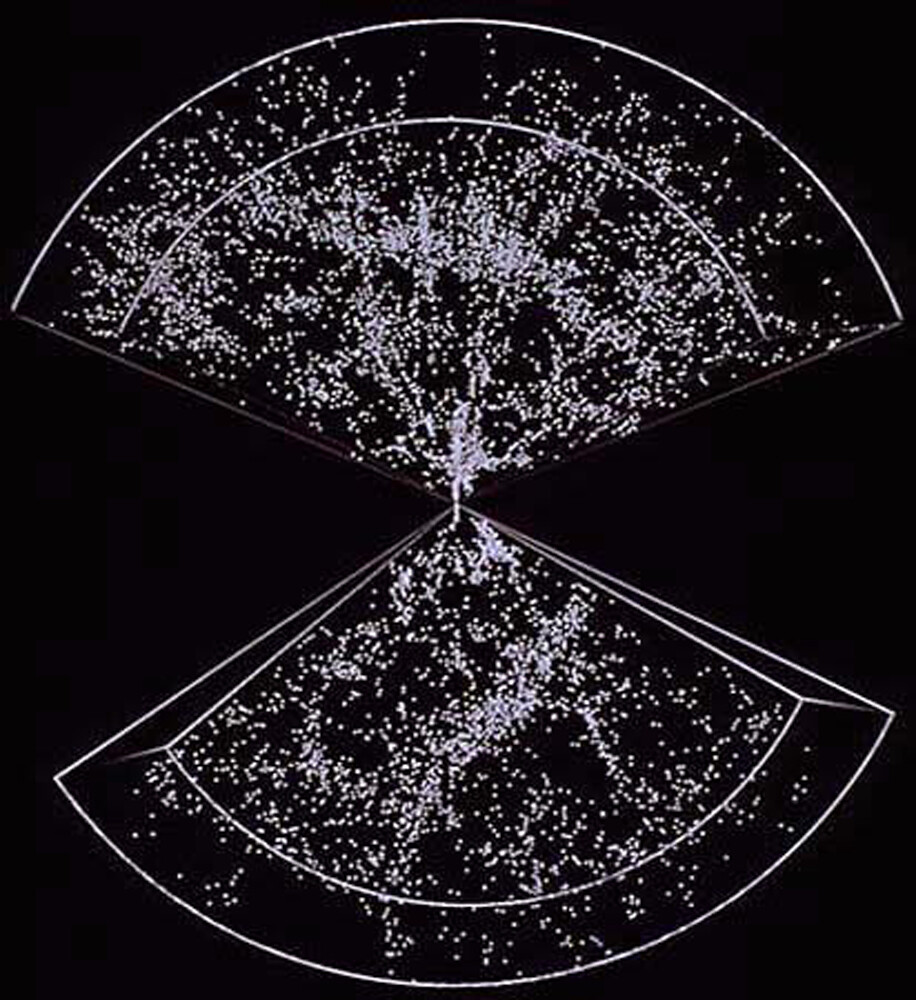
Seeing the Web Connecting Galaxies Across the Universe
Look deeply into the Universe; the bright galaxies are the first thing you'll see. Surrounding and connecting these islands of stars is the cosmic web. These are streams of gas that flow into galaxies, supporting their star formation. Astronomers have used the new Keck Cosmic Web Imager in Hawaii to image the cosmic web, revealing the filamentary network that connects galaxies across billions of light-years of space. Previously, the web was only visible when illuminated by bright objects like nearby quasars, but this new technique can show even the faintest material.
#cosmology
https://www.caltech.edu/about/news/cosmic-web-lights-up-in-the-darkness-of-space
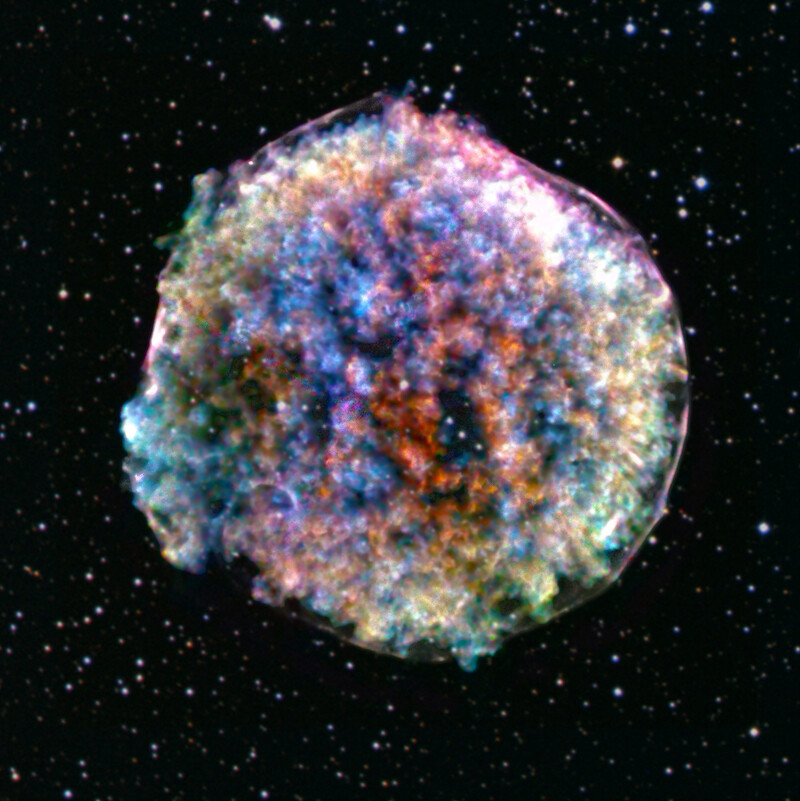
Supernovae Struck the Earth 3 Million and 7 Million Years Ago
Although there weren't astronomers around millions of years ago, researchers have gathered evidence that powerful supernovae detonated close to the Solar System 3 million and 7 million years ago. In the geologic record, they discovered these explosions in the fallout from iron-60, an isotype of iron produced when the largest stars detonate. The more recent one could have been as close as 160 light-years away, while the older one was about 350 light-years distant. For comparison, the closest supernova remnant we can see - the Gum Nebula, is a giant sphere starting at 450 light-years away.
#supernovae
http://arxiv.org/abs/2309.11604
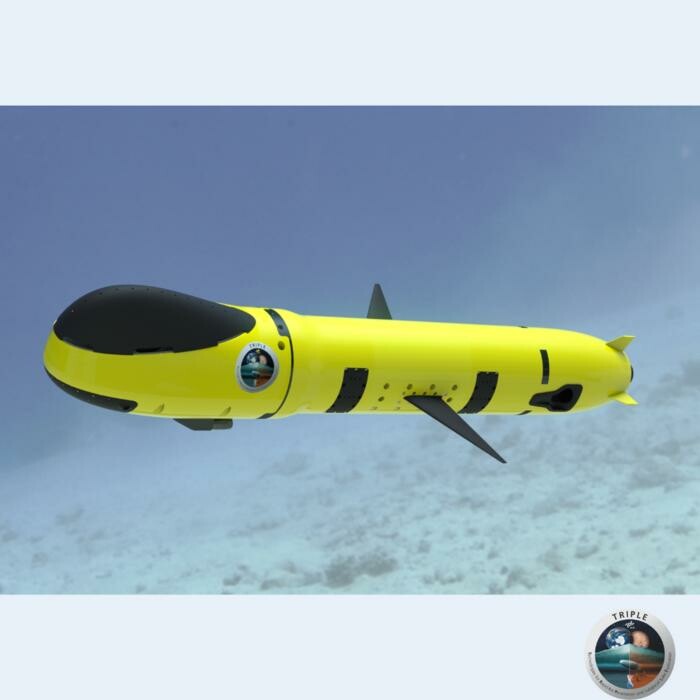
Mini-Subs Could One Day Ply the Seas Under Europa's Ice
Europa and Enceladus have become two of the most exciting places to search for life in the Solar System. We know that both worlds have liquid oceans underneath thick layers of ice. Assuming you could bore down through the ice, what's the best way to explore their oceans? Researchers have built an underwater autonomous vehicle that measures just 50 cm long. It's small enough to fit inside a melting probe and then deploy once it reaches the water. Scientists will test the vehicle under the ice in Antarctica, but one day, it could be deployed on icy worlds.
#spaceexploration
https://www.eurekalert.org/news-releases/1001321
nostr:npub1a807ue627e78s2xlpjhahmddkat3ygd0pn83d6n4n5l345lv8tms27n4e5 nostr:npub1nu968lpe4mqdkjzurvz00e70yfdyqypay2q2xrr2ae9h4eljxcjqykl6r5 With direct observations of each, sure, but I doubt anyone would get enough time to search them with Webb.
The Case for a Small Universe
Astronomers don't know if the Universe is finite or infinite. Whatever the case, it's larger than the Observable Universe, which measures 93 billion light-years across. A new paper proposes that the actual Universe is comparatively tiny, not much bigger than its observed size - just a few orders of magnitude larger. A smaller Universe solves some problems with other theories of cosmology, including inflation and the amount of dark energy in the Universe.
#cosmology
http://arxiv.org/abs/2309.03272
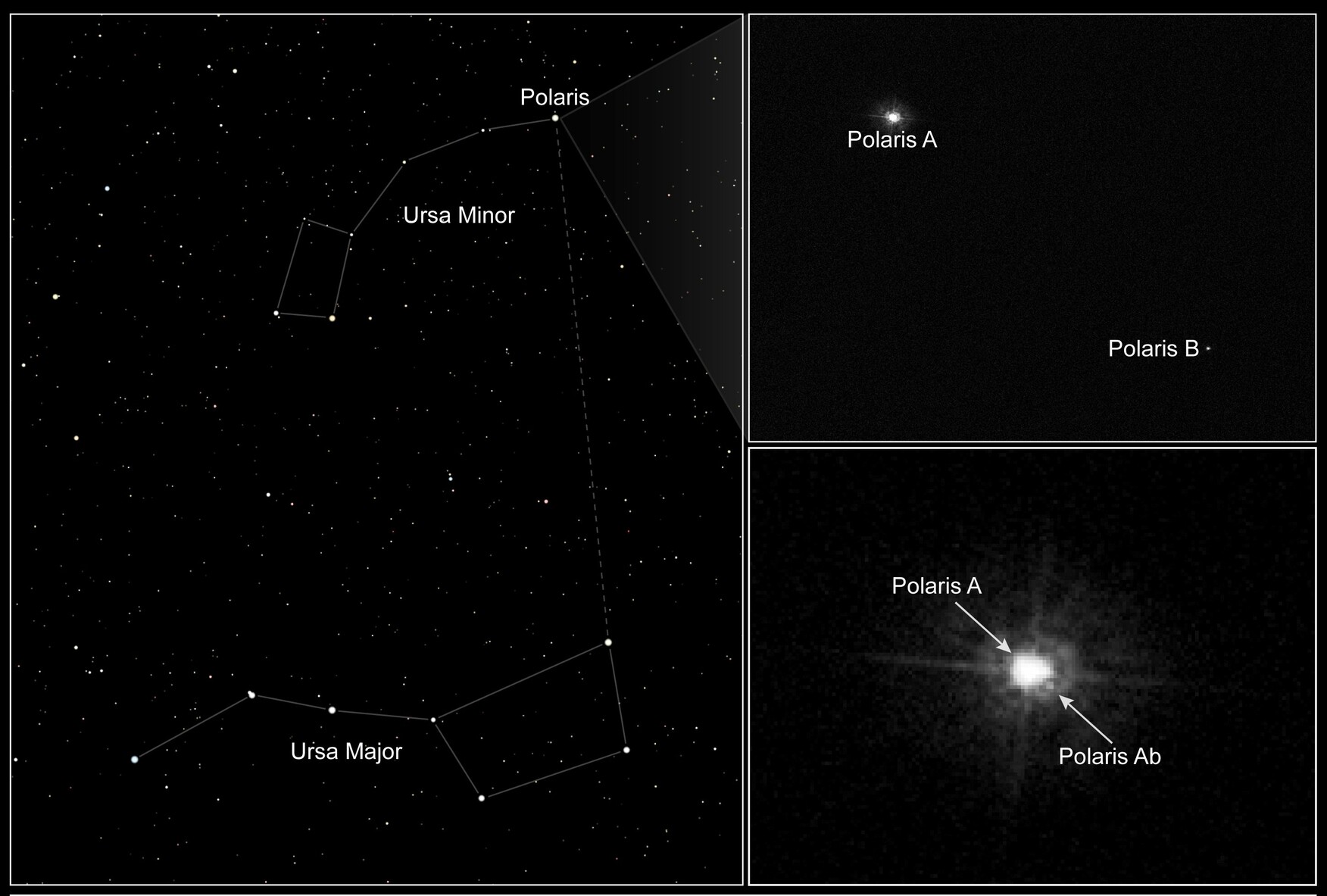
Polaris is the Closest, Brightest Cepheid Variable. Very Recently, Something Changed.
The North Star is one of the most important stars in the Northern Hemisphere, guiding travelers for millennia. But it's also one of the most important stars to astronomers since it's the closest example of a classical Cepheid variable. Hubble used these stars to discover that galaxies are moving away from us in all directions. Astronomers have been measuring the brightness of Polaris for over a century, and its pulsation period was slowly increasing, but a few decades ago, the pulsation rate reversed. Polaris has a companion star that orbits every 29 years. Is that the cause?
#astronomy #polaris
http://arxiv.org/abs/2309.03257
nostr:npub1dgyc08xh3asx9kv9qpxfusdtyu84tfq6y8gse54esusyp7mauqhsx8a5xe You could aerobrake at Mars. Anything with an atmosphere provides you a braking system.
nostr:npub1dgc20rwct3mfd884e2240pqpzhzlz6xm7laky670vnd5um3xxkzsaj4yrt I find it interesting tghat getting gigabit internet at the ISS is complex. It makes me begin to appreciate the fact we might have it a bit easier.
nostr:npub1xa745r58a29n0lned5a9fjj7jnl94ux7hfddxfmyxzl6sx289gaqvy94yv All they needed to do was launch another satellite to relay communications.
nostr:npub1xlqkfa2acc6hyheawkhcd9d39g4g4ydzrrd06njaxyrxyzq8a3fqxyct29 Hah, I wonder if you'll be able to connect to their tracker... in space.
nostr:npub16egqwy7ld63t0kvhfqsthu3dprhsmyh3ppus2kttwl2rlp87y34qg8nm8f Apparently they still take DVDs to space to watch movies. Barbaric.
nostr:npub16nggsyukflgkj9tv8pnljs24dfw5arqfj4v2jhs9yp65cucpc73q2u7jj7 Ah yeah, we're not reporting on the spherules until other people look at it.
I didn't realize Gertz was a conspiracy believer. I think the underlying premise is super interesting, especially when you consider how real astronomical discoveries are published widely and the idea of a coverup is laughable. But I'll pass that along to the writer who's working on a story about it for UT.
nostr:npub1nu968lpe4mqdkjzurvz00e70yfdyqypay2q2xrr2ae9h4eljxcjqykl6r5 You can detect the presence of chemicals, but it's really hard to measure the ratios. so I'd say... no.
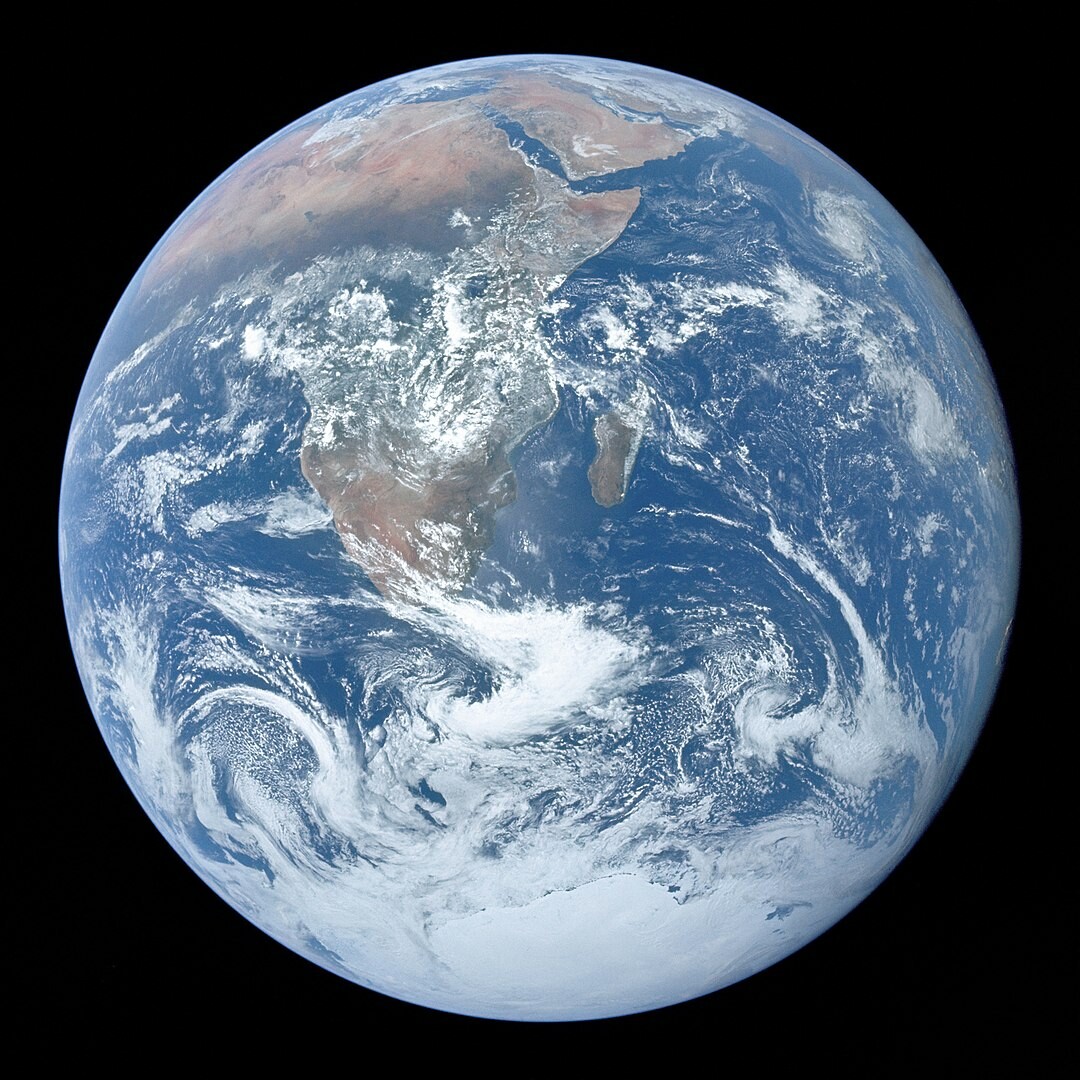
If Earth Was an Exoplanet, JWST Would Know There's an Intelligent Civilization Here
JWST is the most powerful instrument astronomers have to study the atmospheres of exoplanets, looking for trace gases that might indicate life on another world. What if Earth was an exoplanet orbiting a nearby star? What could JWST learn about our planet? In a new study, astronomers took observations of Earth from various spacecraft and then simulated what JWST would see if it got our home planet in the crosshairs. The telescope could detect various chemicals, from water vapor to methane, but it could also sense the presence of chlorofluorocarbons resulting from our industrial infrastructure.
#exoplanets #jwst
http://arxiv.org/abs/2308.14804
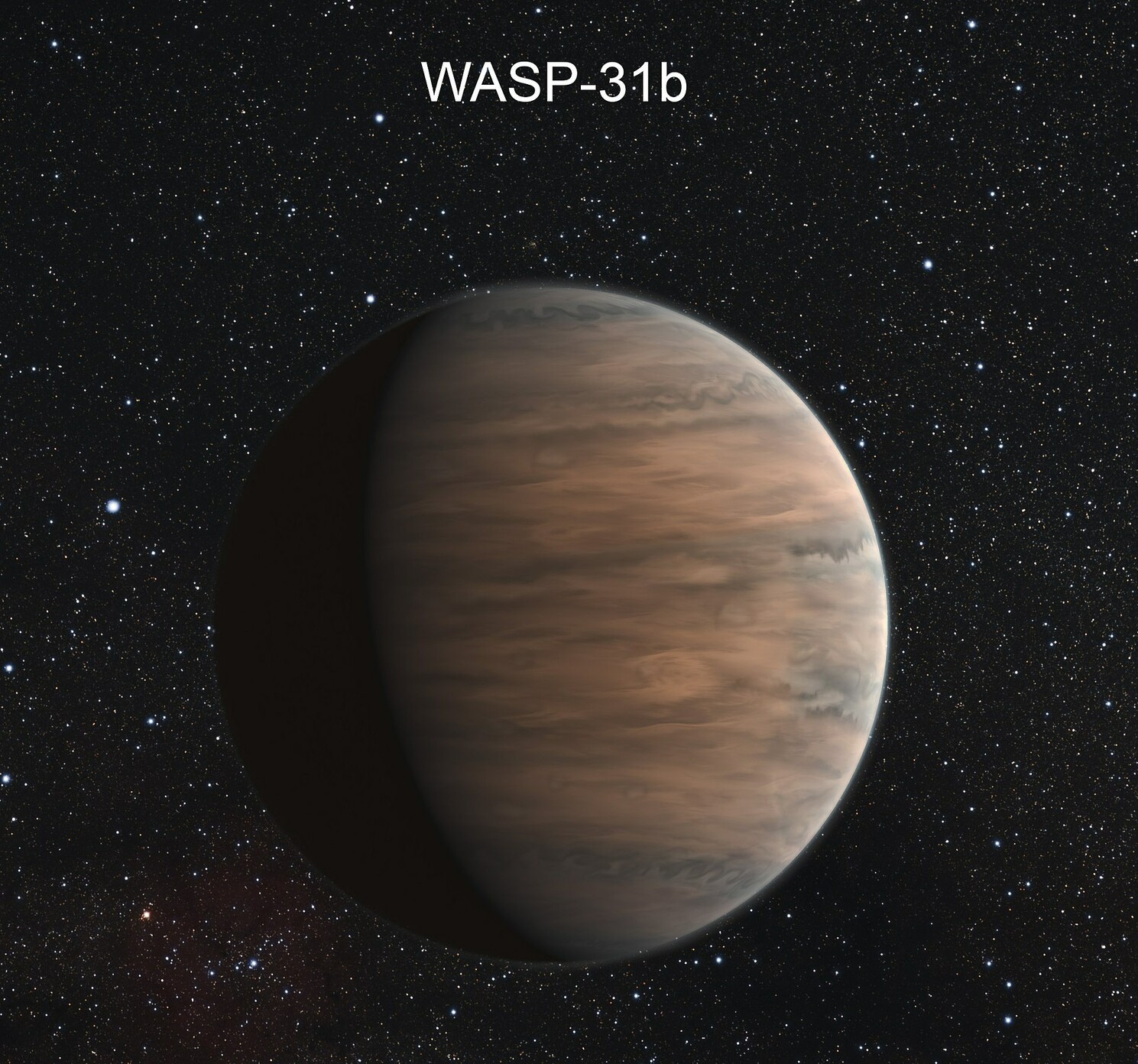
Astronomers Find a "Thermometer Molecule" that Only Appears When a Planet is Between 1,200 and 2,000 Kelvin
Astronomers use spectroscopy to reveal the chemicals present in a planet's atmosphere. One intriguing chemical is chromium hydride (CrH), which can only appear when the upper atmosphere of a world is between 1,200 and 2,000 Kelvin. It was previously only seen in cool stars and brown dwarfs, but now astronomers have found it in the atmosphere of the exoplanet WASP-31b. Astronomers think there could be other temperature-sensitive molecules that could act as natural thermometers to help independently measure the temperature of an exoplanet.
#exoplanets
https://news.cornell.edu/stories/2023/08/thermometer-molecule-confirmed-exoplanet-wasp-31b
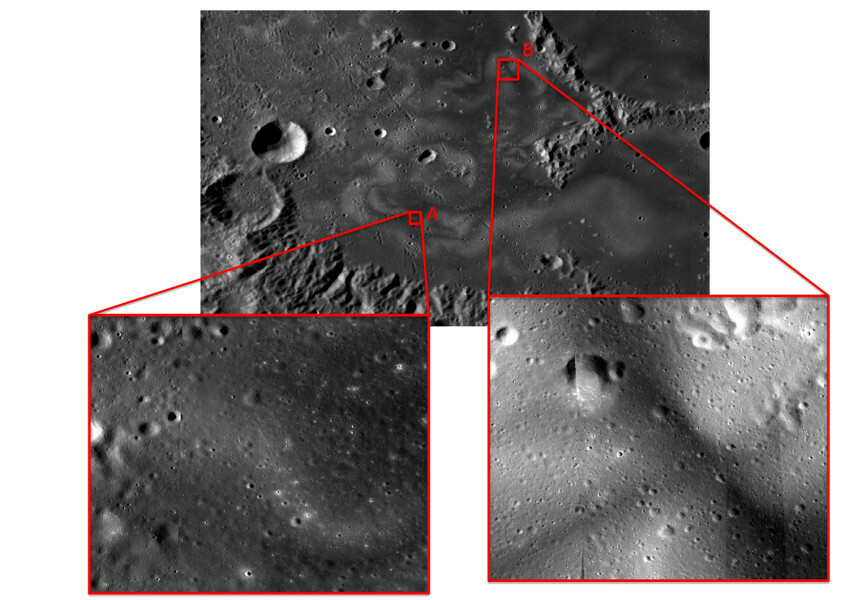
There's No Wind on the Moon, So How Dust Shift and Swirl so Quickly?
"Lunar swirls" are one of the Moon's many fascinating mysteries. These are reflective patterns on the surface of the Moon that shift and change over time. It was initially believed to result from magnetic particles in the solar wind interacting with the lunar surface. Another possibility is that lunar dust levitates off the Moon, shifting to new locations and depositing again. A new study suggests that there's no single explanation, that a combination of factors is working together to cause these movements.
#moon
https://www.psi.edu/blog/psi-study-shows-evidence-of-highly-mobile-lunar-regolith/
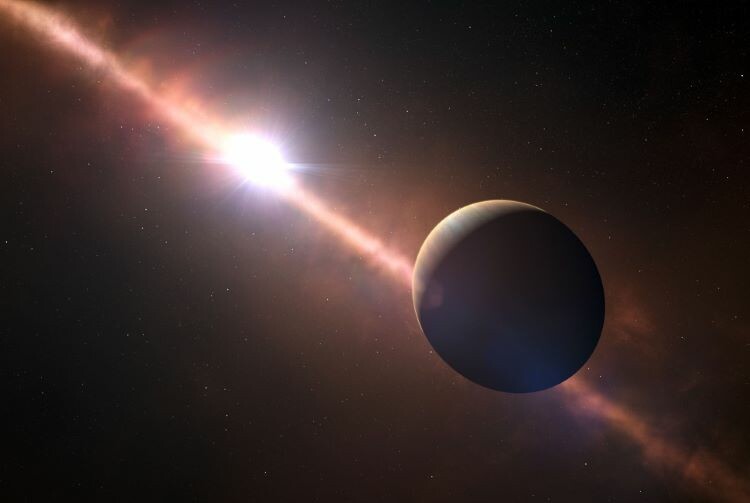
Watch an Actual Exoplanet Orbit its Star for 17 Years
Astronomers have been studying the exoplanetary system Beta Pictoris for 17 years, watching as an enormous planet is orbiting the star. This is one of the most dramatic views ever seen with the "direct method" of exoplanet astronomy, and you can just watch an actual planet orbit an actual star. Beta Pictoris b is the perfect world for this observation; it's far from its star, large, and extremely bright. Astronomers will have watched the planet complete one full orbit around the star in another six years.
#astronomy #exoplanet
https://www.universetoday.com/162895/watch-an-actual-exoplanet-orbit-its-star-for-17-years/
nostr:npub1fahg5avxsar2ens4dg2fjqg8h2zcv40j28sjwqsz7cqgaxhh9meqt5ya3h I guess we can close the book on that mystery, then.