
The Largest Impact Crater on Earth, 520 km Across, Might Be Hiding Under Australia
The largest confirmed impact crater on Earth is the near-300km-wide Vredefort impact structure in South Africa, but there could have been even larger asteroid strikes to early Earth. Erosion hides the evidence of these massive impacts, so they're tricky to find. A geologist team believes they've found one that's even bigger, spanning 520 kilometers across New South Wales, Australia. They found magnetic ripples in rocks from the region that match the roughly circular shape of an impact crater. Deep core drilling will help confirm if it's true.
New Horizons is So Far Away, it Can Measure the True Darkness of the Universe
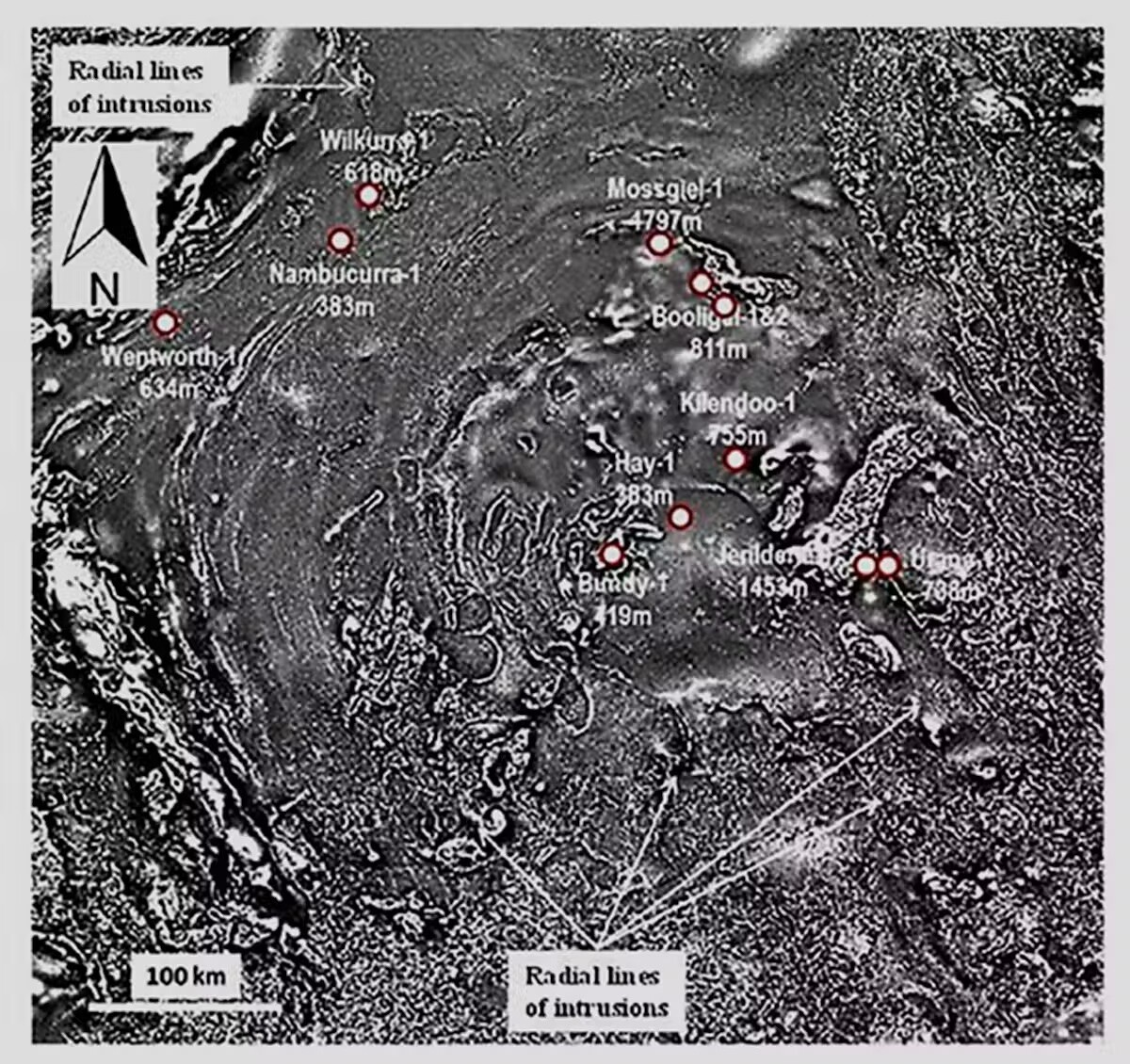
NASA's New Horizons Spacecraft has completed its flybys of Pluto and Arrakoth and is now about 8 billion kilometers from Earth. Although astronomers are looking for another Kuiper Belt target, they can send it towards; the spacecraft is perfectly positioned to look at the Universe itself. At such a great distance, the spacecraft is beyond the dust that causes light pollution in the inner Solar System, darker than the darker skies on Earth. This unique vantage point will measure just how dark the Universe is.
http://pluto.jhuapl.edu/News-Center/Science-Perspectives.php
We Might Be Able to Measure Dark Energy Through the Milky Way's Collision with Andromeda
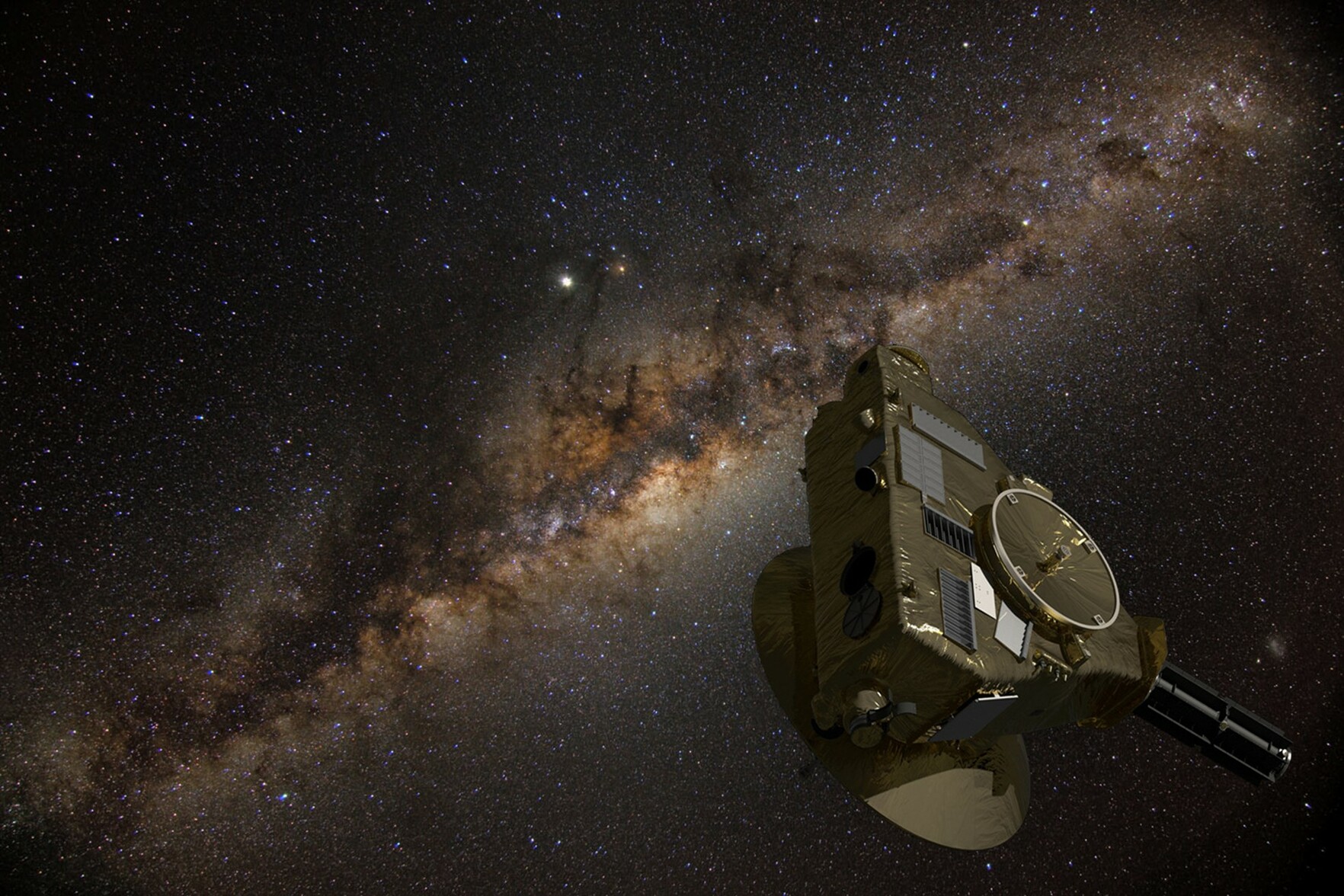
The Milky Way and Andromeda are set to collide in a few billion years but are still over two million light-years apart. Cosmologically, this is right next door, but it could still be far enough to measure the effect of dark energy, which is pushing back on the galaxies coming together. According to a new study, the movement of the two galaxies towards each other could give an upper limit on the cosmological constant model of dark energy. Other merging pairs of galaxies could provide more data and help refine the measurements.
https://www.cam.ac.uk/research/news/dark-energy-could-be-measured-by-studying-the-galaxy-next-door
Storms on Saturn Can Have Impacts that Last for Hundreds of Years
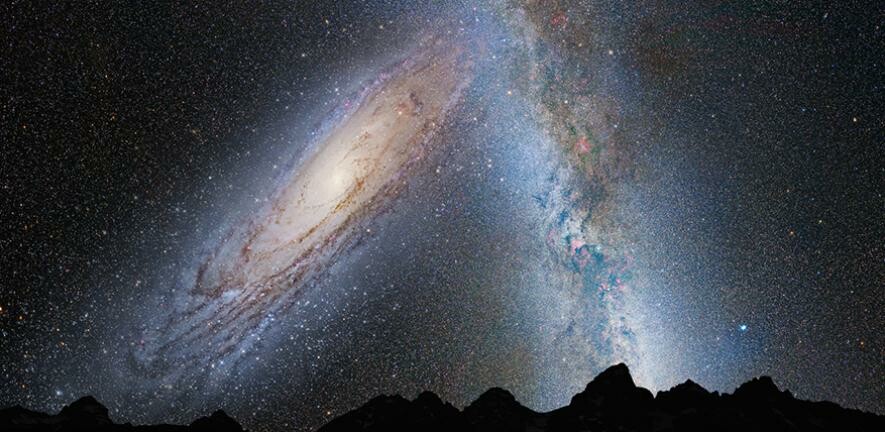
While Jupiter has the famous Great Red Spot cyclonic storm, the other giant planets have less turbulent-looking surfaces. But they do have mighty storms all their own. According to a new study, mega-storms on Saturn can flare up every 20-30 years and have long-lasting effects that persist for centuries. The astronomers looked at Saturn's radio emissions and mapped the ammonia gas distribution. They found that the storms churn up this gas and can be used to trace when storms happened in the past.
https://news.berkeley.edu/2023/08/11/hundred-year-storms
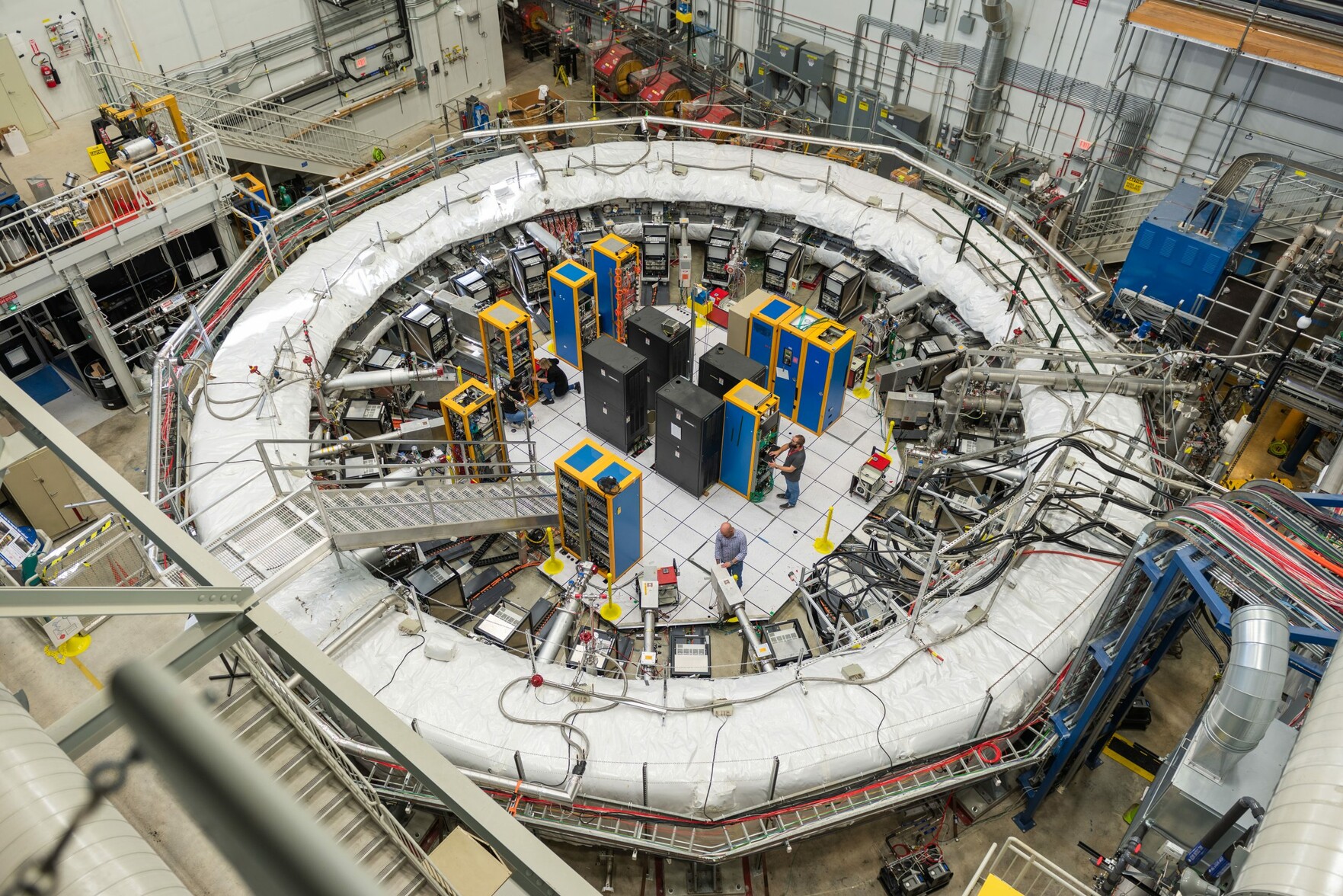
New Muon G-2 Result Improves the Measurement by a Factor of 2
Physicists have been continuing to measure the magnetic moment of the muon G-2 particle, increasing their findings' precision by a factor of 2. Muons are fundamental particles, similar to electrons but with 200 times as much mass. In theory, the magnetic moment of a muon should equal 2. But its interactions with the quantum foam change how it moves through the Universe, and physicists at Fermilab have measured this muon interaction to differ from what the Standard Model of Particle Physics predicted.
https://news.fnal.gov/2023/08/muon-g-2-doubles-down-with-latest-measurement/
nostr:npub1ftymp9gw4p83lkz3jpzswyzf39l2g04vrne3epvmdqptqfz73z2q8haaaa nostr:npub162zklrqrenchncy52dqjs6sea0ausxqcr9xhma4hg5xzlvp22zlq35a839 You stand outside and it burns your skin. That thing is dangerous and not to be trusted.
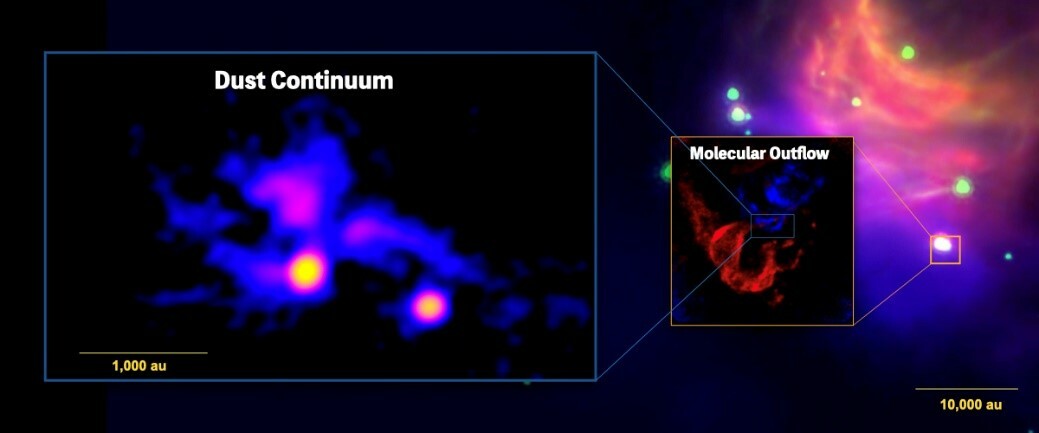
Astronomers Find a Newly-Forming Quadruple-Star System
A team of astronomers searching through the Orion Nebula found one cloud containing a quadrupole-star system under formation. Newly forming quadrupole-star systems have been discovered before, but this group is much closer together less than 1,000 astronomical units. Finding objects like this will help astronomers understand the dynamics of star formation and how clouds of gas and dust fragment into smaller pockets that eventually become individual stars.
https://english.cas.cn/newsroom/research_news/phys/202308/t20230807_334274.shtml
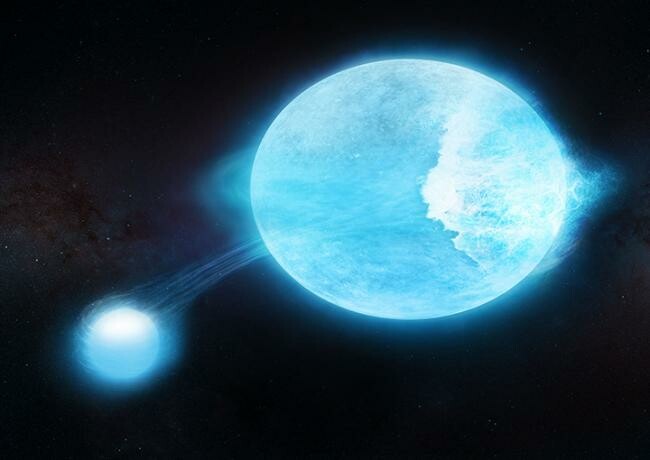
Giant Tidal Waves are Crashing onto the Surface of an Enormous Star
Although the surface of a star seems quite different from the ocean, the underlying effect of gravity can create similar conditions. One type of star is known as a "heartbeat star," where a binary system interacts with one another, generating enormous stellar tides from their mutual gravity. In one extreme system, the gravitational effect is 200 times larger than any heartbeat star seen before. An enormous wave is generated across the star as its binary companion approaches. Like ocean waves, these waves break, crashing down onto the star's surface.
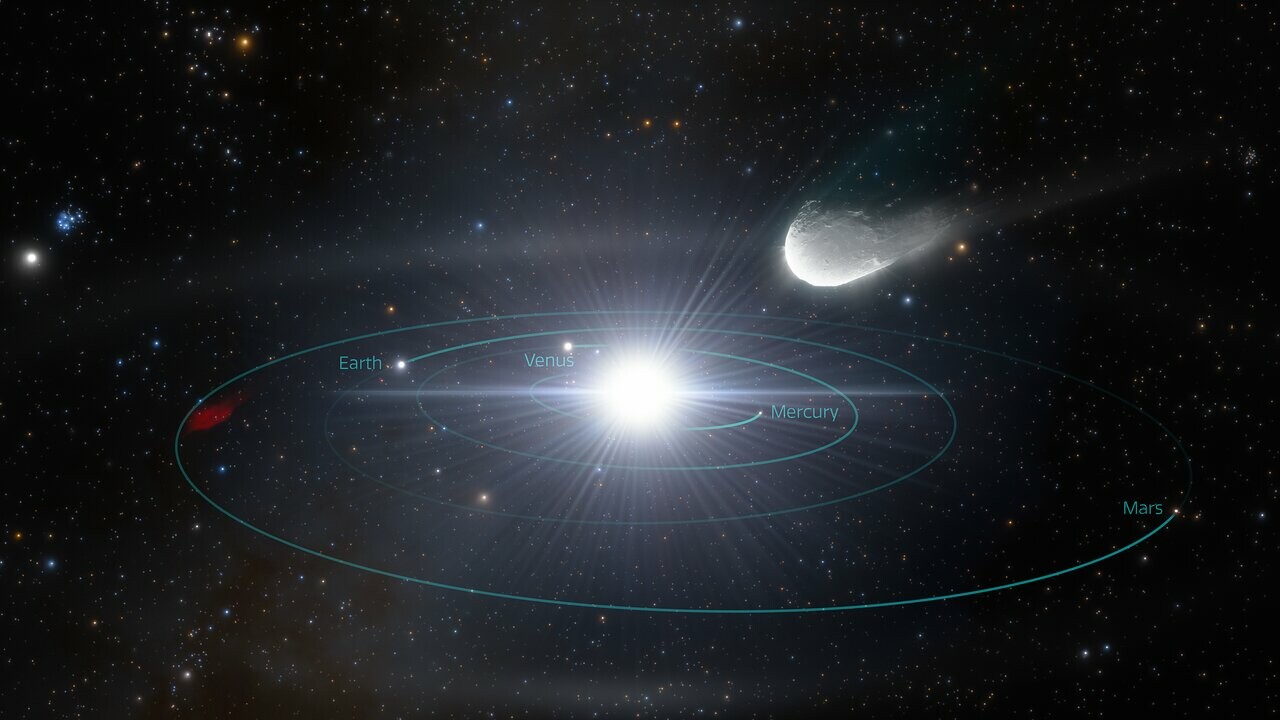
Vera Rubin will Find Many More Interstellar Objects
Astronomers have discovered two interstellar objects, Oumuamua and 2I/Borisov. When the Vera C Rubin Observatory comes online next year, it'll scan the entire southern sky every few nights, revealing thousands of comets and asteroids. Some fraction of these will be interstellar objects, passing briefly through the Solar System. It's estimated that Vera Rubin will discover dozens of interstellar objects, some of which might make the perfect targets for an interceptor mission.
https://noirlab.edu/public/news/noirlab2322/
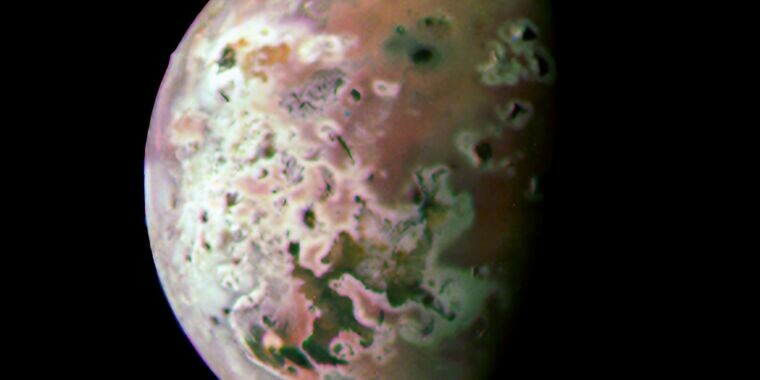
Juno Shares Stunning new Images of Jupiter's Volcanic Moon Io
With its primary mission over, NASA's Juno is taking bold flights closer to Jupiter, making flybys of its moons. On July 30th, Juno came within 22,000 km of the surface of Io, Jupiter's closest large moon, known for being the most volcanically active world in the Solar System. The stunning images showed a world that's awash in volcanoes and lava flows. When Voyager flew past in 1979, it discovered the volcano Prometheus, and new images from Juno show that Io's "Old Faithful" is still erupting decades later.
https://twitter.com/NASASolarSystem/status/1687576383529369600
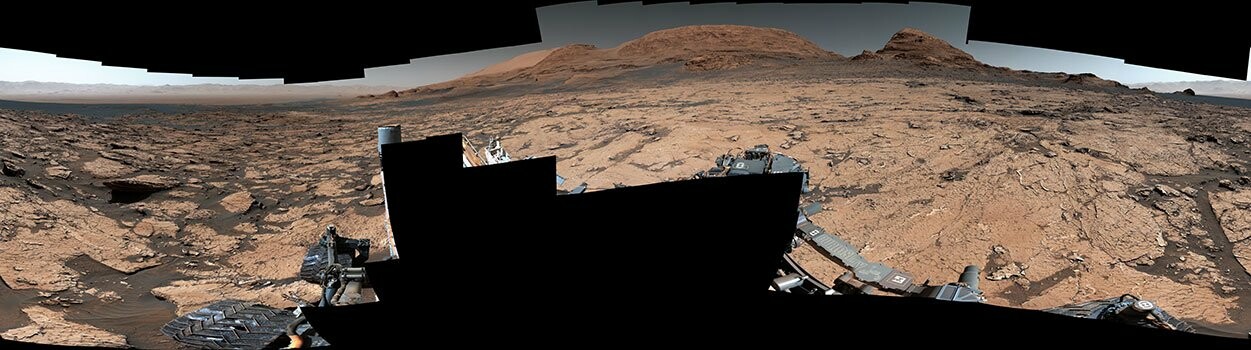
Ancient Cracked Mud Found on Mars
NASA's Curiosity Rover has discovered a region of Mars that seems to be covered in ancient preserved mud in a classic hexagonal pattern. What makes this spot exciting is that the mud is cracked, indicating it went through several cycles of being wet and then dried out again. Areas like this can preserve microbial life, where it doesn't stay too wet or dry for very long, and could be the perfect place for life to gain a foothold on the Red Planet.
https://www.jpl.nasa.gov/news/cracks-in-ancient-martian-mud-surprise-nasas-curiosity-rover-team
nostr:npub1w3qqg5cn8esj0yn6pnpthx907twucl2q89gh6qe706jdc57fhpuq545sfr That's how you know it's a star.
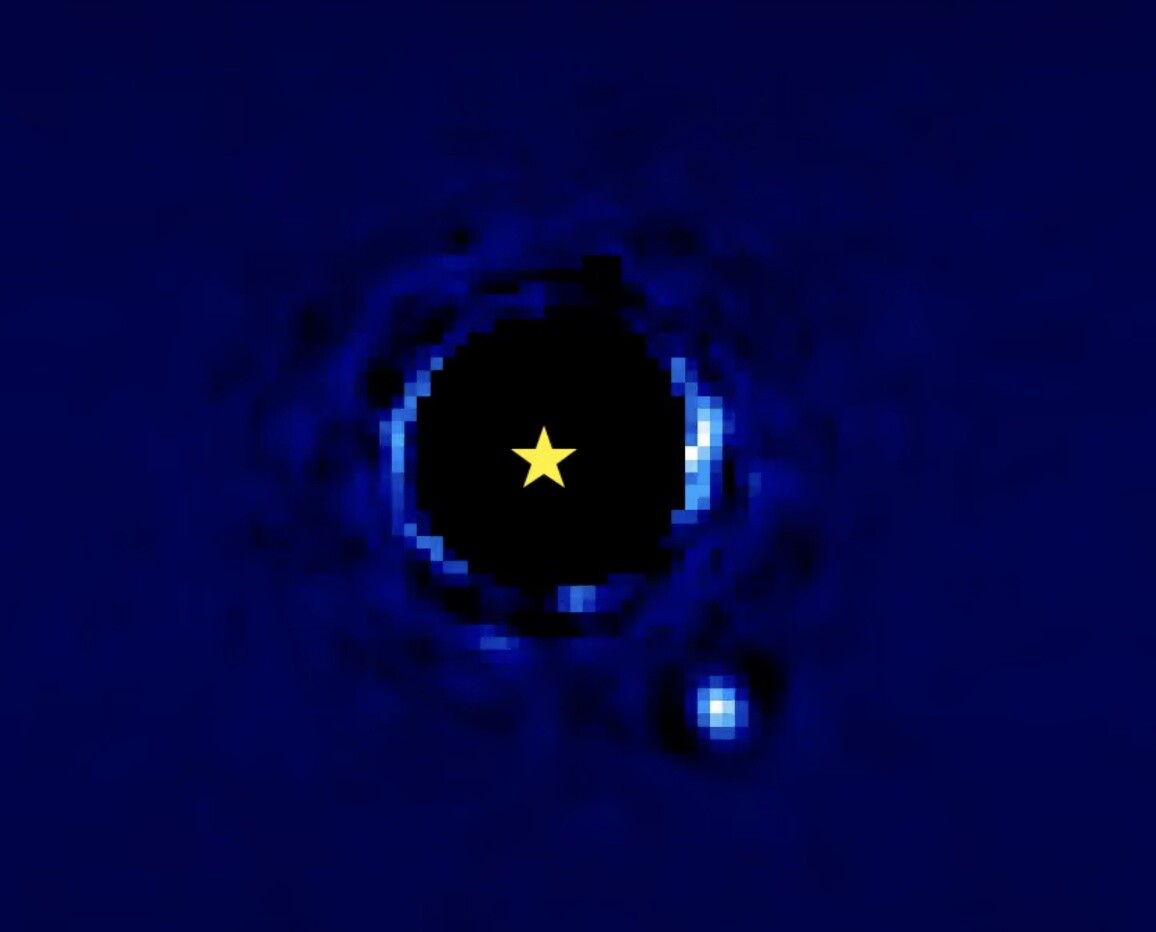
Watch an Actual Exoplanet Orbit its Star for 17 Years
Astronomers have been studying the exoplanetary system Beta Pictoris for 17 years, watching as an enormous planet is orbiting the star. This is one of the most dramatic views ever seen with the "direct method" of exoplanet astronomy, and you can just watch an actual planet orbit an actual star. Beta Pictoris b is the perfect world for this observation; it's far from its star, large, and extremely bright. Astronomers will have watched the planet complete one full orbit around the star in another six years.
https://news.northwestern.edu/stories/2023/08/watch-an-exoplanets-17-year-journey-around-its-star/
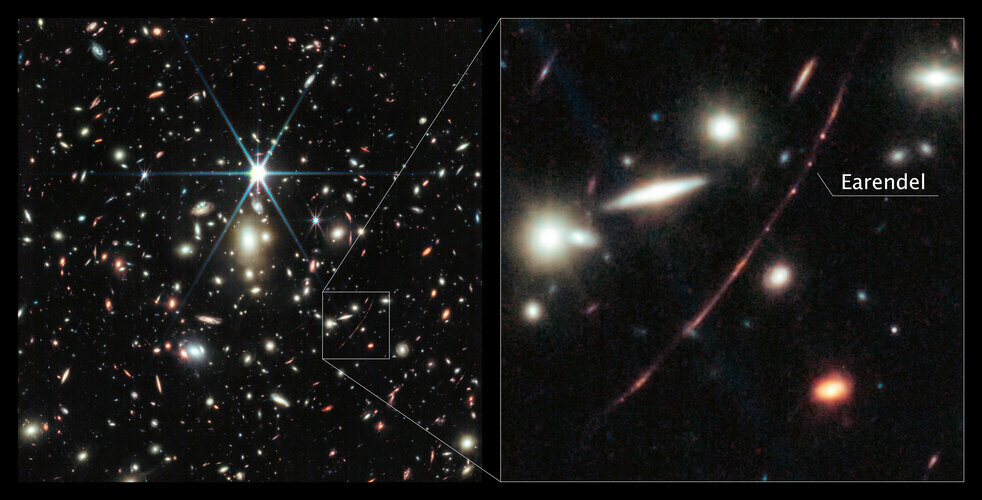
JWST Turns its Gaze on the Farthest Known Star: Earendel
A few years ago, astronomers announced the discovery of the most distant star ever seen. Nicknamed "Earendel," it was found as part of a gravitational lens seen by the Hubble Space Telescope. Now astronomers have used the mighty JWST to observe the star with unprecedented clarity, studying the chemical composition of a star seen less than a billion years after the Big Bang. The image is so sensitive astronomers think they might have even found a dimmer companion star.
nostr:npub162zklrqrenchncy52dqjs6sea0ausxqcr9xhma4hg5xzlvp22zlq35a839 Good thing you don't contemplate the Sun, though. I mean, that's a giant thermonuclear explosion going on, and it's RIGHT THERE!
nostr:npub10m09f2ss6neu2g5mlrrhydw4faqzq72cqlutaywestpflcu53ezqty3we5 nostr:npub1zdp33shl69xr0uq3x8n5gsjykq9upycwh6nqm02c3f6x0frrn0dq42vqv8 I love the idea of a Fediverse video service and I'll probably build into it for redundancy, but it's hard to ignore the discoverability you get from YouTube. It's the second largest search engine in the world, and doesn't seem to be trying to summarize our content into obscurity.
nostr:npub1gx0qcmhrw7tsgwdeq4rrk83fgver4hajczcp9nvkef9czue7yfzsduqwez It's not looking great.
nostr:npub16rzznhdx2qkjvgg59rnku0xlx45ykkmkjxw78z0pznmeglsjptmqgqg07s I've got one metal meteorite and it's endlessly fascinating.
nostr:npub1dgc20rwct3mfd884e2240pqpzhzlz6xm7laky670vnd5um3xxkzsaj4yrt
Edit: geothermal vents might kickstart a steam age underwater. Oceanic nodules similarly be seen as essential for an iron age. Sulphuric/fluorine atmosphere needed for chemical engineering.
I don't doubt life's ability to innovate in their environment

nostr:npub1wqygaw96e7xudmld6sazeve0u2kmluxfsrmf9ue53a9zmu3ttzqq85ftf9 That would be amazing. Life finds a way.