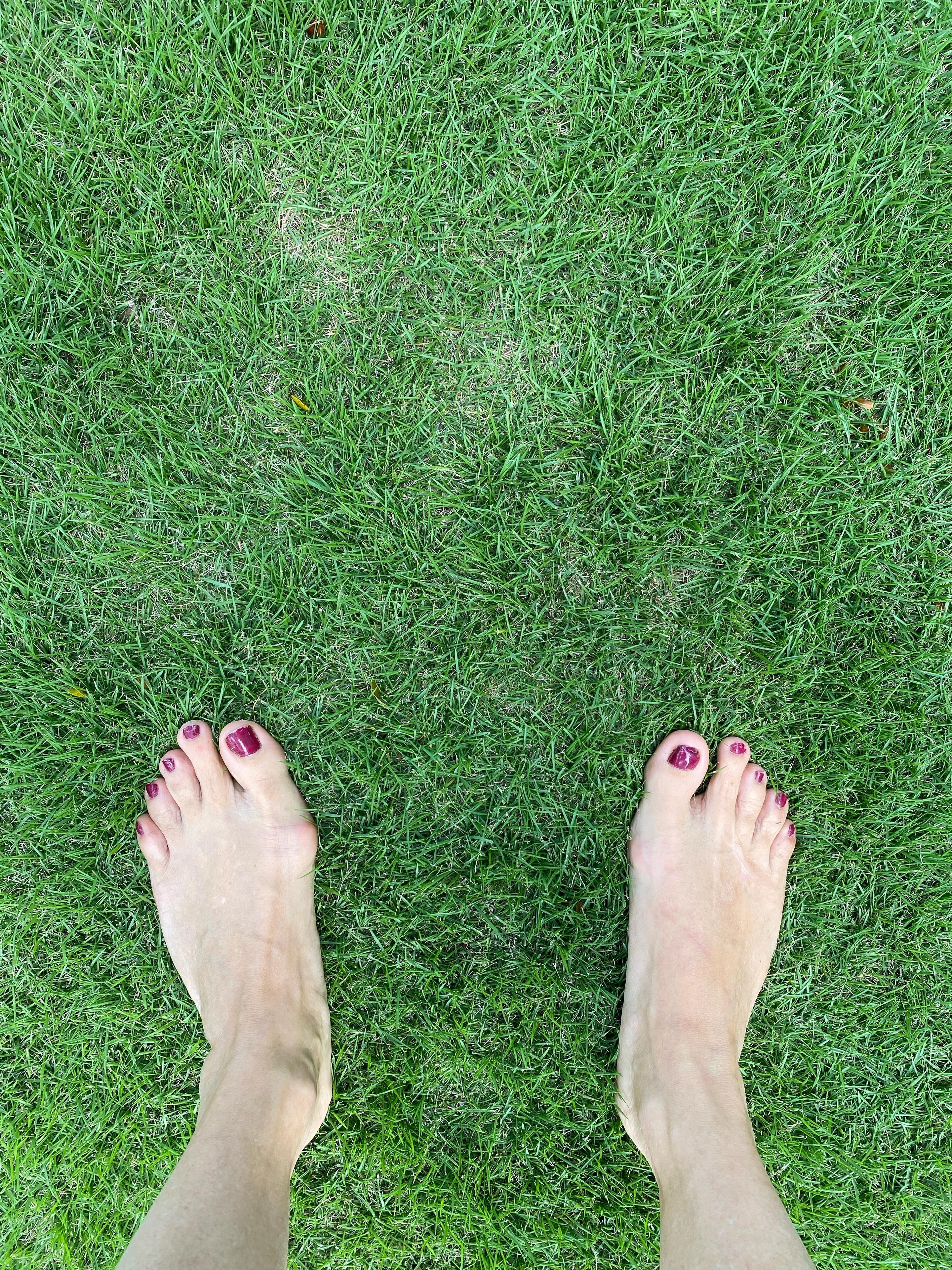
Nice work Sydney Bitcoiners.

Would love everyone to add their personal ‘things’ to this thread.
nostr:note12w3a4sap9amll8e2ymlteqhkylfhlkxc4wv47pvu7p5t4rw7dshs2lysj7

In one word: Incentives.
There are many reasons historically, people used to have children and often, many children.
1. Labour - many hands make light work
2. Legacy
3. Old age care plan
4. High testosterone levels
5. Absence of other entertainment/distraction
6. Low infant mortality
1. no longer needed (AI, robots, other basic tech like dishwashers and washing machines)
2. Wonderfully and Sadly with the internet people can leave a permanent mark or stain of themselves on this planet into eternity without having children.
3. The breakdown of the family plus care facilities make this redundant.
4. Need I say more. Easy times + toxic food + sedentary lifestyles drop testosterone levels to a fraction of historical norms.
5. Convenient distractions combined with low testosterone, need I say more.
6. Spares are no longer needed.
I’m sure many other points could be added here but I’m out of time.
Final thoughts, don’t try to convince others to have children. There is a process of natural selection at play here.
There is 1 thing every human on this planet has in common, our ancestors were survivors. This same comment will hold true, thousands of generations from now.
An article written for a young adult feeling nihilistic about his opportunity to enter the realestste market. It is Australian focused but it holds true globally I believe.
The Housing Crisis: A Story of Monetisation
Australia’s housing crisis isn’t simply about supply and demand, urban planning, or migration — those are surface-level symptoms of a deeper dynamic. At its core, it’s a monetisation problem.
For decades, real estate has absorbed the monetary energy that once flowed into sound money. In the absence of a reliable store of value — something that preserves purchasing power over time — people have been forced to use houses as a financial refuge. Homes stopped being shelter first and became savings accounts made of bricks.
This didn’t happen by accident. When the world moved off the gold standard in 1971, money became elastic — infinitely printable and unanchored from scarcity. As the currency supply expanded, people sought assets that could hold value better than cash. Property was familiar, tangible, and — crucially — limited in supply. The result was inevitable: monetary demand flooded into housing, distorting prices far beyond their fair utility value.
Before 1971, the average home cost around two times the median income. Today, with the median income at roughly $78,000, a median home should reasonably cost around $156,000. Yet the real figure sits closer to $849,000 — more than five times higher.
Now, it’s true that homes have grown larger and more functional over time. In the 1970s, the average house was about 100m²; by 2025, it’s around 245m² — a 2.5x increase. But while houses have grown, their purpose hasn’t multiplied at the same rate. Let’s be extremely generous and assume that today’s homes are twice as useful as those of the 1960s. That would suggest a fair median price of $312,000. Yet the actual median house price is still 2.7 times higher than that.
Somewhere within that 2.7x–5.5x gap lies the true monetary premium that has accrued to residential real estate — the inflated value attached to housing simply because it has been forced to perform one of money’s primary functions: acting as a store of value, something the Australian dollar has failed to do since 1971.
The Shift: From Real Estate to Real Stores of Value
Here’s the good news: houses are beginning to demonetise.
After decades of acting as a store of value, real estate is gradually returning to its rightful role — providing utility and shelter. I know this shift firsthand. For the past 30 years, I’ve used property as my own store of value. It made sense when there were few viable alternatives. But that equation is changing.
There are now forms of money that perform the monetary function far more efficiently — scarcer, more portable, more divisible, and immune to debasement. And I’m not alone in recognising this. Every week, I speak with others who have long treated property as their primary wealth anchor. Many are now rethinking that stance. Quietly, at the margins, capital is rotating.
The pattern is familiar: gradually, then suddenly.
Understanding Value Through a Longer Lens
To understand where we’re headed, it helps to zoom out.
For centuries, gold has served as the world’s most trusted store of value. In Australia, the relationship between gold and housing has been remarkably stable over time. The median Brisbane house price has hovered between 300 and 400 ounces of gold for more than two centuries. Despite fluctuations in nominal prices, that ratio has remained a reliable measure of relative value.
But that balance is shifting once again. Gold is re-monetising — regaining its role as a neutral, apolitical store of value. At today’s prices, 300 ounces of gold can now buy roughly one and a half houses, suggesting that gold is slightly ahead of housing in this new cycle.
Yet even gold is being outpaced. Bitcoin is harder money than gold. Its supply is not just finite — it’s fixed. It’s digitally scarce, globally transferable, and immune to manipulation. Gold still depends on custodians and physical logistics; Bitcoin removes that friction entirely.
When you zoom out, three truths become obvious:
1. Bitcoin is monetising faster than gold.
2. Gold is monetising faster than housing.
3. Housing is demonetising.
The world is quietly repricing what it means to store value.
A Realistic Goal for the Next Decade
So, what does this mean in practice?
It suggests a simple, grounded financial aim: accumulate the equivalent of one house’s fair utility value — between $156,000 and $312,000, depending on the standard of living you’re targeting — in sound money (Bitcoin or gold).
As housing continues to shed its monetary premium and Bitcoin (alongside gold) continues to absorb it, those two curves will intersect. Over the long term, the price of real estate — when measured in sound money — will fall.
Our measuring stick, fiat currency, is broken. So, while nominal house prices may continue to rise in dollars, their true value — measured in Bitcoin or gold — will decline. What looks like property appreciation on paper is often just monetary debasement in disguise.
If current trends hold, I expect that within the next decade, one Bitcoin will buy a good house.
Beyond the Numbers
Of course, this isn’t just an economic story — it’s a cultural and psychological one. For generations, Australians have been taught that property equals security. But true security doesn’t come from the walls we own; it comes from the stability of the money we measure them in.
As housing continues to shed its monetary premium and Bitcoin (alongside gold) continues to absorb it, the two curves will intersect. On a long enough timeline, the price of real estate — when measured in sound money — will fall.

It sounds like a fairly normal early childhood reaction to the world. Their immune systems are not yet developed, so as they encounter new things these flare ups are pretty normal, although the duration seems extended. Glad your little boy is on the mend, whatever the trigger ❤️

I’ll swap you my kids for your frog. I saw you frog wipe down the bench, something my kids never do when they are cooking

The Things I Wish I’d Been Taught in my Youth
From the perfect high-five to the hidden truths of money, the lessons I wish my family had shown me in my formative years. — skills and insights that would have saved years of fumbling, frustration, or misplaced faith in how the world works. Some are small, almost trivial tricks of coordination and craftsmanship. Others are profound truths about the systems that quietly shape our lives.
There are certain things you stumble across in life, often after decades of doing things less effectively and efficiently— and you can’t help but wonder: Why didn’t anyone teach me this earlier? Some are small, almost trivial lessons that make daily life smoother. Others are profound insights that would have shaped the way I understood the world and my place in it. Together, they form a kind of informal curriculum — lessons in awareness, efficiency, and respect for natural order — from the angle of a hammer swing to the arc of monetary history.
Here’s my list — a collection of skills and truths I wish to pass onto the next generation.
1. How to land a High-Five
It’s such a simple act — a symbol of celebration, connection, and camaraderie — yet how often do we miss the mark? Literally.
The secret? Don’t look at the hand. Look at the other person’s elbow.
That’s it. The physics and geometry of body movement take care of the rest. You’ll never miss again.
2. How to Use a Hammer Efficiently
When I first picked up a hammer, I thought it was about brute force. Grip tight, swing hard, hit nail.
Wrong.
The trick is in the motion — a relaxed underhand swing with a natural rotation, not the overhand smash you see in cartoons. The hammer’s weight and arc do the work. You guide it, you don’t fight it. It’s a little bit of physics and a lot of finesse — a quiet metaphor, perhaps, for many things in life.
3. The Shoelace Secret: The Surgeon’s Knot
For years, I tied and retied my shoelaces, cursing the moment they came undone. Then one day I learned about the surgeon’s knot — a simple double loop that stays tied like a double knot but unties like a single.
It’s elegant, efficient, and a tiny act of mastery over chaos. Once you learn it, you never go back.
4. How to Build a Fire That Feeds Itself
Most of us were taught the teepee or log-cabin fire — beautiful in theory but needy in practice. They burn bright, then fade, demanding constant tending.
Then there’s the upside-down fire method — the quiet genius of efficiency.
You start with the big logs at the bottom, smaller logs and then finally sticks and kindling layered on top. Think a miniature pyre, that fits neatly in your fireplace or pit. You light it from the top.
The fire burns downward slowly and steadily, feeding itself as it goes. No constant stoking, no frantic rearranging. Just patient, ordered combustion.
It’s an idea so counterintuitive and effective it almost feels like a secret.
5. The Great Lesson I Really Wish I’d Learned: How Money Actually Works
Here’s the truth that should be on every school curriculum but isn’t: any form of financial engineering that expands the monetary supply leads to higher prices.
Coin clipping, fiscal easing, lowering interest rates, quantitative easing, money printing — these are all different costumes for the same act. The only real question is where the inflation shows up. Sometimes it’s everywhere — food, fuel, rent, wages. Other times it hides in plain sight, in asset markets, inflating property, stocks, and collectibles.
Understanding this changes how you see the world. Inflation isn’t always a symptom of progress — sometimes it’s the quiet theft of value from those who hold money to those who create it.
In a truly open and functioning free market — a world of 8 billion people working in service of 8 billion people, as Jeff Booth so aptly put it — the natural state of things should be deflation.
As innovation and efficiency increase, the cost of goods and services should fall, not rise. That’s the reward of human ingenuity, specialisation and technological progress.
But when the monetary system is distorted — when we keep expanding the money supply to avoid short-term pain — we break the measuring stick itself. Prices no longer tell the truth. The signal is lost in the noise. And in that confusion, value quietly shifts from the many to the few.
6. The one vital lesson, I was lucky to learn in my youth: The Flow of Energy and the Power of Thought
The final lesson is harder to measure, but more foundational than all the rest: the way energy flows outward from each of us begins with the thoughts we choose to think.
Every belief, every quiet assumption, every repeated story we tell ourselves radiates energy — shaping the world around us in ways both subtle and profound. Our thoughts become words, our words become actions, and our actions build the conditions of our lives.
When we think with fear, resentment, or scarcity, that energy expands outward, colouring our choices and relationships. But when we choose thoughts rooted in curiosity, gratitude, and possibility, the world around us responds in kind.
It’s not mystical; it’s the physics of attention and intention. Energy follows focus. Where we place our mental light determines what grows.
Had I been taught that my inner dialogue was not just private chatter but the architect of my outer experience, I might have learned to tend my thoughts as carefully as any fire — to build from the top down, patiently, allowing clarity and calm to feed the flames of purpose beneath.
The Moral of the List
From the perfect high-five to the low maintenance fire, from the arc of the hammer swing to the flow of money — and finally, the integrity of thought that leads to the integrity of actions — these lessons share a single theme: alignment with the underlying mechanics of reality.
Whether physical, financial, or spiritual, systems have their own logic. When we understand that logic, we stop pushing against it and start moving with it.
If I could go back and teach my younger self one truth, it would be this:
The world runs on patterns — of motion, of value, of thought. Learn to see them, and life becomes not only easier, but infinitely richer - vitally potent and grounded in integrity.

What was even more cool was the people that came up to me 6mths later and with little to no practice, we’re still remembering all 12 words in the correct order. 🧡
https://podcasts.apple.com/au/podcast/bitcoin-audible/id1359544516?i=1000733902099
Sounds familiar… paper Bitcoin anyone?


Amazing weekend! Thanks so much Roger! The farm is stunning, will definitely be back. The 6 pythons in our swimming hole was a definite bonus… very cool to see a snake mating orgy in real life. 🧡🧡🧡


I’m glad your daughter and her friend are unharmed and I hope her confidence is only shaken a little. Just enough to make better choices and maybe seek some guidance but not so much that she stops seeking adventure.
Loved your post, children are wonderful at helping us detach from physical shit.
I remember when my son was 2 and I’d had a hammer out fixing something. I’d asked my eldest son (14yrs) to put the hammer away. I little while later from another room I hear this weird tapping sound so my curiosity got the better of me and I followed the noise to the kitchen. There in the kitchen was my 2yr old ‘fixing’ our brand new fridge with the hammer. 😂
That pock marked fridge has been a constant reminder to not become too attached to physical stuff.


Cool, can you send me all your Bitcoin to this address: bc1q9hj77gdawawrqhys3lwewzkmw27fjp3ff236u0




The leverage will cause an temporary unwind, it always does. Two steps forward, one backwards… and so it goes.
https://podcasts.apple.com/au/podcast/bitcoin-audible/id1359544516?i=1000725878833
nostr:npub1h8nk2346qezka5cpm8jjh3yl5j88pf4ly2ptu7s6uu55wcfqy0wq36rpev
Love Allen, great show but please check guest links in show notes… looks like they might be from your Bitcoin veteran’s show… not this show. Keen to find Allen’s Nostr npub.
What is money?
Money is what we save, unlike food, a house, or a car, which are things we consume.
We invented money so we can save our time, energy, and labor and later exchange it for things we need.
That’s why it must be scarce and trustless. That’s why #Bitcoin wins.
https://blossom.primal.net/acbd3d1bc873a73510dbf2b4c1ce4d69404caf3a13108e06257526a5ac454eee.mp4
Nice work Jack! Your short snack size videos are awesome and perfectly snack size for those with short attention spans.

Unless you are someone whose entire identity rests on being a victim. If they are not a victim, who are they?

nostr:npub1x458tl7h9xcxa66vr4a8pg0h2qz96pnhwnfpcra0le9090uk5t5qw7armt This is what I love about Nostr… you have been permanently muted for being a pathetic and weak excuse of a man! I don’t need to allow my feed to be clogged with your dialogue demonstrating your weaknesses.
You are clearly afraid of strong women.
The truth: strong, self confident, independent men attract and adore strong, self confident, independent women.
Only weak men need a weak woman they can dominate, to help them falsely feel more powerful.
Just as there is nothing more attractive for a woman than an intelligent, powerful, self confident and capable man so too there is nothing more attractive to a man (with all the above qualities) than finding their equal in a woman.
There is no greater reflection of how we feel about ourselves than those we choose to be intimate with. Choose wisely as you are forever outing yourself.
nostr:npub1x458tl7h9xcxa66vr4a8pg0h2qz96pnhwnfpcra0le9090uk5t5qw7armt
I think you are missing the limitations of gold.
There are no prefect solutions and people who think Bitcoin is the future, think it possesses better trade offs than gold.
To directly address your criticisms
1. You are kind of correct and also wrong at the same time. Bitcoin is designed to be digital peer to peer cash. So if you had a $100 bill that you wanted to pay me with, I’m not particularly interested in whether that same $100 bill was used in an illicit transaction previously. Plus, the UTXOs history can be hard to follow through mixers, consolidation/splitting and through layer 2 mechanisms.
2. Bitcoin is no easier to lose than cash or gold. It requires user carelessness or stupidity to lose.
The main reason lots of Bitcoin have been ‘lost’ is because, in the early days, it was worthless and the people playing with this new toy did not value it as it cost them nothing to acquire. So these early holders often threw away or sold the laptops where their Bitcoin keys were stored.
I’d even suggest, the more valuable it becomes the harder it is to lose.
Happy to engage further in good faith if you have more questions.
https://podcasts.apple.com/au/podcast/bitcoin-audible/id1359544516?i=1000709439703
nostr:npub1h8nk2346qezka5cpm8jjh3yl5j88pf4ly2ptu7s6uu55wcfqy0wq36rpev
Thank you Guy! This is the best and most confronting information I’m yet to encounter, in my life!
Understanding the legal framework that has been systematically implemented in the past 20years that enables the “You’ll own nothing” part of the WEF narrative makes it so much more than a narrative but instead an imminent threat.
Prepare accordingly!!!
Was walking barefoot in the park today and bumped into a longtime acquaintance who has long been a snide Bitcoin sceptic. He revelled in pointing out every Bitcoin dip in the last bear cycle, knowing we’d bought at previous cycle ATHs. He noticed my bare feet and said in his snide tone … “oh, so you’re one of those people” I smiled and happily replied, “Yes, healthy and rich! Go figure…”
I’m still smiling!