

It doesn't really matter what the technology is. At the end of the day, all technology is serving a purpose. That derives from human values and preferences. Technology is always used in an instrumentalist frame relative to its use -- which is always to serve a human end. This is basically just another way of repeating David Hume's famous insight, "reason is, and ought only to be the slave of the passions".
The key to understanding this insight is understanding that any logical or rational system always serves a normative goal (a human passion). In other words, we don't do advanced industrial farming because the technology availed itself to us. We do it, because we want to eat more food, and the technology improved the fulfillment of that passion.
If you recognize this insight, you should be skeptical of ALL technological deterministic reasoning. The Sovereign Individual, Hyperbitcoinization, AI apocalypses, etc. Some of these things may have grains of truth in them, on a first principles basis about what social orders could be *possible* given these technologies. But possibility space is just that. The other part of the equation is the probability of outcomes within that probability space. So, when we ask ourselves, based on everything we know about human nature, culture, economics, do we think that these scenarios that the possibility space opened up by these technologies is a probable future?
I think the answer is no! No, it's not. Mainly because the entire conclusion rests on a technological deterministic argument! Which just doesn't epistemically make sense!
Re-reading parts of The Sovereign Individual for the critique I'm writing about Davidson and Rees-Mogg's arguments, and the thing that really stands out at me -- and I think this is also a problem that the hyperbitcoinization crowd suffers from -- is this almost religious belief in technological determinism, as the way to predict the future.
Technology is a powerful driver of culture, and in some respects can just be considers part of culture, so it goes without saying that technology helps shape and influence society. I'd never argue against a thing. But I would generally argue against any thinking that views culture and politics as *downstream* of technology. It's a complex interplay between human nature, individual and group differences, economic conditions, political climate, etc. These things interact with each other. Technology doesn't just drive all the others towards some deterministic end. I think that's actually silly!
I’m clearly going to have to take on the Sovereign Individual in my next Medium post. Too many people seem to think it’s a convincing preemptive counterpoint to everything I’m saying. Naturally, I think this is nonsense and I intend to argue why.
I've been making these arguments in fragments across social media. I figured it needed a more long-form take. https://medium.com/@mike.brock/the-libertarian-to-fascist-pipeline-30558ce03c92

I think Trump is a pretty dangerous figure. And if you think that's TDS, I'm not sure that I care.
Dunno. When I hear members of my family and former friends referring to him as the most honest, down-to-earth politician of theirnlifetime, I just hear "I'm in a cult". Thats what my brain translates that to.
This is kind of a straw man of my position. In any case, I'm on vacation this week, and planning on sitting down and writing a pretty meaty Medium post on the Libertarian-to-facist pipeline. My claim is not all libertarians end up fascists -- but a lot do. Many ultimately come to the same conclusion as me, and have retreated into things like state capacity libertarianism, liberal nationalism or New Liberalism.
Nah. They're kind of in a cult.

Yeah, you can collapse this into a more flippant version of artiment: if you want to be self-sovereign, go live alone on an uninhabited island in the middle of the ocean.
But I'm not trying to reach it from the top down. I don't know what you're insisting on a directionality. Individual and collective interests can be in tension with each other, and the maxima of the latter seems to be highly contingent on some concept of the former. As demonstrated by collective action problems (see: tragedy of the commons, uncaptured negative exterbalities, incentive structures for non-violent dispute resolutions like rule-of-law).

The idea that freedom means solely pursuing one's own chosen purpose, without regard for any broader social or ethical context, is a shallow and ultimately incoherent view. True freedom involves more than just individual choice - it requires taking responsibility for the consequences of our actions, recognizing our obligations to others and to society as a whole, and working to create the conditions that enable all people to pursue their own flourishing in a meaningful and sustainable way.
My personal opinion, and what I'm gesturing towards in all my arguments here is that a genuine conception of freedom must be grounded in a sense of shared purpose and common good, not just isolated individual preferences. It's about balancing personal autonomy with social responsibility, and understanding that our own well-being is deeply interconnected with the well-being of our communities and institutions.
I think America has a surprisingly concordant view of the common good, when you look at opinion polls 60-70% of Americans generally agree on most things. There's an institutional failure occuring in the two-party system with minority constituency capture. An even bigger problem is one of the parties has collapsed into a personality cult.
I think this is true. But the problem is even worse than this. I think things like anarcho-capitalism are basically a kind of neo-feudalism that is obsessed with self-justifying itself around a conception of property rights maximalism that claims to be libertarians on a first principles basis, while only paying attention to initial conditions and then falling back into a cold transactional logic from there.
Yes. I'm unapologetically in favor of democracy. Bye, I guess.
Liberal democracy is supposed to be a political answer to that question.
The fact you are insisting it must be bottoms up, is the ontological fallacy. The fact you think I'm arguing a transcendent objective truth about universal notion of a common good, is a straw man of my position. I'm not as sure you have a very strong grasp of these issues, as you seem to think you do.
I don't claim the common good exists in a foundationalist way. I am arguing that conception of it, is necessary for a stable society. You're the one that's insisting that any ethical foundation must be derived from purportedly self-evident truths or objective truths about individual rights. I make no such claim. Either about individual rights or collective rights.

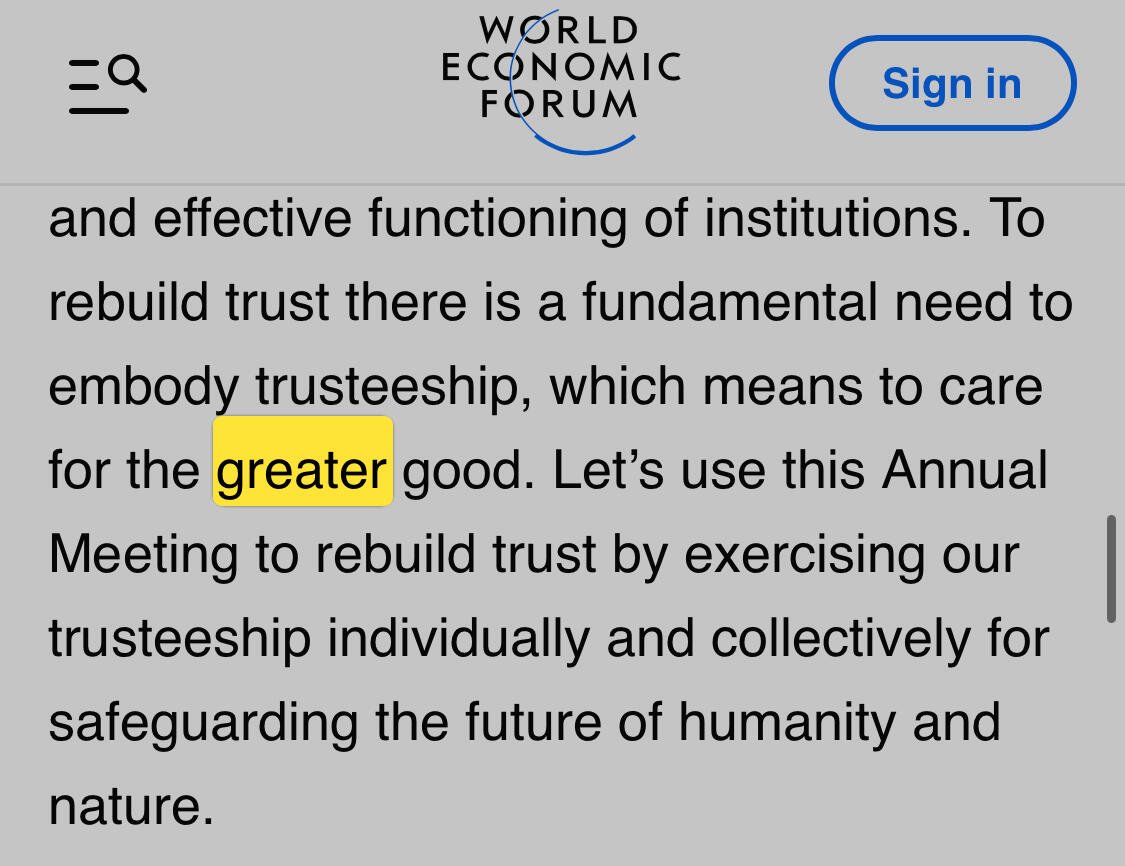
This might be the dumbest thing I've read all day, to be honest.