

CDU and Green Party representatives are attempting to have the parliament ban the AfD, which would sideline the second most popular German party and make some eastern states ungovernable.
https://taz.de/Forderung-nach-Taskforce-fuer-AfD-Verbot/!6017351/
But we have to ban incorrect political parties to save democracy!
It isn't coming right now. Gradually, then suddenly. Money supply has been shrinking for a while now, but that inevitably collapses the financial system because they're way too leveraged. And at that point it's if, not when, the next liquidity deluge hits.
That tighten>collapse>bailout>inflation cycle has been repeating at increasing size and tempo since 2000. Eventually a cycle becomes big enough that they can't stuff it back in the bag so to speak, and people just want to get out of the currency at all costs. That's when the wage-price spiral happens.
In the US we're being flooded with cheap Chinese goods and cheap Guatemalan labor. But that won't save them in the end, because the Chinese and Guatemalans will also demand higher wages to survive. The people actually doing the work always have the power at the end of the day. The elites are just terrified of the day the masses realize that fact.
In the US something like skilled construction labor costs went up by 20-40% since 2019 and they aren't coming back down. Living expenses haven't fallen, and tradesmen are continuing to raise their prices even as the building industry gets squeezed by lower demand. That's the earliest glimmer of labor shifting the pricing power back in their direction.
Quote of the day:
> 90% of people have no savings, so they don't care what the debasement rate of the saved fiat that they don't have is. The other 10% of the people don't have their savings in fiat, so they also don't care. Everyone sees money as currency and they only compare the various fiat currencies with each other and governments just want to have one of the less-bad fiat currencies.
No lies detected.
(in German)
https://open.spotify.com/episode/1R8BlAVjbx3JkHKDIEIF7H?si=m6P0mwr6RT2HP876ZpRuwA
There are tens of trillions in bank deposits and cash in the US alone. "Someone" is holding every dollar at all times, so every dollar created is debasing someone's savings. Most just don't realize it.
But the worst debasement isn't savings, it's the lag in wages keeping up with prices. Every wage earner gets debased through that, and for a non-trivial amount.
Hyperinflation happens when wage earners finally catch on, and proactively demand wage increases higher and faster than price increases. That's what happened in Germany and Austria in the 1920s. The bougie "elites" were aghast at the wages demanded by their domestic servants, while their own "risk-free investment" in government bonds had evaporated to essentially zero.
That's the dreaded "wage-price spiral" the Fed has been freaking out about since 2021.
Reminder that climate "science" is as ridiculous as voodoo, and even more evil.
https://video.nostr.build/4359ed5915c37406ebcfb2436025704db7160fc90db01e071eed0f4295b591d4.mp4
Yeah I think a bridge in some little town that only gets local traffic is exactly the kind of unproductive investment a sound money standard will kill. Imagine how that project gets built today. Massive debt issuance by the state, or taxes on people who will never use the bridge.
I see the fact that these projects under a Bitcoin standard either don't happen, or get fronted by a wealthy local benefactor, as a really good thing. I don't want my taxes and the inflation of my savings building bridges in Podunk Missouri. Let's use that to build SMR's or desalination plants or something really worthwhile.
The project might not be a good allocation of resources. Under a sound money standard, that becomes obvious quickly. If it can't produce enough profit from tolls to repay the loan, it's a poor use of resources. The market is telling you that people value something else more than they value the bridge. Maybe adding a second ferry to reduce the wait time is a better allocation of resources?
We've been brainwashed by fiat economics to see any infrastructure or any business that "makes money" as productive. Without the ability to finance those things through inflation by issuing debt, only projects that provide a lot of real value will be able to get financing.
Anything else will have to be paid up front, by someone who values the project for other than purely economic reasons.
Under the current system, the interest for loans comes from new loans. That's why M2 only goes up to the right, and any pause collapses the entire financial system.
That's a consequence of the debt/fiat system based on the fraud of usury, where banks charge interest to loan out money they don't have.
Imagining a Bitcoin standard is tough right now, because we're in a brief blip with Bitcoin rapidly appreciating in value as in gets monetized. Eventually that process slows down and stops. At that point Bitcoin deflates at the rate of economic growth. That's a lot slower than the current value appreciation. At that point loans become possible, as long as it's for a genuinely productive use that beats the overall rate of economic growth. Loans don't go away, but massive misallocation of capital does.
Another good reason to avoid centralized platforms, for both posting and reading.


Charging interest will always be attractive to those making the loan, as far as I can see. The difference is that under a sound money standard, paying interest on unproductive debt becomes completely untenable.
This is partially a result of misunderstanding what money is. Debt as money is a terrible perversion of the concept of money as a ledger of deferred consumption. A sound money economy makes a lot more sense once you start thinking of money as equity, rather than debt and fiat.
If you had to take out a loan of Exxon shares and repay it in Exxon shares + more Exxon shares, the bar for profitable use of debt goes up.
https://open.substack.com/pub/f0xr/p/money-as-equity?r=3i492j&utm_campaign=post&utm_medium=web
Why progress has become impossible


Chest high now, pushing up past the cover crop residue, but it needs rain soon.
nostr:note1kzmur5a8qlfr8sf8r6t37rpcj86t98x9v4a49f9wvmtawn4wga5q7wfpg3


Ten days from knee high to chest high. It's sucking up a ton of water right now, and no rain in sight, so time to irrigate.
nostr:note1z9uhjhfdyvdrjlv3tkh58srydelj0yehetaerkugc9r6efzmsytq67ay3k

Corn needs a drink today





Another reason being poor is generally a bad strategy.
nostr:note1jdx2jrswz5vxr0s96ma40mqsduy8lv3vm80mqk5g5r9jxhe8ytjqtchgh6
"democracy"


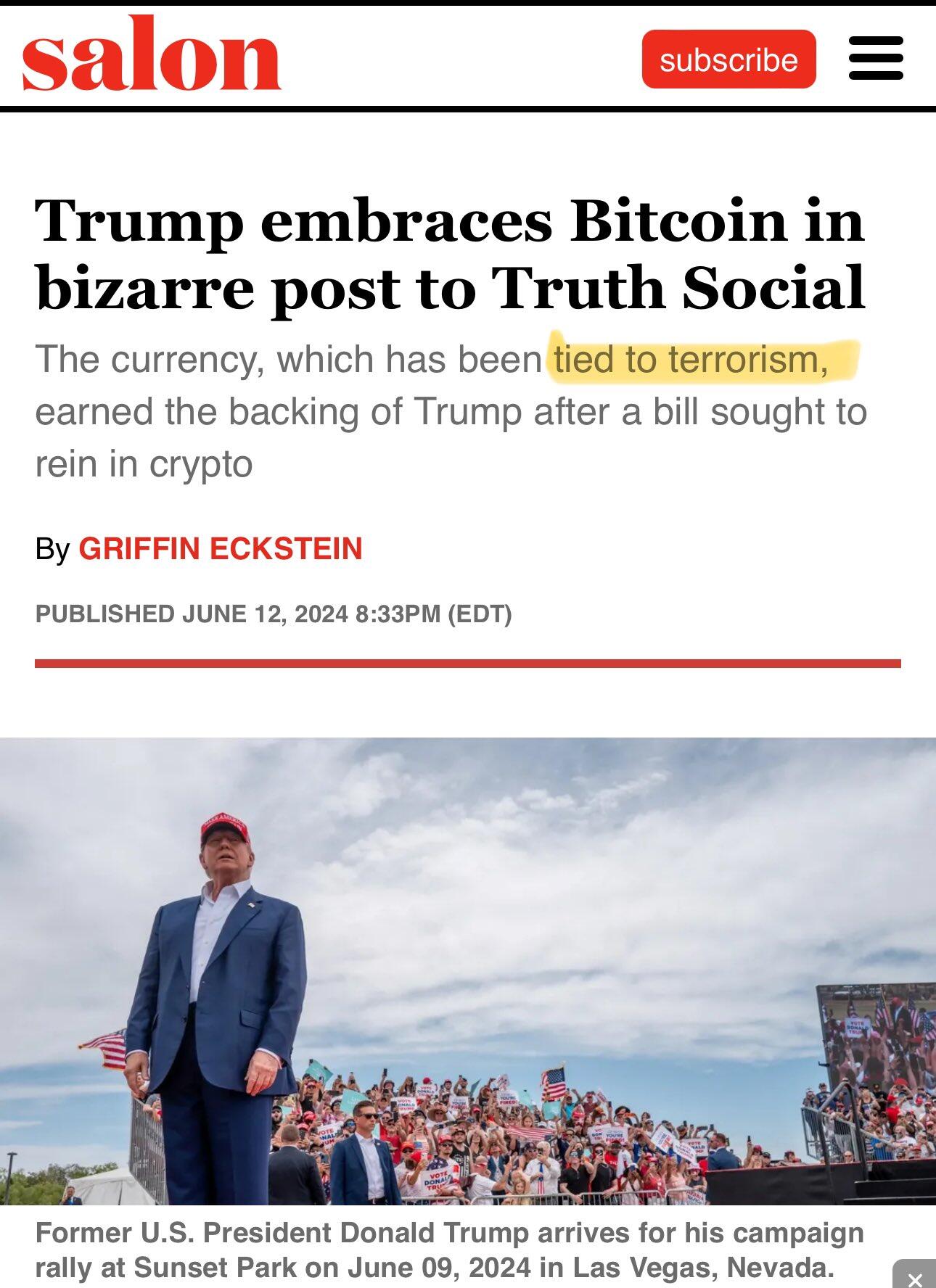
No matter how much you hate journalism, you don't hate journalism enough
nostr:note1t7009ndj4tlfnj5mg7c9qe7n8aqe0dgxgdvuc5j7p62l6khf08ksuj4tnk

I remember


I remember


