
Avatar
The Bitcoin Chef
bd095d5614ff0874e16e3200315fb957fa2b9aba9e66c99d75b83a42e8dc5613
I run monthly supper clubs with my wife. We accept Bitcoin as payment. Come join us www.henryherbert.co.uk

Stacking sats is certainly simpler and more rewarding 😂

No matter how many times I clean my car. From pre wash, scrub with a soapy brush, pressure wash, after buff etc. All looks delightfully clean. Soon as it’s drys it’s clear it’s still covered in crap. How can I be 37 and I still can’t wash a car properly. Is it just me!!! 🤦🏻‍♂️

I like a mayo made with just ev olive oil, lemon, yolk, Dijon. Pretty strong but very nice (and seed oil free 😉)
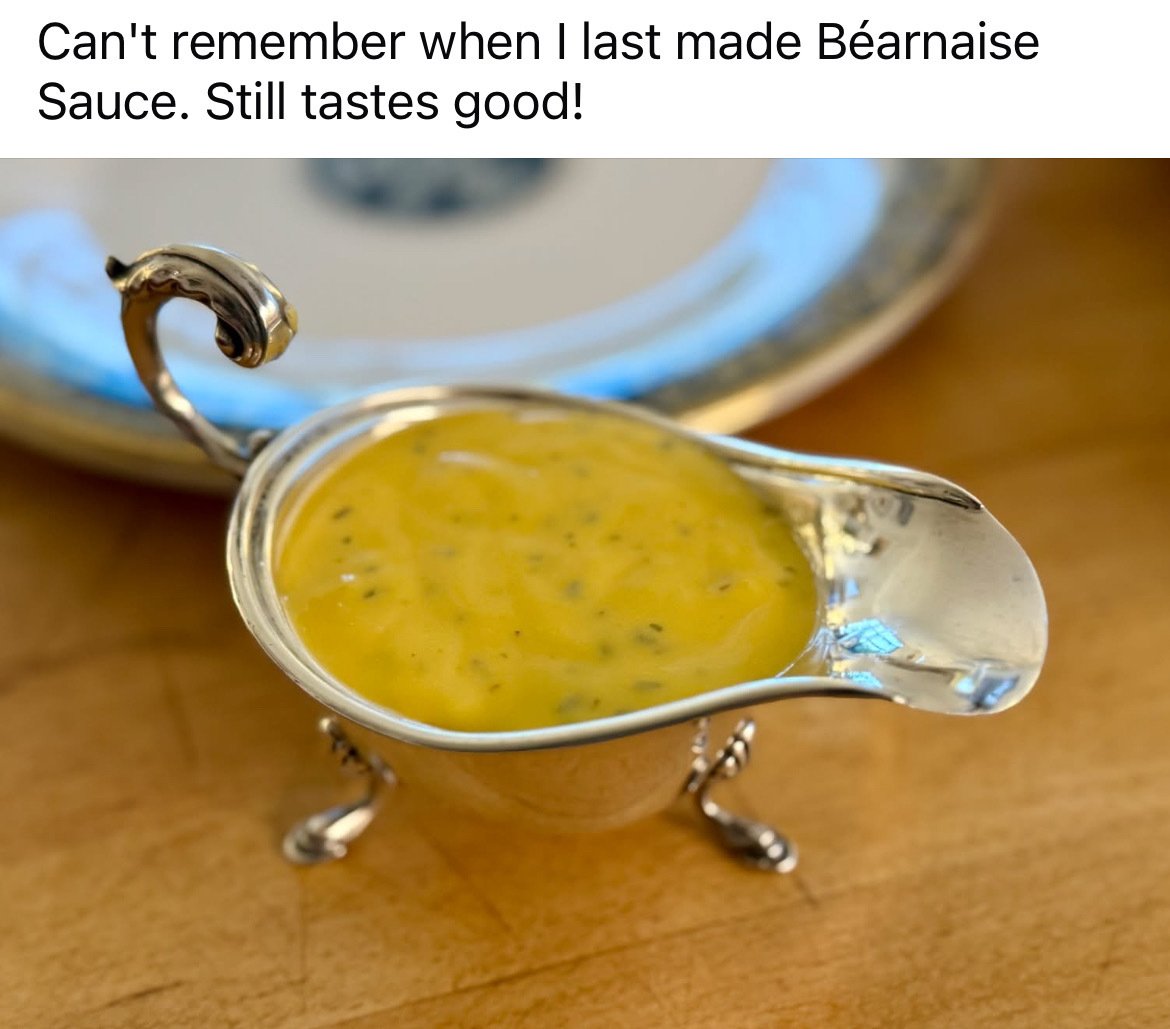
Oh, bearnaise is the bomb!! Maybe not so good in a sandwich but still very special

Hoping to have bitcoin payments in the shops in this year as well

I have been trying to get my family bakery to adopt bitcoin (no avail so far 🤦🏻‍♂️) we are a 5th generation business but we are growing slower than inflation which I know will slowly (them quickly) kill us. The business will just get a bit shitter for all involved as we have to either take on debt to grow or the money we make doesn’t go as far. Without Bitcoin I don’t think we will survive (on our current business plan - which is making delicious artics products) sadly the margins are too low, the growth is hard won and the product is labour intensive. This in itself shouldn’t be a problem for running a good business that provides for its staff and owners but with the inflation hurdle rate being set so high we can’t keep up. In say 1 out of 3 years we might make more profit (after tax 🤦🏻‍♂️) that beats inflation but there are always difficult years where we don’t. Then it’s just a matter of time.

If we put Bitcoin into our business it would do a few things. 1) build value that grows faster than we can make in our current business.

2) make us more prudent with our capital. We are guilty of wasting money trying to do things to grow the business that fail. We should really just do what we are good at and let Bitcoin help us the rest of the way.

It’s very simple in my mind but not to them 🤦🏻‍♂️

I will keep trying though

It’s called www.hobbshousebakery.co.uk it’s a family business

Well I would say they came out pretty good. Interestingly the fat smell you normally get with deep frying didn’t happen with the tallow and the chips tasted so good. 🤌🏻🫡

https://m.primal.net/NLnj.mov

Kids asked for fish and chips. Got to be fried in tallow. IYKYk 😉

#foodster

Replying to Avatar Lyn Alden

A lot of people look down on blue collar work, which I think is misguided. Especially for skilled blue collar work (and most type of work does benefit from skill/experience).

Basically, there’s a popular notion that it’s objectively better to be a CEO than a plumber, or an engineer than a barber, and that’s pretty off base. So it’s not that they criticize blue collar work in any overt way; it’s that they assume that that people in “lower” jobs would all want to be in “higher” roles if they had the choice. A technician would want to be an engineer. A janitor would want to be a CEO.

There are a lot of studies on job happiness and one of the most consistent correlations is that people are happier when they get more immediate feedback. Like if you cut people’s hair or fix mechanical issues or wire up electronic boxes, you often resolve things in minutes, hours, days, or weeks depending the specific task, and with progress along the way, so you get that quick feedback loop where you see the positive results of your work quickly and tangibly. Nothing lingers, unclear and vague.

And for those jobs, often when you’re outside of work hours, you’re truly out. You don’t have to think about it. You can fully devote your focus elsewhere. There’s not some major thing hanging over your head, other than sometimes financial stress or indirect things.

Now, obviously jobs with more complexity and compensation and scale give people other benefits. More material comfort and safety, more power to impact the world at scale, more public prestige, etc. and for some people that’s important for happiness, and for others it is not. And the cost is that it’s generally highly competitive, rarely if ever turns off, and usually comes with much slower and more vague feedback loops in terms of seeing or feeling whether your work is making things better or not.

There was a time in my life where wiring up electronic boxes was really satisfying. Each project had a practical purpose but then also was kind of an artform since I wanted it to look neat for aesthetic and maintainability purposes. I would work on these things like a bonsai enthusiast would sculpt bonsai. And then eventually I would design larger systems and have technicians wire them instead, but for some of the foundational starting points I’d still set up the initial core pieces to get it started right. I wasn’t thrilled when I realistically had to give that up when I moved into management for a while.

I have a housekeeper clean my house every couple weeks. She’s a true pro; she used to clean high-end hotels for years and now works for herself cleaning houses. When we travel, she can let herself in and clean our place, since we trust her.

She doesn’t speak much English, but her daughter does, and that daughter recently graduated college.

Notably, she consistently sings while she cleans. She could listen to music or podcasts but doesn’t. She just sings every time she cleans. I can tell she’s generally in a state of flow while cleaning. She’s good at what she does, and it’s kind of a meditative experience involving repetition but also experience to do it properly and efficiently and then a satisfying conclusion of leaving things better than how they were found. Turning chaos to order.

Last year she was hit by a truck while driving, and had to be out of work for a few months to recover. When she came back, we just back-paid her the normal rate for those few months as though she cleaned on schedule, so she wouldn’t have any income gap from us. Full pay despite a work gap. She was shocked when we did that. We weren’t sure her financial situation (I assume it’s pretty good actually based on her rate), but basically we just treated the situation as though she were salaried with benefits even though she works on a per-job basis. Because skilled, trustworthy, and happy people are hard to come by and worth helping and maintaining connections with.

If I were to guess, I honestly think she is a happier person than I am on a day to day basis. It’s not that I’m unhappy; it’s that I think whatever percentage I might be on the subjective mood scale, she is visibly higher. I experience a state of flow in my work, and my type of work gives me a more frequent state of flow than other work I could do, but I think her work gives her an even higher ratio of flow.

Anyway, my point is that optionality is important. While it’s true that some jobs suck and some jobs are awesome, and financial security matters a lot, for the most part it’s more about how suited you are for a particular type of work at a particular phase in your life. And you’re not defined by your work; it’s just one facet of who you are among several facets.

Find what gives you a good state of flow, pays your bills, lets you save a surplus, and lets you express yourself in one way or another.

Wonderfully put nostr:npub1a2cww4kn9wqte4ry70vyfwqyqvpswksna27rtxd8vty6c74era8sdcw83a I will share this with my wife as it resonates so much