Avatar
Cast Iron Hands
c0605aff47b9330575f4865671528832323c6d0a8320a8568c9e044272e266c5
Bitcoin. Anarcho-libertarian. Bassist. National Divorce.

Anybody using the Tesla app on GrapheneOS?

I'm confused. Are you saying there's a setting in Amethyst that can get rid of the ridiculous URLs?

I thought it was a server issue...

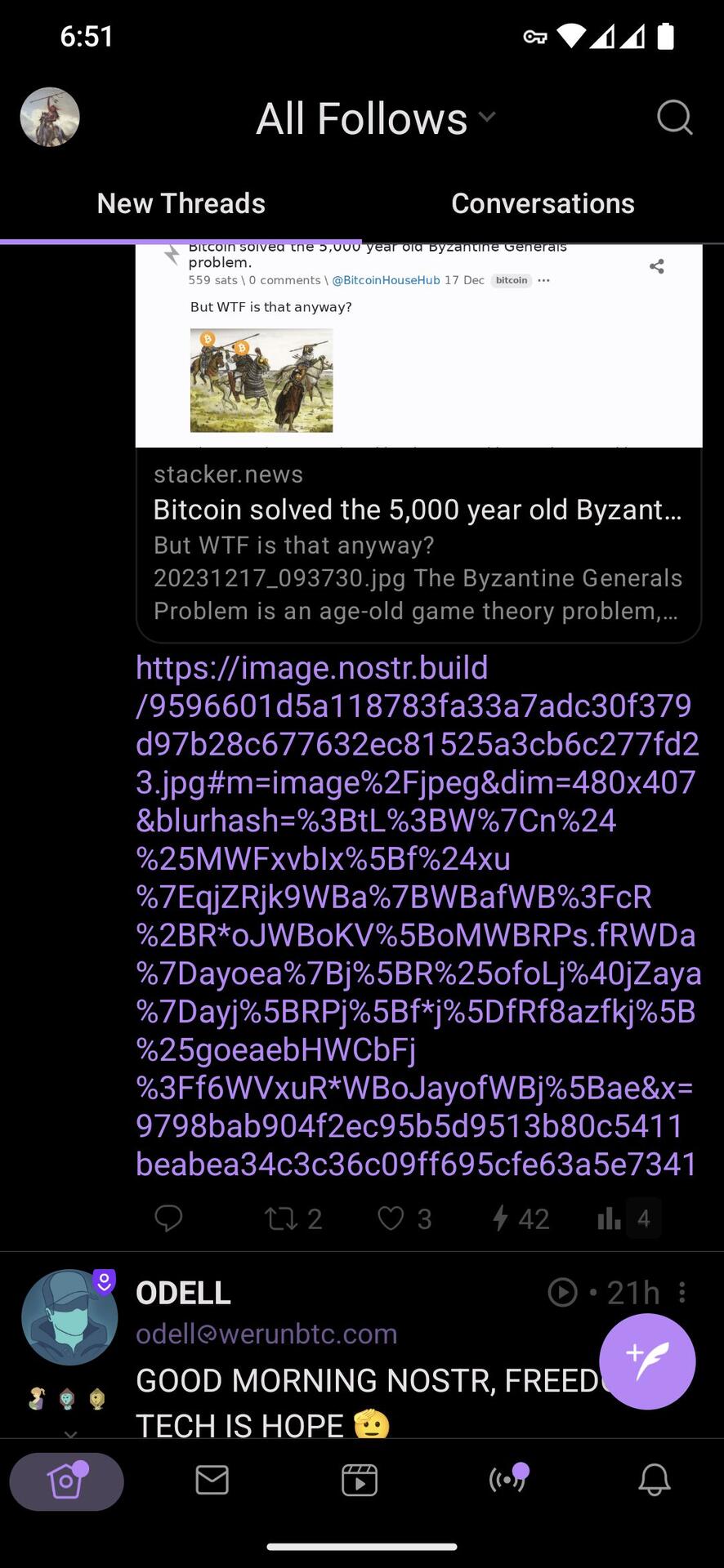
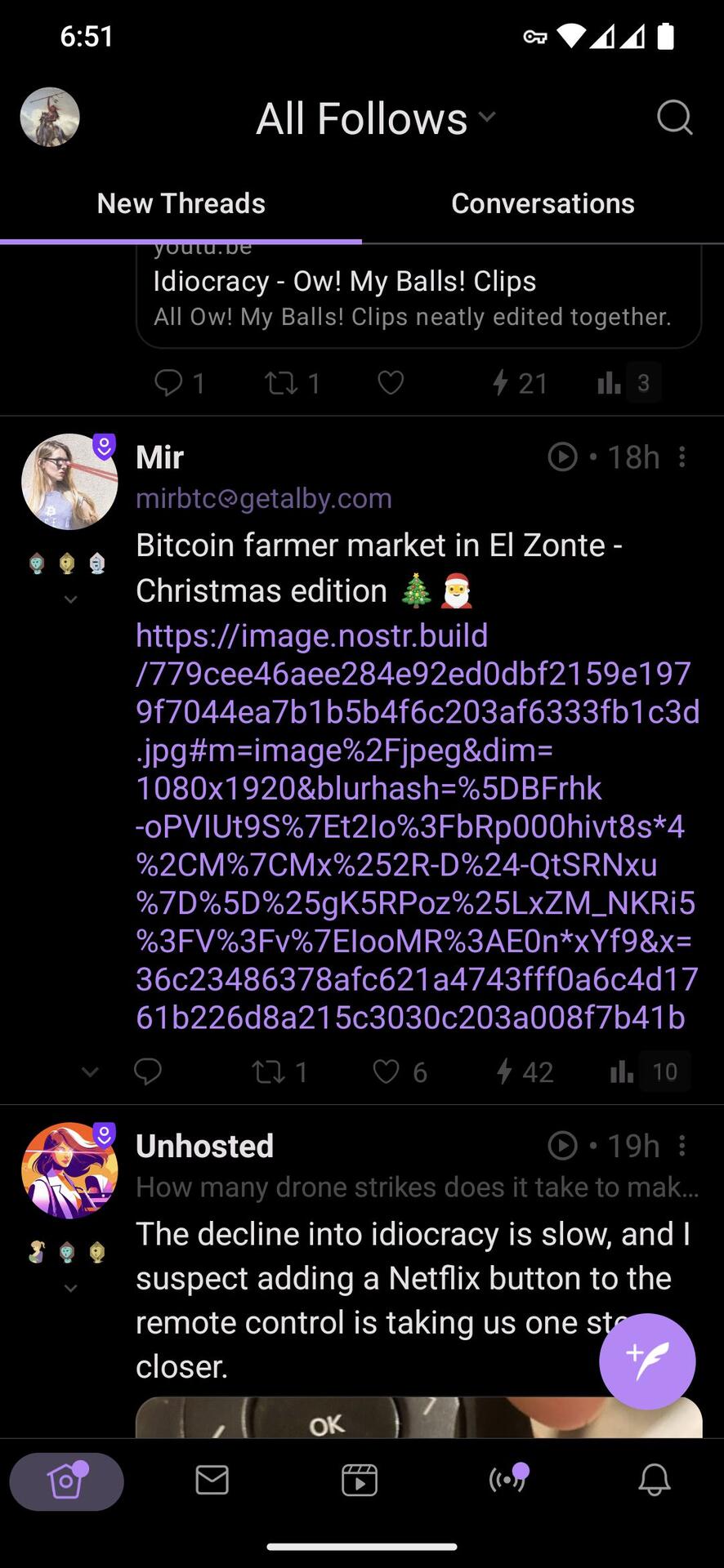
nostr:npub1gcxzte5zlkncx26j68ez60fzkvtkm9e0vrwdcvsjakxf9mu9qewqlfnj5z This is currently the most annoying aspect of #Amethyst (which is otherwise, objectively, the best #nostr client): unrendered images displaying their long-ass urls😒
Leaders lead.

Leaders don't cave to shareholders and advertisers; they persuade those parties to get on-board with the larger vision/mission, and they hold fast to first principles when things get dicey.

Maybe Jack is a good person, but he's no leader.

Maybe Elon is a douche-canoe, but he knows what leadership is and how it manifests.

Replying to Avatar Avi Burra

With the link this time: https://nostrnests.com/gents nostr:note15mt9kmv0jgasfdfaysph0dhp0dscv3rjqjv75hf29qulny76aj0qdc6gxa

I just get a blank screen. Is that because it's no longer live or am I missing a plugin or something...🤷🏼‍♂️

Being a fan of both IndyCar and the PBR (Professional Bull Riders), I became good at understanding Brazilians speaking English.😅

Emmo Fittipaldi🏁

Gil de Ferran🏁

Adriano Morães🐂

Silvano Alves🐂

Mincemeat pie for breakfast on Black Friday is the best meal of the year.

Really anything but steel drum and boomwhackers.

Personally I like the Aquarion.

MEMORY TAGGING (MTE) OUTLINE FOR GRAPHENEOS

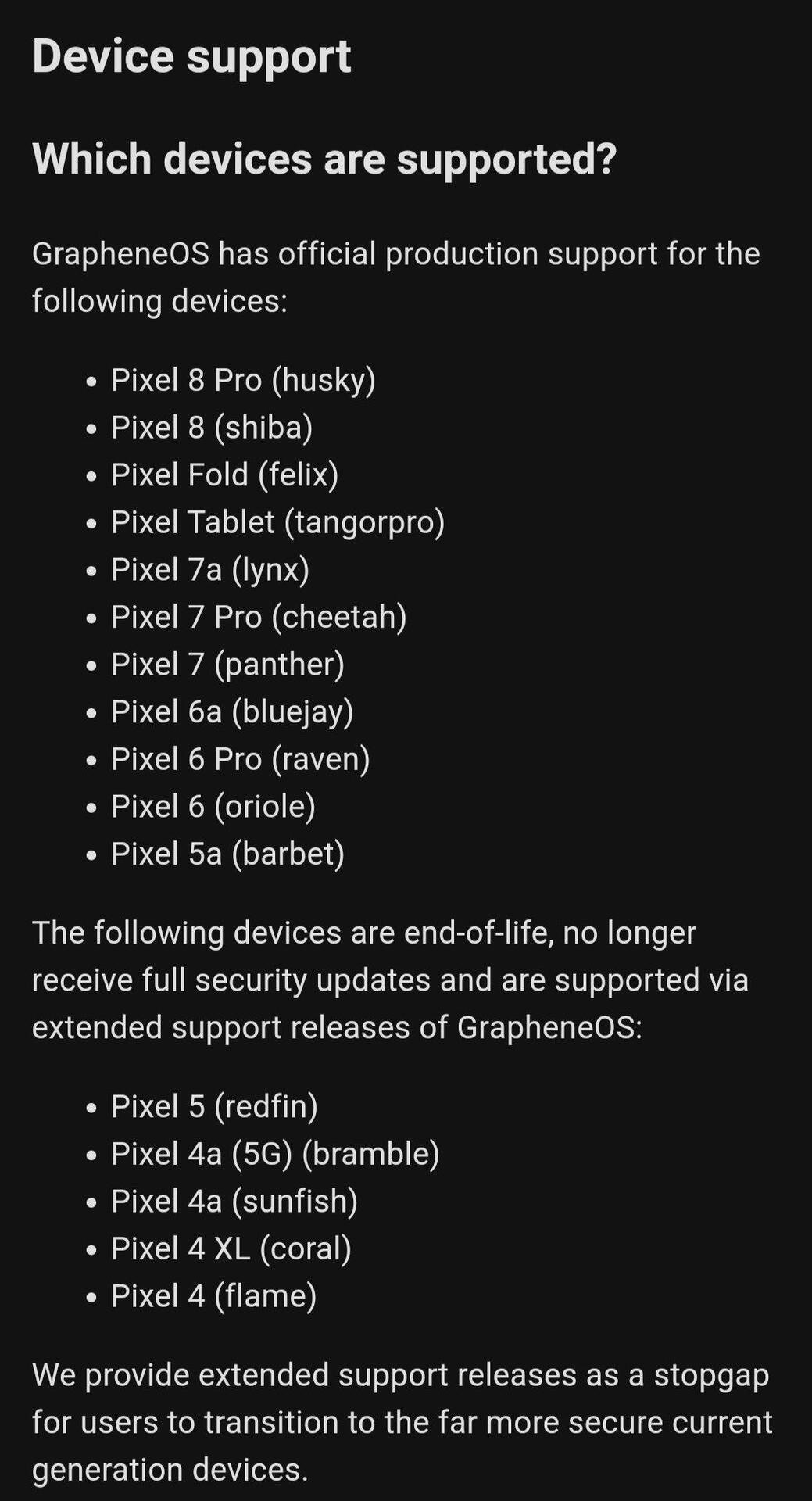
GrapheneOS now has hardware memory tagging support in our Stable channel. Memory tagging greatly improves protection against targeted attacks. Thanks to hardware support on the Pixel 8 and Pixel 8 Pro, it's extremely low overhead despite the massive benefits it's able to provide.

GrapheneOS users on the Pixel 8 and Pixel 8 Pro can enable memory tagging via Settings ➔ Security ➔ More security settings ➔ Advanced memory protection beta on supported devices. We'll be enabling it by default soon since we have a solid approach to preserve app compatibility.

We integrated it into hardened_malloc where it's able to provide stronger security properties than the experimental stock OS implementation.

Our current toggle enables it for everything other than Vanadium, vendor executables and user installed apps bundling native libraries.

We'll be enabling memory tagging support for Vanadium by default via the standard Chromium implementation.

For the near future, we'll be leaving memory tagging disabled by default for user installed apps bundling native libraries to avoid introducing a new compatibility issues.

It will be possible to enable memory tagging for all user installed apps with the ability to opt-out for specific apps where it causes issues. We want to eventually have it globally enabled by default, but we expect it to uncover a lot of issues hardened_malloc hasn't before.

It's also possible to use MTE for protecting from stack buffer overflows and use-after-scope by aligning and tagging variables with an escaping pointer. LLVM has an implementation of this and we've confirmed it works but it may not be optimized enough to enable it quite yet.

When fully integrated into the compiler and each heap allocator, MTE enforces a form of memory safety. It detects memory corruption as it happens. 4 bit tags limit it to probabilistic detection for the general case, but deterministic guarantees are possible via reserving tags.

In hardened_malloc, we deterministically prevent sequential overflows by excluding adjacent tags. We exclude a tag reserved for free tag and the previous tag used for the previous allocation in the slot to help with use-after-free detection alongside FIFO and random quarantines.

MTE support for protecting the Linux kernel isn't enabled yet, but we can likely enable that by default too. However, it's currently part of kasan and is more oriented towards debugging than hardening. It's not entirely clear that enabling it in the current state is a good idea.

I read the post but still have no idea what this means. What is memory tagging and what are its implications for the average GrapheneOS user?

Surely *someone* is working on making nostr:npub1jdgclywl55wc4neey97de57jenghsseuh8njx6z5f2kdwsfvk5xqhd2mys Timechain Calendar available as Lock Screen on @GrapheneOS, right...?