
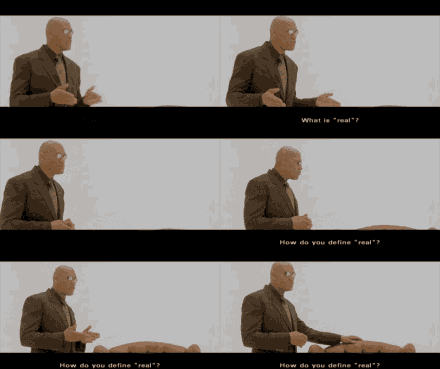



Do they serve fried eggs 🍳 for breakfast? Seems like it… 🤣


#Elon #Musk owned X Corp. has absorbed #Twitter Inc. as the first step to becoming an "everything app" similar to China's WeChat.
Elon never cared about Twitter per say. I think his ultimate goal is to transform Twitter into the payment platform for the web. Ever since PayPal he’s had this dream of creating “X” as the ultimate payment platform. I think that is partially why he is pushing to get everyone on Twitter verified.
Maybe he is going to join in with the #FedNow network this summer and also potentially be the launching point for #CBDC
After all it seems like most things Elon does are connected to the government in some way.
Tesla -> EV Grants
SpaceX -> NASA contracts
StarLink -> Starshield for the military
Twitter -> ???
https://appleinsider.com/articles/23/04/11/twitter-inc-no-longer-exists-now-x-corp
Twitter Tips includes BITCOIN already. But not lightings url yet


The son of the father, a highly evolved spirit sent to earth 🌍 for only one purpose LOVE to show everyone what that means ❤️, he instead got mocked, punished, ridiculed and killed. Don’t worry he is coming back for those how still dubious! 🙏
Good morning every one!
I’m convinced Satoshi must’ve found inspiration every morning in the early rasing sun. 🏄 🌅 🍊 🫂

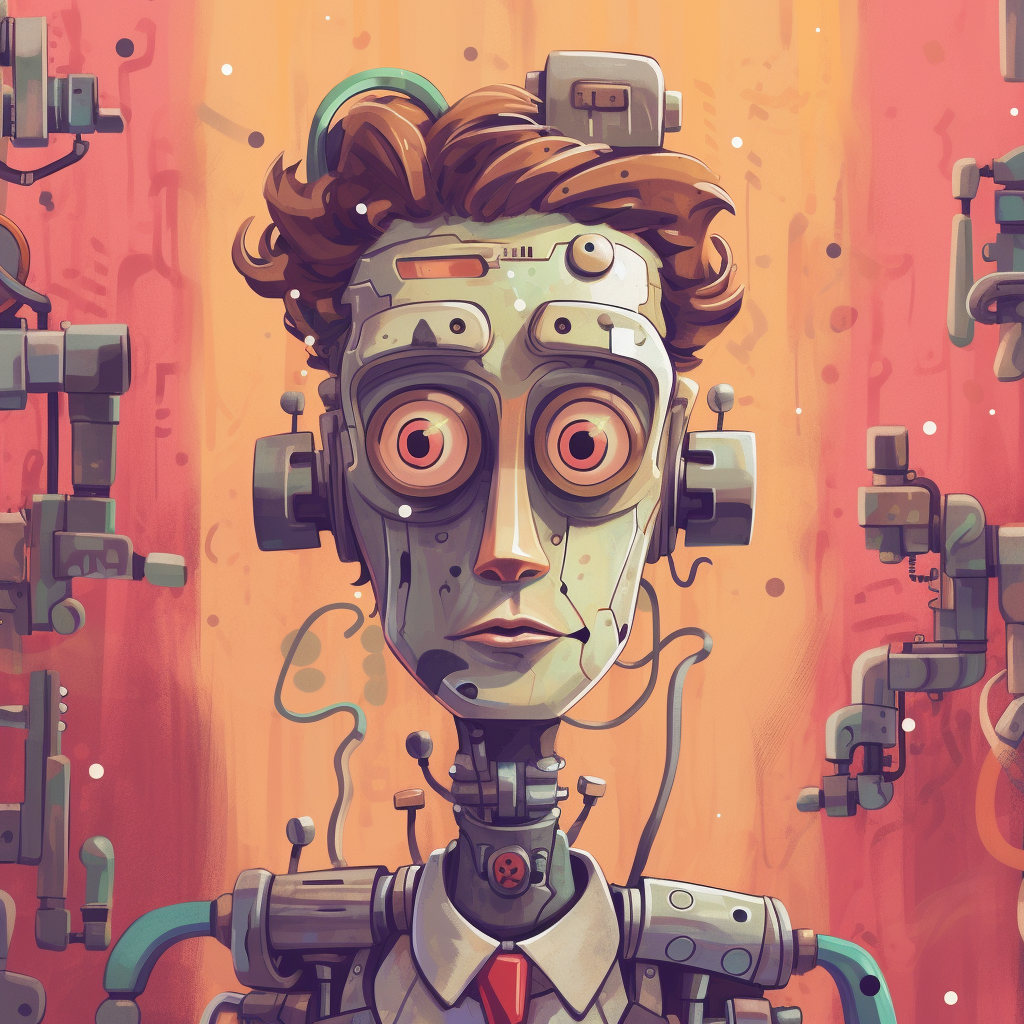
Ok then, tell us about yourself. We will be delighted to hear it. I’m particularly very curious 🧐. Thanks


Combinatorics
is an area of mathematics primarily concerned with counting, both as a means and an end in obtaining results, and certain properties of finite structures. It is closely related to many other areas of mathematics and has many applications ranging from logic to statistical physics and from evolutionary biology to computer science.
Combinatorics is well known for the breadth of the problems it tackles. Combinatorial problems arise in many areas of pure mathematics, notably in algebra, probability theory, topology, and geometry, as well as in its many application areas. Many combinatorial questions have historically been considered in isolation, giving an ad hoc solution to a problem arising in some mathematical context. In the later twentieth century, however, powerful and general theoretical methods were developed, making combinatorics into an independent branch of mathematics in its own right. One of the oldest and most accessible parts of combinatorics is graph theory, which by itself has numerous natural connections to other areas. Combinatorics is used frequently in computer science to obtain formulas and estimates in the analysis of algorithms.
A mathematician who studies combinatorics is called a combinatorialist.
Definition
The full scope of combinatorics is not universally agreed upon. According to H.J. Ryser, a definition of the subject is difficult because it crosses so many mathematical subdivisions. Insofar as an area can be described by the types of problems it addresses, combinatorics is involved with:
* the enumeration (counting) of specified structures, sometimes referred to as arrangements or configurations in a very general sense, associated with finite systems,
* the existence of such structures that satisfy certain given criteria,
* the construction of these structures, perhaps in many ways, and
* optimization: finding the "best" structure or solution among several possibilities, be it the "largest", "smallest" or satisfying some other optimality criterion.
Leon Mirsky has said: "combinatorics is a range of linked studies which have something in common and yet diverge widely in their objectives, their methods, and the degree of coherence they have attained." One way to define combinatorics is, perhaps, to describe its subdivisions with their problems and techniques. This is the approach that is used below. However, there are also purely historical reasons for including or not including some topics under the combinatorics umbrella. Although primarily concerned with finite systems, some combinatorial questions and techniques can be extended to an infinite (specifically, countable) but discrete setting.
Chinese Remainder Theorem
The Chinese remainder theorem is a theorem which gives a unique solution to simultaneous linear congruences with coprime moduli. In its basic form, the Chinese remainder theorem will determine a number
p
p that, when divided by some given divisors, leaves given remainders.

Twin prime conjecture
The question of whether there exist infinitely many twin primes has been one of the great open questions in number theory for many years. This is the content of the twin prime conjecture, which states that there are infinitely many primes p such that p + 2 is also prime. In 1849, de Polignac made the more general conjecture that for every natural number k, there are infinitely many primes p such that p + 2k is also prime. The case k = 1 of de Polignac's conjecture is the twin prime conjecture.
A stronger form of the twin prime conjecture, the Hardy–Littlewood conjecture, postulates a distribution law for twin primes akin to the prime number theorem.
On April 17, 2013, Yitang Zhang announced a proof that for some integer N that is less than 70 million, there are infinitely many pairs of primes that differ by N. Zhang's paper was accepted by Annals of Mathematics in early May 2013. Terence Tao subsequently proposed a Polymath Project collaborative effort to optimize Zhang's bound. As of April 14, 2014, one year after Zhang's announcement, the bound has been reduced to 246. These improved bounds were discovered using a different approach that was simpler than Zhang's and was discovered independently by James Maynard and Terence Tao. This second approach also gave bounds for the smallest f(m) needed to guarantee that infinitely many intervals of width f(m) contain at least m primes. Moreover (see also the next section) assuming the Elliott–Halberstam conjecture and its generalized form, the Polymath project wiki states that the bound is 12 and 6, respectively.
A strengthening of Goldbach’s conjecture, if proved, would also prove there is an infinite number of twin primes, as would the existence of Siegel zeroes.

In one ☝️ word Freedom 🟠
Cleaned ♦️ 🃏 ♣️ by your Kid 👦 🤣 priceless!



The Cramer effect 😂! The flight was doomed the moment he spoke.
Starship - Historic day 🚀 epic!
