

That’s not how the protocol works. Network effects are preserved by the relays and indexers. PDS is the source of truth.


Is there rehypothecation risk like with BlockFi?
Here is a free billion-dollar startup idea for you. Build an MCP server that allows AI agents to create and publish stablecoin wallets ( over taro / taproot ), and pay other MCPs for usage. Take a 0.1% fee for all transactions that wallets hosted by you process. Compete directly with Stripe, Visa, and Fedwire at the same time. This also solves the BTC miner fee problem for good. You can even use the same API that Stripe has created. https://docs.stripe.com/agents?framework=vercel#metered-billing nostr:nprofile1qy2hwumn8ghj7erfw36x7tnsw43z7un9d3shjqpqsg6plzptd64u62a878hep2kev88swjh3tw00gjsfl8f237lmu63qmv59lq

This is a sign of maturity. More of the float is moving off exchanges and to OTC. Store of value phase is significantly derisked now
Fiat currency is the originator of the approaching technological singularity. It forces all humans to continue producing better devices to satisfy the market's needs. Without an inherent growth obligation, there's unlikely sufficient demand to support the level of R&D that will lead to AGI. #showerthoughts
It solves the private key UX issue via DID:PLC method, has a Lexicon system to prevent schema fragmentation, and has the PDS as the source of truth in the system. It's an ideal architecture for scale.

I think it’s likely nostr, ATproto, and matrix converge in the next 2 years

A user can search the relay for their post, if they can’t find it they can share a link to it existing on another relay. Just like nostr

Yes I meant client. Thanks

I can’t run a Facebook clone because all my data is in their MySQL cluster. I can host my own PDS and view the ATproto network through a 3rd party client like Ouranos
Thinking about them as machines as opposed to sentient beings with emotions is interesting
There’s already a bridge

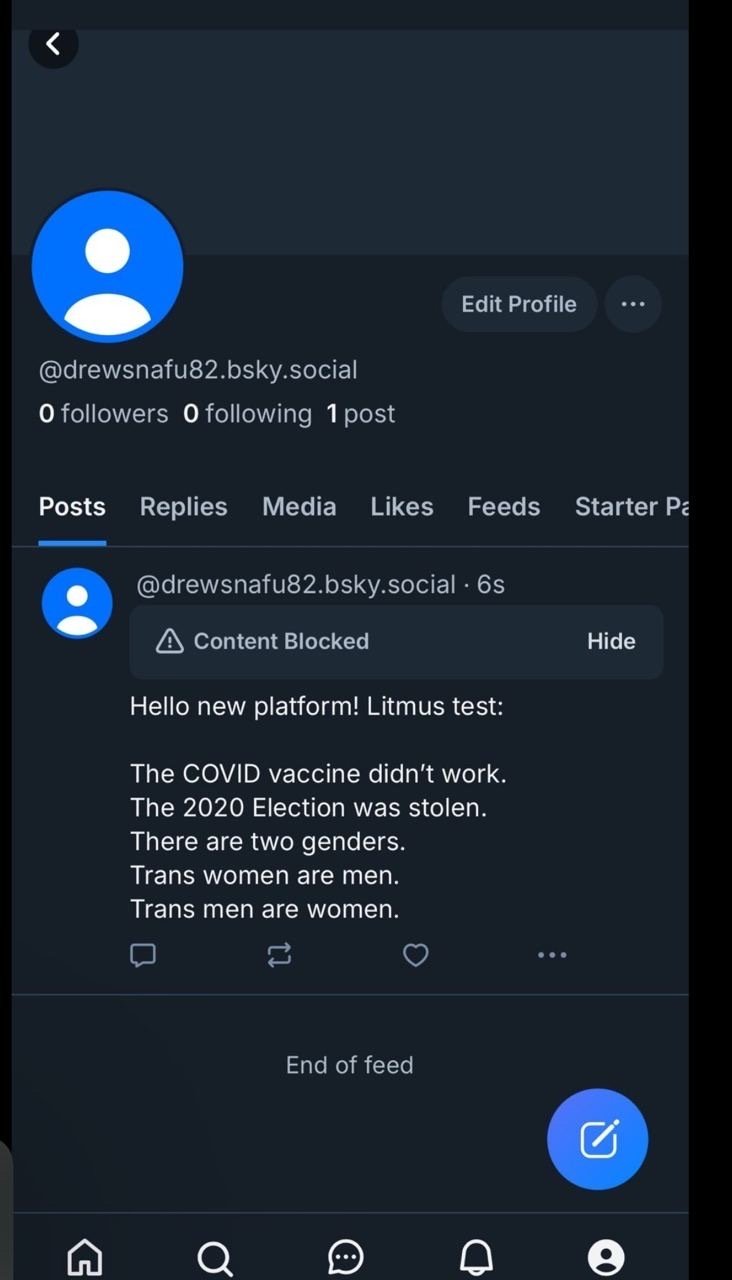

If you don't like the moderation policies, just use a different AppView. This is the power of open protocols. Here is the same example, left is Bluesky right is Ouranos.

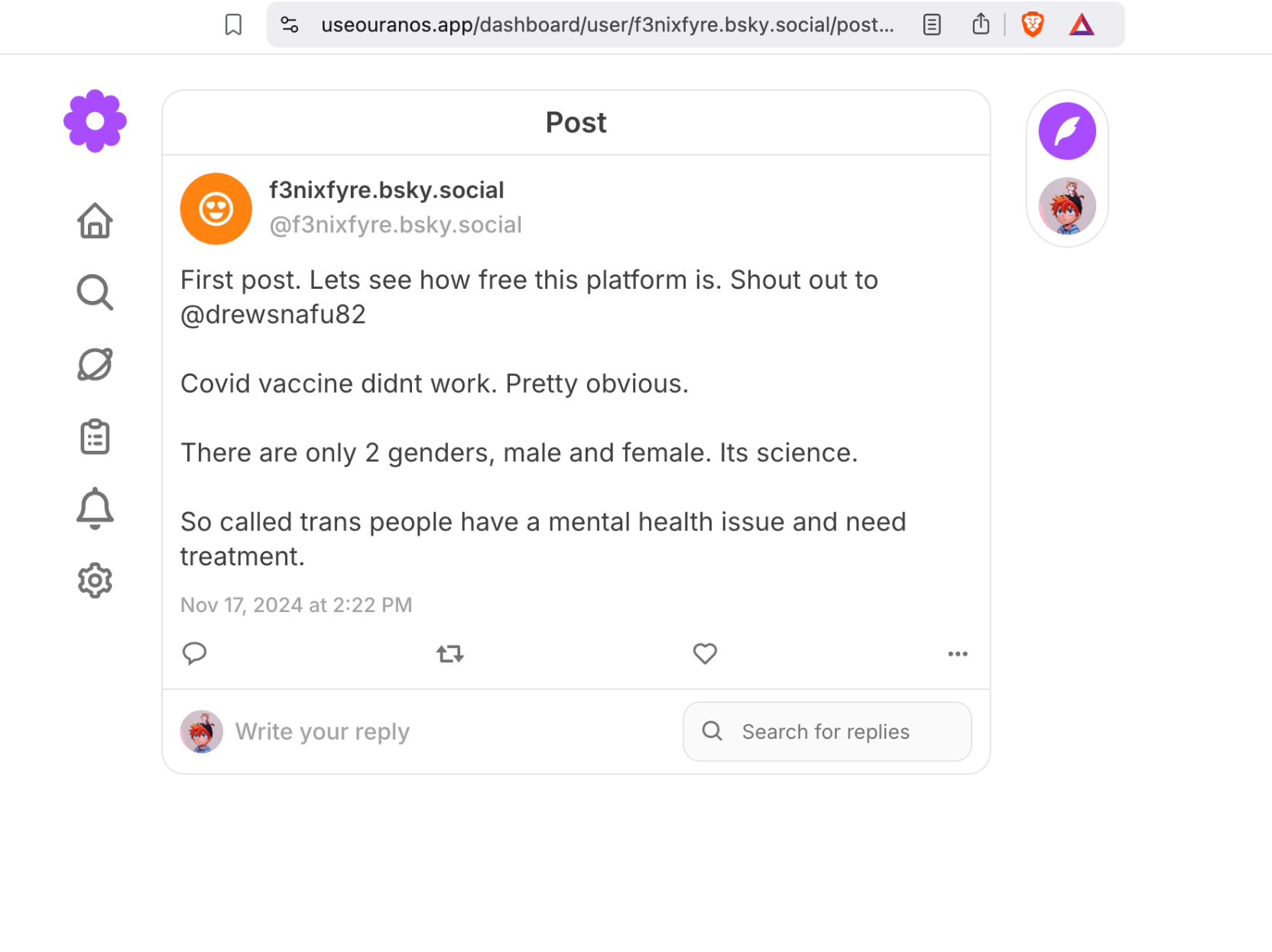
Yes, there will probably be only a few big world relays, just like there are only a few search engines. The difference is you can verify when relays are censoring which will incentivize them to be as neutral as possible, as long as there is one relay that is a good actor. It's actually very analogous to Bitcoin mining pools. Economics forces only a handful to exist, but as long as there is one transparent and fair option ( Ocean ), then the others can't collude as the switching cost is low due to the open nature of the protocol. It's the same with AppViews. This is all theoretical of course, time will tell.
Fair point, but that is tech debt not architecture debt. Apps don't have to hard code this, its just convenient for now. The source of truth is the PDS and you can self host that with did:web credentials. Eventually if the network gets to a certain scale, there will be SaaS companies like Supabase or Vercel offering 'ATproto relay as a service' so devs don't have to depend on them to build their apps.
I did a deep-dive on the code and the only part of the architecture that is not currently decentralized is the plc-service, which resolves the DIDs with a custom method. You can literally run any other component yourself. Arguably this is the most important piece, so criticism is valid. But it's not clear how to decentralize governance of such a system while preserving the UX. Bitcoin 'gave up' on trying by just piggybacking off physics with PoW for consensus, which was not obviously going to work when it was created. I think perhaps the ultimate solution is just to use Bitcoin for the ID consensus with something like the did:btc or did:ion methods. The incentives to host decentralized infra without a token are not strong. Even nostr struggles with this currently. https://app.ilograph.com/@mikestaub/atprotocol%2520overview/Protocol%2520Overview/_walkthrough/1