
Hello. i need an invite for alby wallet! Can someone help me please? tnx
Artificial Intelligence Will Decode Animal Language and Facilitate Communication Between Humans and Other Species
1. Data Collection and Analysis
The first step in decoding animal language is collecting a large amount of data about their behaviors and sounds. Artificial Intelligence (AI) can play a crucial role in this stage by using advanced recording and analysis technologies.
Sensors and recordings: Acoustic sensors and video cameras can be used to collect sounds and images of animals in their natural habitat. For example, underwater microphones can pick up whale songs, and infrared cameras can record nocturnal behaviors of predators.
Big Data and machine learning: Once collected, this data can be processed by machine learning algorithms. AI can identify patterns and correlations between sounds produced and observed behaviors, helping to decipher how animals communicate with each other.
2. Decoding the Language of Animals
After collecting and analyzing the data, the AI can begin to decode the animal's language. This process involves recognizing linguistic and semantic structures in animal sounds and gestures.
Natural Language Processing (NLP) Algorithms: NLP algorithms, already used to translate human languages, can be adapted to analyze and interpret animal sounds. These algorithms can detect regularities and meanings in animal communications.
Semantic Modeling: By correlating sounds with specific behaviors, AI can build semantic models that describe the meaning of different sounds and gestures. For example, a certain alarm sound produced by a monkey may be associated with the presence of a specific predator.
3. Facilitating Inter-species Communication
Once animal language is decoded, AI can be used to facilitate communication between humans and other species.
Real-time translation devices: With the help of AI, wearable devices can be developed that translate animal sounds into human language and vice versa. For example, such a device could translate a bird's song into a human-intelligible voice message.
Mobile apps and voice interfaces: AI-powered mobile apps could allow users to communicate directly with animals. The user could enter a text or voice message and the app would generate a specific sound or gesture that the animal would understand.
Robotics and physical interaction: AI-equipped robots can mimic animal behaviors and sounds to facilitate more natural interactions. These robots could be used in behavioral research or conservation programs to communicate with wild species.
Impact and Challenges
Human-animal communication, mediated by AI, has the potential to radically transform our relationship with the natural world.
Conservation and protection: Understanding animal language can help protect endangered species by interpreting stress and threat signals.
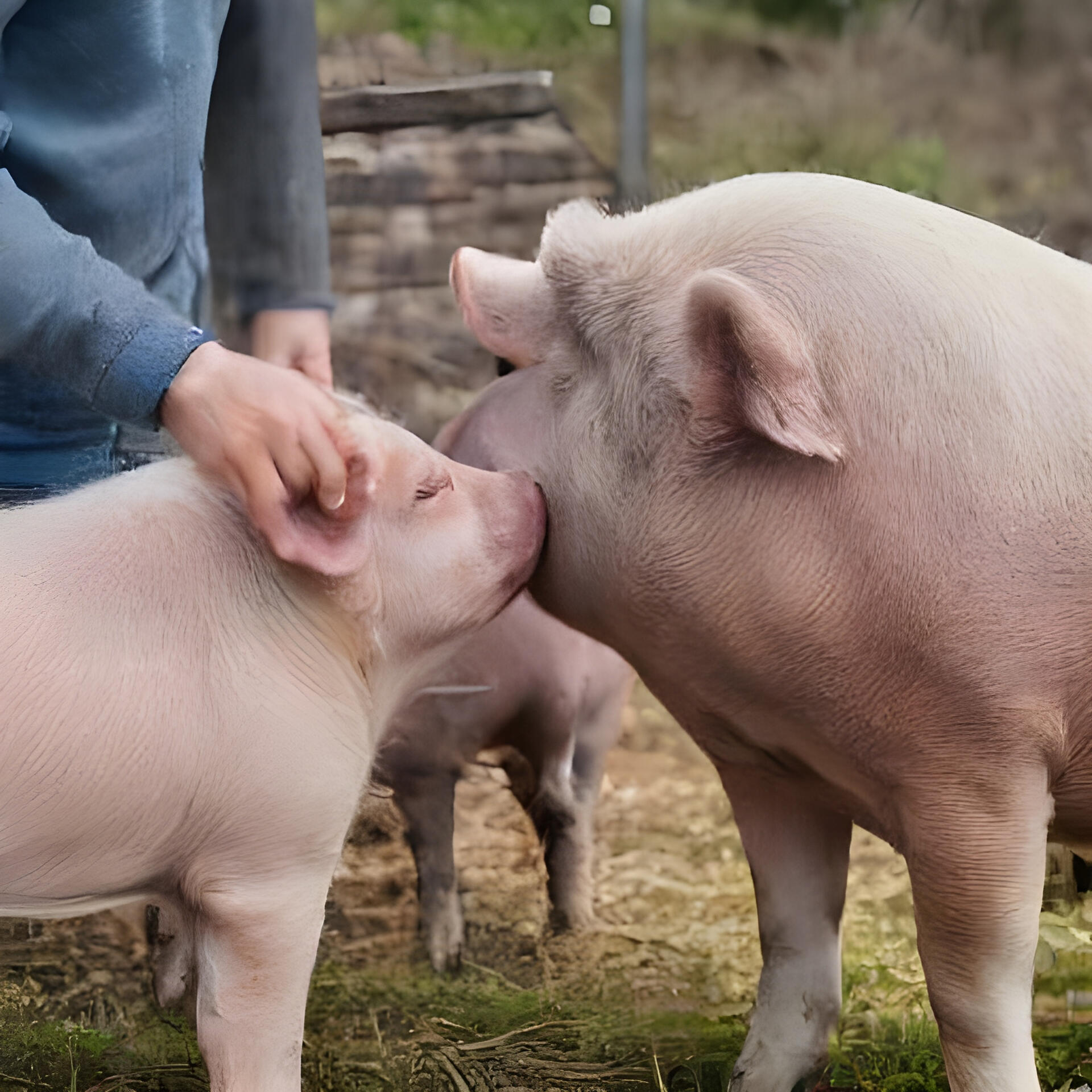
Improving animal welfare: Direct communication with pets and farm animals can improve their welfare, allowing people to better respond to their needs.
Ethical and technical challenges: However, there are significant ethical and technical challenges. Misinterpretation of signals can lead to negative consequences, and the use of technology must be responsible and respectful of wildlife.
AI has the potential to revolutionize the way we communicate with other species, opening up new horizons for understanding and protecting the natural world. With love...

Bitcoin journalism is fucked.
I started The Rage because I'm tired of investors and advertisers telling me what to do for below minimum wage compensation.
What we need are publications willing to let journalists investigate the crap out of the companies, representatives and people enabling the building of surveillance tech behind the scenes.
What we get are publications selling out to corporations, startups and politicians writing public relations puff pieces to keep their returns on track. The point of journalism is to hold power to account, not to become its bedfellow.
There is no lack of talented, experienced, investigative journalists covering bitcoin. The problem is that they write what the powers that be don't want you to hear – so many are out of a job, dabbling away at the next press release for mainstream media, or doing below-minimum wage contract work to pay the bills.
I'm incredibly overwhelmed by all the positive feedback we've been getting for The Rage. In just 8 weeks we've scooped major publications and drove discussions around AML, Samourai and Tornado Cash together with your help. We've even made enough to cover operations with almost 400$ raised, thanks to all the zappers out there.
But here's the thing. I didn't come here to write a good piece every once in a while leaving stories untold left and right because I can't afford to focus on investigations full time. I came here to fuck up the financial surveillance complex. That's why The Rage now needs your help.
We're trying to raise 0.25BTC so we can contract the best investigative journalists in the Bitcoin space to tell the stories that major publications can't afford to print.
If you value your financial freedom, please consider donating via our Geyser fund. We cannot do this without your help.
https://geyser.fund/project/therage

When someone is in a position of vulnerability, the truth is often the only weapon they have at their disposal. The honest exposition of the realities and the disclosure of injustices can attract the support and trust of those around. It is a way for the disempowered to mobilize the masses and bring about change. Leaders who have inspired social or political movements, for example, have often been able to rise up by revealing hidden truths about oppression and inequity.
However, challenges arise once these individuals reach positions of power. History shows us that power can corrupt, and those who have used the truth to rise up often end up betraying those same principles once they achieve their goals. It's easy to get caught up in political games and fall prey to the temptations of power, forgetting the ideals that got you there.
A sad but frequent example is that of revolutionaries who, after overthrowing oppressive regimes with the help of truth, set up their own authoritarian regimes, suppressing free speech and hiding uncomfortable truths. This betrayal is not only a betrayal of one's own principles, but also of the trust of those who supported them.
For me, the real challenge is not just getting into positions of influence, but maintaining your principles and integrity once you get there. It is a constant struggle to resist the temptations that come with power and stay true to your truth and values.
I think it is important to always remember the responsibility we have to the truth. Regardless of our position on the social or political scale, we must strive to maintain integrity and honesty. Only in this way can we build a better and fairer world.
I hope these thoughts give you some useful insight in your reflections.