That's a 𝙧𝙚𝙖𝙡𝙡𝙮 good question that deserves a better answer than I can give here (edit: which turned out to be YUGE). But I'll try anyway.
Actually, a quick note about the first part: yes, my wife and I have seen that kind of shunning before. We recently told my mom and my wife's parents about our change of beliefs, and fortunately, 2 of my sisters have already left the LDS church, so this wasn't new for my mom, and my in-laws told us that they've been having doubts of their own, so they each took it well enough (though we still had to explain ourselves very delicately).
Mormons tend to hold their testimonies of the church's truthfulness as very precious, so when they meet someone who left the church, I've observed (including within myself, years ago) that the shunning comes more from fear than animosity. Like, imagine if you had a puppy and you met someone who was walking around with puppy poison, you might want to avoid them, even if they had no reason to use their poison on your puppy. So having had similar fears before, I get it, but it's a shame that so much fear blocks out the ability for many (though not all) Mormons and former-Mormons to interact like regular human beings. 🫤
Okay, now back to your question.
First and foremost, I believe that the Book of Mormon is an accurate translation (with the exception of a few changes that have been made to it over the years) of a real ancient record because I've read it, studied it closely, tested out its teachings, asked God if it was true, and received a confirmation from Him, as well as through the results of testing out its teachings, that it is true. While I believe that's the best way to know for sure, it's also an extremely personal way of going about it, so I don't blame anyone for being dubious of that explanation.
There's a part near the end of the Book of Mormon, when Mormon's son, Moroni, has taken over writing the record. Speaking to the future readers, he says:
"And now, I, Moroni, would ... show unto the world that faith is things which are hoped for and not seen; wherefore, dispute not because ye see not, for 𝘆𝗲 𝗿𝗲𝗰𝗲𝗶𝘃𝗲 𝗻𝗼 𝘄𝗶𝘁𝗻𝗲𝘀𝘀 𝘂𝗻𝘁𝗶𝗹 𝗮𝗳𝘁𝗲𝗿 𝘁𝗵𝗲 𝘁𝗿𝗶𝗮𝗹 𝗼𝗳 𝘆𝗼𝘂𝗿 𝗳𝗮𝗶𝘁𝗵." (Ether 12:6)
In other words, if one has faith in something that's true, then they 𝘸𝘪𝘭𝘭 receive a witness -- or evidence -- of it sooner or later, but only after their faith has been tested. Only after getting the spiritual witness that I described above, I started noticing evidences that showed that it was impossible for Joseph Smith to have made it up. But, if I had gone in the opposite order by looking for physical evidences first, it would have been like building the roof of a house first before the foundation, and my conviction of the Book of Mormon's truthfulness would've been built on the shaky ground of modern discoveries and opinions that are here today and gone tomorrow.
So, with what I'm about to say, please don't think for a moment that I'm trying to "prove" the Book of Mormon' truthfulness to you. That's a personal matter for those who put in the work to read it and test out what it teaches. After all, I can only show you the door; you're the one who has to walk through it. 😉
So here are some reasons why Joseph Smith couldn't have written the Book of Mormon, for your consideration:
First, Joseph Smith was far too uneducated to have written the Book of Mormon. He was a 23-year-old farmer in the 1820s in upstate New York, and had about 3 years of education. His own wife, Emma, said that he "could hardly write a well-worded letter, let alone a book," and yet he managed to get the whole Book of Mormon written in about 2 months. He would dictate it to a scribe for hours on end, and all of them (including some very skeptical neighbors) said that whenever he'd return to translating after meals or other breaks, he'd pick up right where he left off, without needing to have any of what was already translated read back to him.
Second, word-print analyses, also known as stylometry, have been done on the Book of Mormon, and then compared with the writings of Joseph Smith and those he knew (just in case it was somehow a collaborative effort). For context, none of the world's greatest authors (e.g. Mark Twain, J.R.R. Tolkien, Charles Dickens, etc) were ever able to make their characters speak with a different "voice" than the author's own wording style. Even disputes over ghost writers have been resolved using stylometry. And yet, the Book of Mormon's words do not match those of Joseph Smith's, or anyone else who could have played a part in writing it. There are many distinct "voices" in the Book of Mormon text, which all stay consistent with themselves, but never follow a word pattern used by Joseph Smith or anyone else we know of. Here's a video that explains it better:
Third, we know of 24 people other than Joseph Smith who felt or saw the plates that the Book of Mormon was engraved on. Some of them (I think 4 or 5) said they also saw the angel that Joseph claimed had shown him where the plates were buried, but all the others either saw the plates and their engravings, or (as was the case for Joseph's wife) felt them through a cloth. Many of those 24 later had major falling-outs with Joseph, and left the church he later started. Long after Joseph's death, they were often mocked for their testimony and bribed to renounce it publicly or privately, but despite all the incentives to do so, none of them ever did.
Fourth, there are many things written in the Book of Mormon that were unknown to anyone of that place and time, including over a hundred details that common knowledge back then said was the opposite of what the Book of Mormon said. And yet, the Book of Mormon continues to age well as one by one, discoveries are made that show its claims to be correct. My personal favorite is a short mention of a place called "Nahom," where a man named Ishmael is buried, shortly after the family at the beginning of the book leaves Jerusalem. In the 1970's (if I recall correctly), the ruins of a burial site called Nahom was discovered in exactly the place where it's described in the Book of Mormon (in southern Saudi Arabia, near the Red Sea). Other examples include Hebrew literary forms like chiasms (a form of Hebrew poetry that wasn't known about in the west until the 1960s), depictions of ancient American wars (in the 1820s it was thought that the ancient Native Americans had been very peaceful, unlike what the Book of Mormon shows), and geographic descriptions that only fit central America but couldn't have been known by a farm boy in New York with no maps, and had never traveled outside of the northeastern United States.
And fifth, there are stories in the Book of Mormon that are interwoven and connected with other stories in the book, and are hard to keep track of (especially in one particular book: the Book of Mosiah). But if Joseph wrote it, he was somehow able to keep it all straight and leave no loose ends without using any notes or going back to "retranslate" something he missed.
For almost 200 years, people have tried to discredit the Book of Mormon, but none of their attempts have remained consistent with the facts. When all the facts are considered, it's hard to come up with any other possibility than the one Joseph Smith claimed (after almost 2 centuries no one has come up with a probable explanation). As Arthur Conan Doyle famously said, "When you have eliminated all which is impossible, then whatever remains, however improbable, must be the truth." Given all this evidence (and I'm sure I'm forgetting some), I can only conclude that the Book of Mormon was written by supernatural means; whether they were good or bad means can really only be determined by reading it yourself. Personally, I find the book to be good. It's a companion to the Bible, a witness that the Bible is God's word, and a record from one of the lost tribes that the Bible talks about. But that's a matter for everyone to find out on their own.
I said in my original post that the LDS church is probably the worst thing that ever happened to the Book of Mormon, and I stand by that. After Brigham Young's utterly 𝘪𝘯𝘴𝘢𝘯𝘦 teachings (e.g. polygamy, Africans being cursed by God, Adam and God being literally the same person, the secret Masonic temple ceremony, the idea that murder can be good when the victim has committed a sin so terrible that only their death will cleanse them of it -- these sins included murder, but also included leaving the church and the Utah area, and going back to the United States' territory at the time -- and many more), and after the church leaders who carried on some of those teachings after Brigham's death, more recent church leaders were faced with a conundrum: Throw Brigham Young under the bus and admit that the church has been apostate since Joseph Smith's death (if not sooner), or throw Joseph Smith under the bus and claim that Brigham Young was simply carrying on the abominations that Joseph had started in secret. Brigham had already altered a lot of Joseph's writings, so modern church leaders decided to venerate Brigham Young at Joseph Smith's expense.
This makes Joseph Smith's already-outlandish claims about the Book of Mormon's origins even less believable, and casts a shadow over the Book of Mormon that never needed to be there. Had it not been for that, I still wouldn't blame anyone for not believing the story of how the Book of Mormon came to be, but with all the falsehoods heaped onto Joseph Smith by the very church that claims to be the continuation of what he started, people have more reasons than ever to write-off the Book of Mormon as fraudulent. I wish they wouldn't, of course, and I wish they'd give it a chance, so as to enhance their understanding of God and His words in the Bible, but that's ultimately up to each individual to either try out or not.
Thanks for asking that question, and especially for reading this ginormous response! 😅 Feel free to respond, but I may not reply for a while. I need a break. 😆
I know it sounds confusing, but yeah, I believe in the Bible and the Book of Mormon, but I don't believe that the modern Mormon church, the Church of Jesus Christ of Latter-day Saints, is led by God. They teach a lit of good and true things, but there are many other doctrines they teach (that there's a living prophet today, that the church has God's authority, that men will have the option to have many wives after this life, etc) that I simply do not believe.
There's a fallacious argument that's often taught (I know I've taught it a lot), which says that if the Book of Mormon is true, then the church that believes in it, the Church of Jesus Christ of Latter-day Saints, must also be true. While I agree that the only logical way that the Book of Mormon can even exist is if Joseph Smith was given a gift from God to translate them, that has absolutely no bearing on the rest of Joseph's life, or the question of whether he continued to be a true prophet, whether Brigham Young was supposed to take over after him as a true prophet, or whether the LDS church is still run by prophets that talk to God today.
After carefully studying the original documents on https://www.josephsmithpapers.org/ , I've arrived at the opinion that there's no other way that Joseph could have produced the Book of Mormon, other than by the power of God. I also found writings that I believe to be real revelations to him from God. However, I also found many such revelations that were altered by Joseph and others in the years following their being given. Joseph had many weaknesses, like the tendency to attempt to take power into his own hands, rather than relying on God (like when he searched for buried treasure to help finance his new floundering church, or when he created his own bank notes for the same purpose (he was basically shitcoining ~170 years before crypto existed), or when he ran for mayor of the biggest city in Illinois, or when he ran for president), but the weakness he's blamed for most by the modern LDS church, polygamy, was definitely not one of them.
So I have quietly believed for many months now that Joseph really translated the Book of Mormon, really received other revelations, but was still a very flawed human being, just like all of us. I also, discovered, though, that the LDS church was infiltrated and taken over by some of the most evil people around at the time: Brigham Young, John Taylor, Willard Richards, and others. And the church has been lost and falling away ever since.
I hope that clears up the confusion!
🇬 🇲
This a very personal note, but my life has changed a lot this year: my 6th child was born, my 1st book was published, I started working on Satlantis, and even my religious views have changed.
I've been keeping that last part secret, but I think now is the time to state my beliefs publicly.
For those of you who don't already know, I grew up as a member of the Church of Jesus Christ of Latter-day Saints, commonly known as "Mormons". That may come as a surprise to some, but others may have already known that, or figured it out.
For any believing Latter-day Saints reading this: Trigger warning.
First, a few quick points about Mormons:
- Yes, Mormons are Christians. They believe that the Jesus of the Bible is the only way back to God.
- No, Mormons aren't polygamists. They officially stopped that in 1890, and then again in 1904, and then for real in the early 1920s.
- Yes, Mormons believe in the Bible.
- No, the Book of Mormon was never intended to replace the Bible.
- Yes, Mormons believe God can make us how He is and give us all that He has (Romans 8:16-17).
- No, Mormons don't believe they'll get their own planet.🙄
With that out of the way, here's what I really came here to say:
I no longer consider myself a member of the Church of Jesus Christ of Latter-day Saints. I haven't removed my name from their records yet (I'd like to stay on the church's directory for now), but I do not consider myself a Mormon anymore.
That's probably shocking to those who knew I was a Mormon, and especially to my Mormon friends.
To them I say that I hold nothing against the church or any member. I've simply learned that the church has been corrupt and apostate for ~190 years.
I'm not interested in arguing with anyone about this, though.
Here's what I still believe:
- God is real.
- Jesus Christ died so the Father could raise us up to His level.
- The Bible (as it was originally written) is the word of God.
- The Book of Mormon is also the word of God, translated by God's power through Joseph Smith.
That's right, I still believe the Book of Mormon is (mostly) true, but the Church of Jesus Christ of Latter-day Saints is not, and has been far off course for a long time.
I believe in 𝘴𝘰𝘮𝘦 of Joseph Smith's teachings, but others were altered after his assassination, and others were just his opinions.
But from that point forward, the Church of Jesus Christ of Latter-day Saints and I part ways.
And no, Joseph Smith never practiced polygamy. That was 100% from Brigham Young, as well as Joseph and Hyrum Smith's murderers, Willard Richards and John Taylor, who got it from a group known as the Cochranites.
Joseph and his brother Hyrum were 2 of polygamy's biggest opponents, and preached against it almost literally to their deaths. Brigham Young and others later spread many lies about them to serve their own credibility, but the truth is now coming to light, as it always does.
Let me emphasize that I hold no animosity toward the Church of Jesus Christ of Latter-day Saints or its members. My family (who have all come to the same conclusions...well, except for my 8-month-old) and I love attending our local ward [i.e. congregation] for any truths taught, and our friends there.
For those of you who have not read the Book of Mormon, I still highly recommend it, but I also recommend that you stay away from the Church of Jesus Christ of Latter-day Saints.
Ironically, the "Mormon" church, as it's nicknamed, is likely the worst thing that ever happened to the Book of Mormon.
There are dozens of Mormon splinter groups that have split off from the Church of Jesus Christ of Latter-day Saints, but they're all at least as lost as the mainstream Brighamite branch that's headquartered in Salt Lake City. So for anyone wondering, no, I have no plans to join with any of them.
I now simply conder myself a Christian, a follower of the Way. I refer to the Bible, the Book of Mormon, and all other true books for guidance, no matter where they come from.
𝗕𝘂𝘁 𝗜 𝗮𝗺 𝗻𝗼 𝗹𝗼𝗻𝗴𝗲𝗿 𝗮 𝗠𝗼𝗿𝗺𝗼𝗻.
One more thing:
"Mormon" is said 21 times here, but contrary to what President Russell M. Nelson (think of him like the Mormon version of the Pope) has said, saying "Mormon church" is not a victory for Satan. But Nelson hiding his works (and those of past church presidents) in the dark, is.
I wish him a very happy 100th birthday, though.😁
Rely on God for everything you can't control, and everything becomes a win-win situation.
GN
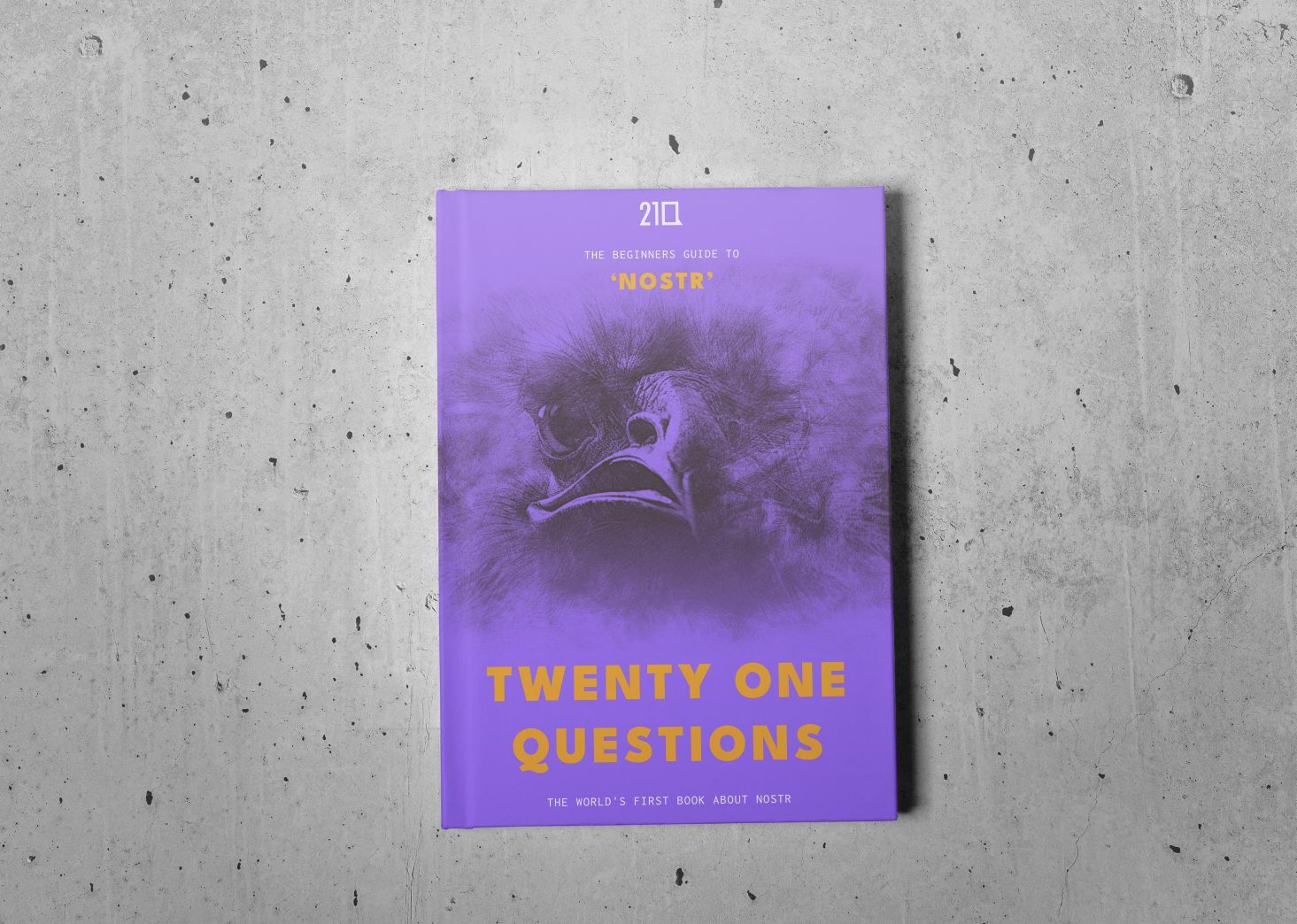
"𝗛𝗼𝘄 𝗱𝗼𝗲𝘀 𝗡𝗼𝘀𝘁𝗿 𝗰𝗼𝗺𝗽𝗮𝗿𝗲 𝘁𝗼 𝗼𝘁𝗵𝗲𝗿 𝘀𝗼𝗰𝗶𝗮𝗹 𝗻𝗲𝘁𝘄𝗼𝗿𝗸𝘀?"
This is the 4th question in the "21 Questions" book, which lists 21 key questions about Nostr, with multiple answers to each one, written by some of the most well-known people involved in the Nostr space.
How would 𝘺𝘰𝘶 answer this question? I'll zap my favorite answers, and I might even quote the very best one(s) in the final version of the book!

Humanity's final boss will be all about learning how to voluntarily coordinate permanent changes to the protocol of our value communication.
If we ever reach a point where we can introduce, test, and implement needed hard forks in Bitcoin with ease, then humanity will deserve -- and inevitably reach -- the stars.
GN
Almost forgot to share this today:
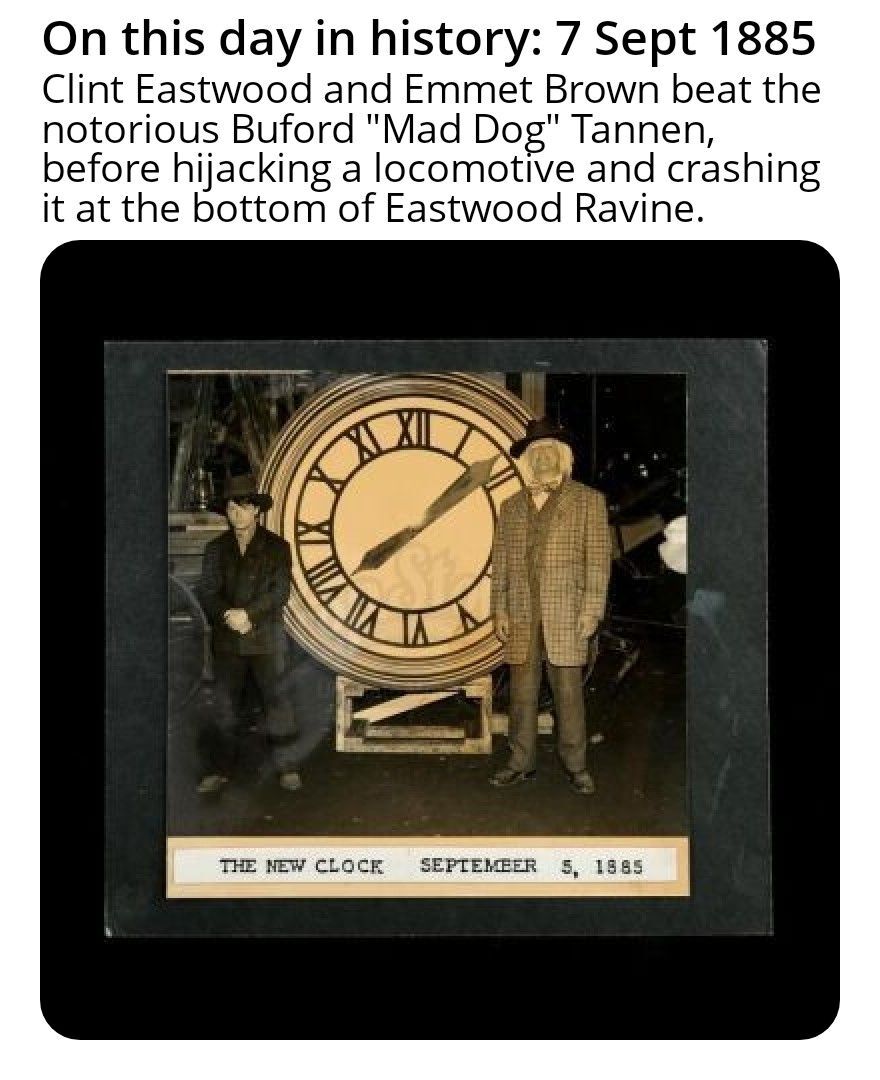
Clearly. There is, as they say, no end to the Bitcoin rabbit hole. This is just a detail I overlooked/missed along the way, I guess.
Imagine what I'll learn tomorrow. 😉

I've been a Bitcoiner for over 9 years, so why was I today years old when I first heard about this??? 🤨
https://chatgpt.com/share/694a2f99-8326-4050-8227-cc0af8ae104b

A few things:
When someone first grokks Bitcoin, they need to recognize why they need it. In much the same way, one needs to recognize their need for Christ before they can develop a relationship with Him. That's where contemplating all our sins and imperfections comes into play. But this is also where controlling, fiat religions love to take over and inundate you with guilt and shame in order to squeeze money out of you, so it's vital that you don't stay at this stage, but only use it as a springboard to launch yourself into a personal relationship with Christ.
Have you ever watched The Chosen? It's only a TV show, but IMO its depiction of Jesus' personality is the closest to what I've experienced personally, when talking to Him and receiving His answers in my heart. You can watch The Chosen for free here:
https://watch.thechosen.tv/page/seasons%201-3
One of my favorite quotes from The Chosen comes from a woman in the 2nd episode, who, in the 1st episode, experiences demonic possession and suicidal ideations. But in episode 2, she says:
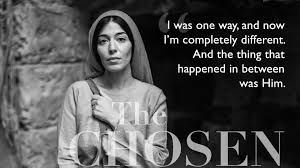
The whole point of building a relationship with Christ is to change us into better, happier, more peaceful human beings. It's not to go through Hell here to somehow accrue "points" get into Heaven some day later; it's to have a bit of Heaven in us here and now, as much as we're able to take, to strengthen and prepare us for Heaven later.
And lastly, test and try out different holy books, different ways of praying, and different styles of worshipping, and then measure their results. Basically, use the scientific method by living the teachings you find, and examine the "fruits" you get from them.
For example, I grew up Mormon, but now my relationship status with that church would be best described as "It's Complicated" (I'm actually planning on posting a note about that soon), but I've still found a lot of value in both the Bible and the Book of Mormon (which is not a replacement for the Bible by any means, but is more like a spinoff series, lol). Anyway, in the Book of Mormon, there's a great chapter in which a man named Alma is preaching to a group of poor people all about humility and faith. The humility part basically touches on the same thing I said earlier (about recognizing your need for Christ), and the faith part is all about this "scientific method" approach to coming to know God, using an analogy of planting a seed, seeing of it's good by seeing if it grows, and then nourishing it until it bears fruit. You can read the whole chapter here:
https://www.churchofjesuschrist.org/study/scriptures/bofm/alma/32?lang=eng
I'm glad you're asking about this, and hope you'll find Jesus at the best time and in the best way. And I think you already know to be cautious about some religious people (like Mormons and others), who may see your note as an opportunity to convert you to their particular church or way of life. While I think you'll find a lot of value in reading the Bible and the Book of Mormon side-by-side, I would actually warn you *against* the main church that champions it, the Church of Jesus Christ of Latter-day Saints ("Mormon" is just the nickname, coined by the church's opponents because of the Book of Mormon, similar to Vitalik calling us "Bitcoin Maximalists"). Contrary to popular belief, Mormons *are* Christians, but their biggest difference from other Christians is that they believe they have God's authority, which gives them a monopoly on the way back to God.
No church has such a monopoly. The way to God is directly through His Son, Jesus Christ, on an individual level, and not through any church. But I'll say more about this in a couple days, when I share my note about the church I grew up in.
Thanks for reading all that! I hope and pray that it helps. 🙏
Thank you, nostr:npub184cwc849sejs5pr566zcg4pqn53zzk85q70gmwqx7qt77h3suansvet30s, for having me on your podcast yesterday! 🙏
https://www.youtube.com/live/L7RSon48fMc
For those who missed it, we talked about all kinds of things, from the importance of connecting with Bitcoiners in real life, to nostr:npub15xd2mmjnh3caykh77djsv73e0zkrp42jp5mwerx8f4m6su40wdvss7t3l3, to my 21 Questions series, to overcoming the mental heath pandemic that's a byproduct of the fiat system, and so much more!
Valerie, it was truly a delight to be on your podcast! 💜


Wait...it isn't?
GM to the bots and the humans, but especially the humans.

I just DM'd you from my nostr:npub1fdc5nr47gx8pcz9cppyat9fx0gc9hv48nke7pf78drx7rpqw28ksqgx779 account. Thanks for messaging me there earlier, and for patiently waiting for my reply! 🙏

The AllTrails app is awesome! It's the best app for hiking and finding great places to explore nature.
That is, until we integrate something like it on nostr:npub15xd2mmjnh3caykh77djsv73e0zkrp42jp5mwerx8f4m6su40wdvss7t3l3. 😏

There are millions (actually more like billions) of people who are not on Nostr only because they haven't heard of it before, and/or don't know how it works.
The "21 Questions" book I'm working on is meant to bridge that gap.
GM.