In 1519, Ferdinand Magellan set out on an incredibly risky voyage around the world with five ships - Trinidad, San Antonio, Concepcion, Santiago and Victoria. Three years later (!!) only one returned to Sanlucar de Barrameda - the starting and finishing port of the expedition - Victoria, the second smallest of the five ships. Of the approximately 270 crew members on the five ships, most died. Only 18 survivors returned on the Victoria.
Magellan himself also died, while still in the Philippines, so the final part of the voyage was commanded by Juan Sebastian Elcano, which is why some documents call the expedition Magellan-Elcano, which is more accurate. Along with Elcano, Venetian Antonio Pigafetta also survived, the chronicler of the expedition, travel blogger and the character who made us know everything we know about this venture.
The picture shows a modern replica of the Victoria, sailing in front of three frigates of the Spanish Navy. One is probably called the Blas de Lezo.
Powerful photo! The Victoria is a tiny ship, here it looks big because of the great shot. Even these frigates behind are not particularly big - about 6000 tons. The Victoria is 85.
I don't know about you, but pictures like this make me proud and almost bring tears to my eyes.
A man who is moved by pictures of warships? An idiot? A toxic masculinist? No, but a lover of the time when people did risky but epic ventures, in which mother Europa was at the forefront. Through this prism I also look at Elon Musk and his crazy dream of a human crew on Mars. This is the Europe I respect, not this bunch of slimy, bureaucratic, strategically lost misery that we are today.

Be fucking impossible to ignore

Happy first birthday, my beauty! You will grow up on the Bitcoin standard, I promise you that 😘

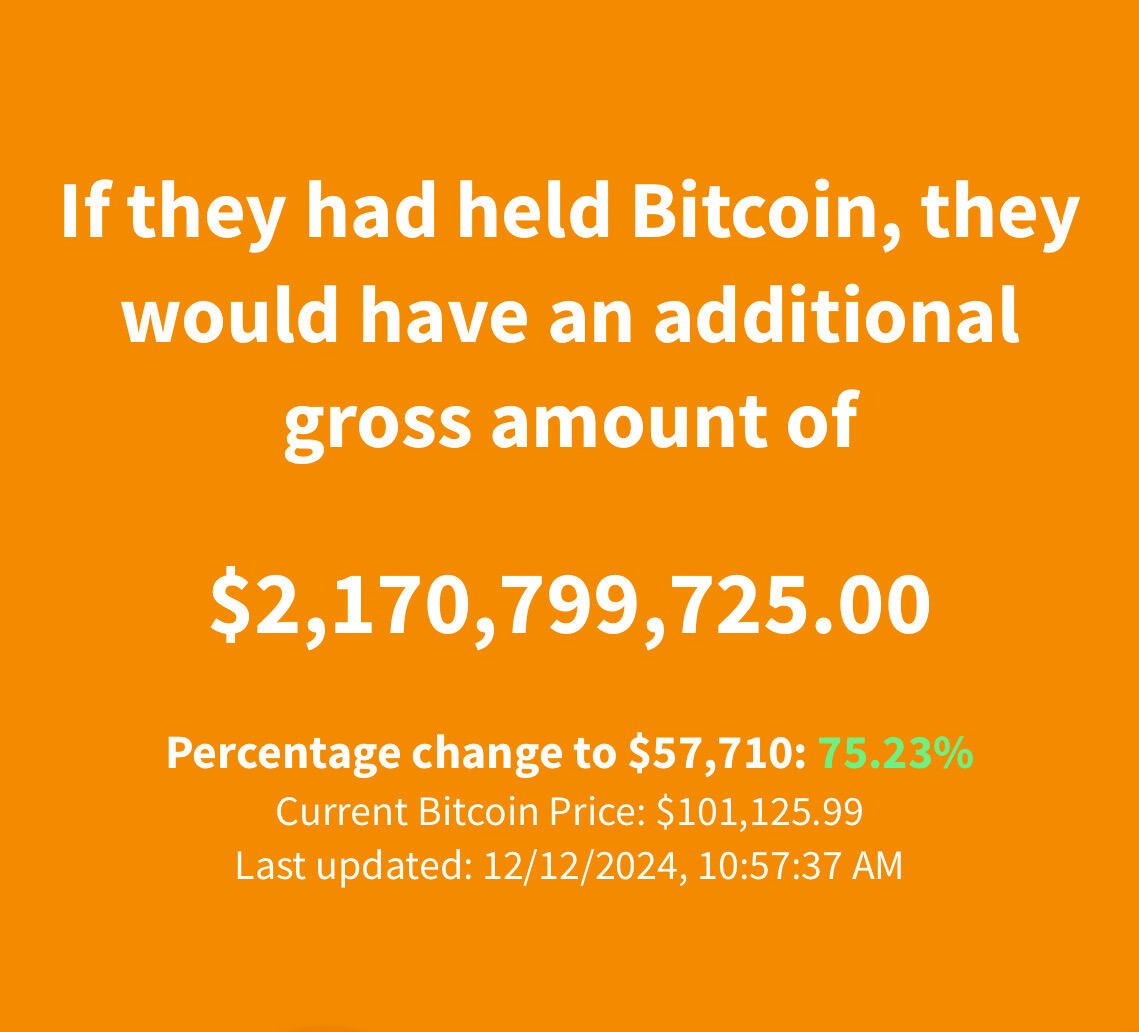

Ich werde niemals verkaufen!
The system that enables immigration is not unfair or exploitative, it is humane and fair.
The world we live in works the way it does because of economic inequality between countries. It provides incentives to developed countries for immigration. Residents of developed countries naturally do not want to do certain jobs in their country, those that are most needed by them. They believe that these jobs are beneath honor for people who are not students, or they cannot be paid as much as a domestic worker would ask for. This creates a demand for foreign labor coming from less developed countries.
This gives an incentive to people in underdeveloped countries, who have #knowledge, #skills and #ambition, who want a better life and are willing to make a certain effort for it, to move to a new environment and start a new life. People do not emigrate because of that first job they will do in a new country or because of that first salary, but because they know that they will have more opportunities in a richer country. They move for a second or third job, which they hope to find or create there after some time.
A Marxist who doesn't understand economics will say: "Look at the slave! He came from a shitty country to work here for pennies and now they exploit him. The #system is unjust and exploitative."
The Marxist, of course, is wrong. If the system were different, if the developed countries have no need to import cheap labor, many good and quality people would be condemned to remain in their village for life, which they could not choose and which does not deserve them, #poor for life, because in a richer part of the world there is no need for immigration. That would be unfair and exploitative.

12 things you need to know about #Bitcoin
#Germany nostr:npub1cwnpmxyr2jd3jmzzudyvtqx3ylp45angr46pw9cn92djhh2yn7nqasrrz3

Study #Bitcoin

How the Anglo-Portuguese Friendship Broke
In 1147, as part of the Second Crusade, the Crusaders laid siege to Lisbon, then under Muslim control. This particular Crusade was largely from northern Europe, consisting mostly of Englishmen, but also Scandinavians, Scots, Flemings, and northern Germans, and set out from Dartmouth. Unlike the first crusade, which was largely on foot, by horse and ox cart from France and central Europe, this one was by sea. On their way to the Holy Land by ship, they sailed past Lisbon, so they stoped along the way and drove the Muslims out of this city, handing it over to their Christian brothers the Portuguese and their King Alfonso I. It fits into the philosophy of the Crusades.
The siege was successful, Lisbon fell, and that year marks the beginning of modern #Portugal as a country, as you probably know if you've been there, the Portuguese love to put together a series of flags and coats of arms from Alfonso I in 1147.
The Crusade on #Jerusalem itself failed after that, but that important incidental success with #Lisbon remained.
Since a large part of the crusaders who conquered Lisbon were English, and the fleet with the crusaders set off from England, this began a centuries-old excellent friendship between the English and the Portuguese. Even during most of the colonial period, these powers did not enter into disputes. In this sense, the great difference in the relationship between Spain and England is noticeable - constant major or minor wars and conflicts, but the Spaniards, although the Portuguese are their closest brothers, could not count on them if the fight was against the English. The Portuguese were either neutral in these episodes, or quietly on the side of the English. They remembered the #liberation of Lisbon!
The Anglo-Portuguese friendship was further emphasized in the Napoleonic Wars, when the English helped defend Portugal, and specifically Lisbon, from the French invaders with their expeditionary forces. (The Spanish changed sides in the Napoleonic Wars, Portugal and England did not.) Portugal and England have never fought a war in history, nor have they been on opposite sides of any major conflict. Spain and England have fought many times.
But everything comes to an end, including that great friendship. Today, no one remembers the POR-ENG alliance or considers these countries friends. Why?
In 1888, Portugal controlled #Angola and #Mozambique. They thought it would be great to merge these two huge colonies into one Portuguese belt across the whole of Africa. This meant that they had to bribe the tribal chiefs in what later became #Zambia, #Rhodesia (#Zimbabwe) and #Malawi. They started making moves in that direction, but the English said - no way, it will be ours, Cecil Rhodes wants the Cape to Cairo. In 1890 they issued an ultimatum to Portugal, which was then militarily much weaker, was not in a position to risk war and gave up.
However, disappointment, anger and resentment towards the "brother English" who had so vilely humiliated them internationally remained. That was the end of the great friendship, although the two countries have not yet gone to war.
Realistically, the English had so much territory everywhere that they could have left part of it to Portugal, but then they would not have a belt running the entire length of Africa from north to south, which Cecil Rhodes had imagined.
Cecil Rhodes, probably the greatest colonialist of the 19th century, died in 1902 at the age of 48. Now the woke team is tearing down Rhodes' statues in England, they are ashamed of his legacy, and Rhodesia, the country named after him, has been gone for forty years....

The Economic suicide of Europe
Sixteen years ago, the European Union and the United States had almost identical gross domestic product (GDP). Today, the difference is large in favor of the United States.
The GDP per capita of the European Union in 2008 was about 37,000 US dollars, and now it is about 40,000. That is an increase of only 8 percent. In a full 16 years.
On the other hand, the GDP per capita of the United States was 48,500 US dollars 16 years ago, and now it is 81,500, which is an increase of 68 percent.
Over the past 16 years, the United States has achieved 8.5 times greater economic growth than the EU.
Looking at the countries, today, when comparing GDP per capita, Germany is richer than only the 5 poorest countries in the United States, and France is richer than only one.
The EU achieved enviable economic growth in the period from 1996 to 2008, much faster than the United States. What happened next, what caused Europe to fall into permanent stagnation, while the US continues to grow?
Yes, we had the global financial crisis and the great depression. But it hit the whole world. So, the Great Depression is not the reason for European stagnation, but the response to it and everything that key politicians did afterwards.
We can say that the stagnation was also influenced by some non-economic elements, such as the accession of Croatia, which was significantly poorer than the EU average at the time, and Brexit (the UK was one of the richest member states and as such contributed significantly to GDP). But even without Croatia, and if the UK had remained within the EU, stagnation would still have occurred.
Ole Lehmann, a German cryptocurrency trader and IT analyst, explained his theory on X: he claims that the stagnation was a political choice of EU leaders. He called it the "economic suicide of Europe".
"Europe chose security over economic growth. America chose innovation over regulation.
The results?
America produced 9 trillion-dollar companies (9 of the 10 most valuable companies in the world). Europe zero.
But that's not the end. European talent is leaving the EU en masse. I see most European entrepreneurs choosing between two destinations:
- the US where wages are higher
- Southeast Asia where the cost of living is lower and it's easier to start a startup
Why?
Because Europe has made it impossible to win at home. Look, for example, at the Berlin scene. Company founders are viewed with suspicion. Entrepreneur = exploiter. I've witnessed local gatherings where IT entrepreneurs have been called "capitalist parasites."
Meanwhile, in places like Silicon Valley and New York City, entrepreneurship is celebrated, innovation is celebrated, risk-taking pays off. Failure is seen as an education, not a disgrace.
Europeans are drowning in red tape. Labor laws make it virtually impossible to hire and fire, taxes destroy small businesses, and regulatory compliance kills innovation.
Even French President Emmanuel Macron admits this. Comparing Europe to the American and Asian markets, he said:
"The EU could die, we are on the verge of a very important moment. Our old model is over - we regulate too much and invest too little. In two to three years, if we continue to push the old agenda, we will be out of the market."
An anti-innovation mindset is killing Europe. When Elon Musk was building Giga Berlin, Germans protested: "We don't want techno-colonialism!"
Tesla almost abandoned the project because of regulations and protests from local residents. This happens to small companies all over Europe every day.
Europe's regulatory culture has created an economic spiral of destruction:
- talent leaves
- companies avoid investment
- innovation dies
- the economy stagnates
- more regulation follows.
The numbers are brutal: 90% of European tech companies would like to move to the US, European salaries in the IT sector are 50% lower than in the US, and investment in startups is 5 times higher in the US than in the EU.
And what about European tech successes? Most of them have moved to the US: Spotify (which is now based in New York), Klarna (which runs its main operations from the US), ARM (taken over by the American NVIDIA).
The point is this: while Europe is debating the ethics of artificial intelligence, America is building it. While Europe is regulating cryptocurrencies, America is creating them. While Europe is protecting an old industry, America is building a new one.
The solution? In my opinion, Europe should:
1. Cut regulations
2. Support risk-taking
3. Support entrepreneurship
4. Lower taxes on innovation.
But will it?
As a European, I unfortunately doubt it. The addiction to regulations is too deep. The anti-business culture is too widespread. As a fellow French entrepreneur told me: "I love Europe, but I can't build my future here. The system won't let me."
That's why America wins. Not because Americans are smarter, but because their system rewards those who build.
Europe has become a museum: good at preserving the past, bad at building the future. Unless Europe deregulates and starts valuing risk-taking, this gap between the US and the EU will only widen," Lehmann explained.
The only difference between a healthy and an unhealthy life is the mindset. Time and money are spent on both.
#health #life #mindset #money
This is a huge strategic success for Israel. Hamas has practically capitulated, Hezbollah has been defeated, their supply route has now been cut off, they have seized a bit more land, Iran has been cut off, and they have control over the entire region.
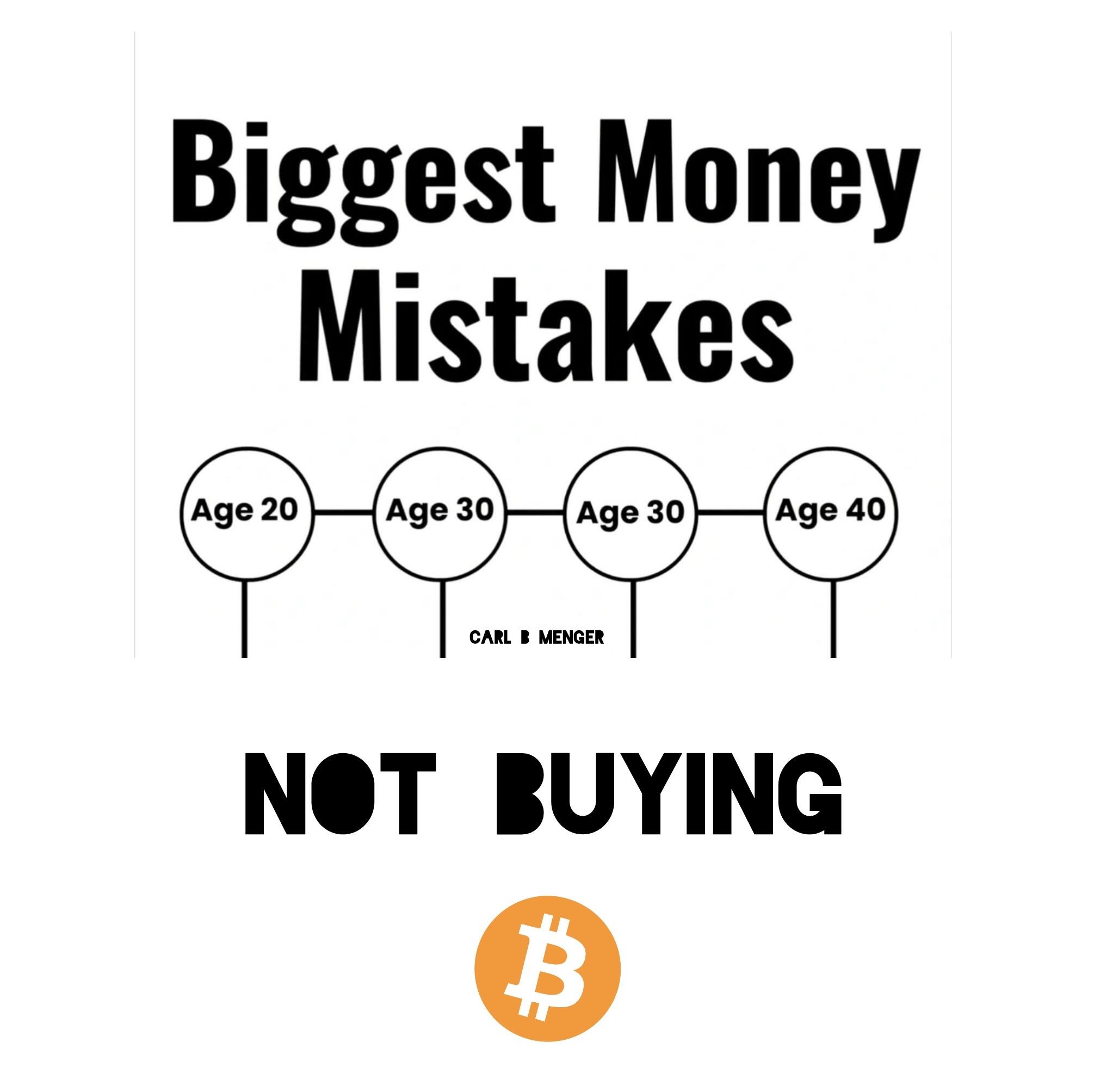
My son is 17 and already heavily investing 💪

If government is involved, avoid it.
If government supports it, reject it.
If government says it's safe, it's not.
If government it's true, it's false.
If government wants to help, it won't.
If government says you need it, you don't.
Weekend Assignment:
Love Yourself
Don't Judge Yourself
Be Kind to Yourself
Do Something Nice and Good for Yourself