

Well, client > server > server > client is much more of a pain in the ass than what we have, client > server > client and all you need to know is which relay(s) to send the signed message to. Also, nobody's identity lives at a server. So on that front, no.
On the message format front, also no. JSON beats out XML any day.
Maybe all we need is a way to exchange omemo fingerprints and we can just adopt that.

I'm still using XMPP right now (it's making a comeback) and as an end user, it is fantastic. If, of course, you don't want jingle.
XML is still too much, and there are too many messages being passed around, and the protocol is extensible to the point that it doesn't function in a uniform way (something we are already seeing in nostr, which is, I've heard, not a general message transport protocol) but it works and works well, dare I say it's the meat messaging protocol we have to this day.

no, but you're being passively controlled by corporate supply chains.
also there's no way you don't fry bacon in canola oil intentionally. bacon comes with it's own oil.
our minds swim defenselessly in the fluid of information flows. you cannot stop your mind, and therefore your behavior, from being influenced from outside. all you can do is have a meta understanding of the process, try to internalize memes that work in your favor, form defenses like skepticism to prevent your mind from being taken by forces hostile towards you and hope you make it.

nope, unfortunately. lots of cumbersome UI things. Stuff is overwritten on top of other stuff if the window isn't big enough, page down/up scrolling freezes up unless the mouse cursor is moving in the window, wheel scrolling is like pouring honey (notedeck it's like pouring tar), i am sick of all these dam GUI toolkits man.

It's just like Lego technic, it's just screws, parts, and caution when pulling on things. You can find walkthrough procedures for any phone disassembly and assembly with a quick search online. I've repaired thousands of phones, it's intimidating at first but once you do it a few times it's nothing.

Signal is good, but I will not use it unless I know someone IRL, because of the phone number requirement. It's got good network effects, and I won't use WhatsApp or Facebook messenger or any of that garbage, at this point just about everyone has more than one person in their lives using signal, the social friction to onboard is not that much like it would be with something like simplex.

Almost nobody mines their own bitcoin either. Almost nobody runs their own simplex node, XMPP server... Decentralized doesn't mean purely peer to peer. You don't have to use gmail.
Everyone has email. It's a good Schelling point for communication.

Dude no sense in arguing with people about this. There are some intense misunderstandings of reality, deliberately instilled by the big communications companies, that leads to these ideas, even in people who eschew those big ones.
The first, big one is "I don't want to install yet another app." This is silly. You have a device in your pocket, designed for installing apps to primarily communicate with people. It is unreasonable to expect to install one app for everything, to talk to everybody. And that's a nice segway into the next idea.
Communication is about talking to people. Network effects are a thing. If you want to talk to someone, you and them have to use the same tool, protocol or network. You have to have a wide array of tools to do this, it's like speaking more than one language, the more you do the more people you can talk to.
Both of these silly ideas are what keep everyone locked into WhatsApp and whatever. These same ideas are internalized by privacy people, where they expect everyone to use one thing, it has the same effect on them, locking them into something.
You should select a handful of communication tools that will connect you to the most people you can, without compromising a handful of things that are very important to you. For me, independence from a big corporation, FOSS, availability of e2ee and personal identifiers can only be required for tools I use with IRL people. If it meets those criteria I'll use it, I have preferences but I won't make myself unavailable to someone I'd like to talk to beyond those simple criteria.
So I got in the pool with my phone
-__-
It's not water resistant because I've had to repair it a couple of times. Took it apart, dried it out with my t shirt and put it back together, came back on fine. So far everything seems to work. I thought it was toast.


On vibe coding
(TLDR: don’t)
nostr:nevent1qqszmwtpc6uzw5t0sqcekcvl6cf2pzzkk6lm0vgq7z4fj3hdcp36n4cnje6dc
I'm not the best programmer. I can make what I want to happen happen though. And I'm very deliberate in designing what I want to make real. The programming part is just placing the blocks. Everything you see in something I do is a deliberate design choice. It's never fancy, it almost always does what I intended it to do. I also learn from everything I make.
I've been contracted before to unspaghetti AI generated code. I usually tell people that it would be cheaper to pay me to write it from scratch.
I've considered doing the vibe coding thing. I know it's not the magic bullet it's being hyped as. But it can potentially make my life significantly easier, at least in the short run. But I know what it will cost me in the long run.
Switched my email and XMPP to disroot, let's see how it goes. I know they're a little overtly political which I'm not a fan of, but if the service is good I don't really concern myself with all that.
Email (and phone numbers) are just a Schelling point for me, a backup communication method because I know everyone has them. So I don't like to self host in case of failure, or pick something that is unreliable. I used cock.li (not overtly political, very trolly and some people seem to have a problem with that, but again, I don't concern myself with those things) and it was just too unreliable. I'd hit email quotas when using it for deltachat, the XMPP server would go down sporadically for a while for no reason, I'd happily pay for those two problems to go away.
All the other email services of this kind, paid or not, that I found appeared to have abandoned XMPP support, which is a no go for me. I could make do with two separate addresses, but having one is just simpler. So I guess, for now, disroot it is.
email, deltachat and XMPP: mister_monster@disroot.org if anyone wants to contact me, XMPP preferred of course.
This might interest you. https://aeon.co/essays/a-new-field-theory-reveals-the-hidden-forces-that-guide-us
There's a lot going on here, and there's a lot of not very popsci (because popsci is dead) research that ties into this free will, decision making and creativity stuff. Particularly besides what I linked I don't know if you have heard of something called assembly theory, but it is being formalized primarily by a chemist named Lee Cronin and an astrophysicist named Sarah Walker, and while the theory itself is pretty formal and they don't venture into anything too crazy, the pair each have very interesting personal opinions on what is going on underneath it all. Lee Cronin in particular has expressed the opinion that invention may be a temporal perturbation, that is, an interaction with the future. I tend to think hes on to something there, though maybe not necessarily entirely correct. They're both very brilliant people.
My personal pet hypothesis on this topic is that we don't clearly understand time, maybe even we are neurologically incapable of it, but that creativity, invention, decision making interact with time in a way we don't really understand but intuitively feel and frame in ways that seem obvious to us without articulating them clearly. I'd like to try to understand it if possible, and do work on understanding the ideas as best I can.


Mineral sunscreen is pretty easy to make with that stuff, you need zinc oxide, a dust mask and some other type of oil. You can find measurements for it online.
45 minutes from a big city is a no go for me. I want to be in the middle of nowhere. You can't see the stars otherwise. I can be an hour from a small city. Not a big one.

The culture is consumerism is the worst, literally the only things it has going for it are vast diverse beautiful landscapes and you can walk around with a gun. And plenty of other places have the former. Nowhere has the latter.

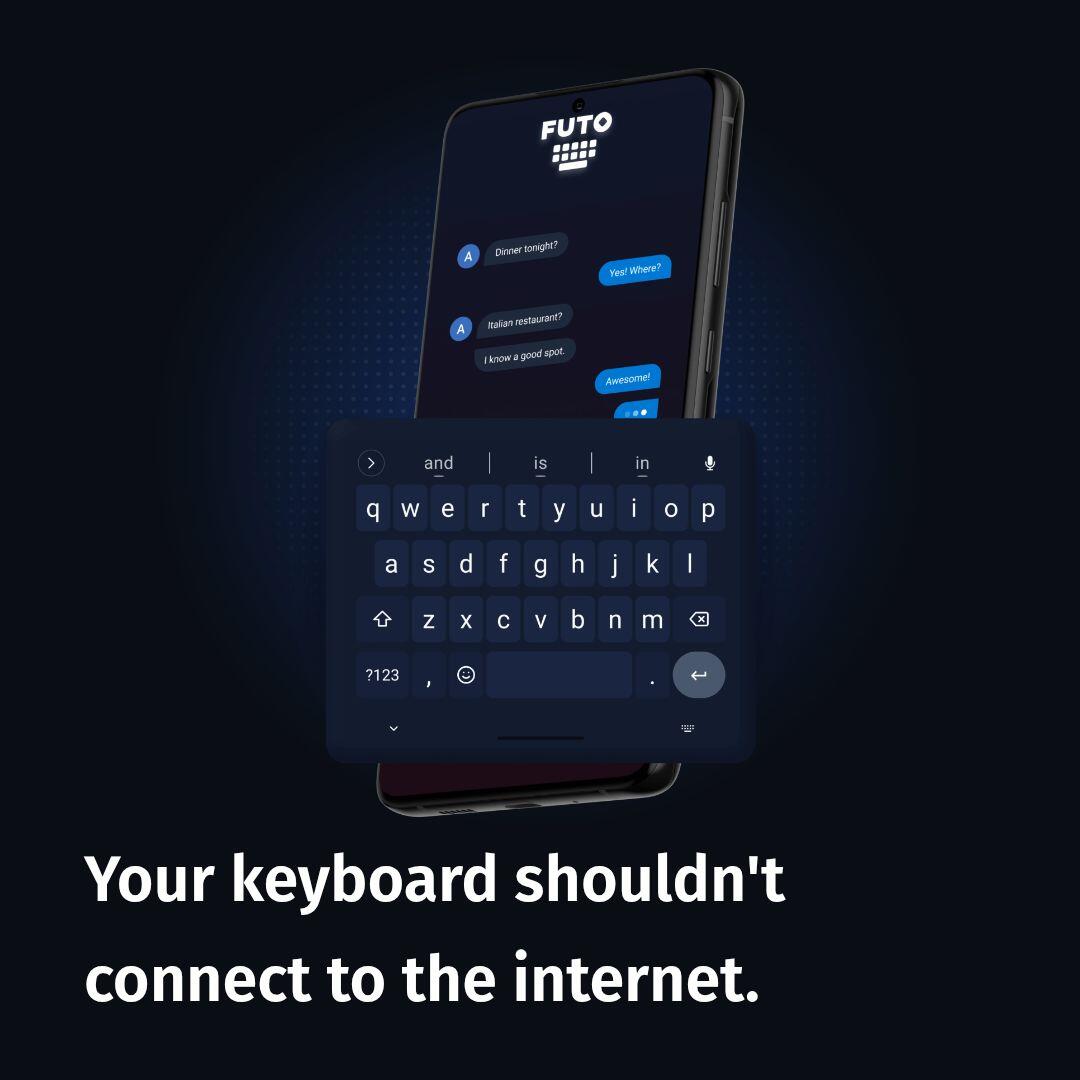
Source available, not Foss. 100% correct, your keyboard shouldn't connect to the internet, I'm pretty sure mine doesnt. Heliboard.
I do use futo speech to text, it's pretty good.

3D Printed Gun Designer Joseph The Parrot on Shaping the Next Steps of True Liberty | Tune-in to a LIVE MoneroTalk episode Tomorrow 4/3 at 7:00PM-EDT!
Watch here on X or on YT➡️: https://www.youtube.com/live/9hPSiXN8yQE?si=90QIKG_8KD9uyl6s
TWITCH ➡️: twitch.tv/monerotalk
Now streaming on Rumble!➡️: rumble.com/user/monerotalk
Thank you to our show sponsors cakewallet.com / stealthex.io /

Distribution of information. That's the third thing.
So, since you know with certainty what the supply will be, you can do your calculus as if it exists but is not in circulation. I think that's what they mean.
They seem to think this is a good thing, long term it is not.

I can take a crack at it.
The thing you're responding to, how bitcoin blocks are a currently ghost town but Monero blocks are not, already refutes the first point made in the video, that bitcoins block size per market cap is bigger and so if Monero were to scale to that size it would have unmanageably large blocks. If that were true bitcoin would at the very least have full blocks right now. As rotten said, rubbish, and I'm surprised you didn't see it before linking us to the video. Using market cap as a heuristic for adoption is an incorrect premise.
(We have all seen this video before BTW, it's a go to gotcha and it has been torn to shreds many times before, "deboonked" you might say, you can find many other responses to it on nostr, on reddit especially, probably everywhere else that there is a presence of the Monero community)
There's no such thing as a free lunch... Nobody ever claimed there was a free lunch. We knowingly make the trade off: bigger transactions for fungibility and private finances. We know the cost of privacy and embrace it because it is a must have feature of money. But framing it that way assumes bitcoin is already perfect, that improvement can't be had over it without losing something. This is not true. I think bigger transactions in exchange for complete privacy is a worthwhile trade off, therefore I think I'm getting more than I'm giving, therefore I think I'm getting something for free, the marginal benefit over the marginal cost. That's nice.
Hasn't been that successful... Again, market cap is a poor heuristic for utility and adoption. Define success. I define it as peer to been electronic cash, the title of the bitcoin whitepaper.
Mining, this is all theory. Some of the arguments about ASICs vs RandomX have merit. But the idea that specialized CPUs will be made is ridiculous. They won't be specialized, they'll just be more powerful general purpose CPUs. The idea that the ability to attack Monero is easier than bitcoin because they're CPUs is also is not entirely ridiculous, but it's not well understood. The fundamental measure of attack ability is hash rate, and right now Bitcoin can be attacked with 10% of the yearly DoD budget, one company has a monopoly on production of bitcoin mining hardware and could attack the network whenever it chooses. It's easier to rent CPUs than ASICs, it's even easier to lean on a single company that produces over half the hash rate. "Bitcoin can just change it's mining algorithm" so can Monero, and in fact it has, something bitcoin probably couldn't do because it can't find consensus to change anything.
You can't call bigger transactions "blockchain bloat" when they're made that way on purpose for a reason. They're not bloat by definition, they're more useful to users. They're just bigger.
Coinjoin, payjoin, non KYC bitcoin, "things that make more sense", L2 this and that, this has been discussed ad nauseam on nostr, there's a meme somewhere of a girl doing gymnastics, you can find it in any of our histories if you're interested in how we tear that apart. It's total and complete rubbish.
I've got no disagreement with the criticisms of zcash in the video.
How's that?

Alright. Let me take a deep breath real quick.
So, miners are rewarded for securing the network. If they're not, they don't do it.
In bitcoin, they're rewarded by the block subsidy, the coinbase transactions, and by the transaction fees of people moving money around. I'm going to call these "users" as opposed to holders, which are also users but I'll distinguish between them in that way.
The block subsidy is like a tax on all holders and users in the network, just as monetary inflation (which I refer to as "debasement" because that's what it is) is a hidden tax on all of us who work for and buy things with fiat.
Holders benefit from the security of the network. That is bitcoins entire value proposition, that's what gives it value, that it is infeasible for anyone to just steal your money without tying you up first. A coin with a supply of 1 and no security is valueless. Scarcity isn't the end all be all of value, as you can see from countless other supply capped altcoins, other considerations are, demand being the big one, but none of that matters if you can wake up to your money gone. The security of bitcoin is it's primary value proposition.
Network security is a commons in game theory parlance, to the bitcoin network, and a situation where some group can benefit from the commons without contributing to it leads to what is called a tragedy of the commons. Those people in game theory parlance are called "free riders", they benefit from it without any cost incurred to them, and for the commons to continue to exist, the cost must be incurred by someone else. That someone else in bitcoin is the users, those actually sending bitcoin and paying transaction fees.
There's a block subsidy right now in bitcoin, but since the supply cap is known, we can treat that yet to be issued subsidy as existing and just not being spent yet. It is "priced in" as you might say. It can be treated as if it already exists, just like satoshis coins can be treated as if they don't exist. Consider your share of the debasement via the block subsidy paid, consider your share of bitcoin as being out of a total supply of (slightly under) 21 million coins, that's what most people do anyway.
So what happens is, there's an incentive built into this game theoretical system that is bitcoin, where people are incentivized to hold and not to spend. They benefit from the security paid for by those who have to spend, and their wealth is secured for free. So as time goes on, more people do this. The more people that do this, the more users have to pay to spend money, the more pressure they feel to just hodl and spend something else, and so on. It has a compounding effect.
The end result of this is of course, a world where nobody or almost nobody spends bitcoin on chain, and where miners have to reduce cost and therefore security. And as security goes down, so does the value of the network, and therefore so does the value of your bitcoin holdings.
A solution to this is a tax on holdings. But that's messy, you need a way to just take money from people when mining a block, keeping track of everything and knowing what everyone has.
A simpler way to do this is to just create some press determined number of new coins every block. It taxes everyone equally in proportion to their holdings, everyone pays for security of their wealth in exact proportion to the benefit they derive from the security of the network. Simple, elegant, problem solved, as long as this money only goes to miners and nobody else.
This could be done on any number of schemes. You can do it on a geometric scale, 2% or 3% as central banks do (even though they don't need it to pay for security. They're just scammers), or you can do it on a linear scale, like Monero does with a set per block emission number that we call a tail emission. I could go into the reasons why this is optimal even though on the surface it may not appear to be viable long term as opposed to geometric debasement, but that's a whole separate thing.
Do you see it? It's not about "the miners have to be paid", it's about who pays the miners and who benefits from mining. The two have to be one and the same, and in proportion to their benefit, or any network is doomed to fail. Incentives are outcomes, always, with anything social in nature.