
GM 🌅
The Streisand Effect refers to the phenomenon where attempting to suppress or censor information actually leads to its wider dissemination. It's named after Barbra Streisand, whose attempt to suppress photos of her residence inadvertently drew more attention to them.

Support for multiple accounts in the web app please.
A good listen if you're a UK based Bitcoiner. #bitcoin
Agreed. Things get a lot easier once you get through your first 4-year cycle.
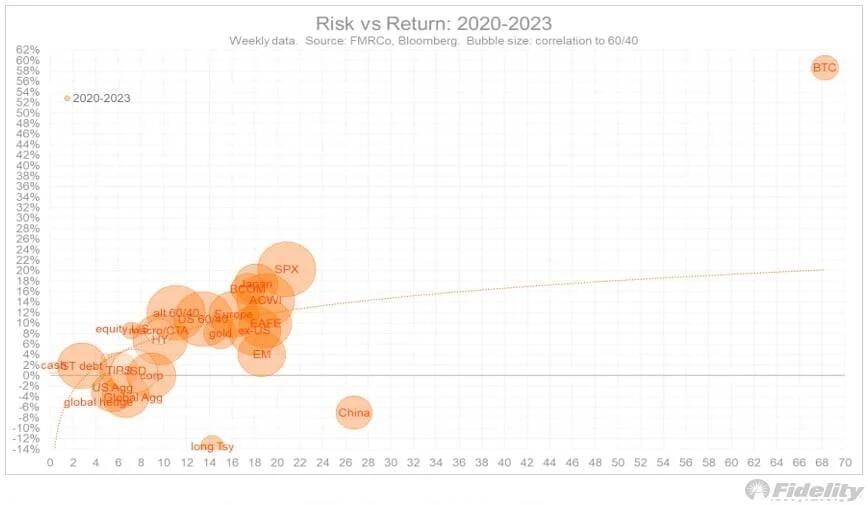
Ignorance. It gives those of us that took the time to understand Bitcoin more time to stack cheap sats.
GM 🌅
The Lindy effect is the idea that the future life expectancy of something, like a technology or an idea, is proportional to its current age. So, the longer something has been around, the longer it's likely to stick around in the future. It's often used in discussions about the durability or longevity of trends, concepts, or technologies.
GM 🌅
The Gell-Mann Amnesia Effect, named after physicist Murray Gell-Mann, refers to the phenomenon where individuals tend to forget or overlook their skepticism or critical thinking skills when consuming information in areas where they lack expertise. This effect highlights the tendency for people to trust information presented in the media, even if they would approach the same information critically in their own field of expertise.
GM 🌅
The concept of an "intransigent minority" refers to a small but influential group that holds strong and unwavering beliefs, often exerting a disproportionate influence on decision-making or social dynamics within a larger population. This term is often used in the context of sociology, political science, and economics to explain how minority groups with extreme views can sway the opinions and actions of the majority.
#bitcoin
GM 🌅
The Gardner Hype Cycle is a graphical representation developed by the research and advisory firm Gartner, showcasing the maturity and adoption of specific technologies or trends over time. It consists of five phases:
Innovation Trigger: This phase marks the introduction of a new technology or trend, often driven by a breakthrough or innovation.
Peak of Inflated Expectations: In this phase, there's a lot of excitement and hype surrounding the technology, with exaggerated expectations about its potential benefits and applications.
Trough of Disillusionment: As initial hype subsides, the technology often enters a phase where interest wanes, and some early adopters may become disillusioned due to unmet expectations or challenges.
Slope of Enlightenment: In this phase, more practical applications of the technology emerge, and understanding of its benefits and limitations deepens. Real-world implementations start to gain traction.
Plateau of Productivity: Finally, the technology reaches a level of maturity where it becomes mainstream, and its benefits are widely understood and accepted. This phase is characterized by stable adoption and integration into various industries and applications.
The Gardner Hype Cycle provides valuable insights for businesses and decision-makers to understand the lifecycle of emerging technologies and make informed decisions about investment and adoption strategies.
#bitcoin
GM 🌄
The Prisoner's Dilemma is a classic example in game theory where two rational individuals may not cooperate even though it's in their best interest to do so. It illustrates the tension between individual rationality and collective rationality. In the scenario, two prisoners are given the option to either cooperate with each other or betray the other to minimize their own punishment, but if both betray each other, they both receive a harsh punishment.
#bitcoin #gametheory
GM 🌄
Gall's Law is a principle that states: "A complex system that works is invariably found to have evolved from a simple system that worked." It's often cited in software development and design to emphasise the importance of starting with simple, functional designs and gradually evolving them, rather than attempting to create complex systems from the outset.
#bitcoin #technology #design
GM 🌄
Moore's Law is the observation made by Gordon Moore, co-founder of Intel, that the number of transistors on a microchip doubles approximately every two years, leading to a rapid increase in computing power and decrease in cost. This trend has been a driving force behind technological advancement for several decades.
#technology #inflation #bitcoin
GM 🌅
Bitcoin isn't deflationary, it's fixed. Technology is inherently deflationary, and a fixed currency like Bitcoin allows us to accurately gauge technology's deflationary impact.
#bitcoin #technology #inflation
And this is also worth reading.
https://skepticalscience.com/climate-the-movie-a-hot-mess-of-cold-myths.html
nostr:note168wt722lat9pl36zsv0h7w747yq94klp504a53w4dgml3jdcxsysewh7dg
GM 🌅
Network effects refer to the phenomenon where the value of a product or service increases as more people use it. Essentially, the more users a network has, the more valuable it becomes to each user. This effect can be seen in various industries, including social media platforms, marketplaces, and telecommunications networks. It often leads to a winner-takes-all dynamic where one dominant player emerges in the market.
GM 🌄
Orders of magnitude refer to the relative size or scale of quantities, usually measured in powers of 10. For example, if something is 10 times larger or smaller than another, it's said to be one order of magnitude different. It's a way to quickly understand the scale of things, particularly in scientific or mathematical contexts.
GM 🌄
An asymmetric payoff refers to a situation where the potential gains or losses are not equal. In other words, the potential upside is significantly higher than the potential downside, or vice versa. This concept is often discussed in finance, where investors analyse the risk-reward profile of an investment. For example, a high-risk investment may offer the potential for substantial gains but also carries the risk of significant losses, creating an asymmetric payoff.
GM 🌅
A Veblen good is a type of luxury good for which demand increases as the price rises, defying the typical law of demand. This phenomenon occurs because the high price of the good is seen as a status symbol, leading to increased demand among certain consumers who value conspicuous consumption.
GM 🌅
Time preference refers to the tendency of individuals to value goods, services, or outcomes differently depending on when they are received or experienced. It's the concept that people generally prefer to receive benefits sooner rather than later, all else being equal. This preference for present consumption over future consumption is a fundamental aspect of human decision-making and plays a significant role in various economic theories, including consumer behavior, investment decisions, and savings behavior.