
This is from 2002:
>The phrase “convergent technologies” refers to the synergistic combination of
four major “NBIC” (nano-bio-info-cogno) provinces of science and technology,
each of which is currently progressing at a rapid rate: (a) nanoscience and
nanotechnology; (b) biotechnology and biomedicine, including genetic engineering;
(c) information technology, including advanced computing and communications; (d)
cognitive science, including cognitive neuroscience.
Among the "twenty
ways the workshop determined that convergent technologies could benefit humanity
in a time frame of 10 to 20 years" [i.e., 2022] is this one:
>The ability to control the genetics of humans, animals, and agricultural plants
will greatly benefit human welfare; widespread consensus about ethical, legal,
and moral issues will be built in the process.
Later:
>If we make the correct decisions and investments today, any of these visions
could be achieved within 20 years’ time. Moving forward simultaneously along
many of these paths could achieve a golden age that would be a turning point for
human productivity and quality of life. Technological convergence could become
the framework for human convergence (Ostrum et al. 2002). The twenty-first
century could end in world peace, universal prosperity, and evolution to a higher
level of compassion and accomplishment. It is hard to find the right metaphor to see
a century into the future, but it may be that humanity would become like a single,
distributed and interconnected “brain” based in new core pathways of society.
...and they want total control of that "brain", using educational institutions to shape our views "from the nanosphere to the cosmos." They want it all; and they want it now. It's the gnostic/pagan dream: "All is One, One is All," all brought about by a "One World" agenda.
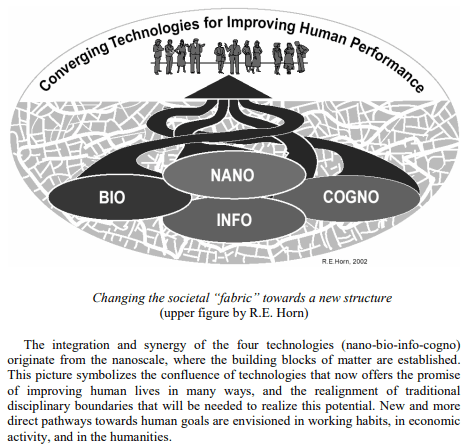
Excerpts from: [Converging Technologies
for Improving Human Performance](https://drive.proton.me/urls/A3RDH1GCKW#gy7nZXHyHXMd) published by the NSF/DOC in 2002.
