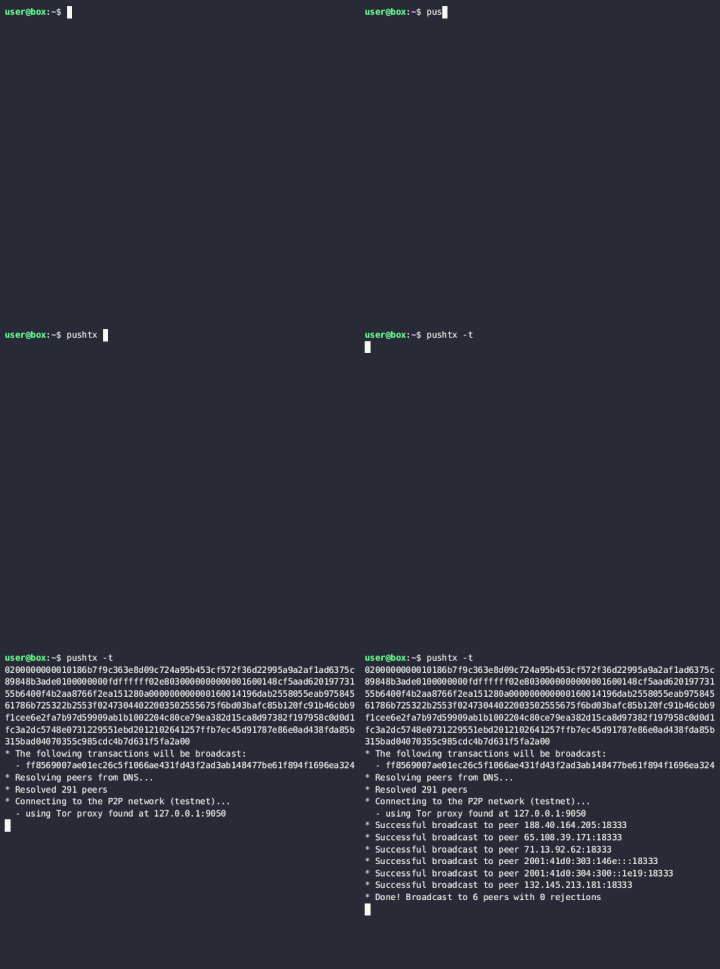
I believe it is because most mobile wallets connect to someone else's public (centralized) node to broadcast transactions. That node can therefore see all your transactions.
It is not as useful if you run your own node and your mobile wallet connects back to it, but more useful as a default option for mobile wallets rather than connecting to a public node to broadcast.
It could probably also be used for projects like #meshtastic to broadcast transactions sent on the mesh to the Bitcoin network via any reachable mesh devices with an internet connection.
I'd put a bounty on it....but appears meshtastic is too low bandwidth. How to store n forward..hmm...it will be an engineering marvel for whoever can solve for it. This is the missing link to an actual parallel economy. Otherwise all hardware and networks are compromised.
Too low for Bitcoin p2p connections? Yes. But I was suggesting sending a Tx over a mesh with a flag (e.g. btc:'tx hex'). When a mesh node receives the flagged message, it could check to see if it has an internet connection (LTE on paired device) and if so, use this to broadcast the tx to the Bitcoin network. Use case might be too spefic and limited to warrant development though.
I like it. Create cocal hubs with a blockfi satellite.
Blockstream, I assume? Don't the satellites just broadcast blocks? We need a parallel internet next.
Rgr. blockstream...too little sleep. Assume local ISP is compromised...now what.
Thread collapsed
Thread collapsed
Thread collapsed
Thread collapsed
Thread collapsed