
Sprinting to prep the multilanguage nostr:nprofile1qyghwumn8ghj7mn0wd68ytnhd9hx2tcpzemhxue69uhk2er9dchxummnw3ezumrpdejz7qg4waehxw309aex2mrp0yhxgctdw4eju6t09uq3xamnwvaz7tm0venxx6rpd9hzuur4vghsz8rhwden5te0dehhxarj95ezu7n9vfjkget99e3kcmm4vshsqg8je9kf0ajpnffclpx087njugv5vp0psjqfdeh9zuxvukmk0xw5qqu9r45v release in time* for nostr:nprofile1qys8wumn8ghj7un9d3shjtnndpshwmnev4skwetj9e3k7mf0vd5xzaqprpmhxue69uhkxetvd3shytnwdaehgu3wwa5kuef0qyfhwumn8ghj7am0wsh82arcduhx7mn99uq35amnwvaz7tmnv4hxg6t59ehx7umxd3shyefwvdhk6tcpzemhxue69uhkzat5dqhxummnw3erztnrdakj7qpqad0ptuzte83alpkpqqctvewlaqj5zq23c83m82xw8apg4t6zlynsc0nfk4 but in the meantime I'm SO EXCITED to get these RP2350 dev boards in to play with as soon as I'm back from El Salvador!
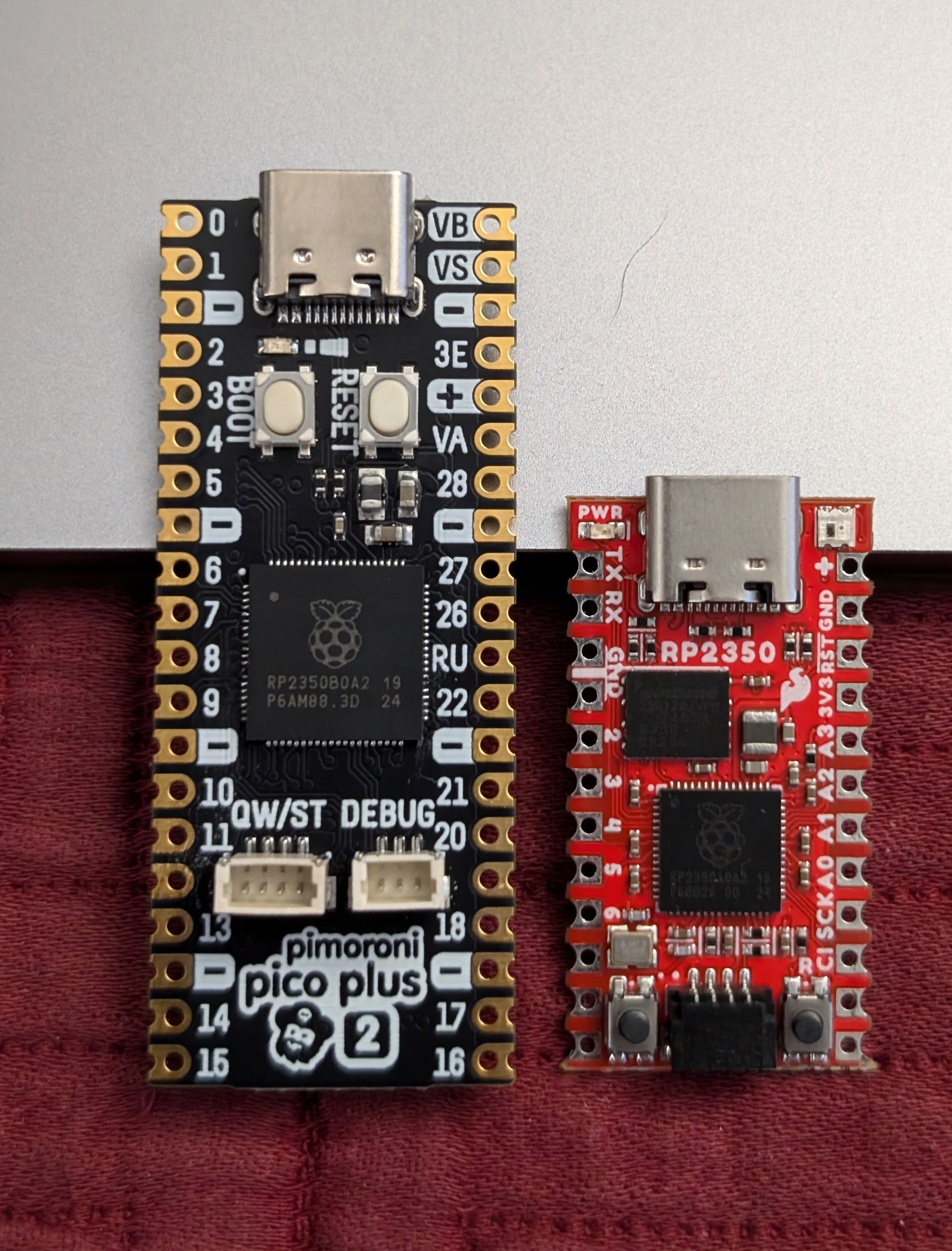
The hope is that the RP2350 microcontroller will be an easier platform on which to port SeedSigner to MicroPython. Getting us onto a microcontroller (while still fully supporting the original Pi Zero hardware/codebase, of course!) will open up some huge new possibilities.
---

*("in time" actually means "have a preview release to demo" 'cause there's no way we could get a full final release adequately tested in time)

Reply to this note

Please Login to reply.

Discussion

I find your work very interesting. It's one of my favorite in the space and I hope I'll be skilled enough to contribute some day.

Thanks! This microcontroller side is pretty far beyond my area of expertise so I'm really just fumbling about and googling everything I can.

But the core @SeedSigner code is just plain python right now and is, I think, very easy to work with and should be quite beginner-friendly.

Combo of:

* Python is the easiest coding language to learn and read.

* We put in a lot of effort to make the code organized, simple, and with lots of explanatory code comments.

t-y & will be following closely. diySS

Definitely sounds like a good place for me to start learning then. Thanks for your work!

Once you are able to port seedsigner to rpi pico will it be easier to go from there to a ESP32? does the pico have wifi built in?

Bit of nerd pedantry: Pico is Raspi's dev board for their RP2040 and RP2350 (Pico 2). Pico / Pico 2 run on RP2040 / RP2350 microcontrollers. But RP2040 / RP2350 shouldn't be referred to as Picos.

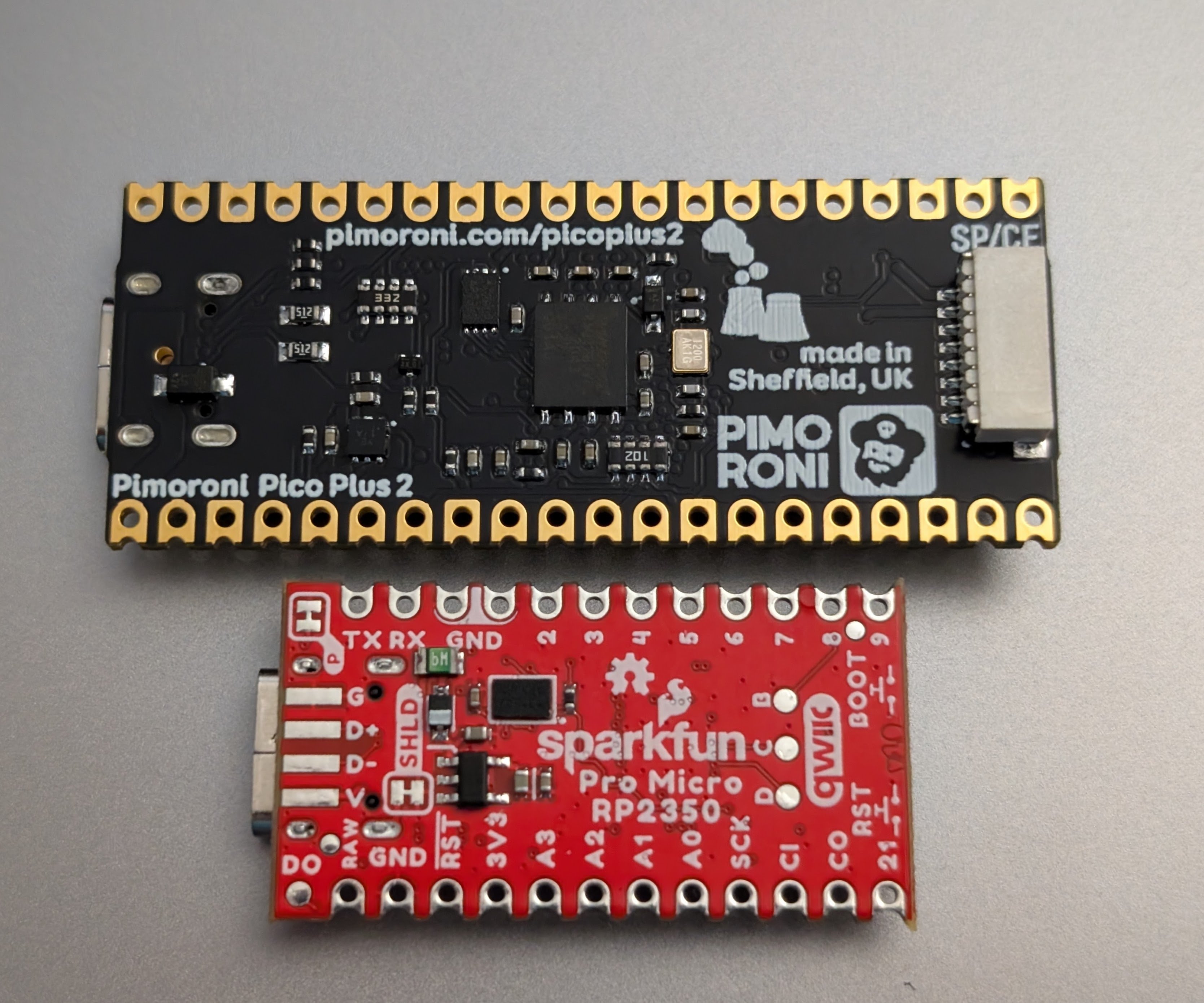
And these two RP2350 dev boards in the pics above have an optional feature that the Pico 2 does not: additional PSRAM. The RP2040 had limited RAM (264kB) that could NOT be expanded, making it a less enticing option at the time. The RP2350 doubles the onboard RAM to 500kB but adds support for PSRAM expansion. So these third-party dev boards have 8MB on board!

So: RP2350, yes! Pico / Pico 2, no thanks!

As to your first question: sorta. Porting to MicroPython on ANY platform definitely makes it easier to support other microcontrollers. But a big problem with the esp32 ecosystem was its compiler. We got our work-in-progress port compiling for esp32-S2 (after much suffering) but never got esp32-S3 to compile. And even the S2 "success" was just too hacky to feel comfortable with trying to make that a viable path.

However, the future of esp32 is all RISC-V. I would hope that would make the compiler issues simpler (but really have no idea).

AND the RP2350 has two RISC-V cores onboard.

So what works for one RISC-V should ideally be easy to make work on another RISC-V (reality is never so kind, tho).

However... my initial RP2350 work will most likely focus instead on its two ARM cores (tho we'll see).

So... yeah, the answer is: sorta.

Your second question: The Pico 2 and these dev boards have NO wifi / bluetooth on board. There is a Pico W and expectation is that there'll be a Pico 2W soon. But obviously that doesn't interest us (and again, Pico 2 doesn't have the expanded RAM).

I ❤️ Pimoroni.

Run by a Bitcoiner I think; at least they used to accept Bitcoin in the early days.

Whoa! Checking now... currently only accepts credit card, PayPal, Shop Pay, G Pay.

Boo.

I think this is my first time ordering from them. Usually I stick to the US options. Adafruit generally has everything I need.

But this pimoroni board uses the RP2350 "B" variant (note the bigger physical package (um, heh)) which, crucially, offers more gpio pins than the "A" variant on the sparkfun board.

Yep, *used* to. Is talked to them about it and they were getting scammed with returns or something as they were (weirdly) refunding the bitcoin amount.

Yikes. Always gotta do BIFO: bitcoin in, fiat out.

That's exactly what's needed. The pi zero platform is much too much overhead. Brilliant idea to port it to a microcontroller 💯🙏

It's amazing that nostr:nprofile1qyt8wumn8ghj7etyv4hzumn0wd68ytnvv9hxgtcpz9mhxue69uhkummnw3ezuamfdejj7qgcwaehxw309anxjmr5v4ezumn0wd68ytnhd9hx2tcprpmhxue69uhkxetvd3shytnwdaehgu3wwa5kuef0qy88wumn8ghj7mn0wvhxcmmv9uqzqxj6lwv69s9n5z9y52h0c9r2ec8fuak2pe9nuarj6dy3eqp4hta3ks7myh and "DT" and others were able to create a custom Linux OS for us (with reproducible builds!!! 🤯) that gets SeedSigner booted up and running in ~12secs.

BUT, yes, a full linux OS is a ton of overhead. Running bare metal on a microcontroller with basically instant-on and hopefully good enough performance (Pi Zero cpu is a BEAST compared to any microcontroller) will be amazing.