
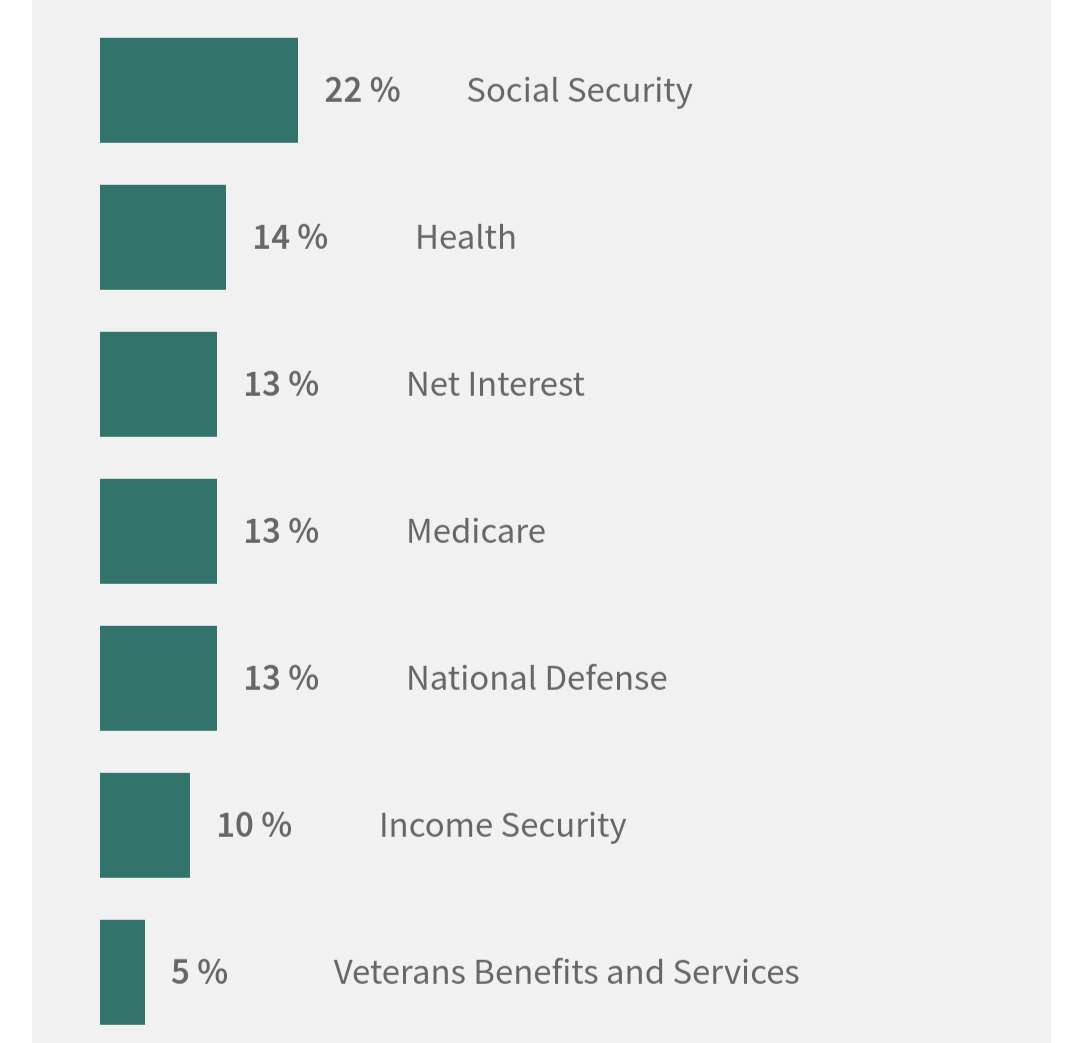

I take this to mean you would support cutting social security (your retirement), Medicare (your insurance before you die), veterans benefits (so we can make it worth it for you to put your life on the line for your country)?
Discussion
my positions aside what I'm saying is politicians aren't going to fix anything
But my position is yes, it should all be cut, welfare is for retards and creates perverse incentives. People can provide for themselves without a money printer and big bureaucracy
I think one of the inherent truths about capitalism is that people can’t provide for themselves. That’s why every functioning capitalist society has social welfare programs. Name one that doesn’t.
America, before they introduced these programs.
You mean like the America that created the Great Depression?

Yes, free market capitalism created the great depression... 🤣
It literally did. Laissez faire government, stock market speculation, unregulated financial industry and income inequality and over-production all contributed to the collapse of the economy. That’s why programs like these exist, and it’s why we haven’t seen anything nearly as severe ever since.
Figured you would cite Rothbard! I’ll have a look at this. As a guy who majored in this stuff, though, what I’ll say is that there is little evidence that the principles of Austrian economics can work (at least better than the status quo) in a large, late-stage capitalist society like the US, but it is fun to think about how it might look.
Ha don't cite a major. That does the opposite of what you think.
"I've been professionally brainwashed by Keynesian propagandists, trust me"
Never said you should trust me, just saying I’m not surprised you cited a controversial fringe economist with little empirical data to support his theories 😉
Likewise, I am not surprised you cited a degree. Have a good one, man!
🤝
Btw I’m not dismissing your argument at all. After all, I, too am a bitcoiner, so at the very least I take interest in commodity-backed currency. It’s just hard for me to accept Austrian economics and anarcho-capitalism at face value without a healthy dose of skepticism, since we haven’t really seen those things work in modern history. Still, I’ll read the paper you shared
🤝 same goal, different understandings.
Correct. When there is too much malinvestment you need recessions or even depressions to clear out shit businesses. The alternative is bailouts, central planning and inflation. Pick your poison
Alright but like… on one side, poverty and death, and on the other, inflation and bureaucracy. I know what I’m choosing.
Inflation and bureaucracy cause poverty and death. Literally look around.

Inflation pushes the most vulnerable further into poverty. Social welfare might keep some alive, but it’s akin to starving a patient but keeping them on life support.
Nah, inflation does erode un-invested wealth over the years, but it doesn’t evaporate the $30 in a poor person’s pocket faster than they can spend it. Poor people don’t earn enough to accumulate any wealth therefore inflation doesn’t make them poor. The issue is that too many jobs don’t pay living wages or provide adequate benefits.
Yes, inflation does increase the cost of living over time so in that way it’s part of the problem. But imo the real problem is a distorted labor market.
Examine that first statement again with anyone living in a high to hyper-inflating economy.
The second statement makes no sense to me. If you have no wealth, inflation hits you the hardest. This is undeniable. Rising costs of goods and services means you have less.
A surefire way to distort labor markets is fiat currency and expanding government interventionism.
One of the inherent truths about capitalism is that people CAN provide for themselves.
A bit of a logical fallacy in the second statement. Every functioning capitalist society also has corruption, this doesn’t prove that corruption is essential for capitalism.
I think the issue is that not enough people can provide enough for themselves to live. We see this today with the number of people living below the poverty line. The wealth gap is too high and, without government intervention, the jobs that people have access to don’t pay well enough for these people to be able to provide food for their families, let alone medical care, let alone a secure retirement. If free market capitalism was working so well, why are we seeing this?
“Free market” fiat capitalism certainly doesn’t help things. People cannot provide for themselves if their money is continually debased.
It’s an unsustainable path and a painful road to serfdom to continually expand the government and the currency in the hopes that doing so leads to prosperity.

These are just the current obligations. Not the future commitments. Problem is actually much worse.
Yes
Yes
Yes
That gets a big yikes from me 😬
The idea that none of those things can be ran more efficiently is batshit crazy and tells me you've never interacted with the administrative state.
Bureaucracy is inherently inefficient. But the alternative to some of these more critical welfare programs is people dying poor, sick and hungry. The trade off is that stark. What gets me about this argument is that those that advocate against these programs seem ok with those consequences because it would prevent abuse by a minority of bad actors (which every society has)

Social security insolvency is predicted in 2035 where automatic cuts will reduce it by 20% by law. How many seniors dependent on social security can stomach a 20% cut to benefits? Can we really do nothing? Or should we bridge those currently dependent on it, and transition away from the government providing retirement benefits in the form of a pyramid scheme.

I know it’s going to become insolvent and it will need to be cut. I’m planning my retirement assuming I only get 50% of what I’m entitled to. But there’s a big leap from that to “we should abolish all welfare programs”
The point of the original post was no amount of efficiency is going to make up for the deficits these programs introduce. I’m of the opinion these programs will need to be unpopularly cut in order to bring them inline with something sustainable. I’m not opposed to some kind of welfare necessarily. But it has to be sized to something. But politicians haven’t been proactive in resolving. It basically manifests as a government entitlement bubble. Just because people are dependent on them today with the choices they make doesn’t mean they shouldn’t be drastically cut and people make different choices. Without these entitlements grandparents lived with their children, now some people have used their social security and Medicare to live independently, that’s seen as a good. But it’s not something you would see without the government debt proping it up. It just may not be sustainable.
We all know what's going to happen. They will be paid out in dollars, but the dollars will be worthless. And somehow people will say this is better than free markets because sometimes there are recessions and they're painful, and we must overcome these "animal spirits". Socialism works, until it doesn't. What do they teach in Keynesian/Communism schools?
"In the long run, we're all dead" - so just kick the can down the road and don't worry about it