
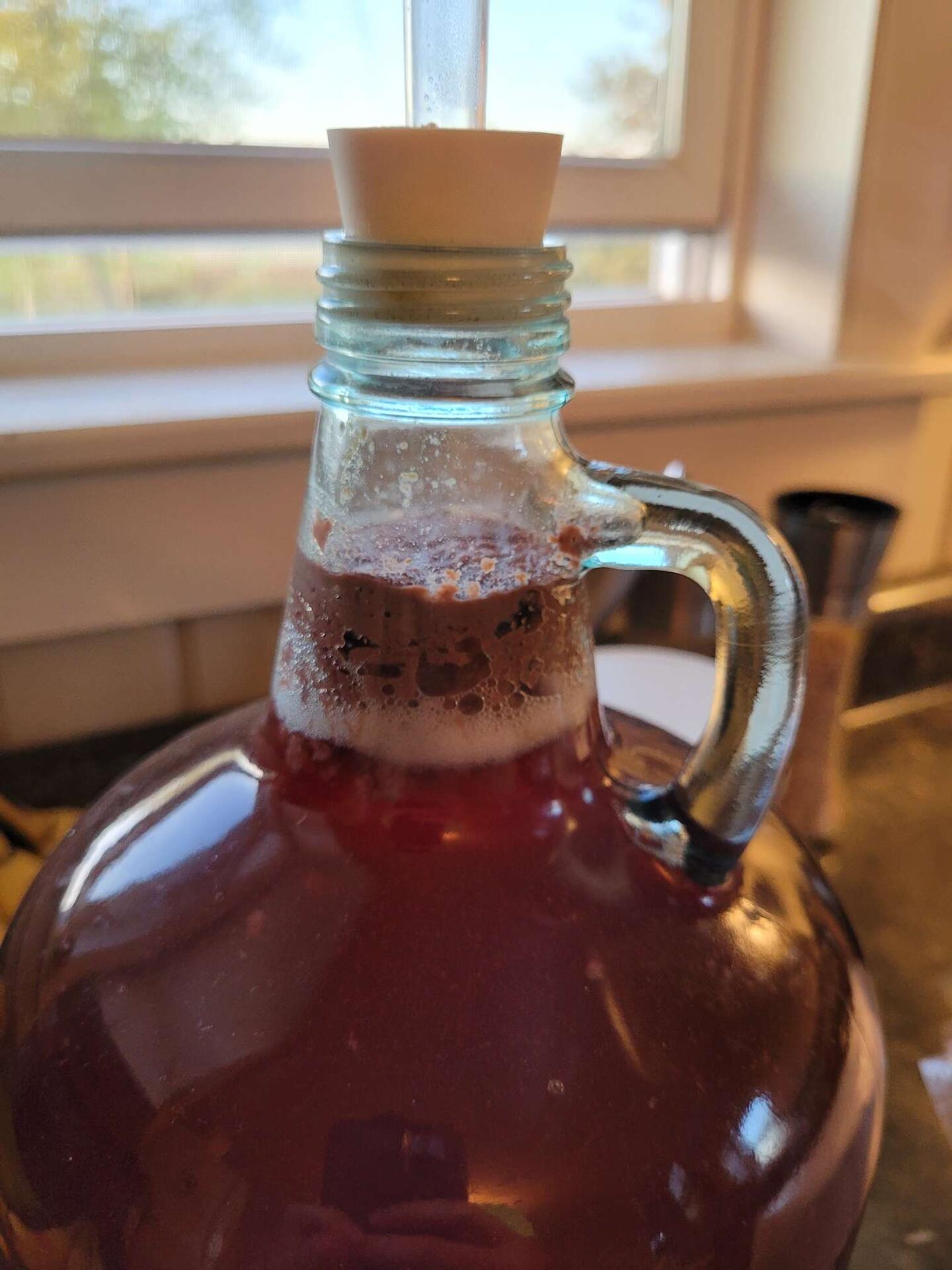
The stuff sunk overnight, thanks nostr:nprofile1qqs0hz0937pcklt3d2yrqr4p7ffellmcwe42zys7cyyk3d43pfyc72qpz4mhxue69uhhyetvv9ujuerpd46hxtnfduhsz9thwden5te0dehhxarj9ehhsarj9ejx2a30qy88wumn8ghj7mn0wvhxcmmv9uunfp48 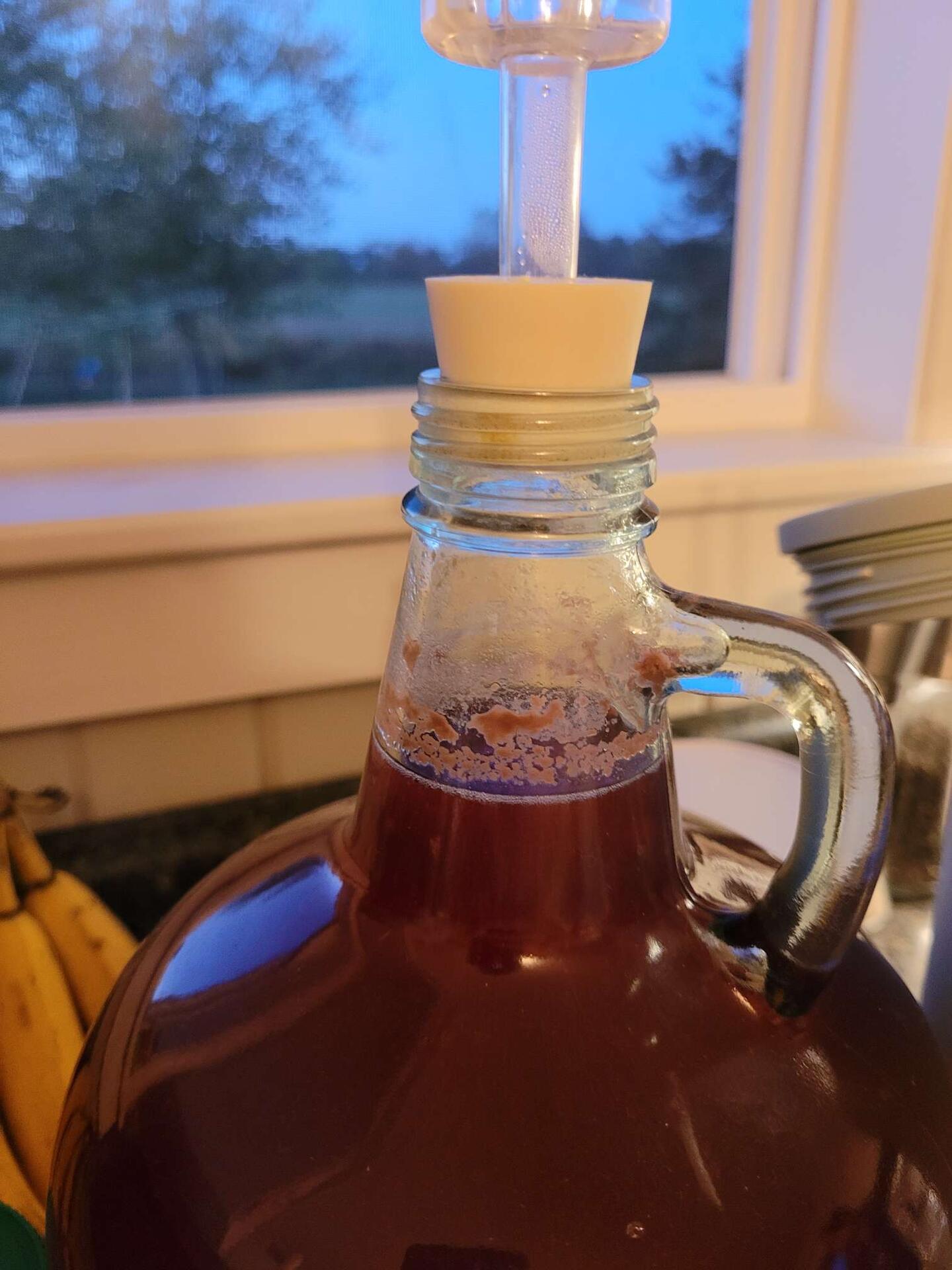 #mead
#mead
Discussion

Your welcome, when you come to rack it if you like it bright aka less cloudy cool temperature and high pressure days help. Its not as essential as letting it settle overtime but you will notice less sediment overall in the liquid.
So fall is mead making season?
Can't say for sure, but it's pretty much when you want as honey doesn't start automatically fermenting due to the high sugar content. I have made some mead but I make more cider and wine its all the same principles. With wine and cider you make the juice now, ferment it, rack it at some point and then typically the late winter/spring temps are warm up and it matures by malolactic fermentation in those mild temps.
Mead has different esters and compounds but there are variables between apples you get way more tannin out of a cider apple than an eating variety for example. As long as its fermenting with yeast then maturing your going to get to an acceptable product most of the time.
That being said its an art and people do things differently to impart different flavours to things, for example the winemaker I know who keeps his wine on the lees(sediment) for over a year.