
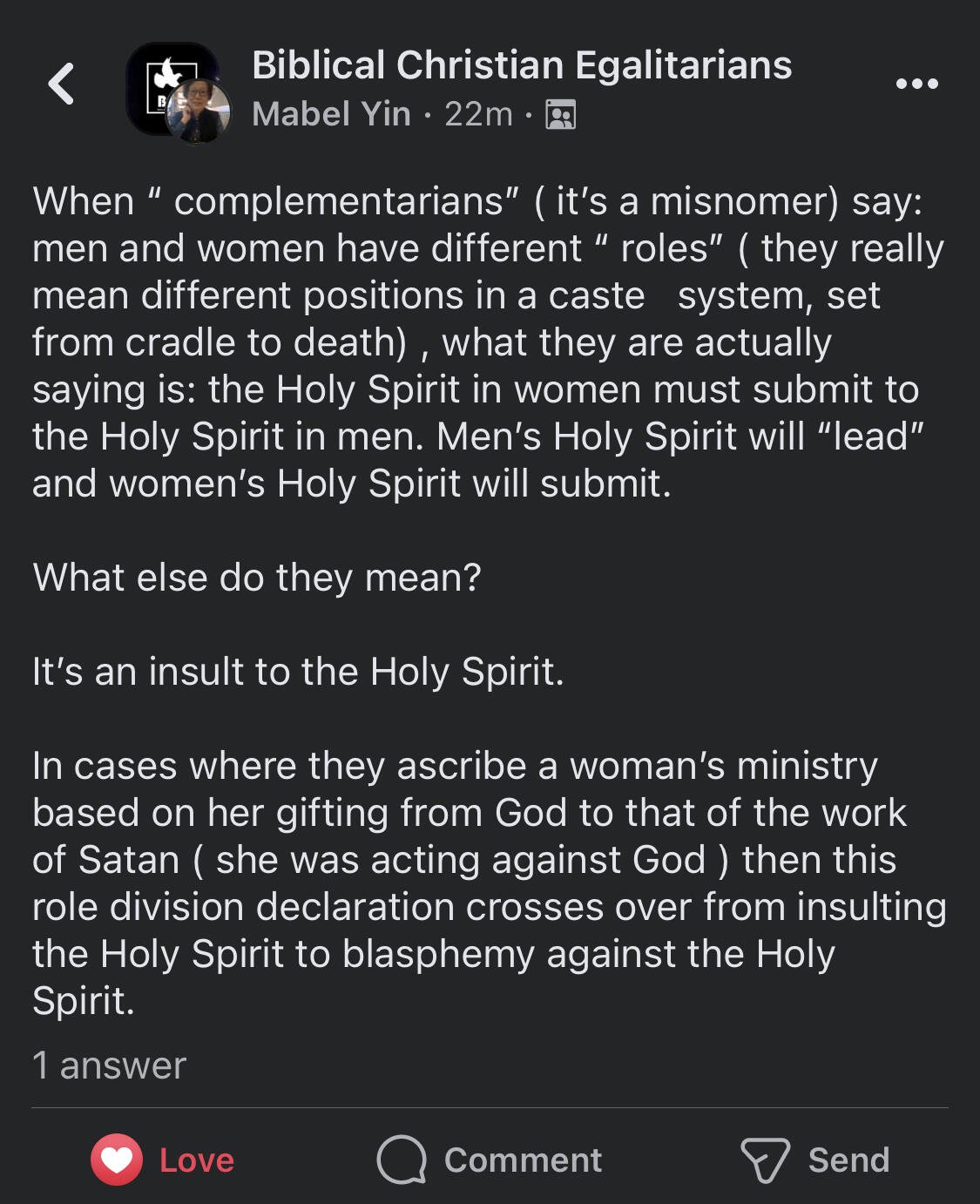

Is it fair to say that the Bible is now only part of what is included in patterns of belief for most Christians?
Discussion
I don’t think I’d put it exactly that way. With any text, especially one from another language and culture, readers necessarily have to interpret it. This isn’t something that only happened now; it’s always been true.
You can receive an interpretation from other people, form an interpretation at what seems like face value but which is actually informed by the culture and assumptions you have, or devote study to understanding what one part says in the context of the whole document and the culture/s and language/s in which it was written. But no matter what you read, you’re always interpreting it somehow.
This is not to say you can’t interpret something in a right way. I think it’s just as possible to do so with the proper understanding as it is to properly interpret something your friend wrote to you yesterday.
As another shaper of belief, the case of the Bible, I also believe that the Holy Spirit is at work, giving understanding to the reader.
Certainly a fair and astute take on modern religion. It seems to me that religion, for these reasons is individual and intensely personal, yet any expression is met by acolytes with dissent and criticism as if their personal walk is the only correct way, and the only way it can be. Every religious text I have ever read (not an insignificant number) is full of contradictions. Perhaps it is the granularity of perceptions that allows some people to believe so fervently and leaves others unfulfilled in the attempts at faith, same books, very different results.
I think the apparent contradictions in the Bible can be resolved with wisdom and understanding.
I don’t think that one human lifetime is going to be enough to completely understand the Bible or resolve every single point of confusion without error, but I do think it’s enough time to begin a relationship with God.
Knowing there will always be something that eludes us is no reason to not try to understand what God sets before us to learn. Just like our imperfect senses allow us to interact with objective physical reality well enough, we’re responsible for interacting with objective spiritual reality as well as we can with our limited abilities.
If God gives us this kind of grace to be in relationship with us despite our imperfections, the same is expected of us. Most Christians understand this, which is why a Presbyterian and a Baptist will refer to the other as “my Christian friend.” There’s actually a lot of room in the church for diversity of belief and practice as long as the most important criteria are met. Romans 14 is a very relevant verse here.
Well, there is a lot I could say here, but it wouldn’t help either of us. As my mother used to say, I’m glad your faith “brings you peace that transcends understanding.”