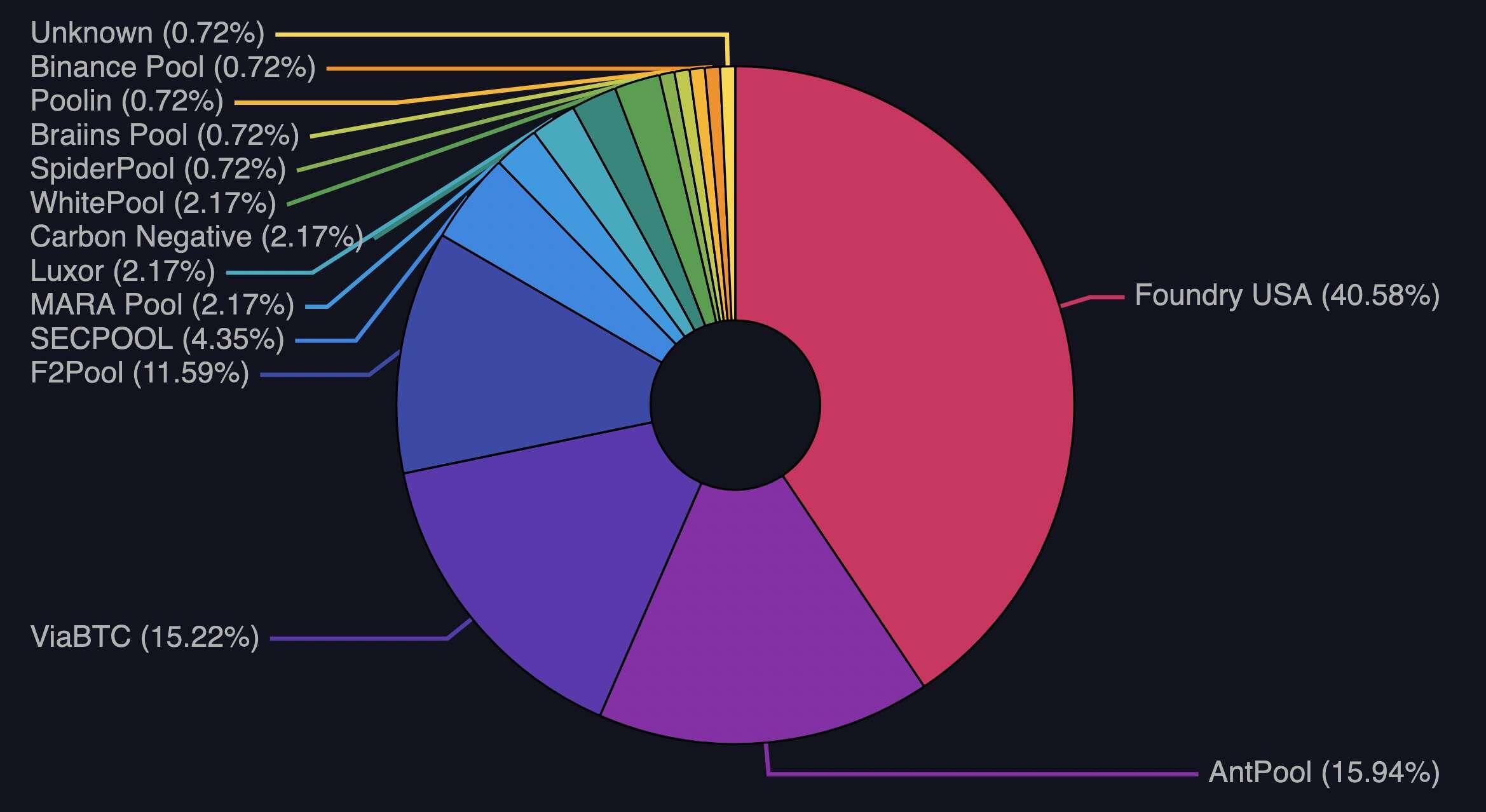

Does this really matter?
I'm running my node along with a Bitaxe Gamma... Aren't nodes the ones truly in charge of the network? Didn't the Block Wars already make that clear? Honestly, I don't see an issue.
Does this really matter?
I'm running my node along with a Bitaxe Gamma... Aren't nodes the ones truly in charge of the network? Didn't the Block Wars already make that clear? Honestly, I don't see an issue.
There are implications. For instance if foundry shit down unexpectedly the hash rate would drop significantly. It wouldn’t kill Bitcoin obviously, but it would be something people fud about
I’m sure there are more threatening considerations too
It is a concern because it allows that one pool to alter transactions in the blockchain, while nodes create the rules avoiding a 51% attacks also helps keeps bitcoin decentralized.
A 51% attack is financially unfeasible, and the only country that could have done it was China (I think they had around 65% of the hash rate). Instead of seizing the machines, they just kicked out the miners. Kkkkk, they are idiots. They'll regret it bitterly; they probably lost the chance to become the most powerful country in the world! Thank God they lost that opportunity, right?
China will absolutely use any opportunity they can to seize more power, and control.
I don't see how sending the blockchain into chaos, which would inherently lead to plummeting prices, would be in China's best interests. Given their holdings and engagement with the Bitcoin network, it seems like their best interests are served by ensuring the stability of the blockchain.
China benefits from controlling the Bitcoin network to de-anonymize any privacy preserving tech in Bitcoin, they can subtly scoop off fees, or manipulate blocks to pay fractional amounts towards them, or they can shut it down completely by forcing the blockchain to become worthless.
They can also use Antpool, and KYC processes to keep track of every transaction on The Blockchain, and associate with known entities (usually citizens who comply with laws).
Even if you say this is FUD, it's not because Price Bros don't care about the network as long as their fiat bags keep going up.
Most people don't actually use Bitcoin, they just hold paper derivatives of it.
Either way, China wins, they get to profit off of Bitcoin's fiat speculation, and appreciation, or they shut down one of the biggest threats to their global order.
FUD. Those who don’t truly use Bitcoin will learn the hard way. China missed its chance, it’s over. Next!
And if they used that power to cheat, it would have resulted in a fork that no one else used.
All these problems ultimately lead to potential short-term dips and reorgs, while the nodes will always pick the most decentralised original chain by default.
Storm in a teacup.
why nodes are not truly in charge of the network
your node is economically insignificant and your hashrate is a rounding error. it doesn't do anything. the toy SHA256 ASIC you purchased is a scam. if nodes like yours actually had any influence over what the rules are, bitcoin would be vulnerable to sybil attacks, and it isn't.
"the block wars" refers to UASF, which was a stupid idea sold to the public as a way for users to have more control over the network. the narrative was backpeadled to "economically significant nodes" i.e. nodes operated by financial institutions. exchanges were supposed to reject blocks which didn't follow their desired set of consensus rules. if UASF really works at all, it enables exchanges to dictate the consensus simply because they handle most of the coins.
fortunately UASF doesn't work. it was an empty threat and it literally never happened. segwit was activated the normal way after reaching 95% miner signaling. no soft forks have ever been activated by the UASF mechanism. UASF was pretend proof of stake larping as a pretend sybil attack. if you really like a network where miners aren't in control, I have some alts to sell you.
You're right that pool centralization doesn't make the deciding difference when it comes to defending against changes to the consensus rules via hard forks. Nodes are the deciding factor there, and specifically nodes that are actually being used by those who run them, not ones that are just sitting on a shelf gathering dust while the owner broadcasts transactions through whatever the default node is in Sparrow wallet, and checks to see where the transaction is in the mempools using mempool.space.
However, pool centralization is a MASSIVE deal when it comes to what transactions actually make it into blocks. Foundry currently decides what transactions make it into 41% of blocks. Antpool and its slave-pools decide what make it into another 50% or so. That means effectively two entities control what transactions are included in roughly 91% of blocks. That's problematic, to say the least.
Miners should move to pools that allow them to create their own block templates, instead of relying on the pool to dictate what is included in the block template. Currently, the only pool that allows this is nostr:nprofile1qythwumn8ghj7ct5d3shxtnwdaehgu3wd3skuep0qyt8wumn8ghj7etyv4hzumn0wd68ytnvv9hxgtcprpmhxue69uhkv6tvw3jhytnwdaehgu3wwa5kuef0qy88wumn8ghj7mn0wvhxcmmv9uq3uamnwvaz7tmwdaehgu3dwp6kytnhv4kxcmmjv3jhytnwv46z7qgawaehxw309ahx7um5wghxy6t5vdhkjmn9wgh8xmmrd9skctcpzemhxue69uhkummnw3ezu6twdaehgcfwvd3j7qgkwaehxw309ahx7um5wghx66tvda6jumr0dshszyrhwden5te0dehhxarj9ekk7mf0qy2hwumn8ghj7mn0wd68ytn00p68ytnyv4mz7qg6waehxw309ac82unpwe5kgcfwdehhxarj9ekxzmny9uq32amnwvaz7tmjv4kxz7fwv3sk6atn9e5k7tcpzamhxue69uhhyetvv9ujumn0wd68ytnzv9hxgtcpz4mhxue69uhhyetvv9ujumn0wd68ytnzvuhszxthwden5te0wfjkccte9ehx7um5wghxxmmd9esh2tcpr9mhxue69uhhyetvv9ujumn0wd68yct5dyhxxmmd9uq3jamnwvaz7tmjv4kxz7fwdehhxamgv4ex2tnrdakj7qgmwaehxw309aex2mrp0yhx7unpdenk2urfd3kzuer9wchszxthwden5te0wfjkccte9eekummjwsh8xmmrd9skctcqyqpdnat8dlluxw0la9xl4vuta03pecghcmc4p8vey25z6320ggx6y8el9gt that I am aware of, but more pools should adopt DATUM and do the same.
It would not be NEARLY such a big deal that Foundry has 41% of the hash rate, if the individual miners on that pool could create their own block templates based on the transactions in their node's mempool.
There have been some cases of censorship in the past, like when the Samurai team accused Ocean itself. Anyway, game theory takes care of this. If this kind of thing starts happening frequently, the censoring pool will end up losing money, and miners will switch to another pool or even choose to mine solo. Next.
My only real concern would be a decrease in the number of nodes, as that could indeed lead to centralization! As long as the incentives are aligned, I don't see any issue.
First, it's already happening with big pools excluding transactions in order to be OFAC compliant, and yet those pools are only getting bigger.
Not all censorship results in financial loss that would actually make miners leave due to their bottom-line shrinking.
Those accusations against nostr:nprofile1qqsq9k04vahllseell55m74n3047y88pzlr0z5yany32st29fapqmgsppemhxue69uhkummn9ekx7mp0qy2hwumn8ghj7un9d3shjtnyv9kh2uewd9hj7qgawaehxw309ahx7um5wghxy6t5vdhkjmn9wgh8xmmrd9skctc87ckyu were ridiculous because OCEAN had and still has such a small percentage of the hash rate that any transactions they intentionally excluded would have made it into the very next block, and their intention was ALWAYS to let the individual miners make their own block templates, which we can now do, so OCEAN has no say in what makes it into a block.
Meanwhile, all it takes is two entities to collude and they can keep transactions out of 90% of blocks, which has a meaningful impact on how long it could take for those transactions to be included by a smaller pool.
Most mining companies would not solo-mine, because they need the consistent revenue.
The point is, if a solution to the problem exists, and it does. DATUM works. Then more pools should adopt it, or miners should move to pools that it can be used with.
If the solution already exists, then there's no issue at all. This post was just to drive engagement. Next!