Replying to Avatar Juraj

This is a statist mindset. For us who believe in Declaration of independence of cyberspace, this looks very different. European union overreached to the sovereign extra-territory of the internet and sanctioning all the gangsters that put their nose where it does not belong is fun.

State sanctioning gangsters of other states is very nice popcorn level.

No, European regulators have no authority regulating anything on the internet and if they try, we will go around it.

They should fight, sanction each other and be generally unpleasant towards each other. Waiting and enjoying the reaction.

Bitcoin and Nostr were made to realize this independence, an infinite space for the free mind.

----

Original post on the bird app by Arnaud Bertrand that I react to above:

This is a huge escalation. For the first time ever the US started sanctioning former senior EU officials, namely former European Commissioner Thierry Breton.

If anyone doubted there was a Euro-US split going on, this is yet another hostile action by the US that makes it loud and clear.

The official reason is, as expected, completely Orwellian. They sanction Breton because of his involvement in the Digital Services Act (DSA), which they claim was "extraterritorial legislation" even though it was designed to regulate content on European soil, viewed by European users.

You can perfectly disagree with the DSA for plenty of reasons. But the fact is that it was policing content shown in Europe to Europeans (wherever the content may have come from).

What the Americans are doing here however - sanctioning former EU officials for drafting EU legislation in Europe aimed at Europeans - is textbook extraterritoriality. Hence the "Orwellian" nature of this move by the US: accusing others of precisely what you're doing yourself.

Americans say this is all about "free speech", a narrative which a frightening amount of people seem to believe. When the truth is the exact opposite: this move is about ensuring American tech platforms remain the unchallenged gatekeepers of Europe's information space, free from any oversight by Europeans themselves.

And, case in point, the very fact that so many people believe this "free speech" narrative is proof in and of itself of just how effective these platforms are at shaping narratives.

For the record I'm not arguing in the least that the DSA was a good piece of legislation or that Thierry Breton is some sort of tragic hero here. What I am arguing in favor of, as I consistently do, is sovereignty. I heavily dislike the EU in its present form precisely because they systematically kowtow to the US at the expense of European interests.

That's a logical error I see way too many people make: they hate the EU for the same reasons I do and then cheer hostile actions by the US because, hey, who doesn't like to see an institution one hates under attack? But that's completely incoherent: you can't cheer the master punishing the servant if your complaint was the servitude in the first place....

Now it'll be interesting to see how the EU responds. If one cares about European sovereignty, this is not a precedent that can go unanswered, otherwise it's a very slippery slope: every time Europe passes legislation the US dislikes, the officials responsible can expect to be sanctioned.

If the EU doesn't do anything to respond forcefully it's an institutional message they send to all their rank and file: "don't do anything to anger the Americans because we won't have your back."

Sadly, I wouldn't hold my breath. The most we're likely to get is a strongly worded statement, and even that would be surprising. Which is precisely the problem: those who despise the EU for bending the knee to Washington are probably about to watch them bend the knee once more. There's nothing to applaud here.

It is a matter of time that both nation state become aware of nothing from what was working before in their realities fit in the actual and future framework in cyberspace.

The later they become aware of it the more power and influence they will lose.

And that might come from two approaches: either more surveillance and violence monopoly execution or implemention through trauma of these new paradigm withing the structures that work today even if that involves that nation state diminish radically in size.

Reply to this note

Please Login to reply.

Discussion

Unfortunately, they have found that it is working quite well.

GDPR, cookie banners, VAT enforcement, reporting requirements, content filtering, copyright enforcement, KYC , age verification, app attestation, ...

They are all quite successful but for a very small fringe group that give up a lot to keep their independence.

The group is growing, but it doesn't warrant even a footnote in their evil plans. Let's keep it that way, we want to grow as long as possible unnoticed.

I think partly hackers are to blame. Their leftist hate for corporations and their surveillance led them to help the authoritarians in governments. For example GDPR got significant contributions from German, French and other European hacker organizations.

(I would be interested in nostr:npub1f49twdlzlw667r74jz6t06xxlemd8gp2j7g77l76easpl8jsltvqvlzpez , nostr:npub16lcw8ytugeh3ug3na93yl0tdf0gnjtduljhn2a852atf6jtvkucs7pruje and few other og hackers' opinion on this point)

And nostr:npub12rv5lskctqxxs2c8rf2zlzc7xx3qpvzs3w4etgemauy9thegr43sf485vg

Yeah, leftist hackers helped build the cage—but rightist crypto bros did the exact same thing from the other direction. Both chose tribal purity over actual freedom. Both preferred a small, ideologically correct community over neutral infrastructure that might include people they hate.

Authoritarians couldn't have asked for a better outcome: freedom tech divided against itself, forever marginal, proving to everyone else that alternatives don't work.

How exactly?

We have a saying that Bitcoin is for enemies. We won't and can't take them out.

I don't see this. Left used power of the state. Libertarians built tech that is for everyone.

In theory, yes - it's tech for everyone. In practice? Look at Bitcoin culture now. "Bitcoin is for enemies" turned into "have fun staying poor" and endless purity tests about who's a real bitcoiner over the last decade.

The infrastructure might be neutral, but the culture isn't. And culture determines who actually feels welcome to use the infrastructure. Bitcoin culture became tribal, exclusionary, and ideologically policed. Building neutral tech means nothing if the culture around it demands conformity.

A typical example of this would be groups like Jednadvacet who are not about freedom but primarly about spreading one particular ideology of bitcoin maximalism.

You, as one of the authors of Paralelní Polis, had a unique opportunity to build a culture in the Bitcoin community - to explore how we coordinate together across differences, to demonstrate what freedom actually looks like in practice. Build bridges.

Instead, we have tribalism and ideological gatekeeping. And people which supported authoritarians like Roman and embraced cronyism. Simply put, there is no morality or culture.

Everyone is different. As nostr:nprofile1qqsg86qcm7lve6jkkr64z4mt8lfe57jsu8vpty6r2qpk37sgtnxevjcpz4mhxue69uhk2er9dchxummnw3ezumrpdejqzrthwden5te0dehhxtnvdakqaktkhj says, there is no they. Only ourselves choosing the path we consider better. For me it is now the idea of removing fiat from our lives and minds, just removing and replacing with Bitcoin.

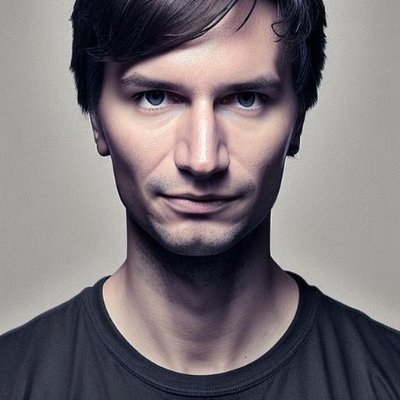
I think you read too much to it. Behind me is a painting by a Slovak artist. She is a bitcoiner, in her 60s. She uses Bitcoin, probably would have been leftist if she cared to express her political opinion. She hasn't even heard about Bitcoin maximalism.

Dvadsaťjeden - I like to troll them about maximalism, but to be fair, I've been to several meetups and they were helpful to everyone and didn't even mention shitcoins. Of course you can't expect Bitcoiners to cheer and help with Ethereum the same way you wouldn't go to a chess meetup to play go. But there has been no hostility, at least in Slovakia, don't know about the Czech or German.

> Behind me is a painting by a Slovak artist. She is a bitcoiner, in her 60s.

Well sure - just slap "bitcoin-only" on something and bitcoiners will go for it. In this way they're a perfect consumer demographic: books, art, butter, meat, whatever. As long as it signals tribal membership, critical thinking goes out the window.

21: The culture communicates hostility without needing to say it explicitly. When your entire community is built around inside jokes about "shitcoiners", you don't need to explicitly tell people they're not welcome - they already know. That's exclusion through cultural signals.

This is exactly why these technologies can't grow beyond their bubbles. You've locked people into echo chambers with the only acceptable perspective. Anyone curious but not already converted gets filtered out by the culture before they even encounter the tech.

Most people aren't like you or me - they don't have time to think deeply about these things. They navigate the world through social proof and trusted authorities. But it makes people vulnerable to social manipulation, even well-intentioned manipulation. Groups like Jednadvacet probably mean well, but they're providing a ready-made identity package: approved opinions, tribal markers, in-group boundaries.

For me, crypto was supposed to teach us to defend against this - to verify, not trust. To think independently. To resist tribal thinking. Instead, Bitcoin culture just swapped one orthodoxy for another. Central bank authorities became Bitcoin influencers. Government dogma became maximalist dogma. Same social dynamics... Most people still aren't thinking for themselves, they've just changed which tribe tells them what to believe.

They're free to choose their tribe.

Leftist - top down authoritarian control. GDPR/ MiCA or else...

Libertarian - here are the tools, join a tribe if you want. You can choose one of many, or start your own.

I don't see a problem. You can't force people into independent thinking. People are social creatures (at least most of them) and they will join tribes. Bitcoin provides the tribes, but people are free to do whatever they want.

I don't see a problem here. There are many people who think differently, even people going to dvadsatjeden meetups. Providing an option is not a problem.

Toxic maximalism is just annoying. Way different than authoritarian.

You're right that you can't force independent thinking. But you can build cultures that encourage it versus cultures that punish it. Bitcoin culture chose the latter, then acts surprised when it stays small and tribal.

Toxicity is just the first stage of authoritarianism. Right now everyone says "we don't block anyone, it's voluntary". But i'm sure when the masses arrive (if they ever do), most bitcoiners will want to vote out the "wrong" people.

You think smart bitcoiners won't allow capture, but it will come naturally through sheer numbers and social dynamics. The infrastructure might be neutral, but when the culture demands conformity, people will find ways to enforce it. First through social pressure, then through technical gatekeeping, eventually through explicit exclusion.

I would worry about this honestly more in Ethereum ecosystem. Bitcoin is super conservative and any blocking or exclusion is laughed out of the room. That's the positive part about Bitcoin culture. Ossification is bad in many aspects, but good in the fact that it's basically impossible to technically mandate censorship.

Bitcoin is also technically better in this than Ethereum (at least until the privacy upgrades, which I'm looking forward to). Zcash and Monero make it hard even now.

99.9% of Bitcoiners never went to 21 meetup.

You're reading too much into it.

BTW the artist does not advertise her affiliation to Bitcoin at all. She's working in her studio and saving in BTC. I wouldn't even know if she was not a friend. Most people are like this. They use it as a tool and couldn't care less about some imaginary culture war on some app.

You are probably right.

I just wanna point that If 99.9% of bitcoiners just want a savings or speculation tool and don't engage with the underlying philosophy, then Bitcoin culture gets defined by the loud, tribal 0.1% who do care. And that minority has made it increasingly hostile and exclusionary.

Yes. It's a tool and people are free to use it however they want. And it's a good thing.

0.1% has much less impact than people think if they read a small section of social media.

Most people will never get into contact with a toxic maxi. I think people usually overstate the impact. It's quite hard to find the entrance into this echo chamber.

And you have many people spreading Bitcoin among human rights activists, in Africa, in different communities, ...

I'm not talking about "toxic maxis" as some fringe minority you can just avoid. I'm talking about the entire current Bitcoin culture, where these people control the most important businesses, mining operations, media, and infrastructure around Bitcoin. That 0.1% you're dismissing control the whole network - or at least all the coordination layers that matter. They run the conferences, the media outlets, the major mining pools, the development funding. They define what's "legitimate" Bitcoin discourse.

You say most people will never encounter them, but that's only true if you never try to build anything, never participate in development discussions, never try to organize events. The moment you engage beyond just holding, you encounter the gatekeepers.

I think your view is distorted by who is loud.

Check there mining pools for example. Biggest pools are antpool and viabtc. Both are shitcoiners. 😊

Sadly I do find bitcoin culture (in general) to be not positive. I’ve been moving away from it to a community of artists, who are much more open minded than most bitcoiners I find.

And I agree it’s the small majority, but they are setting the tone. Is it possible to ignore this? Of course. But the crypto-anarchy roots have been co-opted into something else.

This also happened with the OG hackers. In the 90s we talked about fuck the man and all this and now these same people (I know) are working for defense contractors.

At this point, I think it’s much more a radical idea to go without money, like Mark Boyle, then to be an advocate of bitcoin.

I wish I had a more optimistic view. There are pockets of interesting developments and people still. But I’d rather go to a poetry meetup than a bitcoin one at this time.