

My comment was specifically about bridges and multi-platform clients. That's what I think doesn't work and is a waste of time. One-time migration tools make sense, but that's a little different story for me.
For example, Matrix protocol has a lot of bridges, but that hasn't helped with adoption much. Similarly, on Bluesky, there is Bridgy Fed to connect to Activity Pub, but I don't think that has had any major impact on growth either.
I feel like bridges like this are helping more the larger network become even more dominant, instead of helping smaller networks grow... so maybe it's counterproductive in some way.

Migration is definitely needed and it makes sense. I don't know anything about myspace-facebook, that sounds more like a one way migration. But thats very different from bridges and interop.

It's interesting how the creators of the *multi-platform* social client nostr:npub1plstrz6dhu8q4fq0e4rjpxe2fxe5x87y2w6xpm70gh9qh5tt66kqkgkx8j disappeared from Nostr. The last activity I see from the team is in August..
I am more and more convinced that bridging and connecting different protocols in the social sphere doesn't work very well.
Why?
Maintenance becomes exponential - Every protocol has its own update cycles and breaking changes. You're not building one client - you're building several. When one protocol changes, everything breaks.
Lowest common denominator - To work everywhere, bridges strip out what makes each protocol unique. Nostr's zaps, Mastodon's content warnings, Bluesky's feeds - all lost in translation. Users get a watered-down experience.
Identity doesn't translate - Nostr keypairs, ActivityPub domains, and AT Protocol DIDs are fundamentally incompatible. Bridges create confusing mapping layers instead of real unification.
Culture clash - Each protocol has its own norms and expectations. Bridges create an awkward middle ground where nobody feels at home.
a new browser built specifically for the decentralized web, with local nodes for IPFS and Swarm. Very nice! 👏
"What begins as progress can quietly become dependency"
"In the end, replicating human perception is hard, and it’s made harder when constrained to the limitations of display technology or printed images. There’s nothing wrong with tweaking the image when the automated algorithms make the wrong call."

If voluntary contracting and trade are fine, then we do agree—you're describing anarcho-capitalism. But most libertarian socialist and collectivist frameworks are obsessed with regulating economic arrangements and telling people what they can't do, even voluntarily... or at least that's my understanding.
If it's just about encouraging people in a certain direction without enforcement, then it's just an extension of ancap with different preferences. If not - what's the actual difference?

"Libertarian socialism" isn't actually anarchism if it requires preventing voluntary arrangements. You can't claim to oppose coercive institutions while simultaneously needing enforcement mechanisms to stop people from freely contracting with each other - whether that's wage labor, property rental, or hierarchical organization.
Real anarchy means accepting whatever emerges from genuinely voluntary interaction, even if you personally find those arrangements non-ideal. Otherwise you're just proposing a different bureaucracy.
I've never been a fan of Network State precisely because of what you write - it's an interesting book and a good food for thought, but I don't feel like it fundamentally changes something. Very tied to the whole "right-accelerationist" (e/acc) and technocratic, market-oriented view that lacks more human depth.
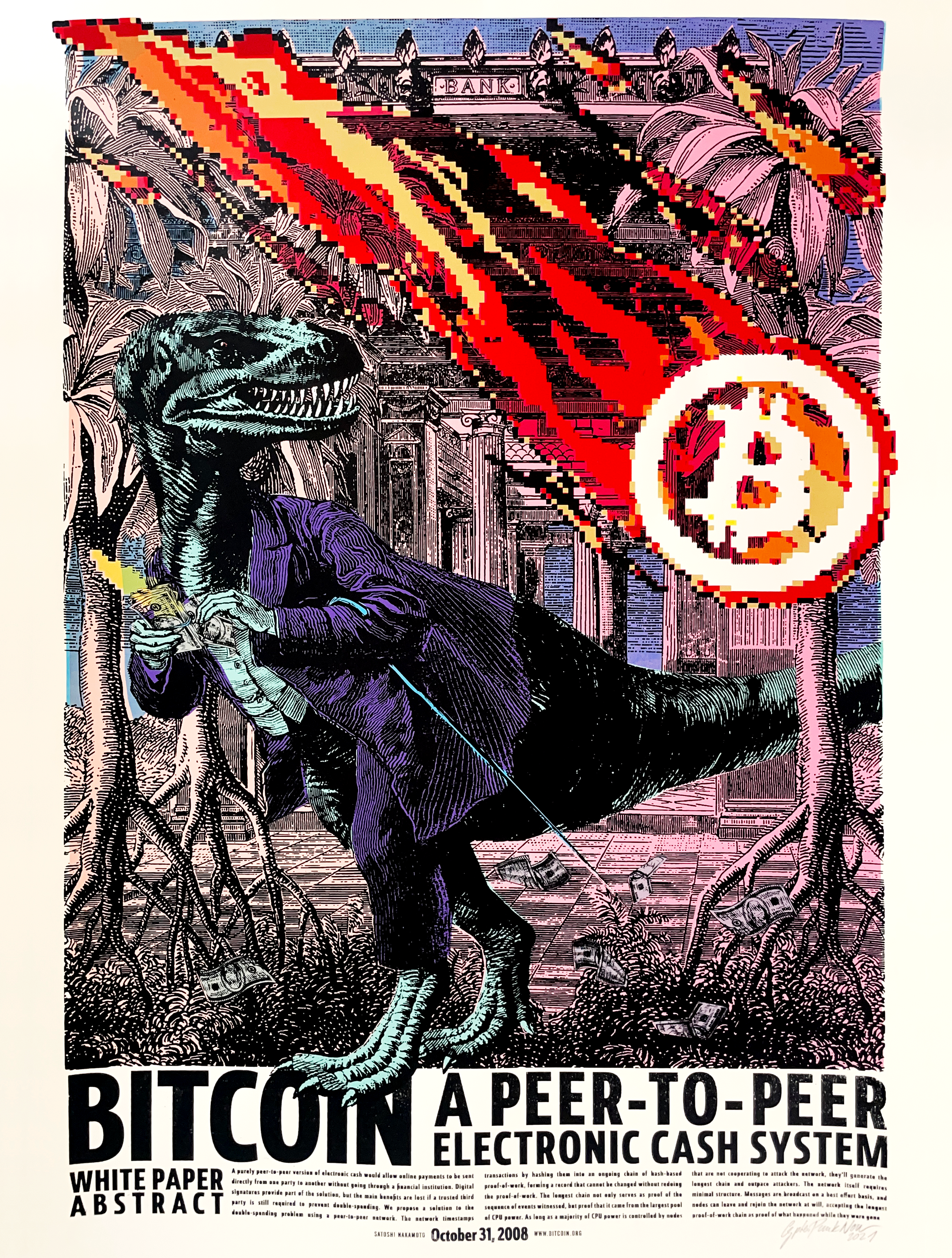
Yeah, there's not much useful things on Solana now, but Ethereum is very useful, especially if you don't want to use fiat money or trusted intermediaries like centralized exchanges. If you use banks, brokers, centralized exchanges, etc., Ethereum doesn't really matter.
I wish open-source would catch up with AC Infinity as soon as possible, because their app, including all the stuff like AI integration, is very nice
I'm curious to see how OpenGrowBox project will improve during 2026, roadmap looks very nice. Home Assistant is an ideal platform for building a smart growbox, I use it myself, playing with sensors is quite fun.
Absolutely. Thats why good advice is about understanding what suits someone else's needs and circumstances, not just projecting our own preferences onto them :)
ok well
when I see you write something about vanilla I probably won't think of writing a response saying I wouldn't recommend anyone to buy it because I don't like vanilla
> How many of the average eth users run a node?
Not much? Running a node makes sense mainly for power users like (dapp) developers or (solo) stakers
> I never really ran one for long it was such a hassle…
cmon. There is nothing particularly complicated about running eth node. 32GB RAM and 4TB SSD is nothing special today. If you want hassle, look at Solana
I've read 1/3 of "Farewell to Westphalia" so far, but I like it... It seems like the book defines something that I've always missed in crypto discourse (and especially in the bitcoin discourse), and that is the emphasis on how blockchain can transform human governance, and how to make nation states obsolete.
Compared to Network State, this sounds more anarchistic and questions the essence of the state itself (even the "network" one). But as I say, I haven't finished reading yet... But sounds very promising
One of my favorite Ethereum projects is https://trueblocks.io/, which provides a user-friendly and private way to access transactions and data, especially useful if you have your own node.
It's a big disappointment to me how almost no one in the eth ecosystem cares about the dependency on etherscan.io and other centralized data providers.
“Time is a drug. Too much of it kills you.”
― Terry Pratchett, Small Gods

There are two options:
1) either accept centralization and that it will not be censorship-resistant and have a few large centralized providers
or 2) go the P2P route (IPFS, Filecoin, Arweave, etc.) and try to be fully censorship-resistant
Nostr seems to not want to go either route, pretending to be "censorship-resistant" but not really

I like the protocol. I'd want to build on it and push it forward... but right now it feels like forcing myself to be naive again. I'd spend months building something that might not grow, or worse - watch it grow into something centralized. I don't see how I can be useful to Nostr right now.
Yes, there are other social networks... so I'll be everywhere and stop endorsing any specific one
2.5 years ago I left X and swapped it for Bluesky, and the urge to go back to X completely disappeared, total ignorance... but since I switched to Nostr I have a constant urge to lurk on X or Bluesky again, because Nostr offers almost no interesting content regarding my interests and hobbies - except for digital gold, market-anarchism and conspiracy theories
I think I'll pack up in a few weeks and move on again... :/
Leaving X or Bluesky to join Nostr is like quitting McDonald's to eat at a vegan co-op that only serves one dish and everyone agrees it's the best dish ever invented.

Bitcoin work in commerce, I use it myself sometimes... it just doesn't work as a tool for adoption.
How and why is bitcoin useful is a good question.
I think it's similarly useful as a Cypherpunk Manifesto, as a historical example of a movement that wanted to achieve something. Satoshi's vision and the first few years of Bitcoin are undoubtedly very inspiring.
Z-Library is awesome project. All ebooks you want, simple UI, decentralized frontend, IPFS, resisting governments around the world... I recommend! #ebooks #piracy
https://z-lib.fm / https://z-library.sk/ / https://1lib.sk/
"Your gateway to knowledge and culture. Accessible for everyone."

Implementing ENS would be nice - but that would ideally require a separate NIP, because through NIP-05 it would be dependent on one centralized gateway like eth.xyz. A custom NIP would allow you to use your own Ethereum node or have several of those gateways set up for redundancy at least
NIP-05 is weird... It's supposed to be a mapping to a DNS identifier, so it sounds logical to use DNS for that - but no, you have to use HTTP/S and a well-known file. I guess I understand that it's more universal through well-known, but it still seems weird to me
Or am I missing something?
Satoshi wrote: "I'm sure that in 20 years (2030) there will either be very large transaction volume or no volume."
We're 15 years in. Fees cover 0.5-1% of security budget. That's "no volume" territory. 5 years left. How exactly do we get from "no volume" to "very large transaction volume" on Bitcoin L1?
Because Lightning Network, nostr:npub17fzkepv3q2szsvdefmws9znhhpzx9kvhgl2p3jqk9tm5z6sjalvsg49yxv , and every off-chain solution is actively reducing on-chain volume - the exact opposite of what Satoshi said we need.
Please explain it to me 🤔

The Security Budget issue and how the Bitcoin community approaches it is a mystery to me.
When I started with Bitcoin, whenever I didn't understand something, there was always some logical explanation. I just had to re-read the whitepaper, study the code, understand the Austrian school of economics, etc. Bitcoin taught me that "code is law" and predictability is its greatest strength.
But then I came across this Security Budget problem. Bitcoin's security costs billions annually, paid through block subsidy. The code says this subsidy goes to zero. The plan is fees will replace it. But after 15 years, fees cover only 0.5-1% of the security budget.
I went looking for the explanation. I re-read the whitepaper - nothing. I studied the economics - the math doesn't work. I asked the community - and encountered something I'd never seen before: pure cognitive dissonance and zero logical answers.
"You're spreading FUD."
"Security budget doesn't exist."
"Miners aren't CREATING coins, they're RELEASING them."
"That's not a problem at all."
This was the first really serious cognitive dissonance I encountered in the Bitcoin community. It forced me to think: do I want to stay in a community where identity matters more than truth?

That "smooth transition to fee-based security"? It's not happening. After 15 years, fees still only cover 0.5-1% of the security budget. Nobody actually wants to use Bitcoin blockspace. The transition isn't smooth, it's imaginary.
Isn't this a beautiful irony? A system designed to eliminate trust in institutions requires you to trust that future Bitcoin users will somehow solve a problem that current Bitcoin users refuse to acknowledge.
The uncomfortable truth: Bitcoin surviving only thanks to inflation of its money supply
Without printing new bitcoins, it would have no security
You, as one of the authors of Paralelní Polis, had a unique opportunity to build a culture in the Bitcoin community - to explore how we coordinate together across differences, to demonstrate what freedom actually looks like in practice. Build bridges.
Instead, we have tribalism and ideological gatekeeping. And people which supported authoritarians like Roman and embraced cronyism. Simply put, there is no morality or culture.
Sixteen years of Bitcoin. Imagine what we could have built by now—a whole generation raised thinking about decentralized finance, cooperative economics, tools for human flourishing outside state and corporate control.
Instead we got another religion. Another in-group/out-group dynamic. Another vehicle for greed wearing the costume of revolution. The promise died somewhere between "be your own bank" and "have fun staying poor"
If you think people will suddenly care about censorship-resistance when they arrive on Nostr, you're delusional. They don't care now, they won't care then, and the protocol can't make them care.
Culture eats architecture for breakfast.

Love you work and designs nostr:npub1j0ht2m9jgs6mccyvkffd2dlnfusmqfx9mjlwg6fsmfwxm9rfuwdq40w6rf, please continue!
Happy christmas to 🇸🇰