
Discussion

good ?

apple tho?

Yes!! Been looking for what to read next 🤝
Bless 🫡

Added to the reading list

The author has a more recent, very similar looking book. I've read neither but he explains the differences here https://www.scotthyoung.com/blog/2024/05/14/ultralearning-vs-get-better-at-anything/

Continued learning is a key to success. Knowledge is power. ✨

note14q73kmf2kza9kmtwh0a9umsuvpxrwuua4l2a2f34qxwypv9qt0vsm7726z


Hi nostr:npub1sg6plzptd64u62a878hep2kev88swjh3tw00gjsfl8f237lmu63q0uf63m sir :)
I’m Sid soni, from india.
Requesting you to Please read my DMs 🙏 I need your help ❤️🩹
thank you 🙇🏻

In AI times, this is fundamental 💜🫂

added to holiday wishlist.

It's an interesting read for those of us who seek new and better ways to learn. I recommend it 100%.

Listened to the highlights of this book on the headway app. It infused a dose of motivation into me. Though, I am unsure if it was sufficiently good to do just as summary.
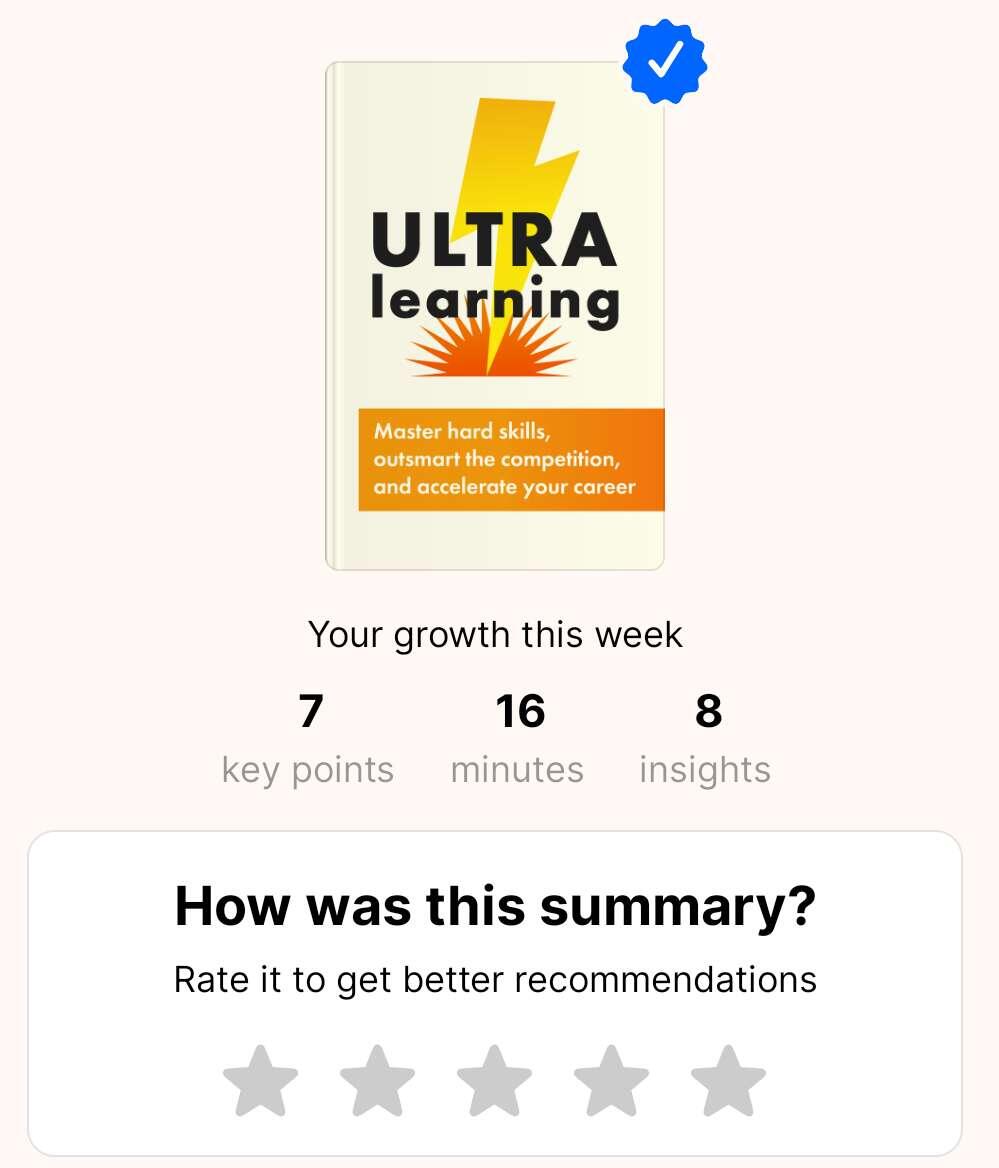
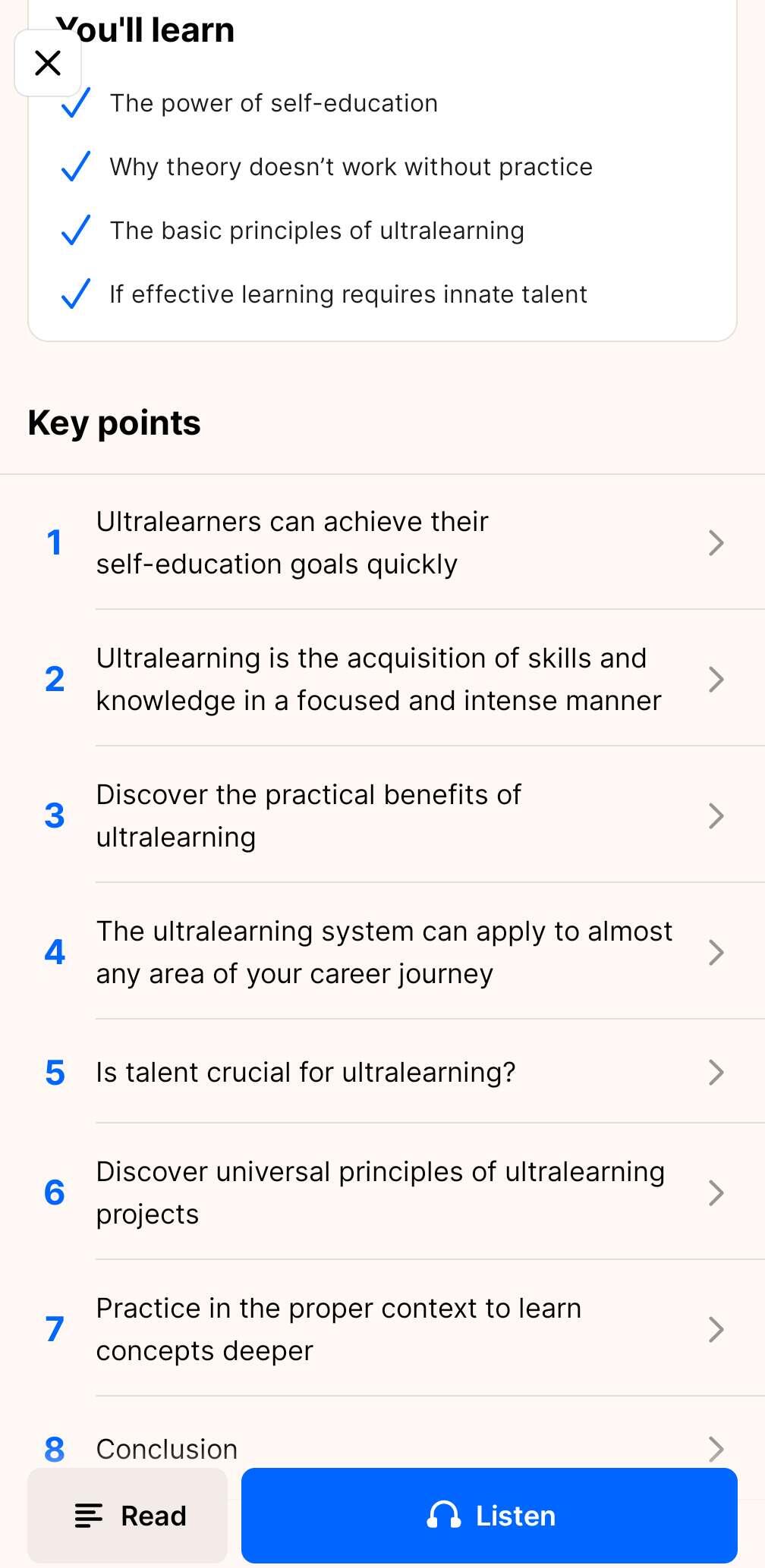

Summary? Unfortunately not on Blinkist…
Thank you for sharing Jack! Do you have any recommendation books to learn blockchain & decentralization for developers. Currently I am just browsing nostr and its client app’s

Mastering Bitcoin: Programming the Open Blockchain
Book by Andreas Antonopoulos
Building bitcoin in Rust
Written by
Lukáš Hozda

Sounds interesting, ill give it a read
Ai summary
“Ultralearning: Master Hard Skills, Outsmart the Competition, and Accelerate Your Career” by Scott Young provides a framework for acquiring skills quickly and effectively. The book focuses on intense, self-directed learning projects that lead to expertise in a subject or skill.
Key Principles of Ultralearning:
1. Meta-Learning (Learning How to Learn):
• Research your subject and identify the most effective learning methods.
• Create a learning map to outline what to study and prioritize key topics.
2. Focus:
• Cultivate deep, undistracted focus during your learning sessions.
• Set specific times and goals to maximize productivity.
3. Directness:
• Practice skills in the real-world context where they will be applied.
• Avoid over-reliance on theory or abstract exercises.
4. Drill:
• Break complex skills into smaller components and focus on improving the weakest areas.
• Use targeted drills to address specific deficiencies.
5. Retrieval:
• Practice recalling information instead of passively reviewing it.
• Use active recall techniques like quizzes and flashcards.
6. Feedback:
• Seek constructive criticism and use it to adjust your approach.
• Embrace feedback loops for consistent improvement.
7. Retention:
• Regularly review material to reinforce long-term memory.
• Space out reviews over time using spaced repetition techniques.
8. Experimentation:
• Be willing to try different methods and strategies.
• Step outside your comfort zone to accelerate growth.
Application Examples:
• Scott Young’s personal projects include learning MIT’s four-year computer science curriculum in one year and becoming fluent in multiple languages through immersive learning.
Takeaways:
• Ultralearning is not easy, but it’s highly rewarding for those willing to put in the effort.
• Self-discipline, curiosity, and a willingness to tackle challenges are essential for success.
• The approach is adaptable to various goals, from career development to personal passions.
By applying these principles, you can systematically tackle ambitious learning projects and achieve mastery in less time.