I would say that you fundamentally don't understand what intellectual property means.
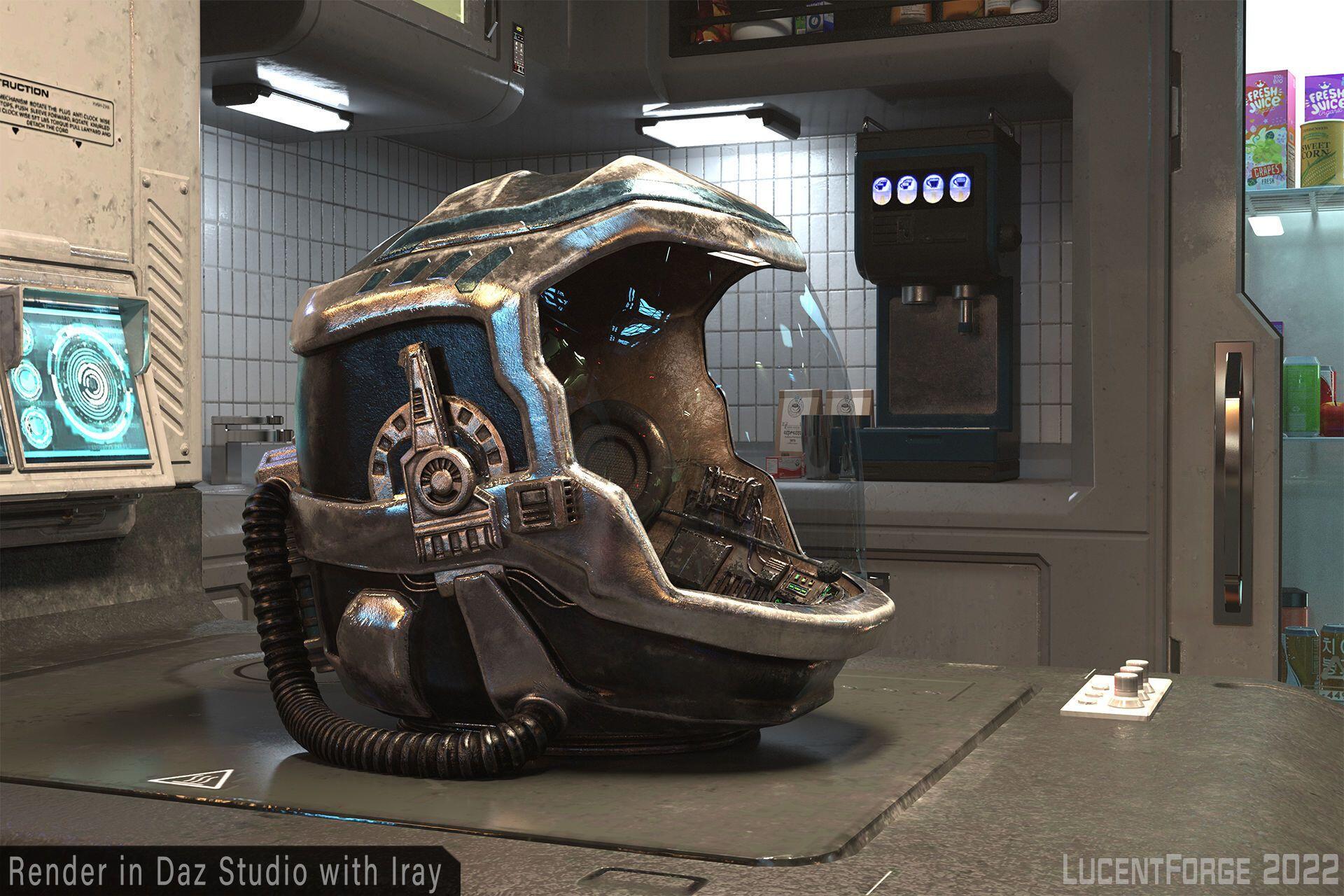
The 3D model that I have modeled is the intellectual property, just as a book or a music album is intellectual property. I will explain how it works.
For example, if you buy a book, it comes with a license to do what you want with that book, except for printing and selling it for profit. Same with the music album.
If you buy a 3D model, you either buy it at a cheap price with a standard license, which grants you full right to 3D print it for your private use. This however is not the same as a commercial license to produce and sell a product.
In regards to upholding intellectual property, that is a different matter. As a free market proponent I believe that reputation is the best arbiter in most cases. If I rip someone off, my reputation will suffer.
They are questioning the validity of imposing such a license
Imposing?
A license is a voluntary agreement between a seller and buyer. The type of license determines the price. A license to commersially sell an album will be much more expensive than a license to own your own copy of that album.
I am questioning individuals that don't believe in voluntarism.
You're trying to sell something that is not sellable to begin with because it is not a piece of property. It's a made up claim with no base.
You are evading the subject and making nonsensical claims.
How is a book or an album not sellable?
The information they contain isn't sellable. The objects are.
You are wasting my time.
Of course the CD information is sellable. You can literally print and sell CD's from that information.
However, if you don't have a commercial license, i.e. a deal with the IP owner to sell that product, but still decide to print and sell those albums, then you are operating on the fraudulent side, which in a free market results in a loss of reputation.
You keep mixing up stuff and framing things incorrectly, sadly. What you keep talking about is simply a claim on being the first one to bring forth a particular arrangement of information. Indeed, an author has that claim and that's why falsely claiming authorship is frowned upon and reputation lost. Absolutely nothing to do with anything we're talking about, still.
Intellectual property is that, and more.
It is the right to commercially produce the product you have developed.
Thread collapsed
Thread collapsed
Thread collapsed
When you say “isn’t sellable” do you mean “is immoral to sell”?
Seems like this may be what’s driving the disagreement.
I’d agree with nostr:npub1y02f89rpykzhqmrjjz99uwgyl9gh06sg0vpjmklu62rzxpx8mxps7zfvpl that it’s technically possible to exchange money for an object with 0s and 1s burned into it like a CD, or for that matter a promise to connect computers together and tickle each other’s wires just right so the recipient ends up with 1s and 0s in all the correct places.
You can buy and sell and pay for whatever you want if you please. What I'm saying is that I am not morally obliged to do so, and that's not an infringement of anybody's property rights.
Does this mean that before contracting with you I need to know whether you believe in the morality of the contract?
I would lie, since you'd be trying to con me...
Haha. Well help me out here. It feels like that undermines the possibility of contracting.
No, it just restricts the obligation to abide to agreements based on good will. Saying that you can "license" information is not one. It's like the Brooklyn bridge case. You're free to believe I can sell it to you and to pay me for it, and on top of it, promise that you won't resell it. But no sane people would take any part of that agreement seriously nor feel obliged by it.
Sorry, what is the Brooklyn bridge case?
How does this “no sane person” argument scale to people who actually have different moral beliefs than you about the contract you’re making? Give any contract example, someone will disagree on whether it’s actually binding. What do you do when they break it?
"Good will" and "if the common person finds it reasonable" are actual legal concepts derived from common law and custom. In case of doubt, sue me. The Brooklyn bridge case: https://en.m.wikipedia.org/wiki/George_C._Parker
Huh. What you’re thinking feels like exploring new territory for me.
Help me out with these questions.
- Do you think the existence of people who think it’s right to enforce IP means they are insane?
- If people exist who believe in enforcing IP and are sane exist, would this prove you wrong about whether such contracts should be enforced?
- How would you interpret losing the lawsuit?
- Do you believe that no contract can validly specify anything about future actions of an individual, or only future actions relating to the treatment of information learned?
I would totally lose the suit because the current legal system has created the figure of "intellectual property". It doesn't mean such thing actually exists or that enforcing such laws is moral. I understand all this, I know what world we live in. People are gullible and greedy, often both at the same time.
You may think I'm not answering your last question, especially. But I have, several times. You can agree to do whatever. It doesn't mean it makes sense to anybody else, and as a rule, I would not care. The issue with this specific fiction called "intellectual property" is that it affects everybody else, including me. And that's the line it cannot be allowed to cross.
“I will not sign” makes sense to me. “I will and I’ll break it” challenges me haha. I’ll review the thread to see which you’re on 🫂
Thread collapsed
Thread collapsed
Thread collapsed
Thread collapsed
Thread collapsed
Thread collapsed
Thread collapsed
Thread collapsed
Thread collapsed
Thread collapsed
Thread collapsed
That's not what I said though.
Intellectual property is the claim of a product developer to own the commercialization of that product.
If you develop a product and I want to sell your product to the market, we enter into a voluntary deal to accomplish that.
If I just start producing your product commercially without a deal with you, then I'm operating on the fraudulent (non-voluntary) side of things.
Nope, I wouldn't. Fraud would be for instance if I make a copy of your book and sell it misrepresenting myself as the author. I'd be lying to the buyer.
Thread collapsed
Sure, I don’t think I agree with the broader claims you’re making yet. But I do agree with the narrow one that selling info is technically possible.
RE: “If I just start producing your product commercially without a deal with you, then I'm operating on the fraudulent (non-voluntary) side of things.”
——This must be assuming there’s a contract between you and the other party - right? Like some valid way that you’ve told them you won’t use their work.
When we buy a cd, we are agreeing to buy the cd + the accompanying license that allows us full personal use of that CD, but not the right to commercially produce more of those CD's to sell. We can do whatever we want with the CD, but we have not bought a license to sell new copies of it.
Exactly where/how is that agreement made?
Because it varies by method, let’s say specifically picking up a CD at the local music store
Thread collapsed
Thread collapsed
Thread collapsed
Thread collapsed
Thread collapsed
Thread collapsed
Thread collapsed
Thread collapsed
Thread collapsed
People should probably do what they say they will do.
But to clarify, I’d suggest specifically discussing the case where a person claims IP, and you happen to have the information on your computer with no foul play involved (maybe let’s say they sold you their old computer but never wiped the drive)
You are actually conceding the case when you accept the lie that anyone can "own" information in the first place. If you admit that untruth, then your "innocent" computer user is guilty of possessing stolen merchandise.
Saying that you can enter an agreement to "own" information is like saying you can claim ownership and license away a cloud. It's not a matter of a gullible individual who "freely" accepts to enter such an agreement, because the initial claim affects the whole human species. And it must simply be rejected and ridiculed as the whacky, greedy idea it is.
I’d argue it’s not an agreement to “own” the information, rather to do or not do certain things in the future.
So in the example, there is obviously no agreement/obligation. And claiming IP doesn’t change that.
But are you nostr:npub1s277u5rww60te98w9umz6p7pjcxuus96cegdsf4y978qcqvu8jtq88dsym saying that one cannot choose to commit themselves to a future course of action?
I'm saying I have a bridge in Brooklyn I'd like to show to those who would enter such an agreement - because they've been duped to believe the "licenser" is morally correct and backed by the right to private property. If they didn't buy the idea that the conman passing as a "seller" actually owns the thing "sold", why would they?
Thread collapsed
Thread collapsed
Thread collapsed
Thread collapsed
Thread collapsed
Thread collapsed
Neither a book nor a CD are "intellectual property" because such thing does not exist. You can own the physical objects, not the information inscribed on them. The fact that I learn a song or a book you wrote by heart doesn't deprive you from it, yet now I "own" it too. You couldn't prevent me from memorizing them, either, which proves that it you didn't "own" them to begin with.
Also, I never said anything about "upholding" anything. You seem to be stuck with legal terms and constructs that have zero relevance in this discussion, which is ontological.
Again you are avoiding the subject.
A CD is intellectual property because you can produce an endless number of copies.
When you buy a CD, you have not entered into a voluntary contract with the artist to sell that product commersially. You have instead bought a license to own that product for personal use.
Same with buying a book. Owning a book does not give us the right to print that book and sell the copies on the market. We need to enter into a partnership with the product developer if we have commersial goals.
Thread collapsed
Thread collapsed