
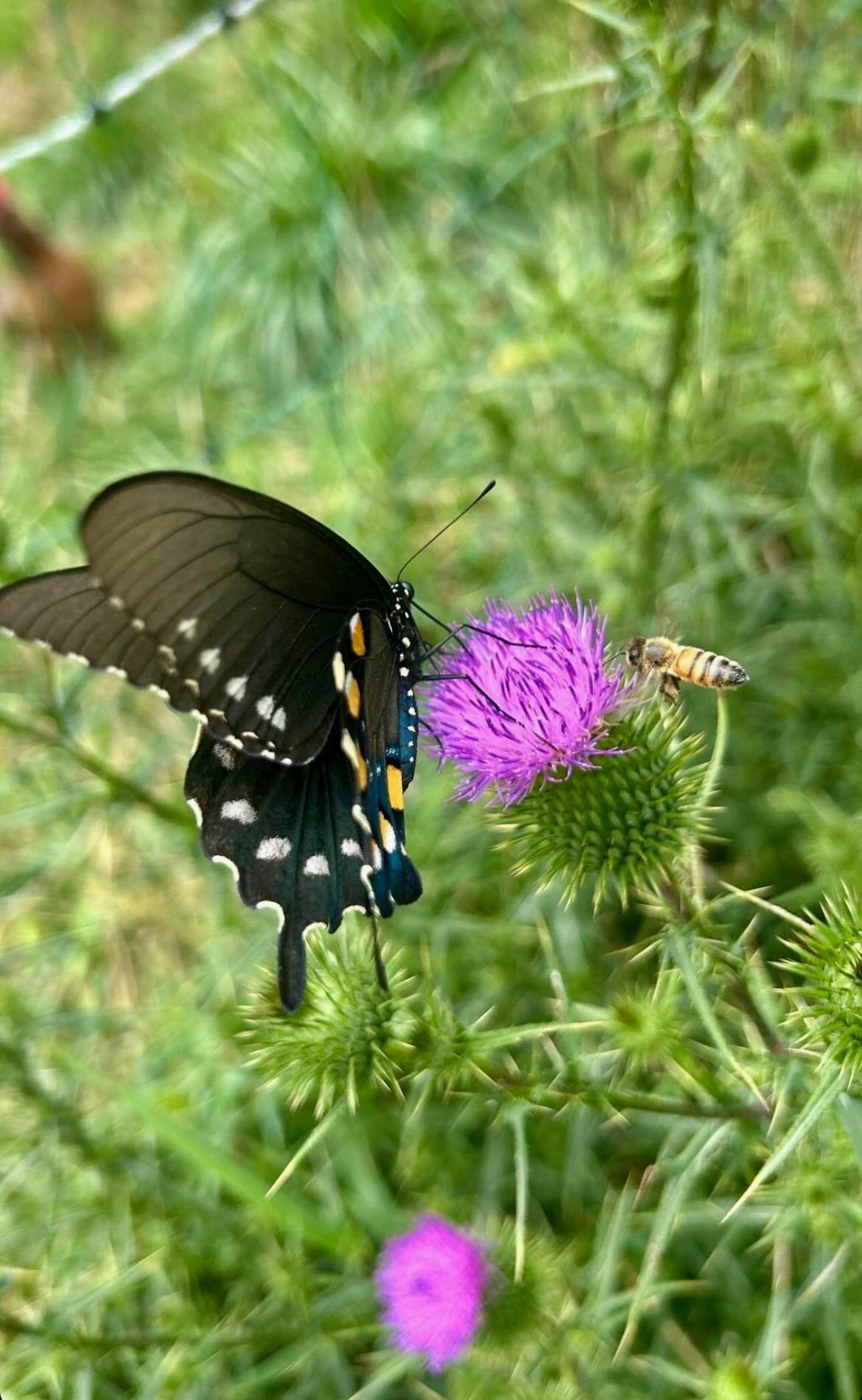

Guess that explains why it’s successfully invasive. I highly doubt anyone who might reply has a clue what the ecological repercussions of it proliferating may or may not be though
Discussion
It also flowers in the "dearth" period for pollen 👀

It's been proliferating for a while. I've never seen it eat large tracts of land. To the extent that it does, it's a tall herbaceous plant, so it's early on the succession hierarchy. If it ate an abandoned field it would likely be joined by shrubs and trees in a short number of years and then be shaded out by them within a decade or 2.
That seems to be the way of most "invasives." They are the early colonizers of degraded ecosystems and they give way to successive species (often native) pretty readily, having done work to revitalize the soil in the mean time.