Replying to Avatar Sjors Provoost

I made a quick first reading pass through the latest satanic EU thing. It's a wide ranging 324 page document, covering things like trusts, football clubs, dubious / tax optimized jurisdictions, the distinction between in house lawyers and law firms, beneficial ownership, reporting requirements, etc, etc.

https://data.consilium.europa.eu/doc/document/ST-6220-2024-REV-1/en/pdf

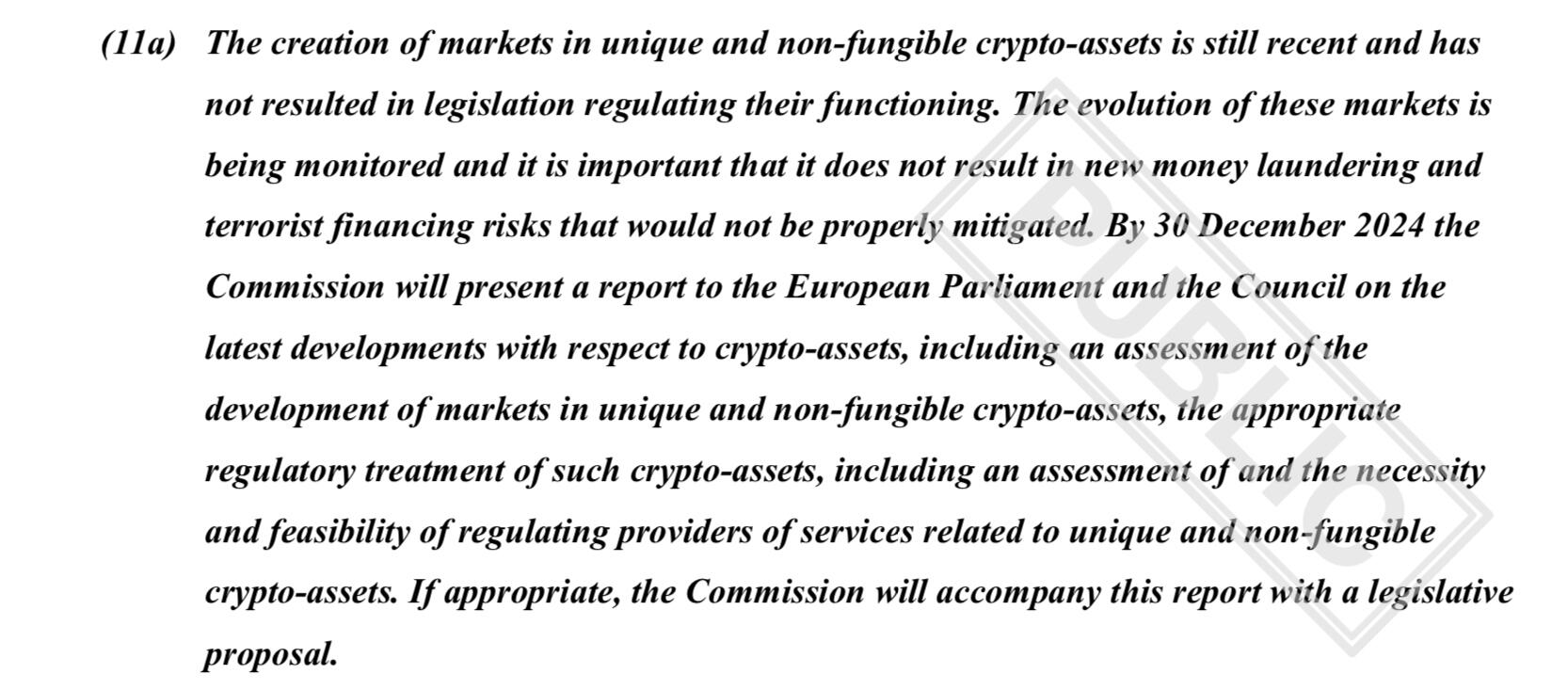
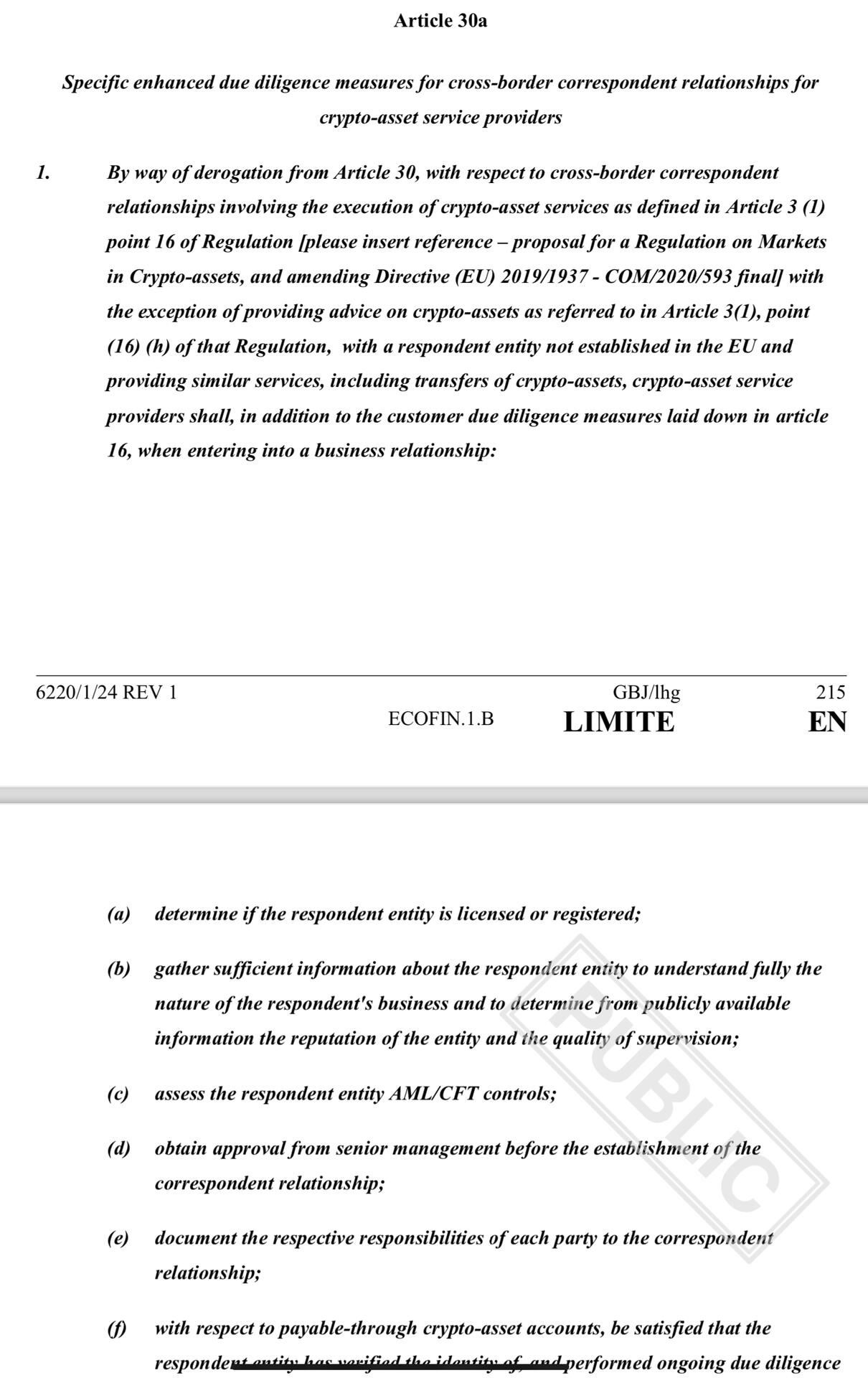
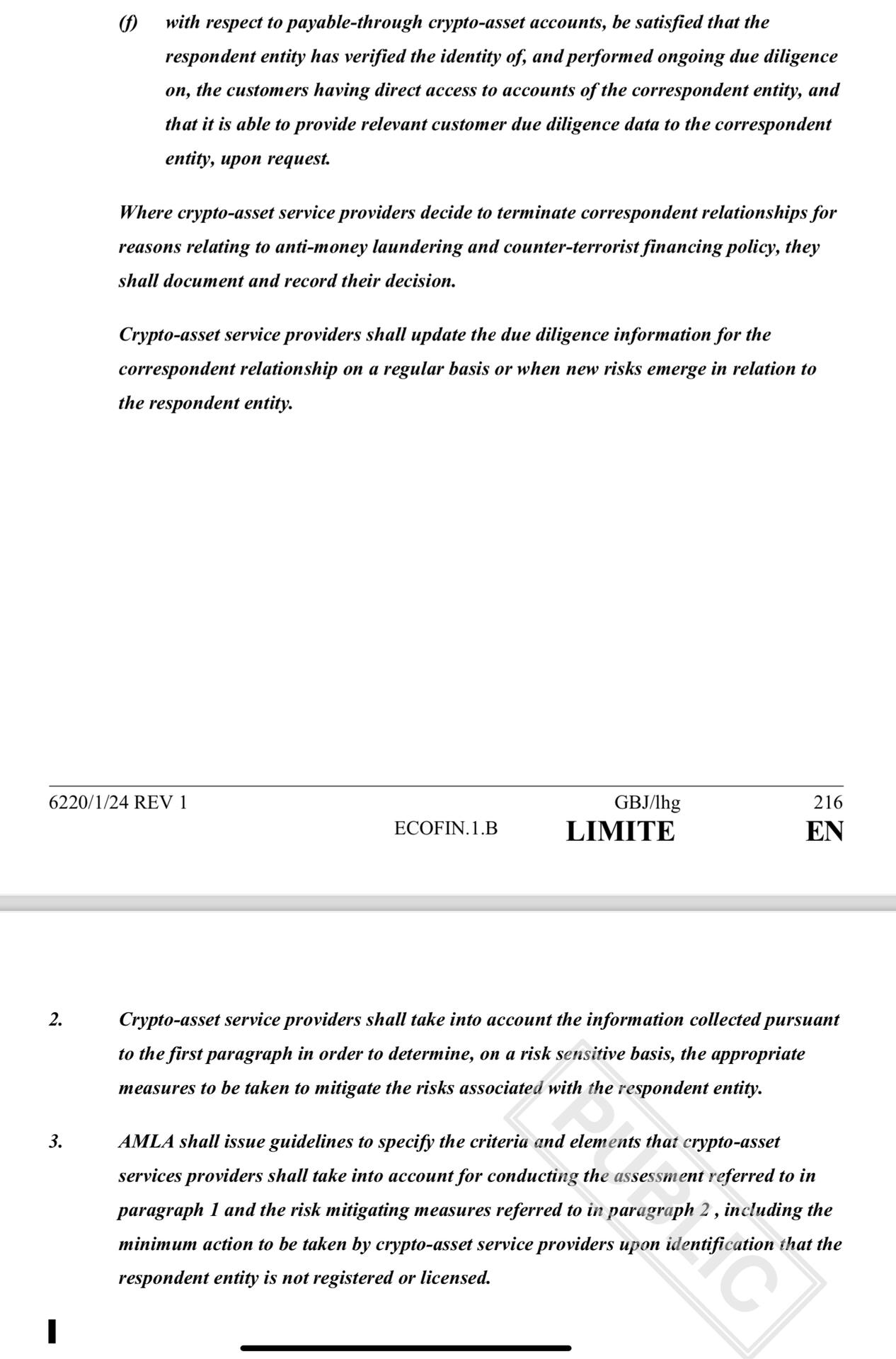
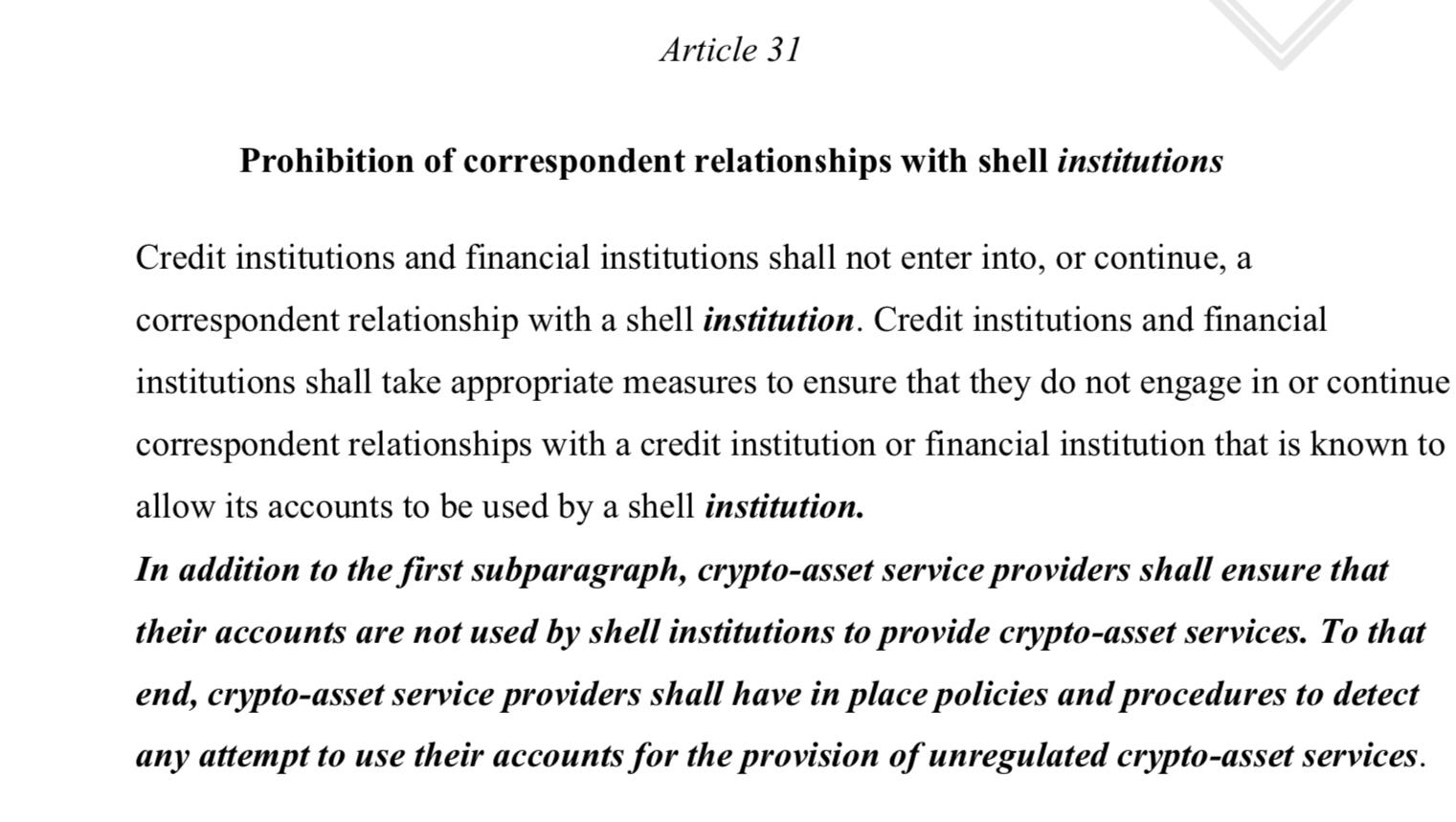
I tried to collect the bits that might impact Bitcoin. A minuscule fraction of the paper surface area. It's not like Bitcoin or even 'virtual assets' has its own chapter: in classic design-by-commission it just pops up in random articles.

Notably I'm ignoring cash: someone else will have to save that. But beware that 'cash' is defined much more broadly than the word suggests. It doesn't explicitly cover bitcoin, but I would expect that to happen eventually.

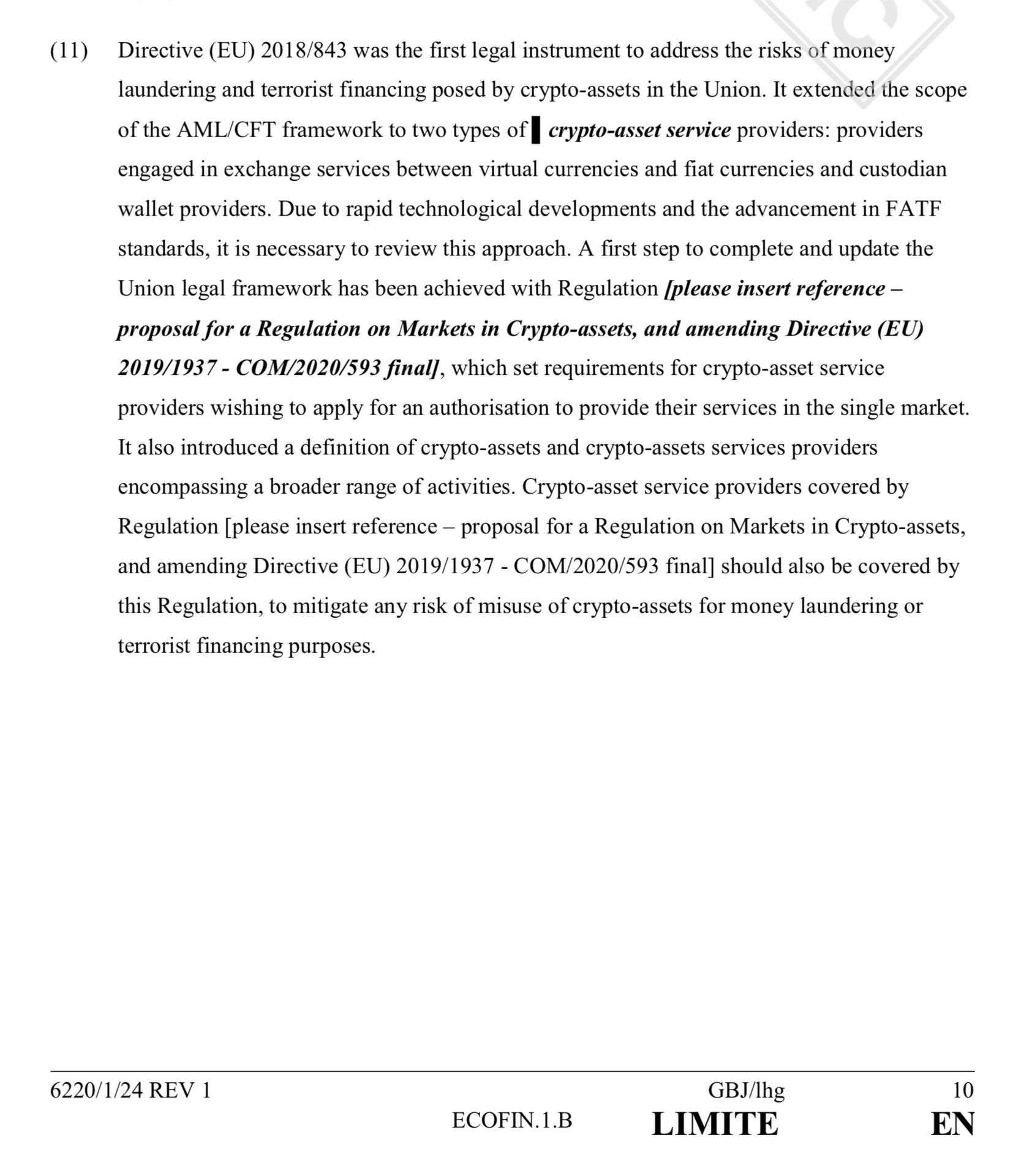
The first 100 pages (items numbered up to 103) seem more like an introduction than actual proposed law. Some of it seems to oversell the actual legal text.

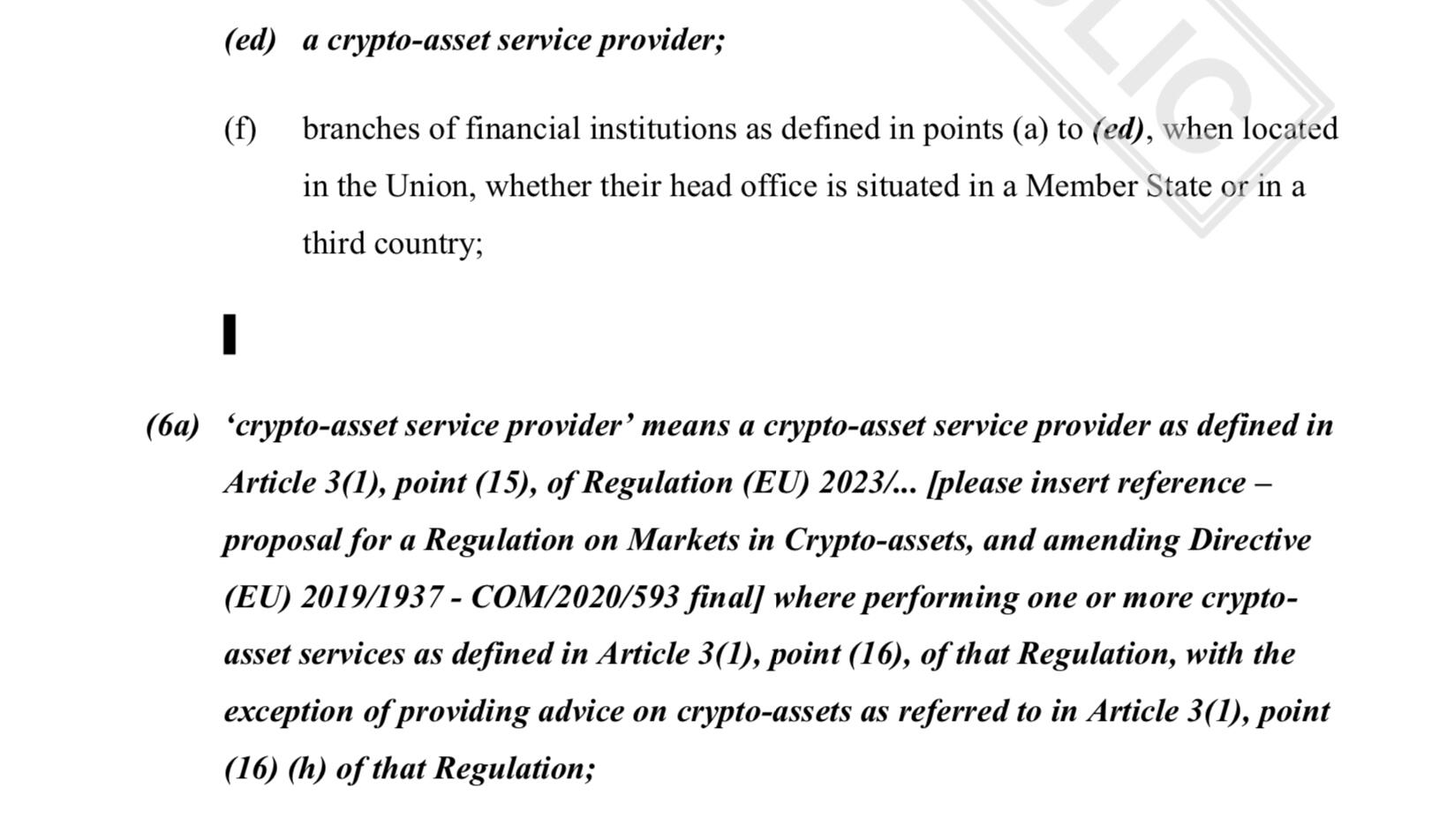
One observation is that 'virtual asset service provider' (VASP, or what Americans would roughly call custodians and exchanges) is now considered a Financial Institution(tm).

My impression now is that only _custodians_ are not allowed to:

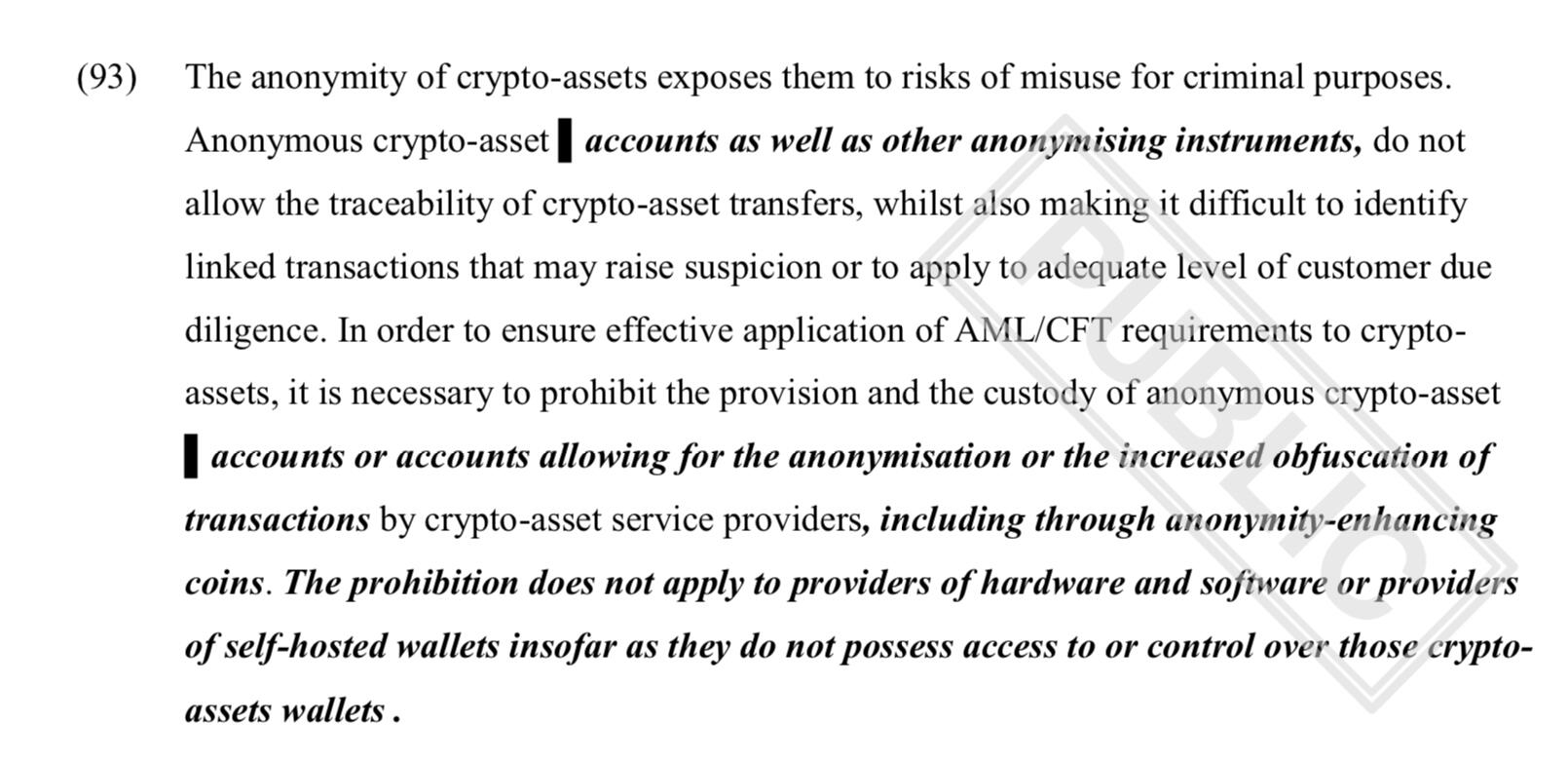
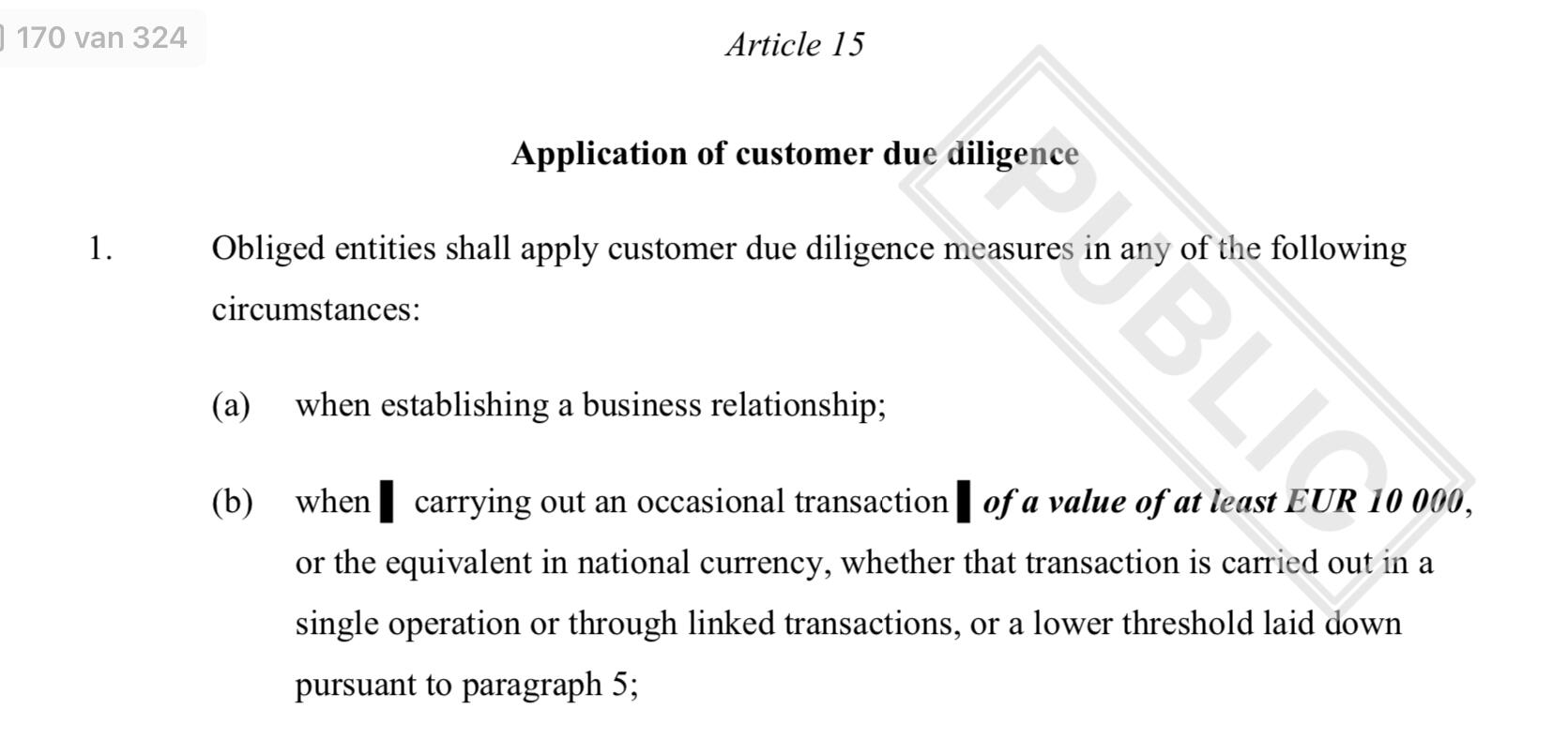
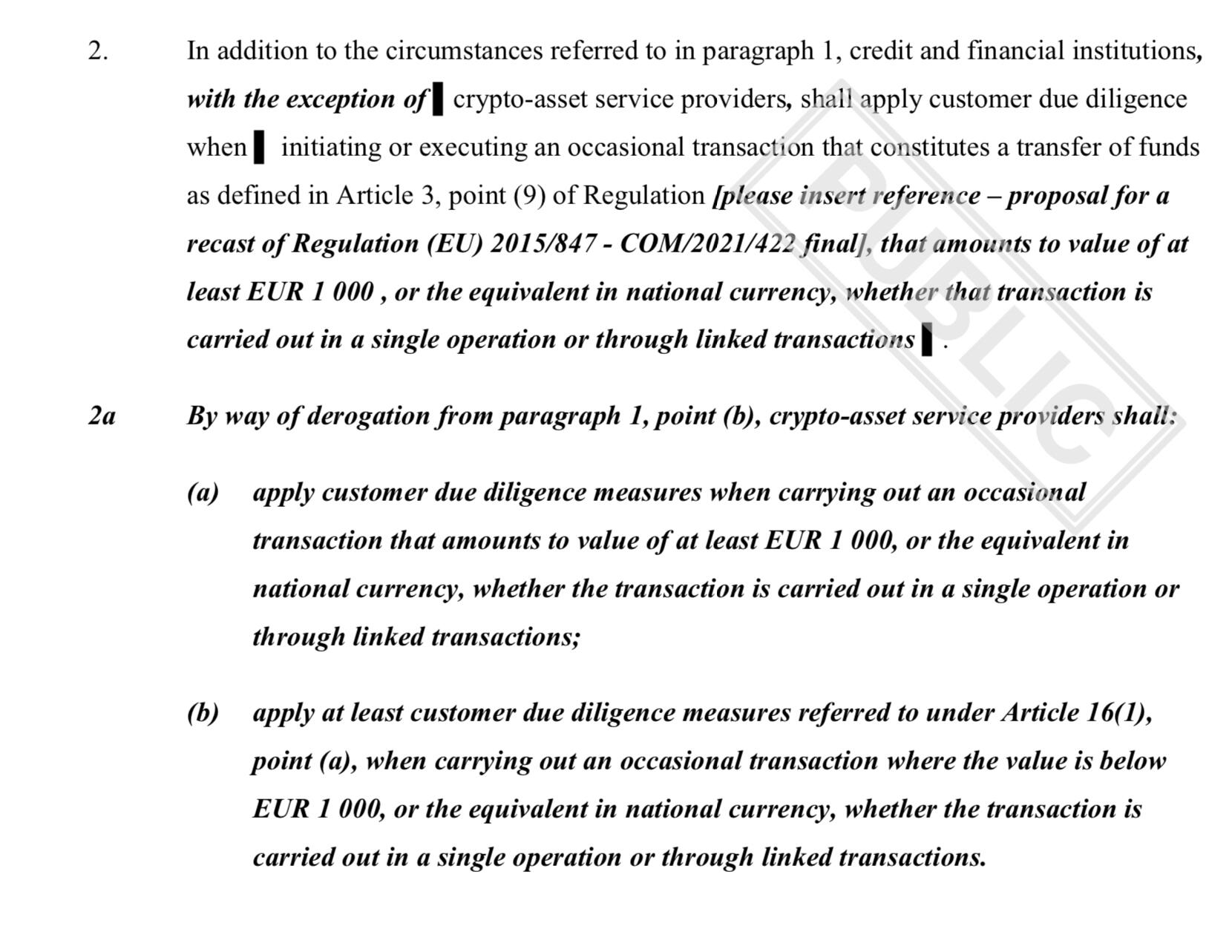
1. Have anonymous customers (i.e. anonymous accounts): they explicitly mandate KYC rugging existing accounts, albeit with a 3+ year heads up

2. Operating a mixer

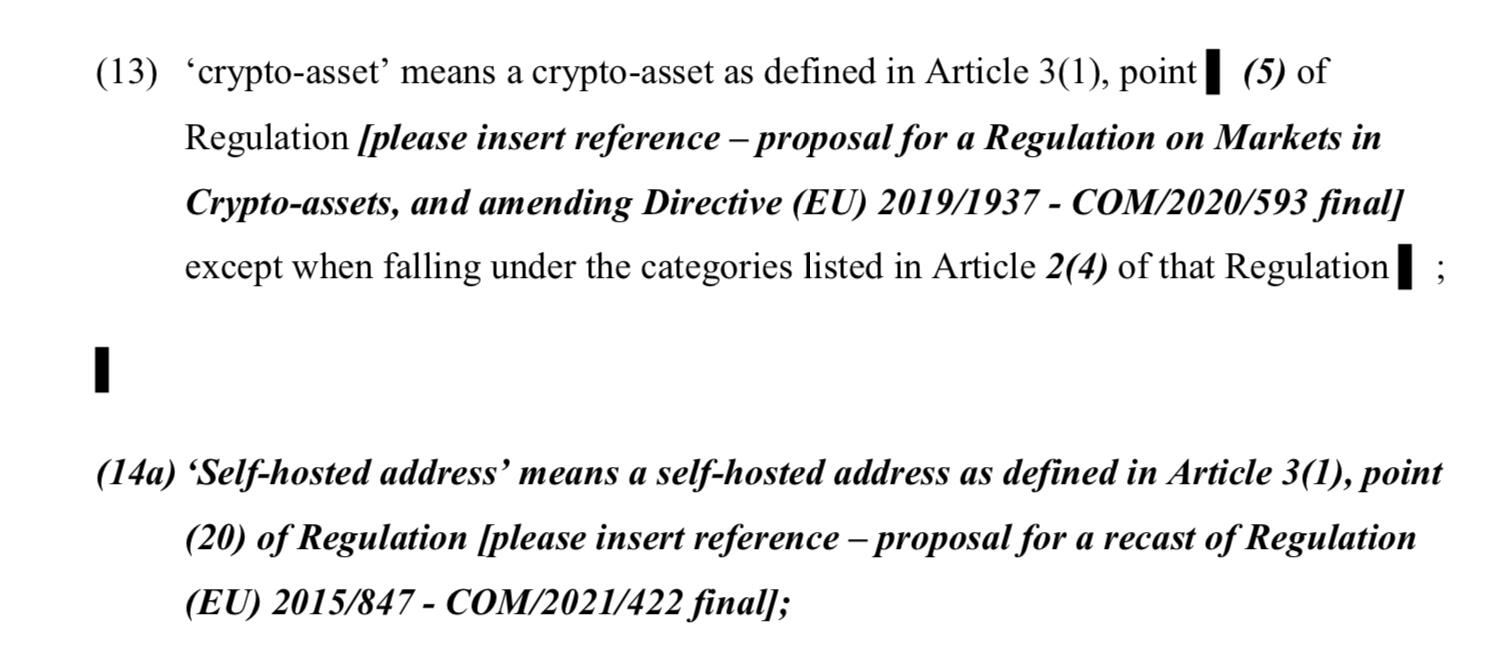
They also need to verify ownership of destination address (wallet verification), which is bad, but far from a ban on self-custody.

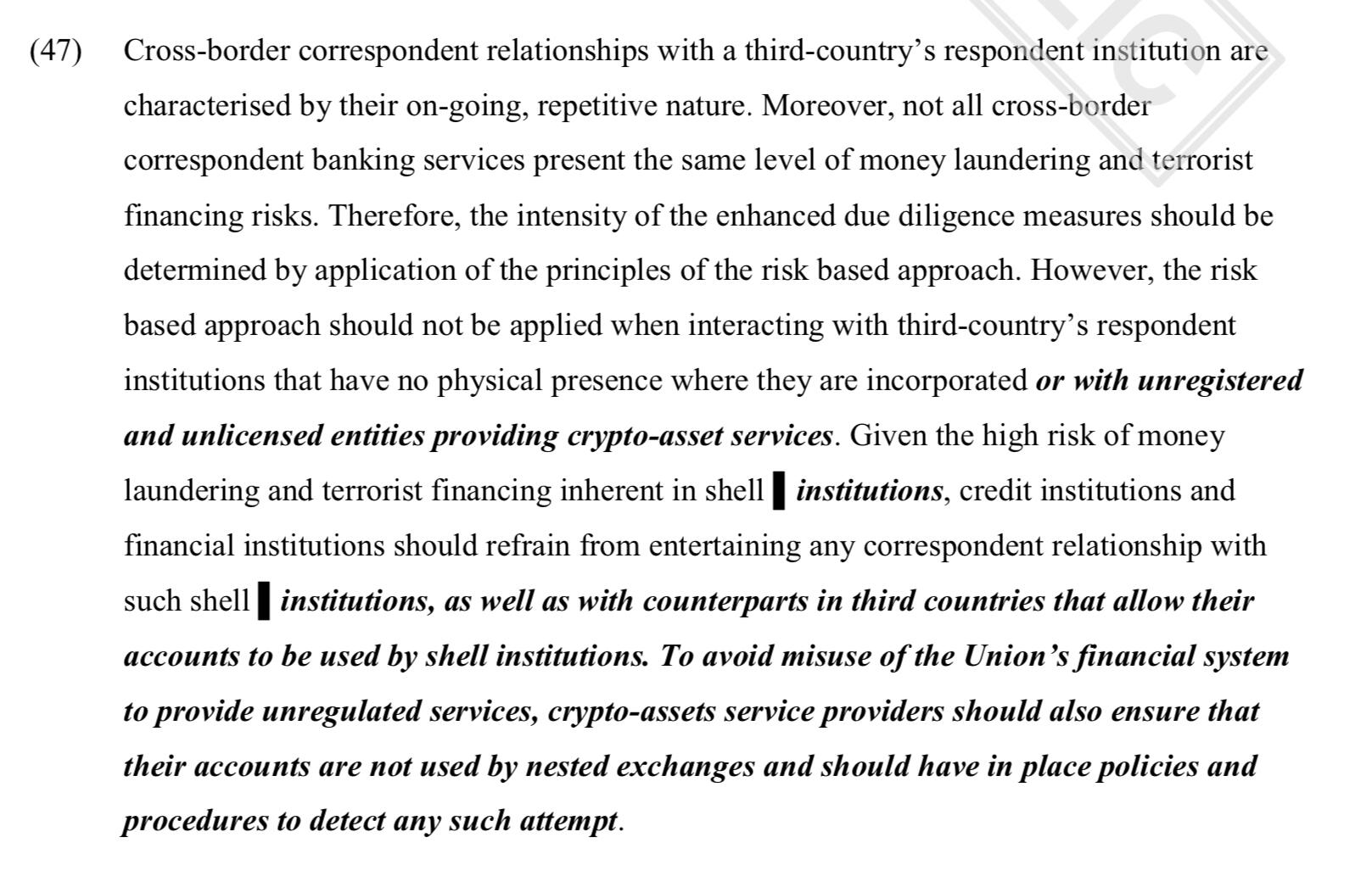
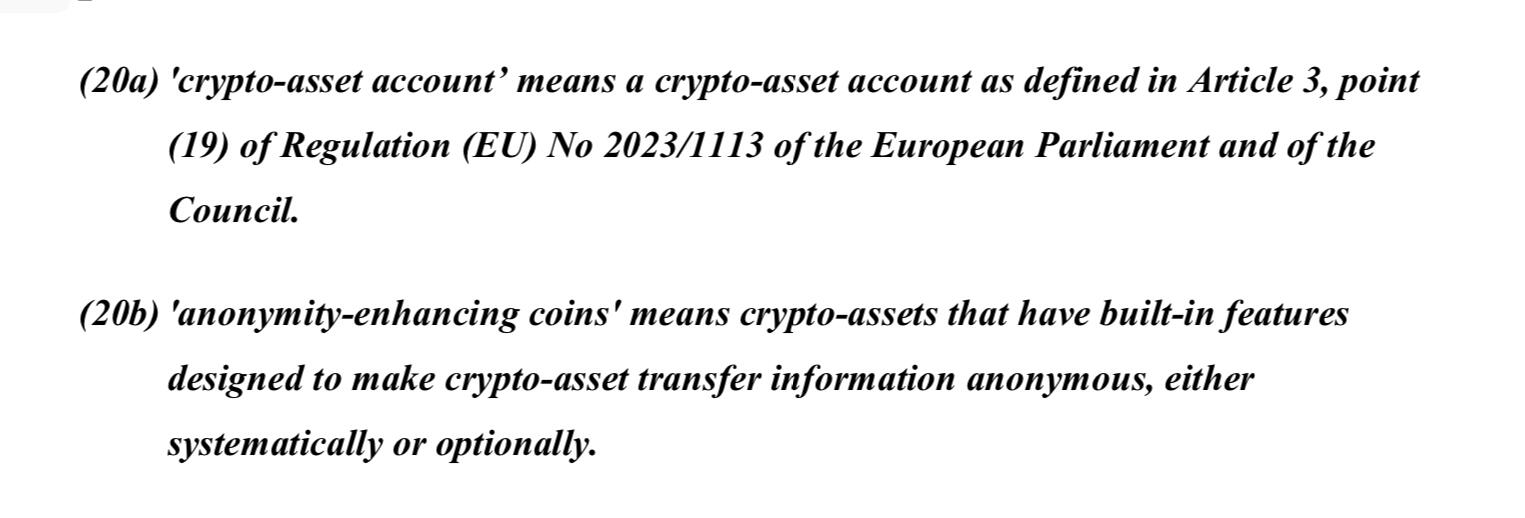
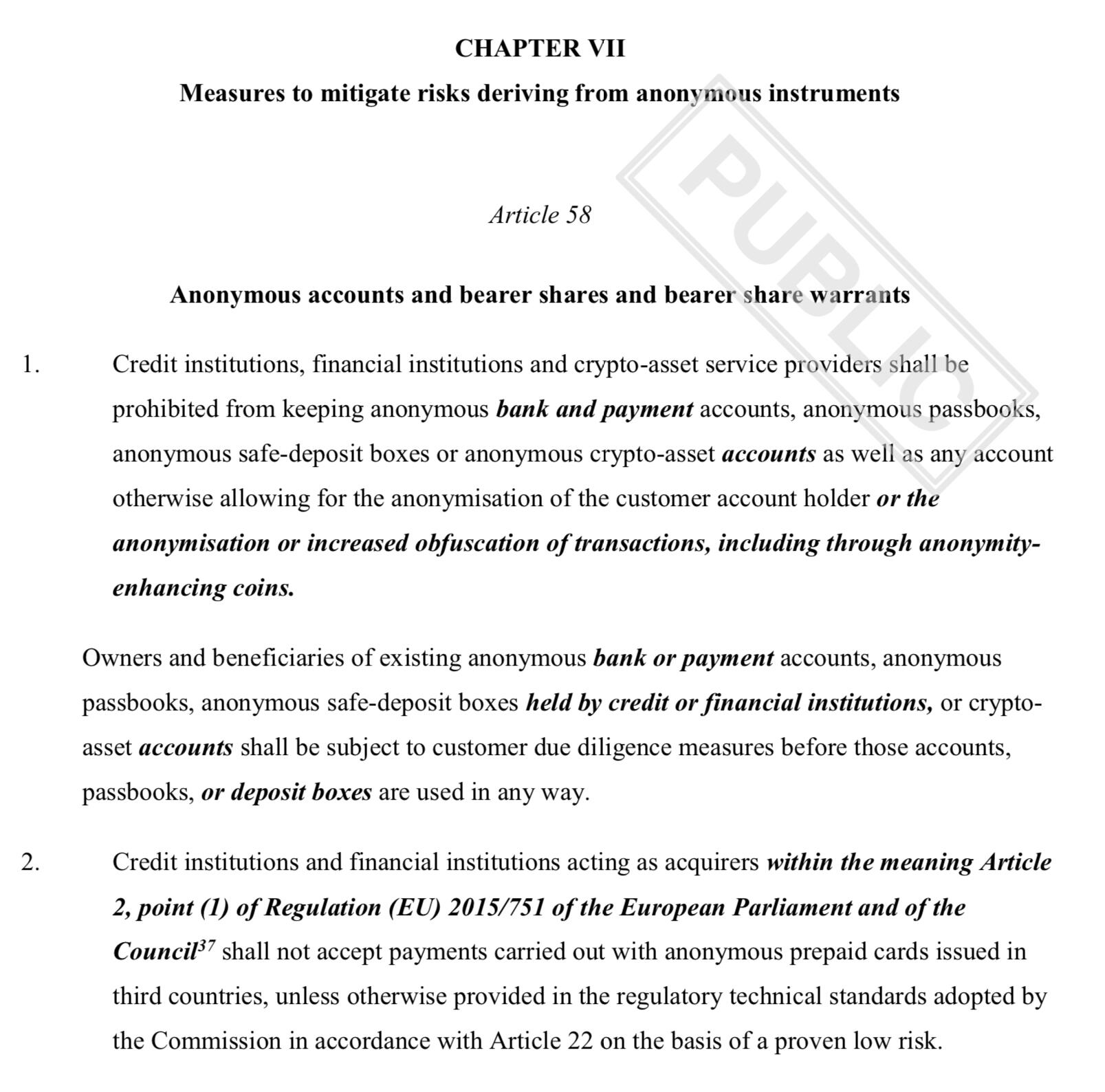
The 'intro' text mentions mixers along with anonymous coins in a way that suggests banning transactions with them. But the word 'through' makes it really unclear what they mean. In the law text they define 'anonymity-enhancing coins' in a way that obviously implies Monero and Zcash in that order. Article 58 uses the vague term 'through' again. Does it mean they can't let you withdraw to it? Or just that they're not allowed to offer a pseudo-mixing service that *uses* these coins.

Anyway I'll have to re-read this a few times to grok. Keeping in mind that the politicians who wrote this don't have the brain cells to process anything more sophisticated than "monero bad, make law with fancy words!" and then the bureaucrats who write the law have no idea what anything means either. No tech literate person was involved in this process, that's very obvious from the language. But that does make it less dangerous.

The next step for me is more deeply understand what the proposal actually says, if there's any potential direct impact on myself (which might give me legal standing - now or in five years or so when stuff has really taken effect and local judges can intervene) or if it's merely bad in general (in which case perhaps all I can do is write an angry letter).

It's hard to read through all that legal crap, so I might have missed some hidden spots.

First of all the word "Bitcoin" is not mentioned in the entire document, they only refer to "crypto", hence we're safe 😉 .

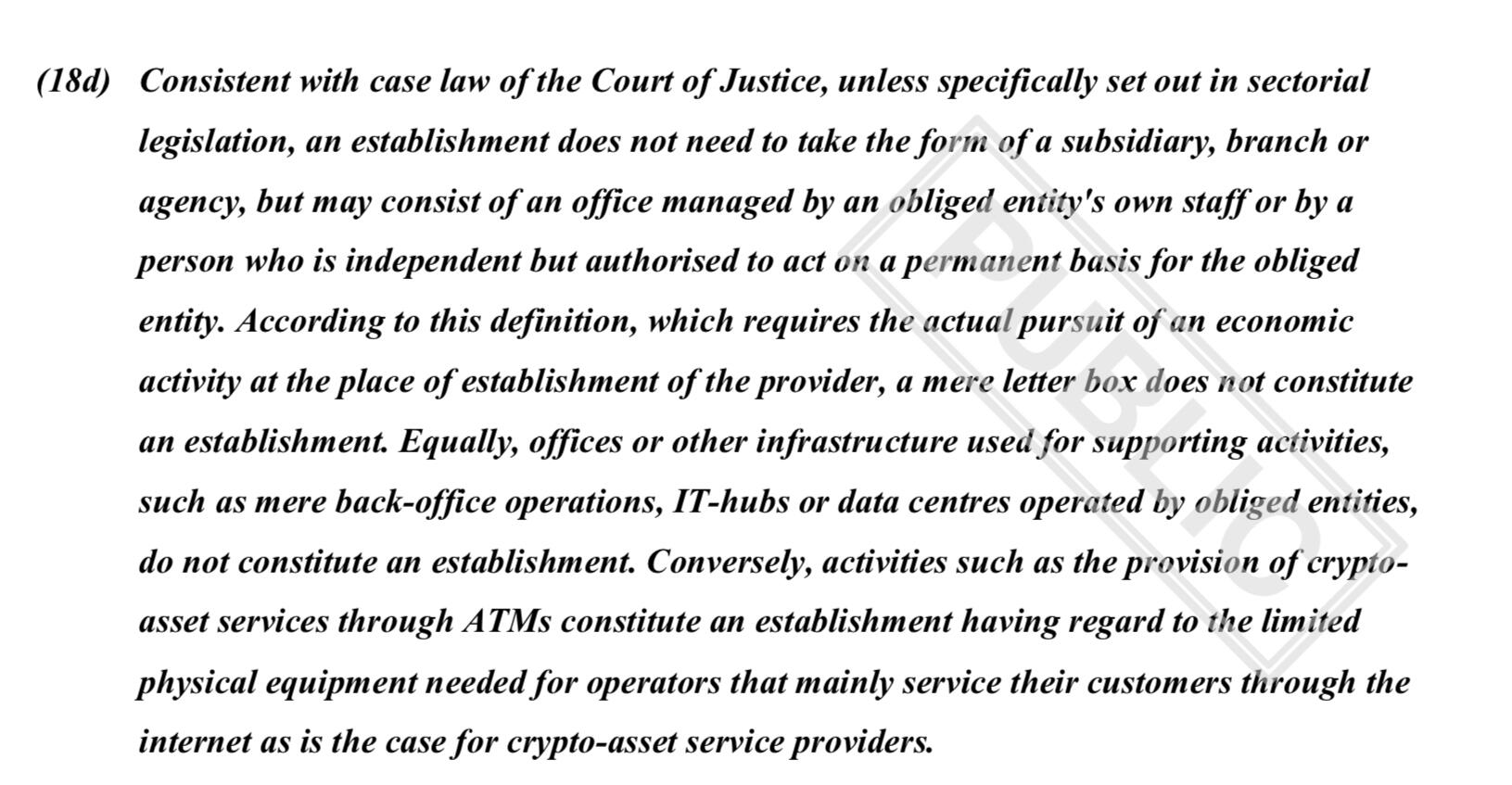
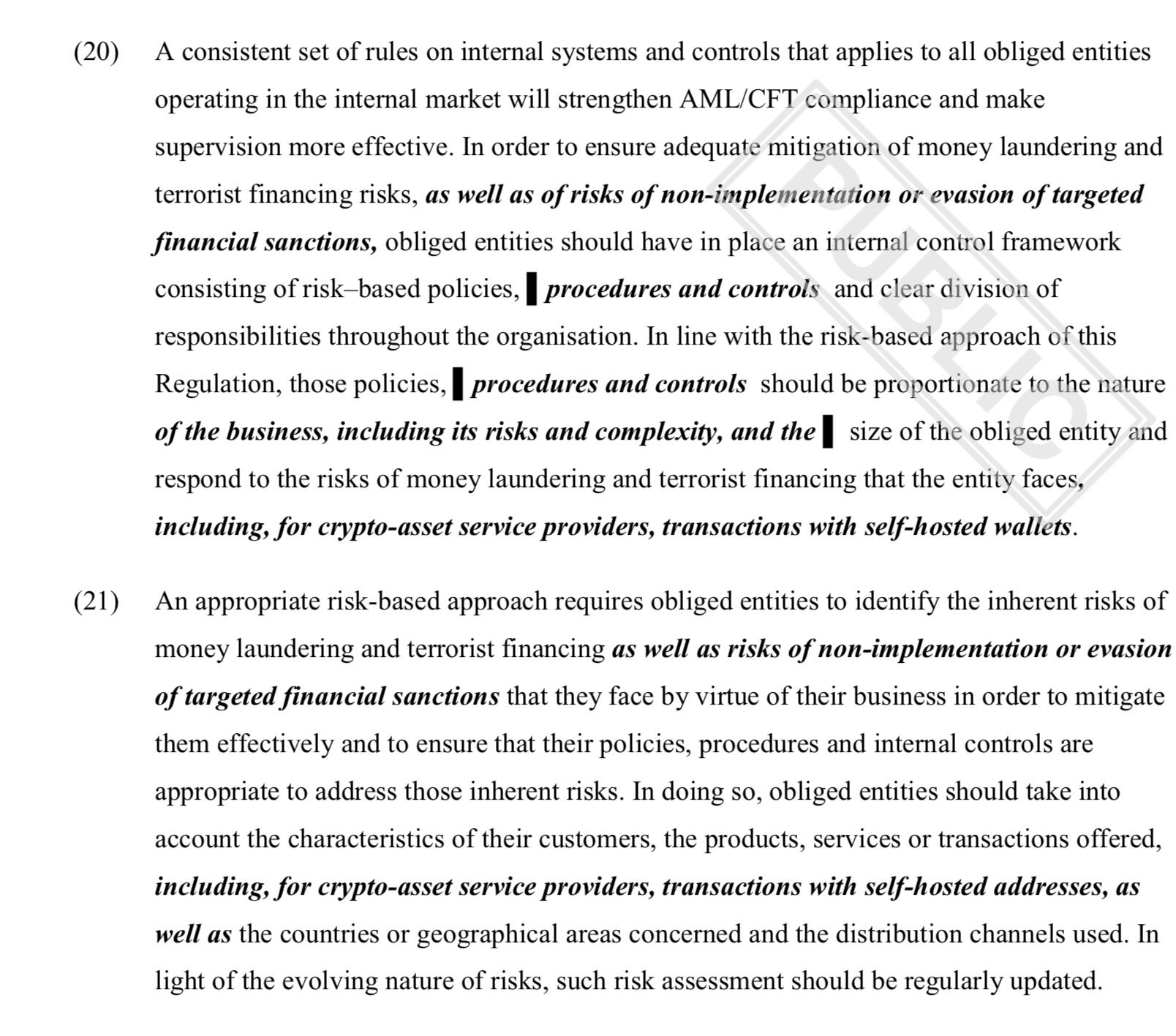
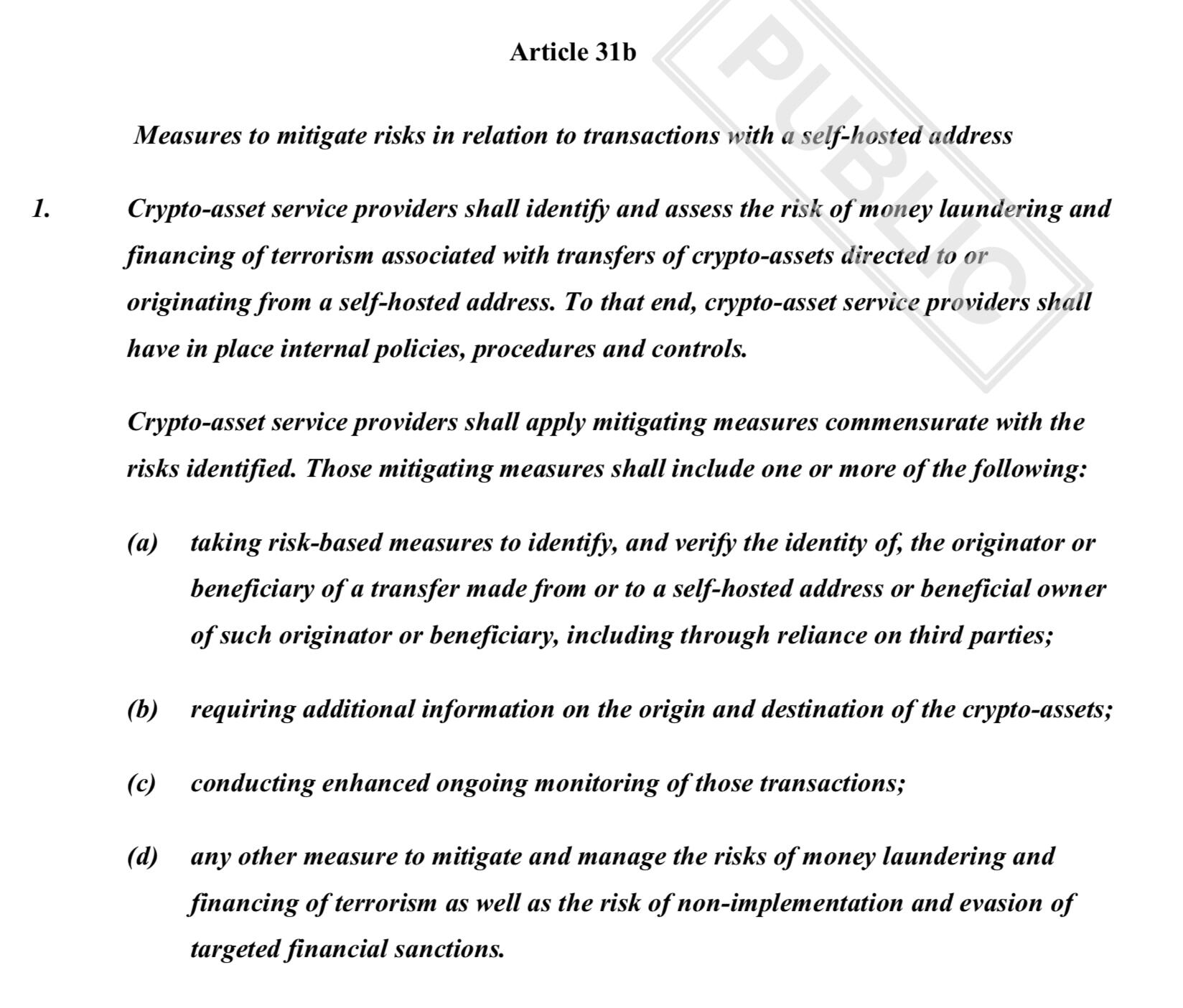
Then article 31b states the obligation of "crypto asset service providers" to verify the destination of source of funds when interacting with "self-hosted" wallets. That's not new, governments in the EU have been bullying on ATMs and exchanges to KYC their clients at least since 2020. I wonder if relai app would be affected by this new regulation.

So far I haven't seen any mentioned about individuals transacting P2P.

Reply to this note

Please Login to reply.

Discussion

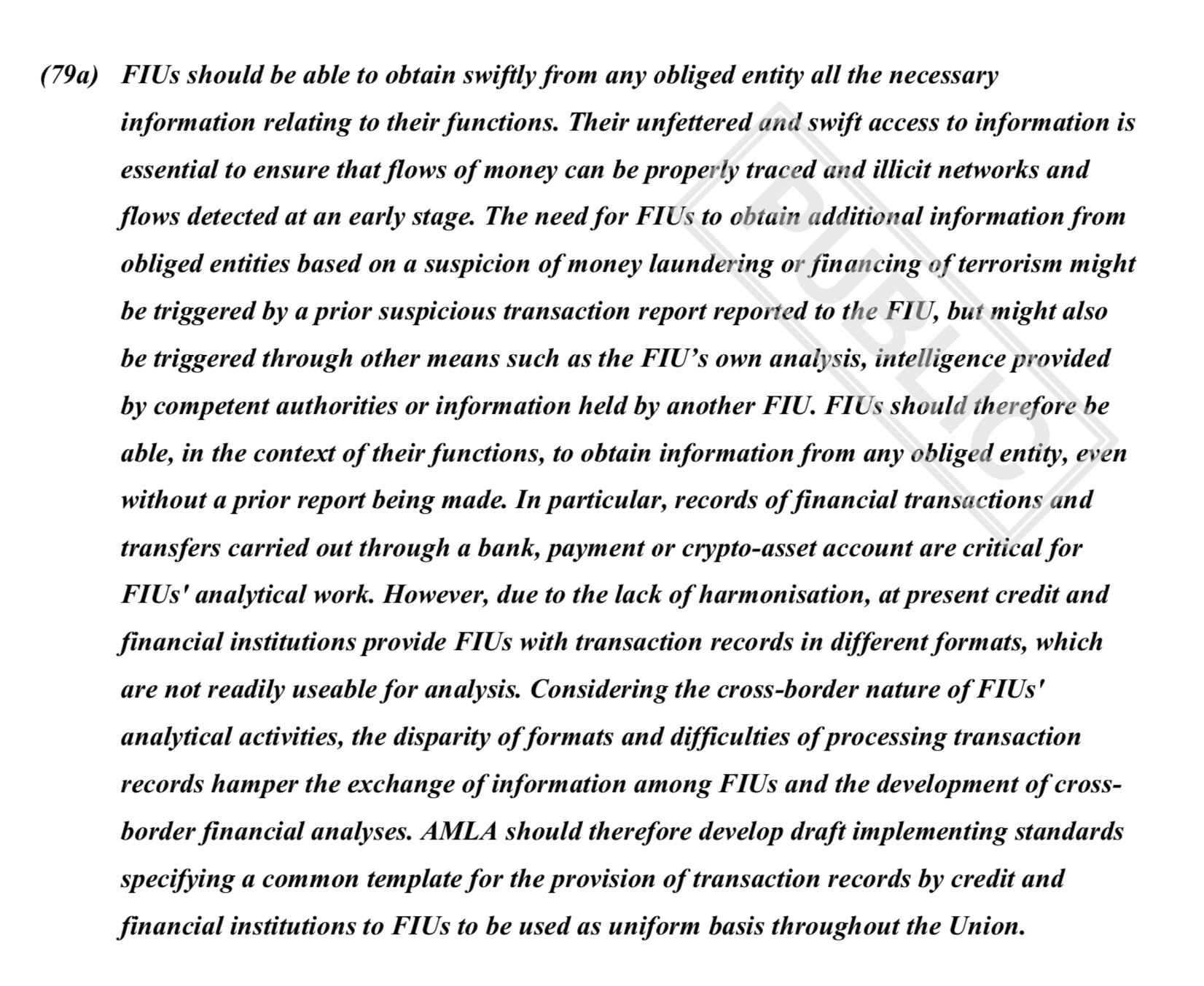
I don't see anything that directly impacts p2p either, just the on and off ramps. There does seem to be a requirement of surveillance of what coins do before and after which can have a chilling effect. That's not new, just worse because it's the law rather than 'voluntary' (arguably illegal, because GDPR) behavior by exchanges.

31b is new in the same sense: some companies already demanded address verification but this is illegal under GDPR because you can't collect data without a legal basis. Bitonic was forced to do this by the Dutch central bank. They went to court and won. Other companies are to cowardly to do the same and the privacy regulators don't have time to fine them for knowingly violating GDPR. The difference is that this new law provides the missing legal basis.

Anyway that's my understanding so far which could be wrong.

if u cannot use any coin from self-custody onchain with ANY OTHER LEGAL REG BIZ in EU what P2P accomplish ?

When is this to come into effect and will it be active restrospectively? Just wondering if I should mix my coins today before it goes into effect.

Laws are generally not retroactive. But here's the thing: if you mix your coins now and send them to an exchange in 5 years, they might freeze them and ask annoying questions - because that's what that law forces them to do. That's already a risk today.

In other words: the duty to do compliance stuff is not retroactive. But the compliance people can look as far back in history as they see fit.

Use trustless swaps (with liquid) before going to a centralized exchange to offramp or deposit with lightning. Take a USDT loan with your btc as collateral (hodlhodl) and use that to offramp. And do it only if you really need to make use of the fiat surveillance network.

You're still assuming presumption of innocence exists. It doesn't for AML/KYC. You're presumed guilty if they can't fully trace your coins.

I doubt they will ever be able to implement and enforce this kind of totalitarian detailed complex massive surveillance and chain analysis and interrogation processes but we’ll see what 🤡-world comes up with next. 🍿 Worst case we’ll exit the EU.

If by "we" you mean bitcoiners, then perhaps yes. But if you mean the Dutch then you should realize that this proposal could have been vetoed by the Dutch government. Instead they probably lobbied FOR it.

If by "they" you mean the government, they don't need to. They'll just tell the companies that it's up to them to do it, and if they don't, they'll get a fine of a percentage of their yearly turnover. That's what the EU does.

In which case, should you mix your coins now I may presume you incurred in terrorism, trafficking, money-laundering at any point in the future.

I mean, the solution can't be "don't mix your coins", but it also can't be "be as noisy about it as possible".

The trick is to resist the injustice, while finding ways to stay alive.