

Soy vegano por cierto
Alex Gleason YouTube search history
Mooooommm can we get Minions router, it has gigabit ethernet and WiFi 6



Now convince nostr:nprofile1qqs04xzt6ldm9qhs0ctw0t58kf4z57umjzmjg6jywu0seadwtqqc75spz4mhxue69uhhyetvv9ujuerpd46hxtnfduhsz9mhwden5te0wfjkccte9ec8y6tdv9kzumn9wshszxnhwden5te0wpuhyctdd9jzuenfv96x5ctx9e3k7mf0dv4ph5 to kind his kind 1 "backward compatible" posts and only do kind 20. People will go for it!
I don't understand why it's not just kind 1 with an "i'm an image tho" tag.
Image of Dog

The main Proxmox Terraform plugin is developed by a prison inmate telecommunications company and maintained by a they/them furry from the Netherlands.
nostr:nprofile1qy2hwumn8ghj7un9d3shjtnddaehgu3wwp6kyqpqhq7fz9q8c4mqqs6xz48nzpme6tqvulc2u6j6qf3qe0kzude462eq0cc5gk We don't have a Nostr account yet. This is our Mastodon account being bridged by someone else.
It's being bridged by me. Also, I use GrapheneOS.
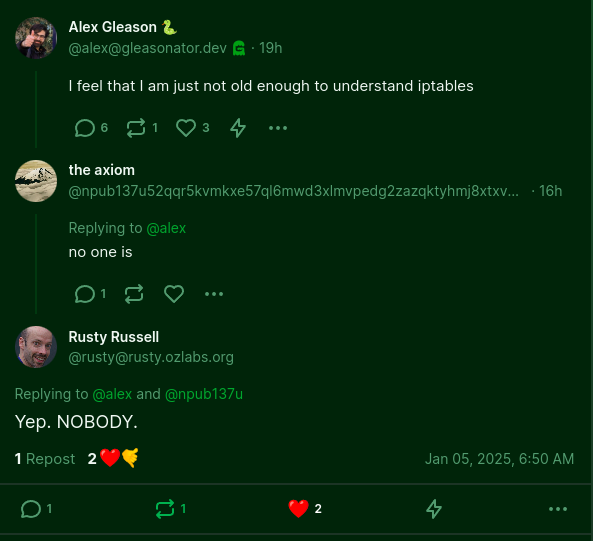
I made a joke about iptables then the creator of iptables replied to me. This is a certified Nostr moment.
proxmox dhcp chaos and destruction. Who knew dhcp was such a crime?
Importantly I didn't want to rely on Cloudflare entirely. If they boot me it still works. If the VPS boots me it also still works.

Cloudflare is above the "decoy" providing another layer but I didn't write that because it triggers people.
Let me tell you about the theory of my weird homelab imagination.
I want to run a rack server in an undisclosed location, with a dynamic IP address. I want it to be flexible so it can be easily moved and resistant to deplatforming. It will host public websites.
It consists of two essential parts: "keystone" and "decoy"
"keystone" is the entrypoint of my rack - one big http server (running caddy, not nginx), that routes traffic to hostnames within my internal network.
"decoy" is a cloud VPS, running nginx, which streams requests to the keystone over WireGuard.
DNS is all pointed at "decoy".
From the outside, it looks like the cloud VPS is hosting the sites. In reality I pay them very little money to just transfer data, and I can easily switch to a different provider. As a result, I get a static IP and a layer of protection/obscurity from the VPS, but the rack will continue to "just work" even if the decoy is changed or even removed. Only DNS entries would need to be updated.
This is not exactly groundbreaking. I know people have used VPNs to route traffic for decades. The main thing that's new is just my weird terminology for it.
To connect the "keystone" and the "decoy" together... I call this "trepanning".
I want to make this easily reproducible so others can copy my setup. Later I will release code and a guide.
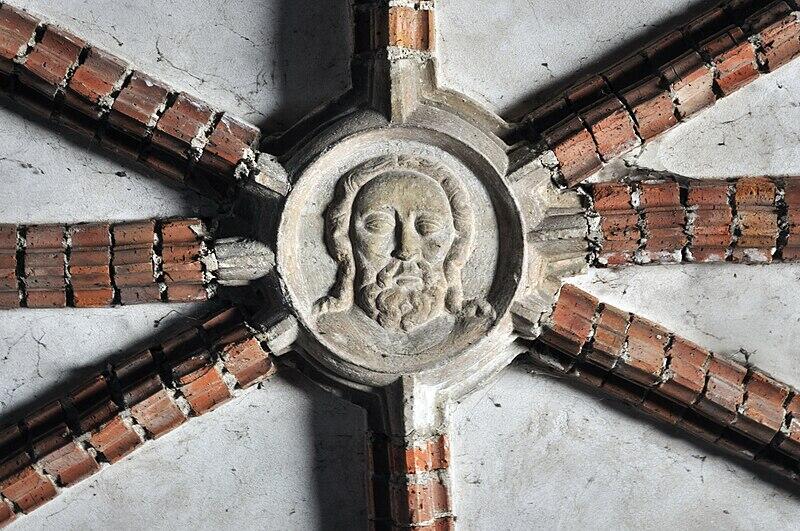
The dungeon boss is a very strong enemy the player must defeat.
The dungeon boss is also a face carved into the keystone providing support to the building without which the entire structure would crumble.
There is "boss" as in master, and "boss" as in "emboss".
These terms are totally unrelated.

I managed to route traffic through the wireguard interface to the other server, but it never goes out to the public network. I tried everything chatgpt told me, but the problem is I haven't read a 200 page book about networking.

same… we have the guy who made it here! nostr:npub179e9tp4yqtqx4myp35283fz64gxuzmr6n3yxnktux5pnd5t03eps0elz4s
Maybe he can help me force all outgoing traffic through wireguard. Nothing I do works so I gave up and installed proxy server.