Avatar
ThermoValue
0544f7f26d6fe0051116b0a5b26075cfcff9aa64bbfadc3d35ea18ca9c523282

Are you gonna trust the AI translations? Stupid question, of course we will all do...

Replying to Avatar ODELL

Did you delete the equivalent plot for Binance where you were saying there was nothing to worry about? But, it seems you still trust Glassnode, since you are not deleting this one. Though they´ve never explained how they cluster addresses...I would be wary of anything they report

Caffeine is an adictive and enhancing drug, but for sure not a poison

Gathering mushrooms is a great way to get a practical understanding of nature surrounding you. How a soil with a certain PH looks like, which symbiosis parterships are relevant to your search and how do weather conditions affect growth

Nature is not about pretty landscapes, it is about a complexity so deep, we will never have a full picture. Layers over layers of complexity. Interact with it through it´s details and you will apreciate it in all it´s beauty

Consider the structure of a flower, and how many different flowers there are. Their designs perform a funcion and interact with the world in deep and complex ways. Be at least aware of it when you look at them.

I have no hope for a better future if Bitcoin fails, or betrays it´s basic principles. Do everything to prevent this from happening!

This is the first entry when searching in Google "sats to eur" . The fucking marker for Craig Wright´s shit is SATS???

I don´t think it is "something" . The problem is the characters are absolutely plain and lack any depth. Only very basic emotions are represented in a stereotypical way. As if created by artist who´ve had no interaction with the world or read classic literature. It is a product for kids and even when the plot is interesting the character development is fake and artificial

You cannot convince everyone the will need #Bitcoin, but you can plan it for them. Gift is as a present in special ocasion. But don´t just give it to them. Hide the instructions on how to get it and give them the coordinates as if it was a treasure hunt. They will ignore, since they are not interested. Then in some years, when the price x10 they will remember it and do the work on their own.
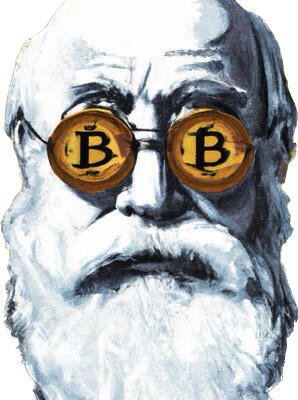
A sad reality. It is therefore your task to accumulate not for you, but for them

It is ridiculous that most city dwelers are completely ignorant about the position of major stars in the sky and how to identify the planets. The world you live in does not only consist on screens and interactions with other people. You are responsible for your own learning.

Really? Bitcoin is like a whale. It can´t go forward without thousands of barnacles and smaller fish swimming on its wake.

Don´t believe it´s the fish creating the wake, but the whale.

Replying to Avatar Jameson Lopp

It's easy to miss the speed at which civilization is accelerating major technological advancements.

There have been roughly eight major turning points in human history. Most of them didn't involve any fundamentally new idea - they just used the advancements going on in the background to make a new thing work. And since those advancements built upon each other, so too were we able to make more and more small advancements at faster rates.

The first was language, around 60,000 to 100,000 years ago. Language allowed humans to begin preserving knowledge from generation to generation, meaning that each generation didn't have to relearn everything. Some other animals can pass on a few things - other primates teach their children how to use tools, for example - but not with the speed or detail allowed by human language.

The second was agriculture, around 10,000 years ago. Before the rise of agriculture, humans spent most of their time just getting enough food to live. After it, you could spare enough resources to have people start to become experts in things. One person could become an expert at computing things, another could become an expert tailor, and so on. Those specialists pushed the boundaries of their fields forward and shared what they learned through language.

The third was writing, around 5,500 years ago. Writing was a *huge* step forward. Now you could pass information on without having to have an expert sit down and tell you. You could keep track of things for generations, and find patterns in what you kept track of. For example, a lot of early mathematics was worked out to predict celestial events like eclipses, which you could only do if you had reliable records of when eclipses had occurred in the past.

The fourth was the printing press, around 600 years ago. This kicked writing into high gear and made information orders of magnitude more available (the printing press could produce copies of text around 100x faster than previous printing methods).

The fifth was the Scientific Method, around 400 years ago. While earlier scientists had existed, the scientific method turns out to be a much more effective way to test ideas than most previous frameworks, which tended to *start* with logic and try to *explain* observations, rather than *observing* observations and trying to design theories that fit them.

The sixth was the factory and mass production, around 150 years ago, which was made possible by massive advances in chemistry, engineering, and materials science enabled by the scientific method. This made the tools for experiments, data collection, and observation far more available, not just things that could be afforded by a few very wealthy researchers (or those funded by wealthy benefactors.) Automation wasn't new, but advancements in things like metallurgy, steam power, and electricity made automation *work* in a way the machines of the ancient world didn't.

The seventh was electronics, which was spread throughout the 20th century. The rise of electronic machinery allowed a whole new range of observations and a new level of precision. Again, this was only possible because factories permitted the mass-production of electronic components and because materials-science had advanced to the point that things like the transistor - a key component of all modern electronics that makes logical circuits possible - could be produced.

And the eighth major leap forward was networking, currently in the form of the Internet. The idea of a network, of course, was not new. Networks of information date back to the ancient world. But advancements in speed and precision via electronics, and the creation of vast networks of infrastructure through mass production, made it possible to instantly send vast amounts of information around the world on demand.

In general, it's best not to think of leaps in terms of "one big idea." Big ideas are enabled by a million small advancements, and many big ideas have been conceived numerous times before someone turns the big idea into a working thing. The pace of progress gets set by those small advancements, not by how many big ideas are thought up.

We stand upon the shoulders of giants who stood upon the shoulders of those whose names are lost to history. Will the next major turning point be AI? It's a bit early to say for sure, but it's certainly promising...

I think a usually dismissed milestone is the village or community of any relevant size. It most likely appeared simultaneously with agriculture (although this is debatable given the recent discovery of large megalithic constructions built during the paleolithic). The point is not the agriculture itself, but the community. Even without writing a group of 500-1000 people will store knowledge and evolve it as culture for generations, while sparse hunter-gatherer groups of a few docens will constantly loose critical knowledge because of death..

Energy is a well defined quantity, there is no need to speak loosely about it. Better be precise when talking about physical properties

Never let the trivial things in life make you forget the deep complexity and mistery of existance.

Take a minute today and pay attention to some weed, that you would usually disregard. Look up it´s name in google; it´s place of origin; is it edible?; How does it look in it´s different stages? Do the flowers and seeds feed any specific creatures?